5 Best Apps for Kids Storytelling in 2026
In our increasingly digital world, parents and educators are constantly searching for meaningful ways to engage children and foster essential skills. While screen time is often a concern, the right tools can transform a tablet or computer into a powerful gateway for creativity, literacy, and imagination. The challenge lies in finding high-quality platforms that truly inspire. This guide cuts through the noise to showcase the best apps for kids storytelling in 2026, each offering a unique way to help your child create, share, and fall in love with their own narratives.
From personalized AI adventures to animated movie makers, these applications are designed to empower young minds. They go beyond passive consumption, inviting children to become active participants in the creative process. Whether you have a budding author, a future animator, or a curious reader, there’s a perfect tool waiting to unlock their potential.
The Top Storytelling Apps for Children in 2026
Here are our top picks for apps that blend technology and narrative craft to create unforgettable storytelling experiences for kids.
1. LoveToRead.ai
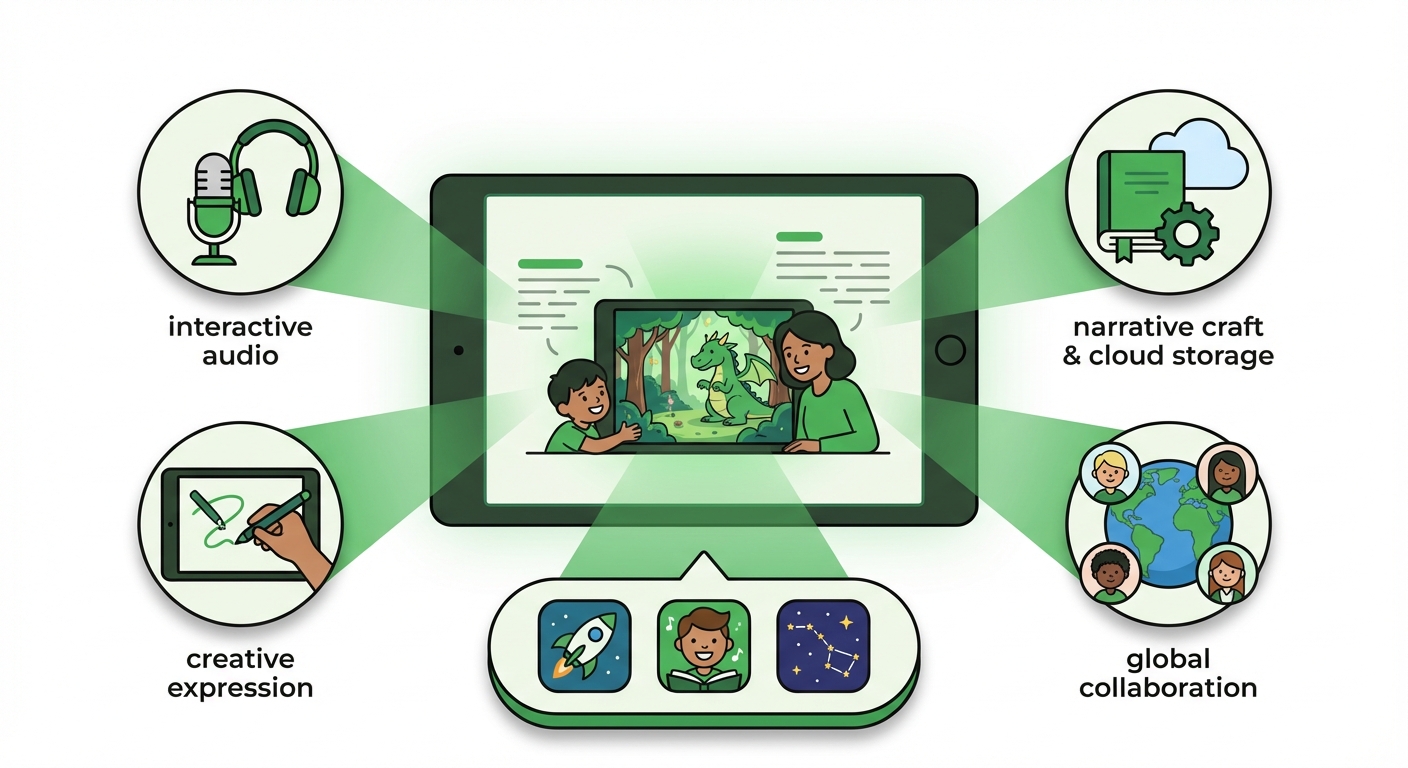
LoveToRead.ai has quickly become a leader in the personalized content space by placing the child at the absolute center of every story. This innovative platform uses artificial intelligence to generate unique, beautifully illustrated storybooks where your child is the main character. Designed for children in grades K-5, it addresses the core desire of every kid: to see themselves as the hero. The process is remarkably simple and fast—a complete, personalized story can be generated in as little as 30 seconds, making it perfect for busy parents and engaging for impatient young readers.
The platform’s strength lies in its deep personalization. Parents can create a character library with custom avatars that look just like their children, family members, and friends. This visual representation is a powerful tool for engagement, helping children connect with the text on a much deeper level. The stories themselves are not only entertaining but can also be tailored to include educational themes or life lessons. Once created, tales can be read instantly on any device or ordered as beautiful, professionally printed hardback books, creating a lasting keepsake. This blend of digital convenience and physical permanence makes it one of the most versatile and impactful kids storytelling apps available. To learn more about how this technology works, you can explore this guide on What Are AI Storybooks? A 2026 Explainer.
Key Details:
- Best for: Parents and educators seeking highly personalized, quick-to-create stories that build reading confidence.
- Pros: Extremely fast story generation, deep character personalization with custom avatars, and the unique option to order physical hardback books.
- Cons: The platform is focused on story generation and reading, so it lacks the interactive mini-games found in other apps.
- Pricing: Offers a free trial, with flexible credit packs starting at $9.99.
2. Storybird
Storybird is a celebrated platform that has inspired millions of young writers by reversing the typical storytelling process. Instead of starting with words, children begin by exploring a vast, curated library of professional illustrations. They select images that capture their imagination and then write their own stories to accompany the art. This art-inspired approach is a fantastic way to overcome writer’s block and provides a visual framework that guides the narrative process. It’s a powerful tool for developing creative writing skills, especially for children aged 7 and up.
The platform fosters a strong sense of community, offering writing challenges and courses that can be used both at home and in the classroom. Children can share their stories with a global audience of peers, receiving encouragement and feedback in a safe, moderated environment. While it requires more active writing effort from the child compared to AI-driven platforms, this makes it an excellent tool for school projects and for kids who are ready to take the next step in their journey as authors. The focus is less on being the hero and more on becoming the creator, which is a valuable skill in itself.
Key Details:
- Best for: Classrooms and older children (7+) focused on developing creative writing and literacy skills.
- Pros: Features stunning, professional artwork that serves as creative prompts. Strong community and educational focus.
- Cons: Requires significant creative input from the user, which may be challenging for younger children or those who struggle with writing.
- Pricing: A free plan with basic features is available, with a subscription required for full access.
3. Toontastic 3D
Developed by Google, Toontastic 3D is a phenomenal free app that empowers kids to become animators and directors of their own 3D cartoons. This app isn’t about writing a book; it’s about building a narrative from the ground up and bringing it to life through animation and voiceover. Children can design their own characters, choose settings, and then move them around the screen like digital puppets while recording their own dialogue and sound effects. The app cleverly guides them through a standard story arc—Setup, Conflict, Challenge, Climax, and Resolution—subtly teaching the fundamentals of narrative structure.
The final product is a polished 3D animated short film that can be saved to the device and shared with family and friends. Its intuitive, play-based interface makes complex concepts like animation and storyboarding accessible even to young children. For kids who are more visually or kinesthetically oriented, Toontastic 3D provides an exciting and highly creative outlet that builds essential 21st-century skills in digital literacy and communication. It’s an outstanding example of how to make reading interactive for kids (2026 guide) by turning them into creators.
Key Details:
- Best for: Visual storytellers and aspiring animators who learn best by doing.
- Pros: Completely free with no in-app purchases. Teaches classic story structure in a fun, hands-on way. Highly creative and engaging.
- Cons: The end result is a video, not a readable book. The creative process can be more complex and may require some parental assistance for younger users.
- Pricing: Free.
4. Epic! – The Leading Digital Library for Kids
While the other apps on this list focus on story creation, Epic! excels at story consumption, which is a critical part of the storytelling ecosystem. It provides unlimited access to a massive digital library of over 40,000 high-quality books, audiobooks, and educational videos from leading publishers. For a monthly subscription, children get a safe, curated world of content to explore. This exposure to a wide range of genres, authors, and illustration styles is invaluable for developing a child’s own narrative voice and understanding of what makes a good story.
Epic! is not just a passive library. It includes ‘Read-to-Me’ features for emerging readers, quizzes to check comprehension, and personalized recommendations based on reading level and interests. It’s an indispensable tool for parents who want to encourage a daily reading habit. By exploring some of the best educational storybooks for young children (2026), kids can find inspiration for their own creative projects, perhaps using another tool on this list to build a story based on a new favorite character or theme.
Key Details:
- Best for: Voracious readers and families looking for access to a vast and varied library of existing stories.
- Pros: Huge, high-quality library; excellent for both home and school use; includes audiobooks and educational videos.
- Cons: Strictly a consumption platform, not a creation tool. The subscription model can be a recurring cost.
- Pricing: Monthly or annual subscription after a free trial period.
5. NovelAI (with Parental Guidance)
For older children, teens, or a parent-child collaborative project, more advanced tools like NovelAI offer a glimpse into the future of AI-assisted writing. While not designed exclusively for children, its powerful AI can serve as an incredible brainstorming partner, helping to generate plot ideas, describe characters, or write entire paragraphs of text based on a user’s prompts. Used correctly, it can be an amazing tool to explore complex narratives and long-form storytelling.
It is crucial to note that this tool requires significant parental supervision. Its advanced nature means parents must be involved to set up content filters and guide the creative process to ensure it remains age-appropriate. When used as a collaborative tool, it can teach older kids about the sophisticated capabilities and responsible use of artificial intelligence. For those interested in the mechanics, understanding how to use AI for storytelling: a 2026 guide can unlock its full potential. It serves as a powerful contrast to platforms like LoveToRead.ai, which are specifically built with a child’s safety and user experience as the top priority.
Key Details:
- Best for: Older children (10+), teens, and parent-child co-writing projects.
- Pros: Extremely powerful and flexible AI for generating complex stories. A great tool for overcoming writer’s block.
- Cons: Not designed for children and requires close parental supervision. Subscription can be more expensive than kid-focused apps.
- Pricing: Subscription-based.
Conclusion: Choosing the Right Storytelling App
Ultimately, the best app for kids storytelling is one that aligns with your child’s age, interests, and creative goals. From directing 3D animated movies with Toontastic 3D to writing novels alongside professional art in Storybird, the digital tools available in 2026 are more powerful and diverse than ever before.
These platforms do more than just entertain; they build confidence, enhance literacy, and teach the fundamental structures of narrative. For parents wanting to give their child a truly magical and motivating introduction to the world of reading, a personalized approach is often the most effective. Platforms like LoveToRead.ai stand out by offering a unique and deeply engaging experience that makes your child the star of their very own adventure, fostering a love for stories that can last a lifetime.