9 Best AI Storybook Generators in 2026 (Plus Gemini Storybook)
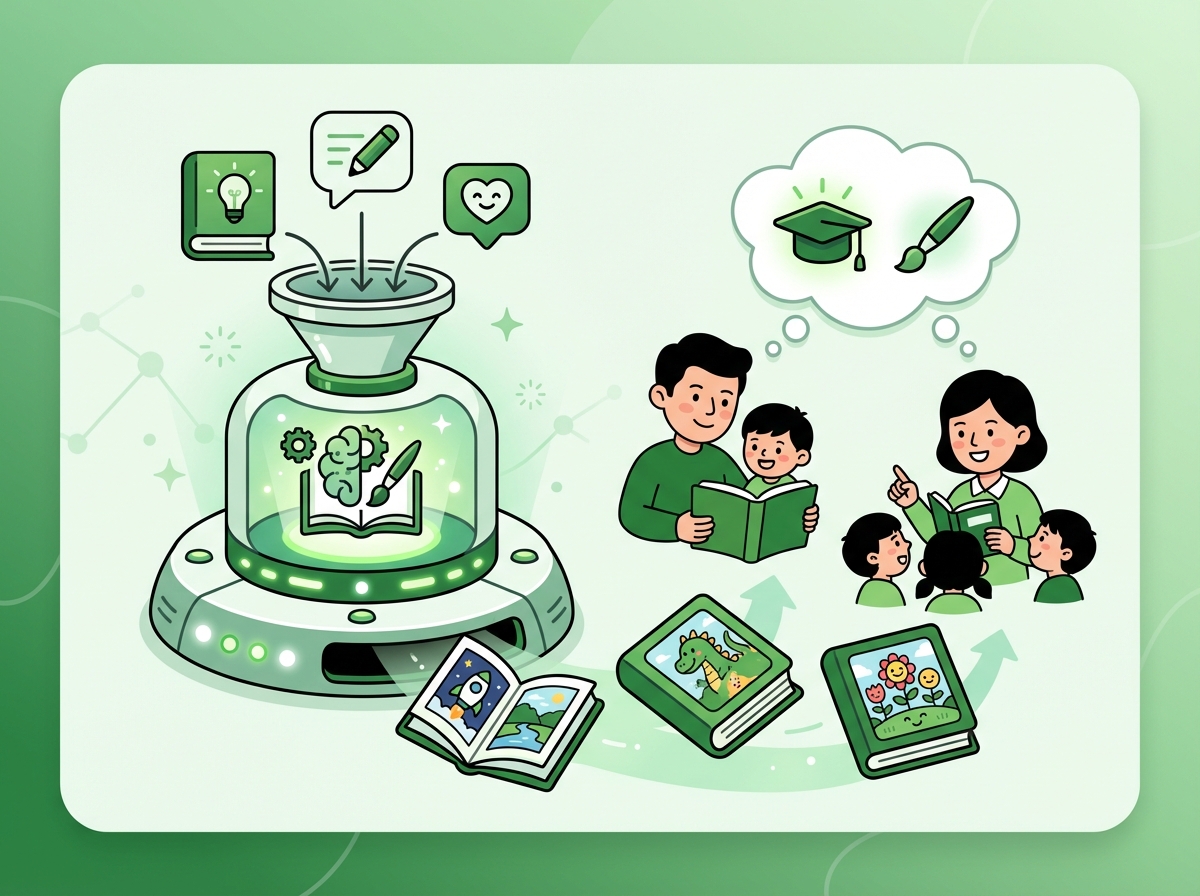
Imagine sparking your child’s love for reading with a story where they are the hero, complete with beautiful illustrations—all created in the time it takes to make a cup of coffee. AI storybook generators are transforming how parents and teachers create engaging, personalized content. These powerful tools can turn a simple idea into a fully-formed, illustrated book, making storytime more magical and learning more effective. The category moved fast in 2026: Google quietly shipped its own Gemini Storybook feature, and a wave of personalized-book platforms refined character consistency to the point where the kid genuinely recognizes themselves on every page. Whether you want to create with an AI story generator for free or find the perfect platform for your classroom, we’ve reviewed the top options below (plus a closer look at how Google’s new Gemini Storybook compares). If you are weighing that free tool against a printed keepsake for a gift, our honest Gemini Storybook vs keepsake book comparison breaks down where each one wins.
The Best AI Storybook Generators of 2026
1. LoveToRead.AI
Best for: Parents and teachers seeking a fully personalized, educational, and beautifully illustrated reading experience.
LoveToRead.AI stands out as the premier AI storybook generator specifically designed for children’s content. Its core strength lies in its unmatched personalization. You can create a main character from a simple description or, uniquely, upload a photo of your child and transform them into a consistently illustrated character across the entire story. This feature alone creates a powerful connection for young readers, seeing themselves as the star of the adventure.
The platform is user-friendly, generating a 14-24 page book in about 30 seconds. You can choose from 8 distinct art styles (like Cartoon, Pixar 3D, or Watercolor), decide between rhyming or prose, and even select an educational mode that naturally weaves spelling and vocabulary words into the narrative. For educators, this is a game-changing feature for creating custom learning materials. With outputs ranging from online reading and PDFs to professionally printed hardcover books and animated videobooks, LoveToRead.AI offers a complete end-to-end solution for creating cherished keepsakes. See our 30-second AI storybook walkthrough for a step-by-step look at the create flow.
2. FlipHTML5
Best for: Converting existing documents into interactive digital flipbooks.
FlipHTML5 isn’t a story generator from scratch in the same way as LoveToRead.AI. Instead, its strength lies in presentation. It allows users to upload PDFs, PowerPoints, or Word documents and convert them into slick, page-turning digital books. It offers AI-powered features to enhance these existing documents, such as generating tables of contents or summarizing content. For authors or designers who have already written and illustrated a story, FlipHTML5 is an excellent tool for publishing and sharing it online in a professional format.
However, for parents or teachers looking to create a new, original story with custom illustrations, it falls short. It lacks the core functionality of text-to-story generation and integrated AI art creation. It’s best viewed as a powerful publishing and presentation platform rather than a creative-from-scratch tool.
3. Storybird
Best for: Creative writing prompts using pre-existing professional artwork.
Storybird takes a unique approach by putting art first. Users select from a vast library of illustrations created by professional artists and then write a story inspired by the images. This can be a fantastic way to overcome writer’s block and provides a visually rich foundation for storytelling. The platform has a strong community focus, allowing users to read stories created by others and take on writing challenges.
The main limitation is the lack of personalization in the artwork. You cannot generate custom characters or scenes. You must work within the confines of the available illustrations, which means you can’t, for example, create a story starring your own child. It’s more of a creative writing tool than a personalized book maker.
4. Jasper AI
Best for: Professional writers needing a versatile AI writing assistant.
Jasper (formerly Jarvis) is one of the most powerful and well-known general-purpose AI writing assistants on the market. It excels at generating high-quality text for a huge range of applications, from blog posts and marketing copy to fiction. You can certainly use Jasper to brainstorm plot ideas, write chapters, and develop characters for a children’s story. It offers various templates and a “Brand Voice” feature to maintain a consistent tone.
Where it doesn’t compete with specialized tools is in the storybook format. Jasper does not have any integrated illustration capabilities. You would need to use a separate storybook illustration generator to create visuals, and maintaining character consistency would be a significant challenge. It’s a tool for writers, not an all-in-one storybook creator.
5. Canva
Best for: DIY designers who want to combine text and graphics manually.
Canva has become a go-to tool for all things design, and it has incorporated AI features like Magic Write to assist with text generation. You can use it to draft story text and then access Canva’s massive library of stock illustrations, elements, and templates to design your book page by page. Its drag-and-drop interface makes it accessible for non-designers.
The process is far more manual than with a dedicated storybook generator. The AI text generator is not specialized for children’s narratives, and the illustrations are stock graphics, not custom-generated art. Achieving a consistent, unique character throughout the book is difficult and time-consuming, requiring significant design work from the user.
6. Tome
Best for: Creating AI-powered presentations and slide decks.
Tome is an AI tool designed to create compelling presentations and narratives in a slide-based format. You can enter a prompt, and Tome will generate a full presentation with both text and AI-generated images (using DALL-E 2). This is great for quickly storyboarding an idea or creating a visual pitch. The layouts are clean and modern, making it a great professional tool.
However, Tome is optimized for presentations, not for the traditional children’s book format. The pacing, layout, and image-to-text ratio are geared toward slide decks. While it can generate story-like content, it lacks the specific features—like character consistency, grade-level adaptation, and print-ready formats—that are essential for creating a high-quality children’s storybook.
7. Sudowrite
Best for: Fiction and long-form authors looking for an AI writing partner.
Sudowrite is a powerful AI writing tool built specifically for fiction authors. It helps writers expand on their ideas, rewrite sentences in different styles, generate descriptive language, and even brainstorm plot twists. For an adult or young adult author, it’s a capable co-writer that can help push through creative blocks and enrich their prose.
While it’s a phenomenal writing tool, it is not intended for creating illustrated children’s books. It has no image generation capabilities and its features are geared towards enhancing long-form text. A parent or teacher would find its interface and feature set overly complex for the simple goal of creating a short, illustrated story.
8. DeepAI
Best for: Developers and hobbyists interested in raw text and image generation.
DeepAI offers a suite of AI tools, including a text generator and an image generator, available via an API or a simple web interface. It’s a flexible and powerful option for those who want to experiment with different AI models. You could generate a story with the text model and then create separate images for it with the image model.
The primary drawback is the lack of integration and specialization. The tools are separate, meaning there is no guarantee of character or style consistency between the images. It requires a lot of manual work to piece everything together, and the final result won’t have the polished, cohesive feel of a book created with an all-in-one platform.
9. Picsart
Best for: Photo editing with added AI image generation features.
Picsart is a popular mobile and web-based photo and video editor that has integrated a suite of AI tools, including an AI image generator. Users can create unique images from text prompts and then use Picsart’s powerful editing suite to further refine them. It’s a great tool for creating standalone art pieces or enhancing existing photos.
As a storybook generator, it’s incomplete. You can generate illustrations, but there’s no built-in tool for writing the story, laying out pages, or ensuring character consistency. You would have to generate each image individually and then assemble the book in a separate program, which is a time-consuming and often frustrating process.
Bonus: Google’s Gemini Storybook (New for 2026)
Best for: Parents who want a quick, free, one-off illustrated story and already use Google Gemini.
Google rolled out Gemini Storybook in early 2026, and it deserves an honest mention here because it’s now the default many parents will see when they search. You describe the story you want, and Gemini generates a 10-page illustrated book with read-aloud narration baked in. It’s free, it’s fast, and it’s directly integrated into the Gemini app — no signup beyond a Google account, no separate platform to learn.
Where Gemini Storybook wins: it’s genuinely free, the narration is solid, and for a one-off “make-a-quick-story-about-the-puppy” moment, it’s the lowest-friction option on this list. If your goal is a five-minute distraction, it’s hard to beat.
Where it falls short: it’s not a personalized-book product. There’s no character upload from a photo, no consistent main character starring your child across multiple stories, no print-to-hardcover pipeline, no educational-mode for vocabulary or grade-level adaptation, and no library of your past creations to revisit. Gemini Storybook is a general-purpose Google feature that happens to produce kids’ stories; LoveToRead.AI and the personalized-book platforms above are built specifically to make a child the hero of their own keepsake book. Different jobs. For “Mom needs something on the screen in 30 seconds,” Gemini is fine. For “this is a birthday gift the kid will keep on the shelf,” you want a dedicated platform.
For the full apples-to-apples breakdown — pricing, output limits, photo upload, hardcover printing, narration, character consistency — see why LoveToRead is the best Gemini Storybook alternative for gifts and keepsakes in our side-by-side comparison.
Conclusion: Choosing the Right AI Storybook Maker
While many AI tools can generate text or images, creating a cohesive, personalized, and engaging children’s book requires a specialized solution. General-purpose writing assistants lack illustration, design platforms require too much manual work to ensure consistency, and even Google’s new Gemini Storybook — for all its convenience — doesn’t put your child on the page or print to hardcover. For parents and educators who want to create truly magical stories in minutes, an all-in-one platform is the clear winner. A dedicated AI storybook maker like LoveToRead.AI provides the perfect blend of powerful personalization, stunning art, and educational features, making it the top choice for bringing your child’s next favorite story to life. And if you’re creating one as a present, our guide to AI book gifts weighs how a personalized, AI-generated storybook compares with other keepsakes. If you are weighing book-making tools rather than finished storybooks, our roundup of the best tools for creating children’s books compares them side by side.