A Guide to Using a Social Stories Creator
A social stories creator is a tool that helps you craft custom narratives to guide children—especially those with unique learning needs—through tricky social situations. Instead of using generic templates, a modern creator can whip up a personalized story in just a few seconds, turning abstract ideas into lessons that really stick.
Why Personalized Social Stories Work
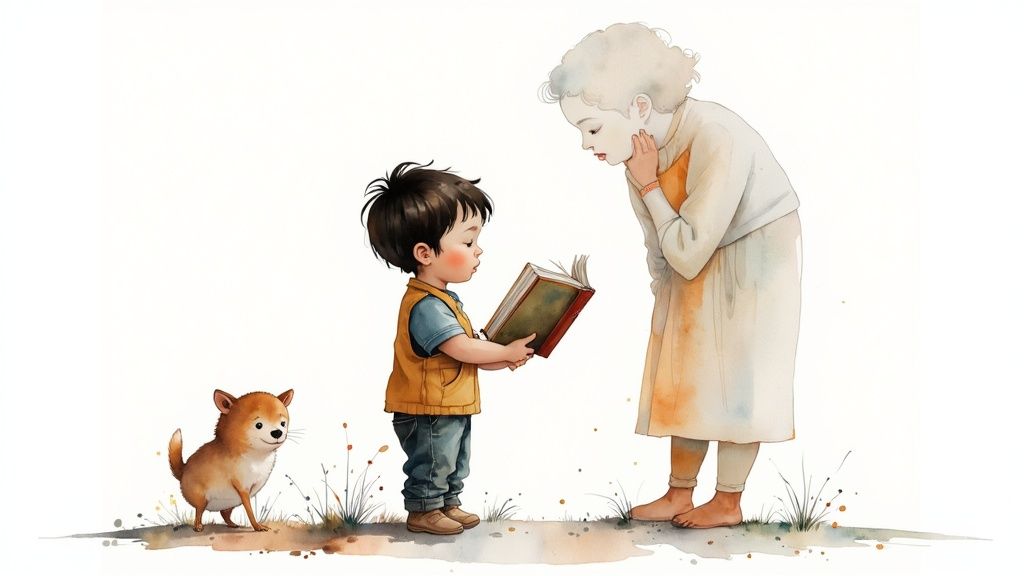
Standard social stories can be a good starting point, but personalization is where the real magic happens. A generic story about a fictional character might not resonate with a child facing their own unique challenges. The narrative truly clicks when they see themselves as the hero.
That personal connection is precisely why these custom stories are so effective. When a child reads a story about a character who looks just like them, in a place they recognize—like their own classroom or backyard—the lesson becomes real. Abstract rules about taking turns or managing big feelings suddenly make sense in their world.
The Impact of Seeing Yourself in the Story
Using a social stories creator lets you go far beyond stock images and pre-written scripts. You can build a story that actually mirrors your child's life, turning a simple teaching aid into an experience they genuinely connect with.
Here’s why that personal touch is so powerful:
- Builds an Emotional Connection: Kids are far more likely to absorb a story's message when they feel a bond with the main character—who, in this case, is them!
- Improves Understanding: Familiar faces and places help reduce mental clutter, letting the child focus completely on the social skill being taught.
- Boosts Confidence: When the story shows the child successfully handling a tough situation, it builds their self-esteem and gives them the confidence to try it in real life.
By building a story around a child's own world, you're not just telling them what to do; you're showing them that they can do it. That shift in perspective is crucial for developing social skills and resilience.
Ultimately, a personalized story provides a safe space for a child to practice. With a tool like LoveToRead.AI, you can create personalized stories in seconds. Convert your real-life photos into characters, build a reusable library, choose from the best art styles, and easily order a beautiful hardback copy to transform a helpful digital story into a treasured keepsake.
Crafting Your First AI-Powered Social Story

Jumping into a new tool can feel a little intimidating, but a modern social stories creator really does make it easy. The best part is you don't need to be tech-savvy to turn a simple idea into a fully illustrated, personalized story for your child. It all starts with pinpointing a specific scenario you want to address.
Think about a common hurdle your child is facing. Is it the anxiety of a first trip to the dentist? Maybe it’s the classic challenge of learning to share toys with a sibling. Once you have that situation in mind, you’re ready to write a simple but effective prompt to guide the AI.
Building Your Story Prompt
Your prompt is the blueprint for the story. It’s where you lay out the key details for the AI to bring to life. From my experience, the most effective prompts are clear and direct—no need to overcomplicate things.
To get a fantastic result, make sure your prompt includes these key ingredients:
- The Main Character: Always start with your child’s name. This simple step makes the story instantly relatable.
- The Specific Situation: Describe the event clearly. Think "going to a noisy birthday party" or "trying a new food at dinner."
- The Desired Outcome: Frame the positive behavior you want to encourage, like "staying calm and having fun" or "being brave and taking one bite."
Here's a real-world example: "Create a story for Leo, who is nervous about going to his first swim lesson. The story should show him feeling brave, listening to his instructor, and enjoying the water." It’s that straightforward.
The power of a story lies in its ability to create an emotional connection. By crafting narratives that are personal and ongoing, you build a world for your child that fosters deep investment and understanding.
This idea of creating an immersive narrative 'world' is becoming a big deal in how we connect with content. Recent analysis shows that personal storytelling is essential for making an impact, a trend you can learn more about in this piece on how personal stories are driving engagement.
A tool like LoveToRead.AI lets you put this into practice immediately. Get personalized stories in seconds, turn your real photos into reusable characters, and choose from the best art styles available. You can even order any hardback copy of your creation to build a lasting library of encouragement for your child.
Turning Real Photos Into Reusable Characters
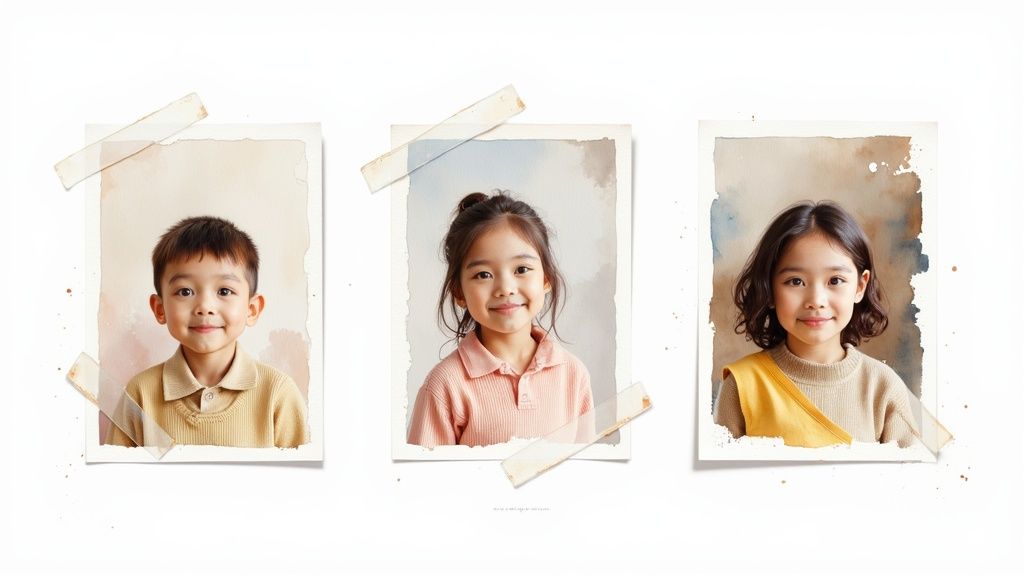
Here is where a modern social stories creator really shines, leaving generic clipart in the dust. Imagine your child opening a book and seeing a storybook hero who looks exactly like them. It's a powerful moment. This feature lets you upload real photos of your child, family members, or friends and turn them into beautifully illustrated, reusable characters.
The process is surprisingly straightforward. You just pick a photo, upload it, and the AI works its magic, generating a consistent character that can star in countless stories. For instance, if you're helping a child get ready for a visit to Grandma's house, you can upload photos of both of them. Seeing those familiar, friendly faces right there in the story immediately deepens their connection and makes the whole situation feel safe and personal.
Building Your Personal Character Library
Creating a character isn't a one-and-done deal. After you've converted a photo, that illustrated version of your child (or their teacher, or the family dog!) is saved to your personal library. From there, it's ready to be dropped into any future narrative you create. This is a real game-changer for building a cohesive and comforting world for your child.
Think of it as creating a recurring cast for your child’s own personal book series. This consistency is so important. When a child sees their character pop up again and again in stories about sharing, trying new foods, or the first day of school, it builds a powerful sense of familiarity and predictability. They aren't just reading a random story; they are stepping back into their world, which can dramatically boost engagement and help the lessons stick.
A great tool gives you the power to be both the creative force and the architect of your child's learning journey. Building this library of familiar faces makes every story an extension of their real life, strengthening the bond between the narrative and its real-world application.
Choosing the Best Photos for AI Characters
The magic starts with a good photo. To get the best results when converting a picture into a storybook character, a little prep goes a long way.
Follow these simple guidelines to ensure your photo uploads result in clear and recognizable story characters.
| Guideline | Why It Matters | Example |
|---|---|---|
| Clear, Front-Facing Shot | The AI needs to see the person’s full face clearly to capture their likeness accurately. | A school picture or a simple headshot against a plain background works perfectly. |
| Good, Even Lighting | Strong shadows or harsh backlighting can obscure facial features, leading to a less accurate character. | Take the photo indoors near a window with natural light, or in a well-lit room. |
| No Hats or Sunglasses | Accessories that cover the hair, eyes, or forehead can confuse the AI and affect the character's final look. | Ask your child to remove any hats, big bows, or sunglasses before snapping the picture. |
| One Person Per Photo | To create a character of a specific person, make sure they are the only one in the frame. | Crop a group photo to focus on just one person, or take a new picture of them alone. |
A few seconds of choosing the right picture can make all the difference in creating a character your child instantly recognizes and loves.
With a tool like LoveToRead.AI, you can effortlessly convert real-life photos into characters and build a library to reuse across a variety of stories. The platform offers the absolute best art styles and character persistence, ensuring your creations are beautiful and effective. You can generate personalized stories in seconds and even order a hardback copy to create a treasured keepsake.
Choosing Art Styles and Ordering Keepsake Books

Once you’ve nailed down the characters and the plot, the real magic happens when you bring the story to life visually. The art style isn't just decoration; it sets the entire emotional tone of the book. A good social stories creator gives you that artistic control, letting you fine-tune the visuals to match the message.
Think about it: a story about managing big, overwhelming feelings might feel more calming with soft, gentle watercolors. But if you're crafting a tale about a child's first exciting trip to the zoo, bold and vibrant cartoon illustrations will capture that energy perfectly. It's all about matching the art to your child's personality and the story's core purpose.
From Digital Story to Tangible Keepsake
Digital stories are fantastic for their speed and convenience, but there's a unique power in a physical book. Holding a professionally printed hardback copy transforms a helpful tool into a cherished keepsake. It becomes something your child can physically hold, flip through, and return to whenever they need that little boost of confidence.
This is where you bridge the gap between a quick lesson on a screen and a permanent fixture on their bookshelf. The process is usually straightforward—once you've polished your digital creation, you can order a durable, high-quality copy.
A physical book offers a different, more tactile experience. It's a screen-free way for a child to reconnect with their story, reinforcing the lessons in a calm, focused environment. This helps make the narrative a permanent and accessible resource in their daily life.
By choosing the perfect visuals and opting for a keepsake book, you’re doing more than just telling a story. You’re crafting a complete, multi-sensory experience that can support your child for years to come.
Ready to bring your own stories to life? With LoveToRead.AI, you get personalized stories within seconds. Experience the absolute best art styles and character persistence. It’s also simple to easily order any hardback copy, turning your digital creation into a beloved family treasure.
Taking Your Social Stories to the Next Level
Once you've got the hang of creating basic social stories, it's time to start thinking like a pro. A few small tweaks to your process can make a world of difference, turning a simple story into a truly powerful tool for learning and growth.
Let's dive into some of the strategies I've seen work wonders.
Adopt the Child's Point of View
One of the most impactful changes you can make is switching to a first-person narrative. It’s a simple shift, but it’s incredibly effective.
Instead of writing, "Leo will wait for his turn," try framing it from his perspective: "I can try to wait my turn." This small change helps the child internalize the idea and take ownership of the behavior. It's no longer a command from an adult; it becomes a personal goal, a new skill they can master. This is a game-changer for building confidence and a sense of agency.
It's All About Timing and Tone
The when and how of sharing a story are just as crucial as the words on the page. I always recommend introducing a new story during a calm, quiet moment—long before the challenging situation is likely to happen. This gives the child a chance to process the information without the stress of being in the middle of the actual event.
Think of it as a mental rehearsal. Here are a few things to keep in mind:
- Stay Positive: Always frame the story around the desired behavior. Use reassuring, can-do language that focuses on what the child can accomplish.
- Keep It Simple: Resist the urge to pack too much into one story. Stick to one core message and keep the steps clear and concise. Too many details can muddle the takeaway.
- Make it a Routine: Consistency is key. Reading the story together regularly, maybe before bed or after breakfast, turns it into a comforting and familiar ritual.
When you proactively and positively frame social situations, you’re creating a safe space for your child to learn and practice. A well-timed, encouraging story gives them the mental roadmap and the confidence to navigate real-world challenges.
This kind of personal, resonant storytelling is becoming more and more valued. In the wider world, global investment in creator marketing has shot up by 143% in just the last four years. It's a clear sign that effective, personal narratives matter. You can read more about these fascinating creator marketing trends and statistics if you're interested.
With a tool like LoveToRead.AI, putting these advanced tips into practice is a breeze. You can create personalized stories in seconds, build a library of characters from real photos to use in different stories, and order a beautiful hardback copy to make story time a special, tangible experience.
Got Questions About Social Story Creators?
Even with a tool that feels like magic, you're bound to have a few questions. I've heard a lot of the same ones from teachers and parents just starting out, so let’s clear up some of the common uncertainties you might have.
One of the first things people ask is who these stories are really for. They've got a well-deserved reputation for helping children on the autism spectrum, but their reach is so much wider. Think about any child who gets a little anxious about something new—a trip to the dentist, the first day at a new school, or even just a loud thunderstorm. A story made just for them can be a game-changer.
So, How Does the AI Actually Do It?
It's natural to be curious about what's happening behind the curtain. How does the AI take a simple idea and spin it into a complete, illustrated book?
It all comes down to some seriously smart language and image models. You give it the basic concept, and the AI figures out the context to write a story that makes sense for the child's age. At the same time, it creates pictures to match.
The best tools, though, have a secret weapon: character persistence. This just means that the main character looks exactly the same on every single page. That consistency is a huge deal for helping a child connect with the story and feel secure.
I often hear people worry that AI is taking the creativity out of storytelling. I see it differently. A great social story creator is more like a co-pilot; it handles the heavy lifting of illustration and writing, so you can pour all your energy into the message and what your child truly needs to hear.
This technology is part of a massive movement. The creator economy was valued at around $205.25 billion USD in 2024 and is expected to explode to $1.345 trillion by 2033. You can read more about the rapid expansion of the creator economy if you're curious about the trends. All that growth means these tools are only going to get more powerful and easier to use, which is great news for all of us.
Ready to make a story that will really click with your child? With LoveToRead.AI, you get personalized stories within seconds. Convert your real life photos into characters and create a library of characters to reuse across a variety of different stories. Experience the absolute best art styles and character persistence, and easily order any hardback copy of your creation for a keepsake they'll cherish.
Give it a try and start your own storytelling adventure at https://lovetoread.ai/.