How to Encourage Storytelling in Kids: A 2026 Guide
In a world saturated with digital content, the timeless art of storytelling remains one of the most powerful tools for a child’s development. It’s more than just spinning a fun yarn; it’s the foundation for creativity, empathy, and critical thinking. If you’re wondering how to encourage storytelling in kids, you’re already on the path to unlocking their boundless imagination. This guide provides a clear, step-by-step approach to help you nurture the budding narrator in your child in 2026.
Why Nurturing Storytelling Skills is Crucial
Before we turn to the ‘how,’ let’s touch on the ‘why.’ Encouraging your child to tell stories helps them:
- Develop Language and Literacy: They learn to structure sentences, expand their vocabulary, and understand narrative concepts like plot, character, and setting.
- Boost Creativity and Imagination: Storytelling is a workout for the imagination, allowing children to create new worlds, solve magical problems, and explore endless possibilities.
- Build Empathy: By creating characters and stepping into their shoes, children learn to understand different perspectives and emotions.
- Enhance Communication Skills: Articulating a story from beginning to end hones their ability to communicate ideas clearly and confidently.
Step 1: Cultivate a Story-Rich Environment
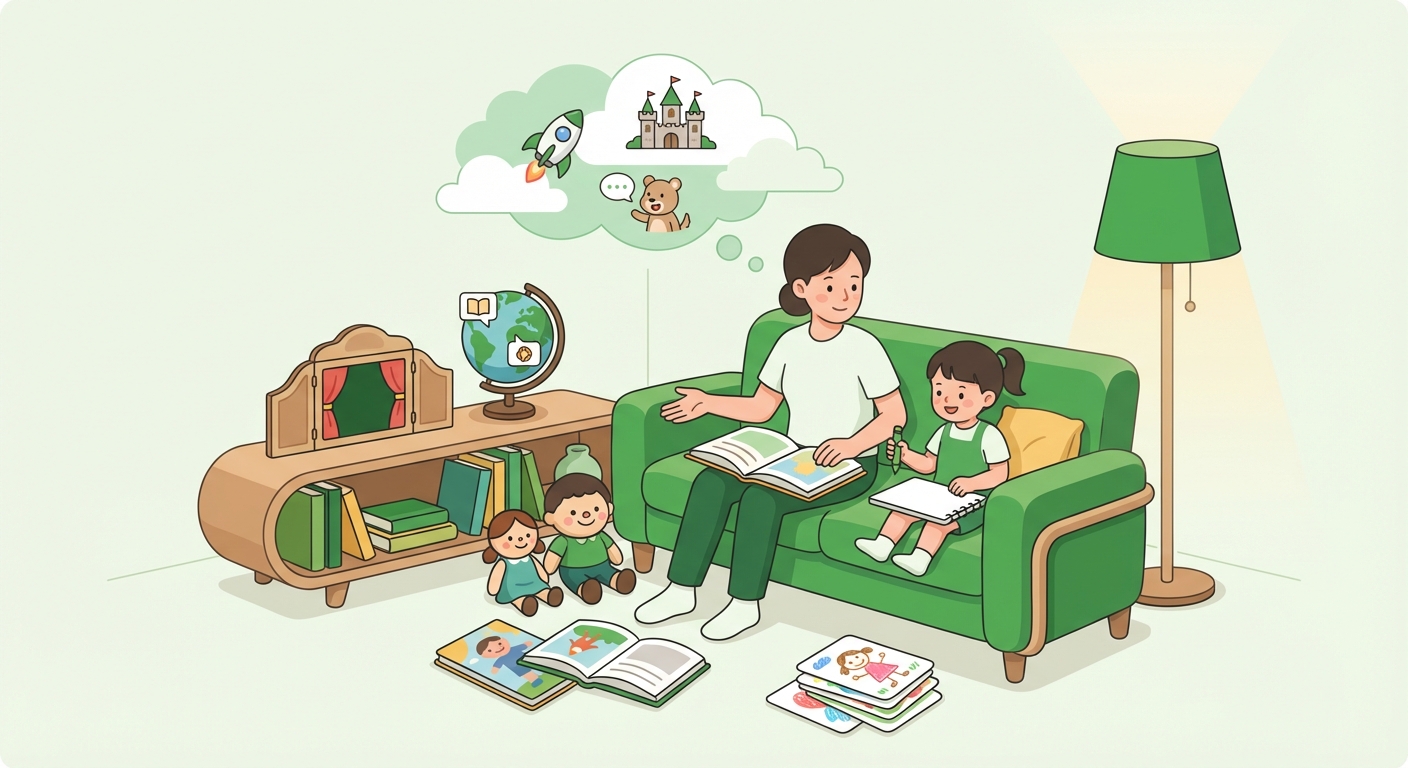
The first step is to make stories a natural and celebrated part of your daily life. A child who is surrounded by narratives is more likely to create their own.
Make Reading a Daily Ritual
Set aside time each day to read together. This isn’t just about reading the words on the page; it’s about discussing the story. Ask questions like, “What do you think will happen next?” or “How do you think that character feels?” This turns passive listening into active engagement. For more ideas on making this a cherished activity, explore our guide on how to make reading fun in 2026.
Diversify Your Library
Expose your child to a wide range of stories—myths, fables, non-fiction, and tales from different cultures. This shows them that stories come in all shapes and sizes. Personalized books are particularly effective, as they place your child directly at the center of the action, making the concept of a ‘main character’ tangible and exciting.
Step 2: Use Creative Story Starters
A blank canvas can be intimidating. Instead of saying, “Tell me a story,” provide a gentle nudge to get their creative gears turning.
- “What If” Scenarios: Start with a simple, imaginative prompt. “What if our dog could talk? What would be the first thing he’d say?”
- Picture Prompts: Use a random photo, a postcard, or an illustration from a book as a starting point. Ask, “Who is this? Where are they going?”
- The Magic Bag: Fill a bag with random, small objects (a key, a feather, a smooth stone, a toy car). Have your child pull out three items and weave a story that connects them all.
Tip: Keep it simple. The goal is to ignite a spark, not to hand them a fully-formed plot. The best stories often come from the simplest beginnings.
Step 3: Become an Active, Encouraging Audience
Your reaction to your child’s stories is critical. This is their safe space to experiment and be vulnerable. Your role is to be their biggest fan.
- Listen Patiently: Give them your full attention. Put down your phone, make eye contact, and show that you’re invested in their tale.
- Ask Open-Ended Questions: Instead of questions with a ‘yes’ or ‘no’ answer, ask things that encourage more detail. “That sounds exciting! How did the dragon escape the tower?” or “What did the forest smell like?”
- Resist the Urge to Correct: Don’t interrupt to fix grammar or point out logical inconsistencies. The focus right now is on creative expression, not perfection. There will be time to work on technical skills later.
Step 4: Leverage Modern Tools and Different Mediums
Storytelling isn’t limited to the spoken word. Encourage your child to express their narratives through various formats to find what resonates with them.
Visual Storytelling
Provide crayons, markers, or a tablet and ask them to draw their story. They can create a single scene or a multi-panel comic strip. This is especially helpful for visual thinkers who may find it easier to show rather than tell.
Digital Creation
In 2026, technology offers capable tools to inspire young storytellers. Platforms like LoveToRead.ai allow children to become the heroes of their own professionally illustrated books. By creating a personalized avatar and generating a story in seconds, they see firsthand how a character (themselves!) can be the star of an adventure. This can be a powerful catalyst, demonstrating the core elements of a story in a way that’s deeply personal and engaging. Understanding what is personalized storytelling can open up new avenues for inspiration.
Step 5: Model Storytelling Yourself
Children learn by example. If they see you sharing stories, they’ll understand it as a normal and enjoyable form of communication.
Share simple anecdotes from your day, embellishing them slightly to make them more engaging. Instead of saying, “I went to the store,” try, “You won’t believe what happened at the grocery store today. I was on a secret mission to find the crunchiest apples…” This models how to find the narrative in everyday life.
Common Mistakes to Avoid
As you work on how to encourage storytelling in kids, it’s easy to fall into a few common traps. Be mindful to avoid:
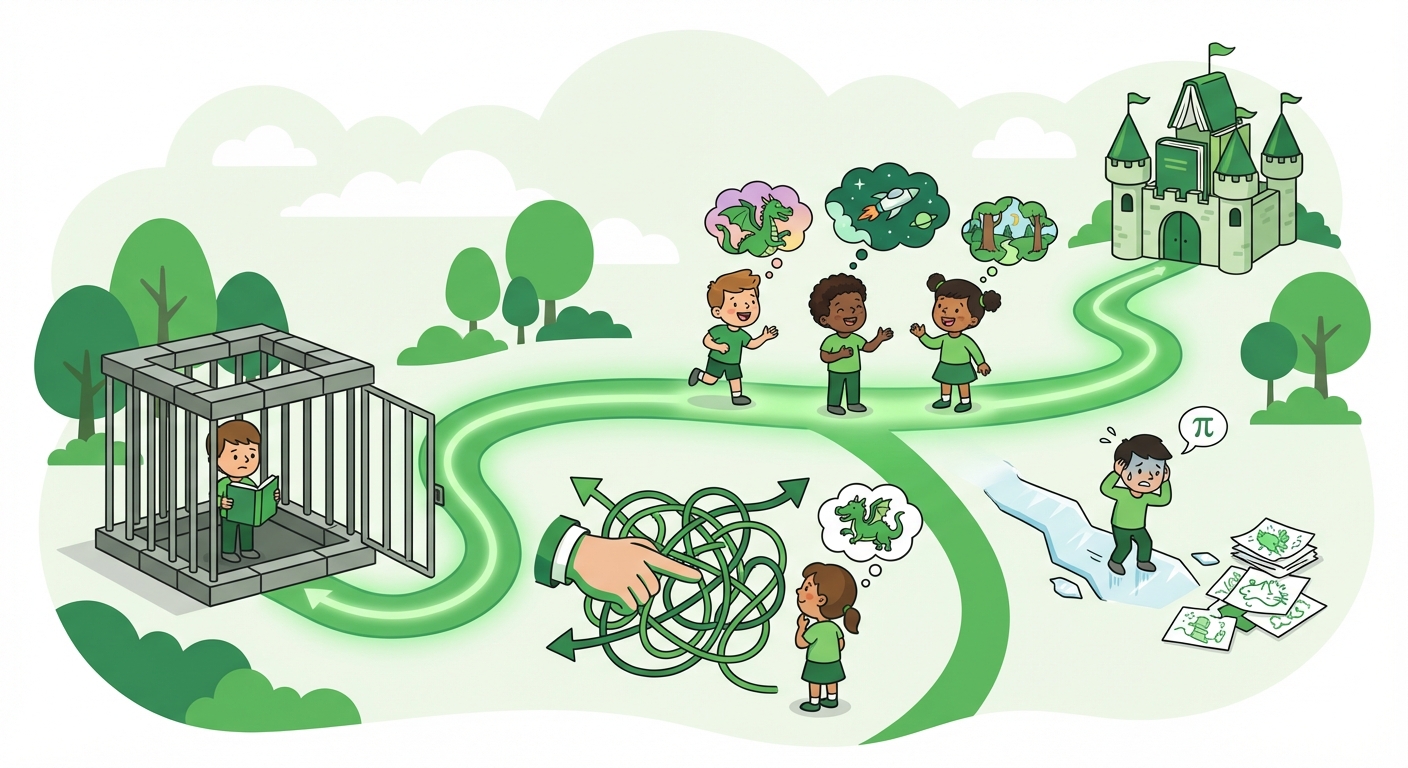
- Forcing It: Creativity can’t be scheduled. If your child isn’t in the mood, don’t push. The goal is to make it a fun activity, not a chore.
- Over-Praising: Be specific with your praise. Instead of a generic “Great job!”, try “I loved the part where the squirrel used a leaf as a parachute. That was so clever!”
- Taking Over the Story: It’s tempting to jump in and steer the narrative, but let your child be the director. Your role is to be a supportive co-pilot, not the one flying the plane.
- Comparing Them to Others: Never compare your child’s stories to those of a sibling or friend. Every child’s imagination is unique.
Expected Results: The Power of a Storyteller
By consistently applying these steps, you’re not just teaching a skill; you’re nurturing a mindset. Over time, you can expect to see a child who is:
- More Confident: They’ll be more comfortable expressing their ideas and opinions.
- A Better Problem-Solver: Crafting stories involves overcoming obstacles, a skill that translates directly to real-world challenges.
- More Verbally Articulate: Their vocabulary and ability to structure thoughts will improve dramatically.
- More Empathetic and Imaginative: They will have a richer inner world and a greater capacity to understand others.
Ultimately, you’re giving them a powerful tool for understanding themselves and the world around them. The journey of learning how to tell a story is a story in itself—one of growth, connection, and discovery. To get started, you might find inspiration in this personalized children’s books guide which details how to craft these unique tales.
Ready to kickstart your child’s narrative adventure? Seeing themselves as the hero in a book can be the ultimate inspiration. Consider exploring a platform like LoveToRead.ai, where you can create a personalized story together and watch their imagination take flight.