How to Choose Children’s Books: A 2026 Guide
In a world overflowing with digital distractions and endless entertainment options, a physical book can feel like a quiet miracle. But walking into a bookstore or scrolling through online listings in 2026 can be overwhelming. The sheer volume of choices makes the simple task of finding the right story for your child a genuine challenge. This is why learning how to choose children’s books is more than just a skill—it’s a crucial part of nurturing a young mind. The right book at the right time can ignite a lifelong passion for reading, expand their understanding of the world, and create cherished memories. This guide will walk you through a clear, step-by-step process to help you select the perfect books for your child.
Step 1: Consider Your Child’s Age and Developmental Stage
The most important factor in choosing a book is ensuring it aligns with your child’s current developmental level. A book that’s too complex can cause frustration, while one that’s too simple can lead to boredom.
Infants and Toddlers (Ages 0-2)
For the youngest readers, focus on sensory experiences. Look for durable board books with rounded corners that can withstand chewing and grabbing. The best books for this age feature:
- High-contrast images: Black, white, and red are easiest for developing eyes to see.
- Simple, repetitive text: Rhyme and rhythm are captivating for babies.
- Interactive elements: Lift-the-flaps, textures to feel, and mirrors are excellent for engagement.
Preschoolers (Ages 3-5)
At this stage, children are developing their language skills and understanding of narrative. They enjoy stories with clear, simple plots and relatable characters. Look for:
- Stories about familiar experiences: Starting school, making friends, or learning to share.
- Engaging illustrations: Bright, detailed pictures that help tell the story are key.
- Predictable patterns and rhymes: These build pre-reading skills and make it fun for them to join in.
Early Elementary (Ages 6-8 / Grades K-2)
As children begin to read independently, they need books that build confidence. This is the perfect age to introduce early chapter books with larger fonts and supportive illustrations. Seek out:
- Simple chapter structures: Short, manageable chapters help build reading stamina.
- High-interest topics: Funny stories, mysteries, and adventures are often big hits.
- Relatable protagonists: Children in this age group love seeing characters who face similar challenges. This is also where personalization can become a powerful tool. Platforms like LoveToRead.ai allow you to create stories where your child is the main character, instantly boosting their connection to the narrative.
Upper Elementary (Ages 9-11 / Grades 3-5)
By this age, readers are more independent and can handle complex plots and themes. They are developing their own tastes and often enjoy getting lost in a series. Consider:
- A variety of genres: Introduce them to fantasy, science fiction, historical fiction, and realistic contemporary stories.
- Non-fiction: Fuel their curiosity with books about science, history, biographies, and how things work.
- Books that spark discussion: Look for stories that tackle deeper themes like resilience, empathy, and justice in an age-appropriate way.
Step 2: Follow Their Interests and Passions
The quickest way to get a child excited about reading is to give them a book about something they already love. Whether their current obsession is with dinosaurs, ballet, outer space, or coding, there’s a book out there for them.
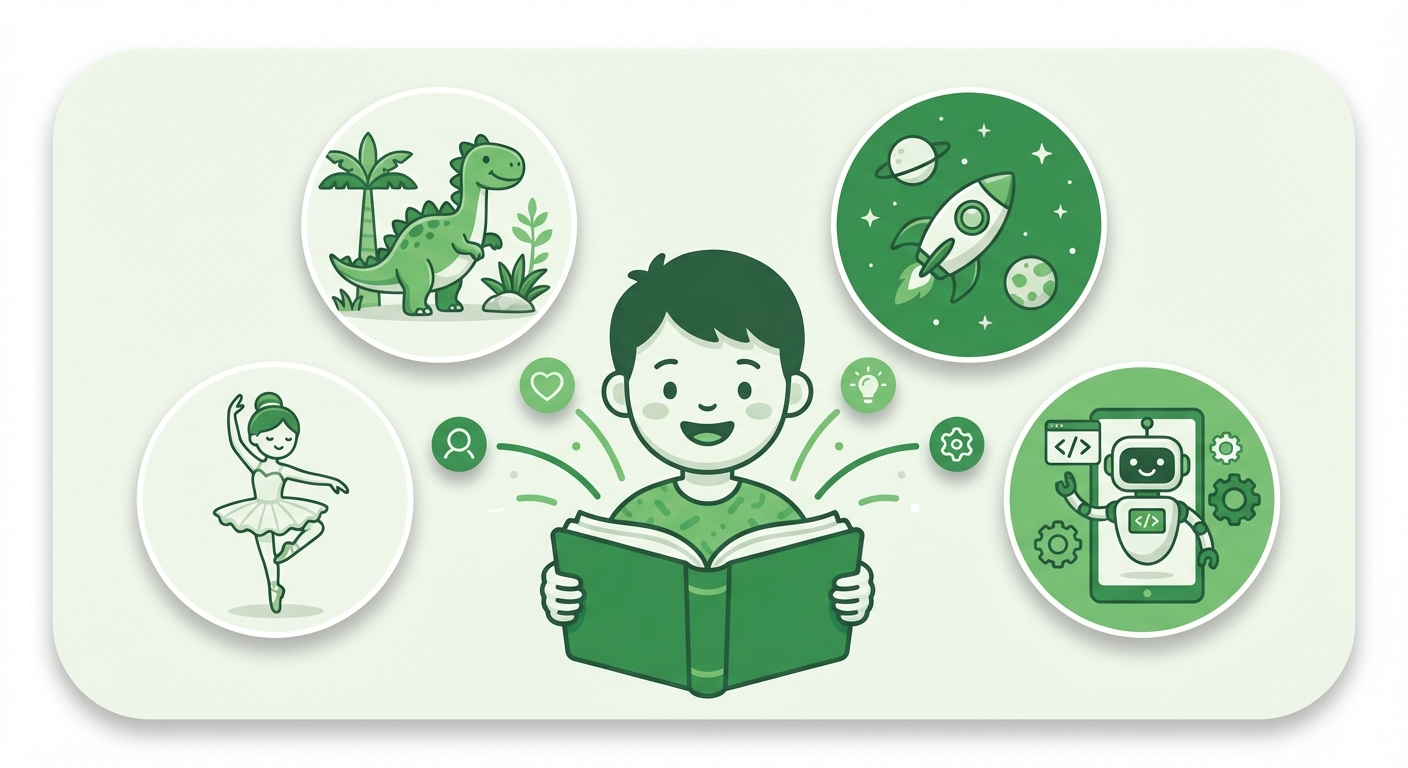
Pay attention to the topics they talk about, the games they play, and the questions they ask. Involving them in the selection process by taking them to the library or browsing online together gives them a sense of ownership. For a truly tailored experience, consider a personalized story that directly incorporates their interests. In fact, exploring The Best Personalized Books for Kids in 2026 can be a game-changer for reluctant readers, making them the hero of a story built just for them.
Step 3: Evaluate the Illustrations and Overall Design
Never underestimate the power of great art. For pre-readers and early readers, the illustrations are just as important as the words—they provide clues to the story, convey emotion, and capture attention. When evaluating a book’s design, look for:
- A clear and appealing style: Does the art match the tone of the story?
- Diversity in representation: Do the illustrations depict people from a wide range of backgrounds and abilities?
- Thoughtful layout: Is the text easy to read and not overwhelmed by the images?
Tip: Flip through the book and ask yourself if the pictures alone tell a compelling story. If they do, it’s likely a well-designed book.
Step 4: Assess the Story, Language, and Message
A great children’s book does more than just entertain; it enriches. As you’re deciding on a book, consider the quality of the writing and the underlying message.
- Language: Is the language rich and engaging without being overly complicated? Great books often introduce new vocabulary in a natural, contextual way.
- Plot: Does the story have a clear beginning, middle, and end? Is the conflict interesting and the resolution satisfying?
- Themes and Values: What message is the book sending? Look for stories that promote kindness, courage, curiosity, and empathy. This is a core part of how to encourage storytelling in kids, as they learn narrative structure and values from what they read.
Step 5: Prioritize Diverse and Inclusive Representation
In 2026, creating an inclusive bookshelf is essential. Children need to see themselves reflected in the stories they read (mirrors) and be introduced to the lives and experiences of others (windows). This builds self-esteem and fosters empathy.
Actively seek out books that feature:
- Characters of different races, ethnicities, and cultures.
- Diverse family structures (single-parent, same-sex parents, multigenerational).
- Characters with disabilities.
- Stories that authentically break gender stereotypes.
Step 6: Embrace Technology and Modern Reading Formats
While the classic printed book will always have its place, the modern reading world offers more options than ever. E-books, audiobooks, and interactive story apps can be fantastic tools, especially for tech-savvy kids. These formats can offer features like read-aloud narration, animations, and definitions at the tap of a finger. Many of The 5 Best Kids Reading Apps of 2026 blend education and entertainment seamlessly.
Innovative platforms like LoveToRead.ai take this a step further, using AI to generate unique stories in seconds. By allowing you to create an avatar that looks like your child and place them in an original adventure, it transforms reading from a passive activity into an immersive, personal experience.
Common Mistakes to Avoid
Knowing how to choose children’s books also means knowing what not to do. Here are a few common pitfalls to sidestep:

- Only Choosing “Classic” Books: While classics are wonderful, contemporary books often reflect today’s world more accurately.
- Ignoring Your Child’s Opinion: If a child repeatedly rejects a certain type of book, don’t force it. Reading should never feel like a punishment.
- Sticking to One Genre: Encourage exploration by offering a mix of fiction, non-fiction, poetry, and graphic novels.
- Judging a Book by its Movie/TV Show: The book is almost always a different, and often richer, experience.
Expected Outcome: A Love for Reading
By following these steps, you move beyond simply buying books and become a curator of your child’s literary world. The result isn’t just a shelf of well-chosen stories; it’s a child who sees reading as a source of joy, comfort, and adventure. You’ll be equipping them with the tools for empathy, critical thinking, and a boundless imagination.
A thoughtful approach to selecting books is one of the most powerful ways to support your child’s development and is a cornerstone of how to develop a love for reading. For a truly special addition to their library that makes them the star, consider creating a personalized story on LoveToRead.ai and watch their excitement for reading reach a whole new level.