How to Make Reading Interactive for Kids (2026 Guide)
In a world saturated with dynamic screens and instant gratification, encouraging a child to sit quietly with a book can feel like an uphill battle. The passive nature of traditional reading often struggles to compete. This is why learning how to make reading interactive is no longer just a helpful tip—it’s an essential strategy for parents and educators in 2026. By transforming reading from a one-way reception of information into a two-way conversation, you can build deeper comprehension, critical thinking, and a genuine, lifelong love for stories.
Why Interactive Reading is Crucial for Development
Before we turn to the ‘how,’ let’s touch on the ‘why.’ Interactive reading is far more than just a method to make reading fun. When a child actively participates in a story, they are building crucial cognitive and emotional skills.
Research consistently shows that dialogic reading—the technical term for this interactive approach—significantly improves vocabulary, narrative skills, and print awareness. It encourages children to think critically about plots, empathize with characters, and connect the events in a book to their own lives. This active engagement turns them from passive listeners into co-creators of the story’s meaning.
A Step-by-Step Guide to Making Reading Interactive
Ready to transform your story time? Here’s a practical, step-by-step guide on how to make reading interactive and engaging for children in grades K-5.
Step 1: Start with the Right Story
The foundation of an interactive session is a book that captures a child’s interest. A story that aligns with their passions or curiosities is naturally more engaging. When selecting a book, consider its potential for discussion and connection.
- Consider their interests: Are they fascinated by space, dinosaurs, or friendship? Choosing a relevant topic is the first step toward engagement.
- Look for rich illustrations: Pictures provide excellent prompts for questions and predictions.
- Embrace personalization: A story is instantly interactive when the child is the main character. Platforms like LoveToRead.ai allow you to create custom storybooks in seconds where your child is the hero of their own adventure, making the connection immediate and powerful.
For more detailed advice, our guide on How to Choose Children’s Books: A 2026 Guide offers excellent pointers.
Step 2: Ask Open-Ended Questions
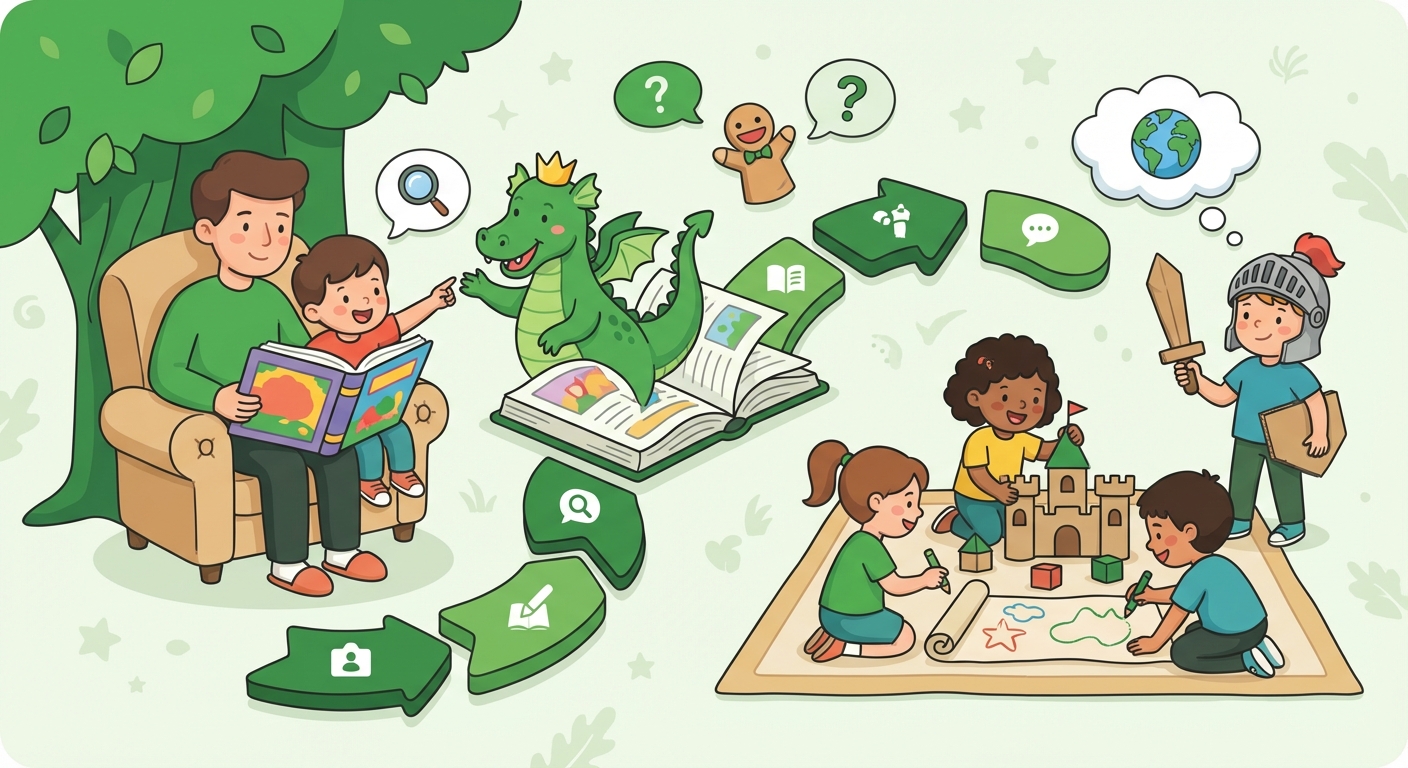
Shift from asking simple recall questions (“What color was her hat?”) to open-ended questions that encourage thinking and discussion. Structure your questions around the reading process: before, during, and after.
Before Reading: Look at the cover together. Ask, “What do you think this story will be about? What do you think might happen to this character?”*
During Reading: Pause at key moments. Ask, “How do you think she is feeling right now? What would you do if you were him? What do you predict will happen next?”*
After Reading: Reflect on the story as a whole. Ask, “What was your favorite part and why? Did the ending surprise you? What did you learn from this story?”*
Tip: The goal is a conversation, not an interrogation. Let the child’s answers guide the discussion, even if it takes you on a tangent.
Step 3: Engage Multiple Senses
Reading doesn’t have to be a purely visual or auditory experience. Involve other senses to make the story come alive.
- Use your voice: Create distinct voices for different characters. Vary your tone and volume to reflect the emotions and action in the story.
Add sound effects: Make the “ROAR” of a dragon or the “pitter-patter”* of rain. Encourage your child to join in.
- Incorporate touch and movement: If a character is hopping, hop together. If they are eating a fuzzy peach, find something fuzzy to touch.
Step 4: Connect the Story to Their World
One of the most effective ways to make reading interactive is to build a bridge between the world of the book and the child’s own life. This makes the themes and lessons more tangible and memorable.
Ask questions like, “This reminds me of the time we went to the park, remember?” or “Has anything like this ever happened to you at school?”
This is where personalized stories truly shine. When your child sees a character with their name and appearance navigating a challenge, the connection is effortless. It automatically frames the story within their personal context, boosting engagement and self-esteem. Exploring The Best Personalized Books for Kids in 2026 can provide fantastic options for making this connection seamless.
Step 5: Extend the Story Beyond the Page
An interactive reading experience doesn’t have to end when you close the book. Carry the story into other activities to solidify its impact.
- Act it out: Put on a short play based on a scene from the book.
- Get creative: Draw a new book cover, build a character out of clay, or write a different ending to the story.
- Themed activities: If you read a book about gardening, plant some seeds together. If it’s about baking, make a special treat. This helps foster creativity in kids and reinforces the story’s themes.
Common Mistakes to Avoid
As you begin to make your reading sessions more interactive, be mindful of these common pitfalls:
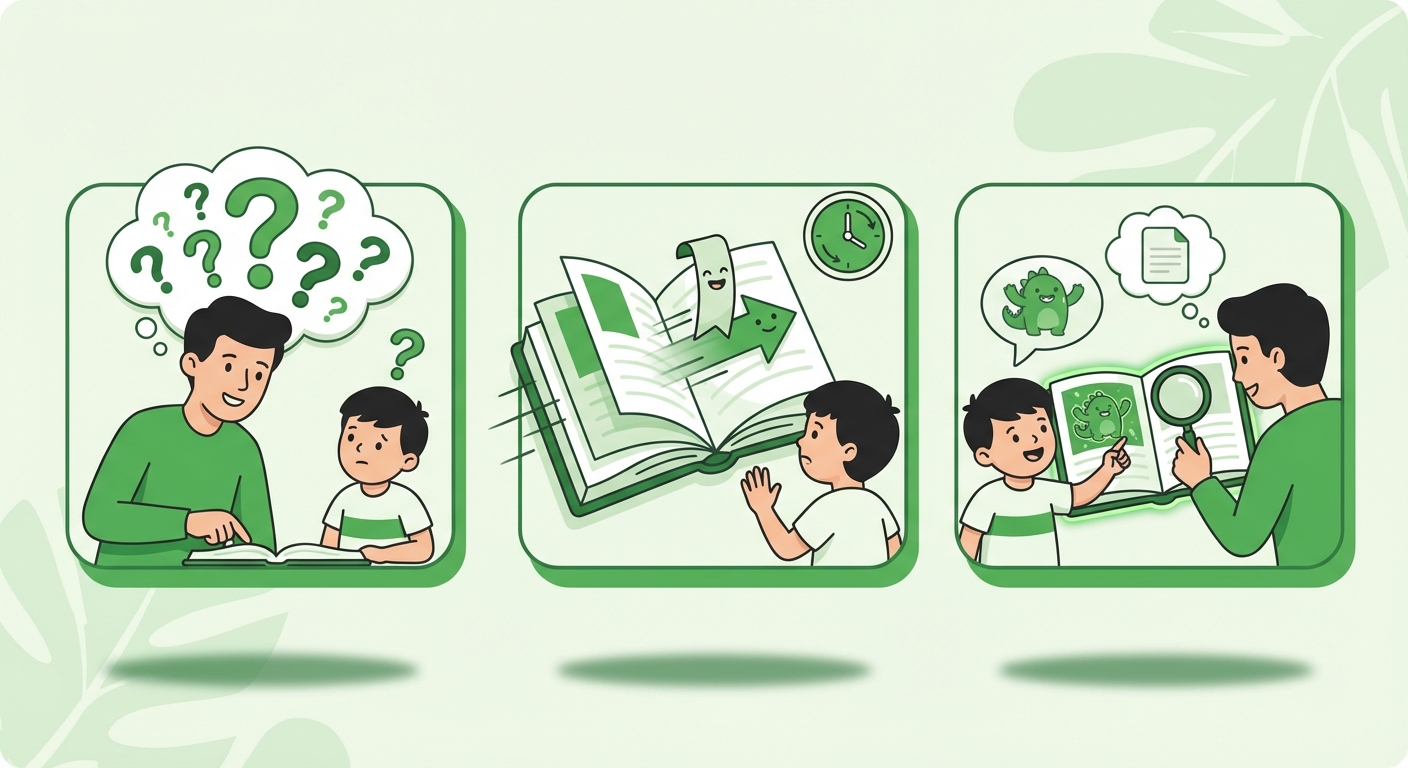
- Asking too many questions: Remember, it’s a story, not a test. Don’t interrupt the flow so much that the narrative is lost.
- Providing the answers: Let your child think for themselves. It’s okay if their predictions are wrong or their ideas are silly—that’s part of the fun.
- Forcing it: If a child isn’t in the mood or dislikes a particular book, don’t push it. Reading should always be a positive experience.
- Ignoring their lead: If your child points something out or asks a question, follow their curiosity. These are the most authentic interactive moments.
Expected Results: A Deeper Connection to Reading
By consistently applying these techniques, you’re doing more than just reading a book. You are building a foundation for a lifetime of intellectual curiosity and literary enjoyment. You can expect to see a noticeable improvement in your child’s vocabulary, comprehension skills, and ability to think critically and express their ideas.
Most importantly, you are transforming reading from a solitary activity into a cherished bonding experience. This shared joy is the most powerful tool you have to develop a love for reading that will last far beyond childhood.
Conclusion: Make Every Story an Adventure
Learning how to make reading interactive is about shifting your mindset. It’s about seeing a book not just as a story to be told, but as a world to be explored together. By asking questions, engaging the senses, and connecting stories to your child’s life, you create an experience that is memorable, educational, and deeply engaging.
Tools like LoveToRead.ai are designed to make this process intuitive. By placing your child directly into the narrative, the story becomes inherently interactive, sparking their imagination and showing them that they can be the hero of any adventure. Start creating today and turn your next story time into a collaborative journey.