5 Best AI Story Generators for Kids in 2026
The world of children’s literature is undergoing a remarkable transformation in 2026, driven by advancements in artificial intelligence. Parents and educators are no longer limited to the books on the shelf; they can now access tools that create unique, engaging, and personalized narratives in minutes. These platforms are revolutionizing storytime, making it more interactive and tailored to each child’s interests. If you’re looking to explore the world of AI-generated stories for children, you’ve come to the right place. This guide will walk you through the best AI story generators available today, helping you choose the perfect tool to spark your child’s imagination and foster a lifelong love for reading.
The Rise of AI-Powered Children’s Stories
Before we get to our top picks, it’s worth understanding why these tools have become so popular. AI story generators use sophisticated language models to craft narratives based on user prompts. Our longer roundup of the nine best AI storybook generators breaks down how each one handles that step. You can specify characters, settings, themes, and even moral lessons. The result is a one-of-a-kind story that can feature your child, their friends, and their favorite things. This level of personalization is a game-changer for reluctant readers, as seeing themselves as the hero of a story can be motivating. For a deeper look into the technology, you can explore our guide on What Are AI Storybooks? A 2026 Explainer.
Here are the top 5 platforms leading the charge in 2026.
1. LoveToRead.ai
At the forefront of personalized storytelling, LoveToRead.ai has established itself as the premier platform for creating custom storybooks for children in grades K-5. Its core mission is to make every child the hero of their own adventure, and it accomplishes this with stunning efficiency and creativity. The platform’s standout feature is its speed; you can generate a fully illustrated, personalized story in about 30 seconds. Users simply input a few details about the main character—the child—and a story theme, and the AI takes care of the rest, weaving a unique tale complete with beautiful, custom-generated illustrations.
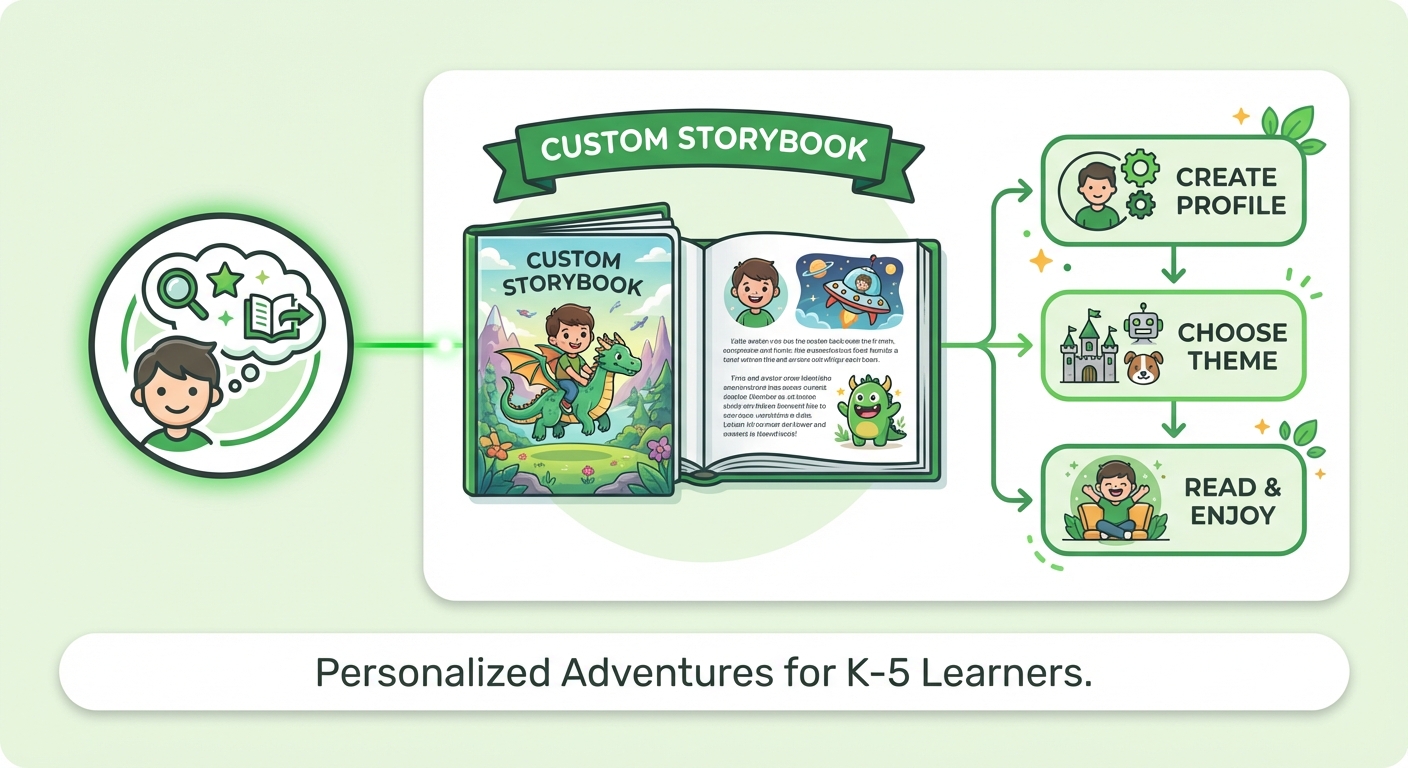
The personalization goes deep. Parents can create a character library with custom avatars that look just like their children, allowing for instant recognition and connection. This feature is particularly powerful for building a child’s self-esteem and making reading feel like a special activity designed just for them. Once a story is created, it can be read instantly online or ordered as a professionally printed hardback book, making for a perfect gift or a treasured keepsake. This blend of instant digital access and tangible, high-quality physical products makes LoveToRead.ai a versatile choice for any family.
Key Details:
- Best For: Parents and educators of children in grades K-5 seeking a fast, easy, and highly personalized reading experience.
- Pros: Fast story generation (under 30 seconds), deep character personalization with custom avatars, option for high-quality printed books, and an intuitive, user-friendly interface.
- Cons: The subscription-based credit system, while flexible, may require management for heavy users.
2. StorySpark AI
StorySpark AI takes a more collaborative approach to creating AI-generated stories for children. Instead of generating a complete story from a single prompt, this platform acts as a creative partner for parents and kids to build a story together. It’s designed for a more hands-on experience, where the user provides an opening, and the AI suggests multiple branching paths, dialogue options, or plot twists. This “choose your own adventure” style of creation is fantastic for teaching the fundamental elements of storytelling.
This platform is ideal for a family activity, encouraging children to think critically about cause and effect, character motivation, and plot development. While it requires more input than a fully automated generator, the payoff is a story that feels co-authored by the child. It’s an excellent tool for weekend projects or for educators looking to make creative writing lessons more dynamic. The final stories can be saved as text files or simple, illustrated ebooks, though the illustration quality is generally simpler than more specialized platforms.
Key Details:
- Best For: Families who want a collaborative and educational storytelling experience.
- Pros: Promotes creativity and critical thinking, highly interactive and engaging for both parents and kids, teaches the basics of narrative structure.
- Cons: Requires more time and creative effort from the user; not an “instant” story solution.
3. VocabVoyager
As its name suggests, VocabVoyager is an AI story generator with a strong educational focus. This tool is designed to help children expand their vocabulary and improve reading comprehension in a fun, narrative context. Parents or teachers can select a grade level and specific vocabulary words or educational concepts (like the seasons or the solar system), and the AI will generate a story that seamlessly incorporates them. It’s a powerful way to reinforce classroom learning at home.
Beyond just word integration, VocabVoyager often includes interactive elements, such as comprehension questions or mini-quizzes embedded within the story. The platform can track a child’s progress, providing parents with insights into their reading level and vocabulary acquisition. While the stories themselves can sometimes feel secondary to the educational objectives, it’s an invaluable resource for parents looking to blend entertainment with tangible learning benefits. It’s a perfect example of how to make reading interactive for kids.
Key Details:
- Best For: Parents and educators focused on academic reinforcement and vocabulary building.
- Pros: Excellent for supplemental education, tracks learning progress, stories are tailored to specific learning goals.
- Cons: The narrative quality can sometimes be sacrificed for educational content; less creative freedom than other platforms.
4. AnimateTales
AnimateTales carves out a unique niche in the market by transforming AI-generated stories into short animated videos. This platform is perfect for today’s visually-oriented kids who are accustomed to consuming content on screens. Users enter a simple story prompt, and the AI not only writes a short narrative but also generates a 1-2 minute animated video to accompany it, complete with AI-generated voice-over and simple character animations.
The appeal of AnimateTales is its novelty and high engagement factor. It can be a fantastic way to introduce a reluctant reader to the joy of stories by presenting them in a familiar, video-based format. The final product is easily shareable with family and friends, making the child a true creator. However, the focus is less on the act of reading and more on viewing, so it may be best used as a supplemental tool rather than a primary method for developing literacy skills.
Key Details:
- Best For: Visual learners and kids who love animated content; creating quick, shareable video stories.
- Pros: Highly engaging and entertaining, produces a unique multimedia output, simple and fast to use.
- Cons: Less emphasis on developing reading skills; stories are typically very short and simplistic.
5. FableForge
Targeting a slightly older audience of readers aged 8-12, FableForge is an AI tool designed for generating longer, more complex narratives. This platform allows users to build out entire worlds, develop multiple characters with distinct personalities, and outline a central conflict. The AI then uses these building blocks to construct a multi-chapter story, complete with rising action, a climax, and a resolution. It’s an ambitious tool that moves beyond simple picture books.
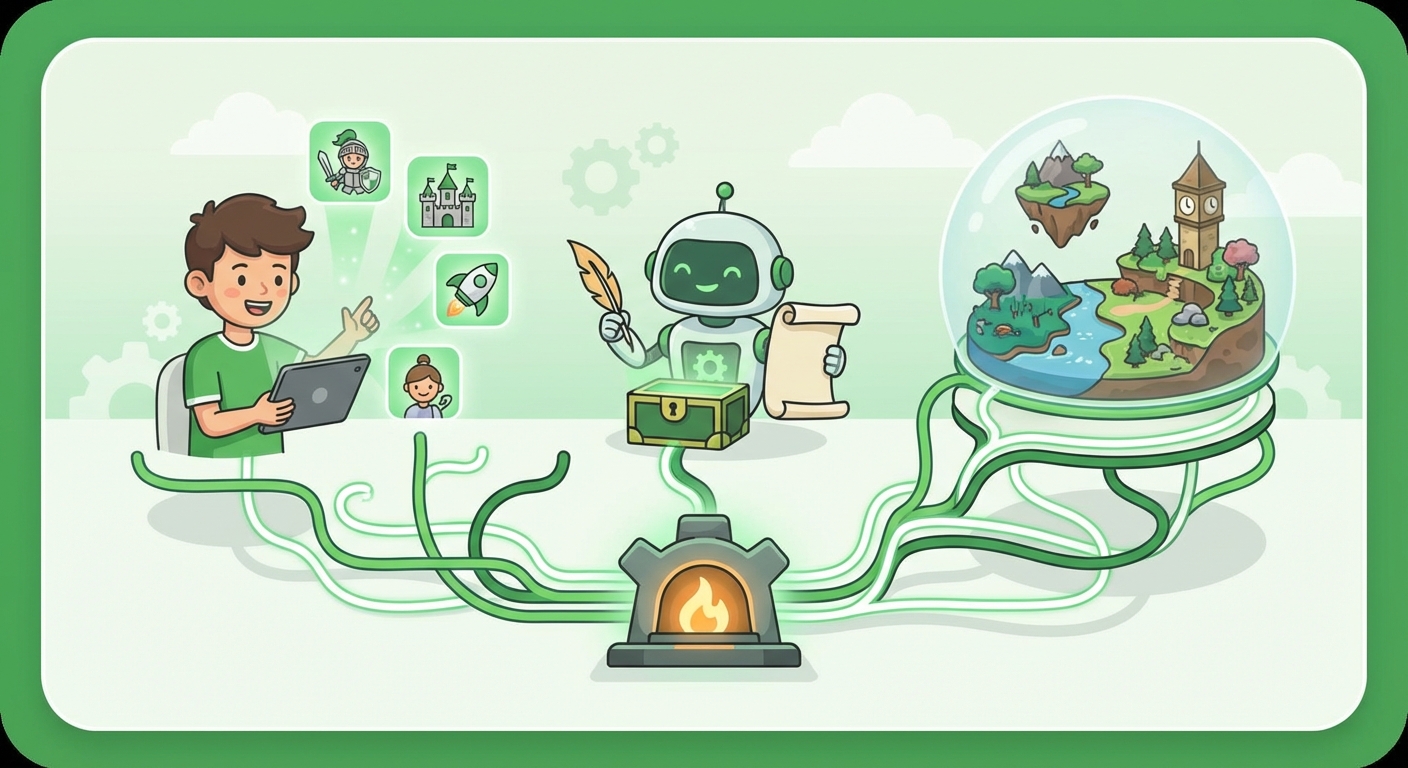
FableForge is an excellent stepping stone for young readers who are transitioning into chapter books. It gives them a sense of agency in creating the kind of complex stories they enjoy reading. It can also serve as a powerful creative writing aid for aspiring young authors, helping them brainstorm plot points and overcome writer’s block. While the AI’s ability to maintain narrative coherence over multiple chapters can vary, it represents a fascinating look at the future of long-form AI storytelling and is a great option when looking for custom children’s books online.
Key Details:
- Best For: Older children (ages 8-12) and pre-teens interested in chapter books and creative writing.
- Pros: Generates longer, more complex stories; allows for detailed world-building and character development; great for encouraging creative writing.
- Cons: The user interface can be more complex; longer narratives may occasionally have plot inconsistencies.
Choosing the Right AI Story Generator for Your Child
The world of AI-generated stories for children is rich and varied in 2026, offering something for every type of young reader. The best platform for your family will depend on your goals. Are you looking for a quick, magical, and deeply personal storytime experience? Or do you prefer a collaborative, educational, or multimedia approach?
By exploring these tools, you can find a new and exciting way to engage with stories, turning reading from a passive activity into an interactive adventure. If you’re looking for a powerful, easy-to-use platform that puts your child at the center of every story, a tool like LoveToRead.ai is an excellent place to start your journey. Its AI storybook maker takes you from a single prompt to a finished, fully illustrated book in minutes. Ultimately, the goal is to find what works best to develop a love for reading in your child, and these AI-powered tools offer more pathways to that goal than ever before. For a closer look at the software side, our roundup of the best tools for creating children’s books compares what each one actually does well.