Top AI Tools for Children’s Education in 2026
In 2026, the digital classroom has evolved beyond simple apps and videos. Artificial intelligence is now a transformative partner in learning, offering personalized, adaptive, and deeply engaging experiences for young minds. For parents and educators navigating this new frontier, the range of AI tools for children’s education has never been more exciting or promising. These platforms are not just about digital flashcards; they are about creating unique learning journeys that cater to each child’s individual pace, interests, and needs. From mastering math through epic adventures to becoming the hero of one’s own story, AI is unlocking unprecedented potential.
This guide highlights the best-in-class AI educational tools available today. We’ve curated a list of platforms that excel in fostering critical skills like literacy, problem-solving, and creativity, ensuring your child receives a truly modern education that is both effective and fun.
The 5 Best AI Educational Tools for Kids in 2026
Here are the top AI-powered platforms that are making a significant impact on how children in grades K-5 learn and grow.
1. LoveToRead.ai
LoveToRead.ai is a revolutionary platform that places your child directly at the center of the story, transforming reading from a passive activity into an exciting, personalized adventure. By leveraging sophisticated AI, it generates unique storybooks complete with custom illustrations where the child is the main character. This approach is a game-changer for early literacy, especially for reluctant readers who may struggle to connect with generic storybook heroes.
The process is streamlined for busy parents and educators—a new, fully illustrated story can be created in as little as 30 seconds. Users can build a library of personalized avatars for their children, family members, and friends, ensuring that the faces in the stories are familiar and beloved. This level of personalization fosters a deep emotional connection to the narrative, which is proven to boost reading comprehension and engagement. You can learn more about the technology behind these experiences in our explainer, What Are AI Storybooks? A 2026 Explainer. Whether read instantly online or ordered as a beautiful printed hardback, these books become treasured keepsakes.
- Key Details:
* Best For: Fostering a love for reading, creative writing inspiration, and personalized learning.
* Pros: Highly engaging for kids, creates a strong personal connection to reading, fast story generation, offers both digital and physical book options.
* Cons: Requires a subscription for full access after the free trial; parental involvement is needed for the initial setup.
2. Khanmigo
Developed by the trusted non-profit Khan Academy, Khanmigo is an AI-powered tutor designed to guide students through a wide range of academic subjects. It acts as a personal learning assistant for children, leveraging the power of advanced AI to provide one-on-one support in math, science, humanities, and more. Khanmigo is built on a pedagogical foundation, meaning it doesn’t just give students the answers. Instead, it uses a Socratic method of questioning to help them think critically and arrive at the solution on their own.
This tool is particularly powerful for homework help and concept reinforcement. If a child is stuck on a math problem, Khanmigo can provide hints, break down the problem into smaller steps, and explain the underlying concepts in different ways until it clicks. For older elementary students, it can also act as a debate partner or a writing coach, offering feedback on clarity and structure. The integration with Khan Academy’s vast library of content makes it a comprehensive and reliable resource for supplemental learning.
- Key Details:
* Best For: Homework help, concept clarification, and structured academic support.
* Pros: Backed by a highly reputable educational organization, encourages critical thinking, covers a vast array of subjects.
* Cons: Primarily text-based, which may be less engaging for younger, pre-reading children; requires a monthly donation or fee for access.
3. Duolingo Max
Duolingo has long been a leader in language learning, and its AI-enhanced subscription tier, Duolingo Max, takes the experience to a new level. Powered by OpenAI’s latest models, this tool is perfect for introducing children to a new language in a way that feels more like a conversation than a lesson. Two key features make it stand out: “Explain My Answer” and “Roleplay.”
“Explain My Answer” provides learners with clear, concise explanations of why their answer was right or wrong, going beyond simple correction to deepen their grammatical understanding. The “Roleplay” feature allows kids to practice their conversational skills in realistic scenarios with an AI character, such as ordering food at a café or asking for directions. This interactive practice is invaluable for building confidence and moving beyond vocabulary memorization to real-world application. For families looking to raise bilingual children, Duolingo Max is one of the most effective AI tools for children’s education focused on language acquisition.
- Key Details:
* Best For: Learning a new language, conversational practice, and grammar skills.
* Pros: Makes language learning interactive and fun, provides instant, intelligent feedback, and simulates real-world conversations.
* Cons: Included only in the premium subscription tier; focuses exclusively on language learning.
4. Prodigy Math
Prodigy Math masterfully combines a fantasy role-playing game (RPG) with a robust math curriculum aligned with school standards. While not new, its AI-driven adaptive learning algorithm has become increasingly sophisticated by 2026. The platform assesses a child’s performance in real-time and automatically adjusts the difficulty of the math problems presented. This ensures that students are always working within their zone of proximal development—challenged but not overwhelmed.
As children explore the game world, battle monsters, and complete quests, they are seamlessly presented with math problems they need to solve to advance. The AI identifies areas where a child is struggling and provides more questions on those specific topics until mastery is achieved. For parents and teachers, the dashboard provides detailed reports on a child’s progress, highlighting their strengths and areas needing improvement. This gamified approach is effective at keeping kids motivated and reducing math anxiety.
- Key Details:
* Best For: Making math practice engaging, adaptive learning, and curriculum reinforcement.
* Pros: Highly motivating for kids who love games, curriculum-aligned for grades 1-8, provides detailed progress reports.
* Cons: The free version has significant gameplay limitations; some parents find the game elements can be distracting from the learning.
5. CodeSpark Academy
In a world driven by technology, coding is a fundamental 21st-century skill. CodeSpark Academy is an award-winning platform that teaches the basics of computer science to young children (ages 5-9) without requiring any reading. Its word-free, visual interface allows kids to solve puzzles and create their own games by dragging and dropping code blocks. The platform’s AI works behind the scenes to create a personalized learning path for each child.
The AI system tracks a child’s problem-solving strategies and introduces new concepts like sequencing, loops, and conditionals at the perfect moment. It provides subtle hints when a child is stuck and offers progressively more complex creative challenges as their skills grow. This approach helps build not just coding skills, but also crucial executive functions like logical thinking, creativity, and resilience. It’s a fantastic way to introduce foundational STEM concepts in a playful, accessible manner, making it a top choice among AI-powered educational tools.
- Key Details:
* Best For: Introduction to coding and computer science, STEM skills, and logical reasoning.
* Pros: Word-free interface is accessible to pre-readers, fosters creativity alongside technical skills, personalized learning path.
* Cons: Subscription-based; focus is specific to coding and may not appeal to all children.
How to Choose the Right AI Tool for Your Child
When evaluating different AI tools for children’s education, it’s essential to look beyond the technology and focus on your child’s unique needs. Consider the following factors:
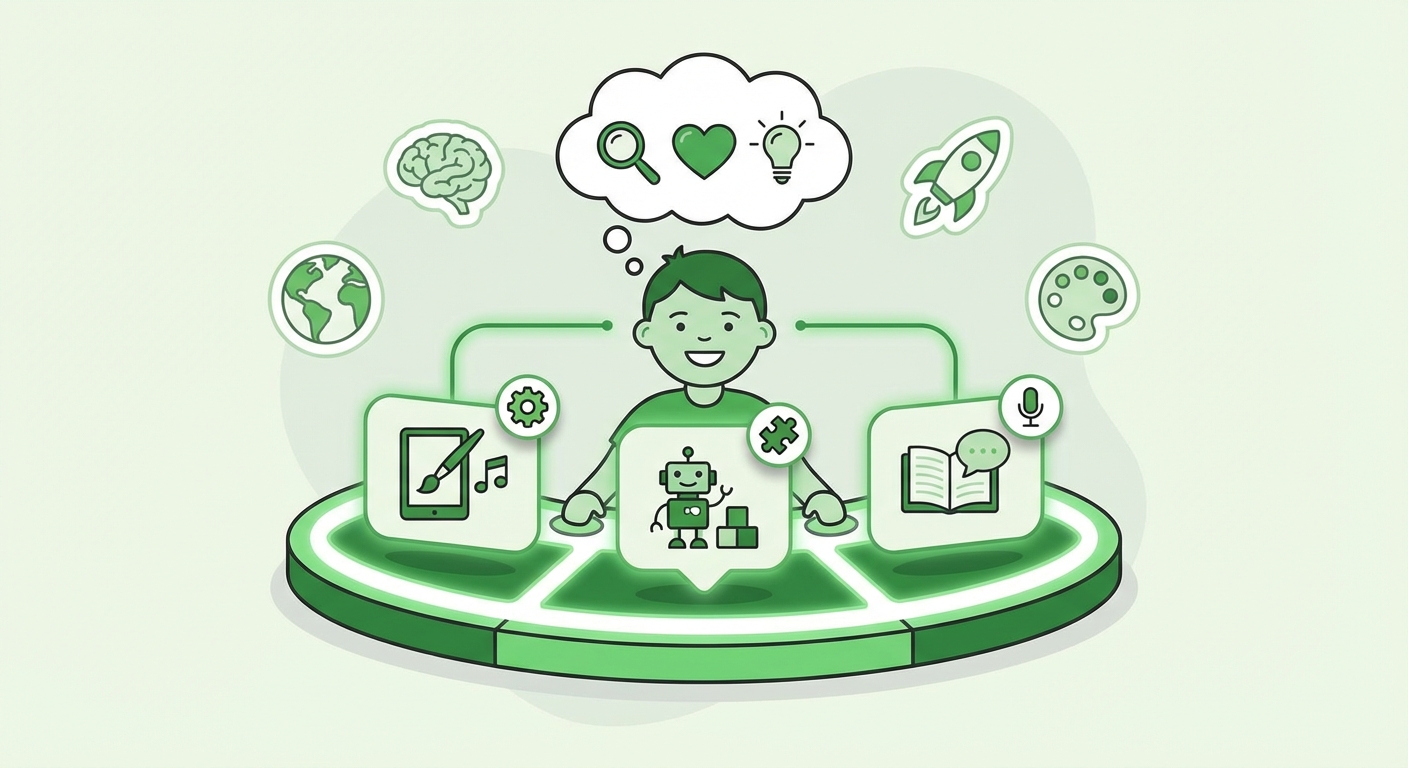
- Learning Goals: Are you looking to boost reading skills, support math homework, or introduce a new language? Choose a tool that aligns with your specific objectives.
- Child’s Interests: The most effective tool is one your child will actually use. A child who loves fantasy stories will thrive with Prodigy Math, while a budding author will be captivated by the creative possibilities of a platform like LoveToRead.ai. If you want some ideas, check out our list of the 5 best educational storybooks for young children (2026).
- Age Appropriateness: Ensure the interface, content, and learning concepts are suitable for your child’s developmental stage.
- Parental Controls & Safety: Look for platforms that prioritize data privacy and offer robust parental controls to manage screen time and content.
The Future of Learning is Personal
The era of one-size-fits-all education is fading. The best AI tools for children’s education in 2026 are those that recognize and adapt to the individual learner. By providing personalized feedback, customized content, and engaging experiences, these platforms can ignite a child’s curiosity and build a lifelong love of learning. Whether it’s through seeing themselves as the hero of a story or conquering a challenging math problem in a fantasy world, AI is helping to make education more relevant, effective, and joyful than ever before.
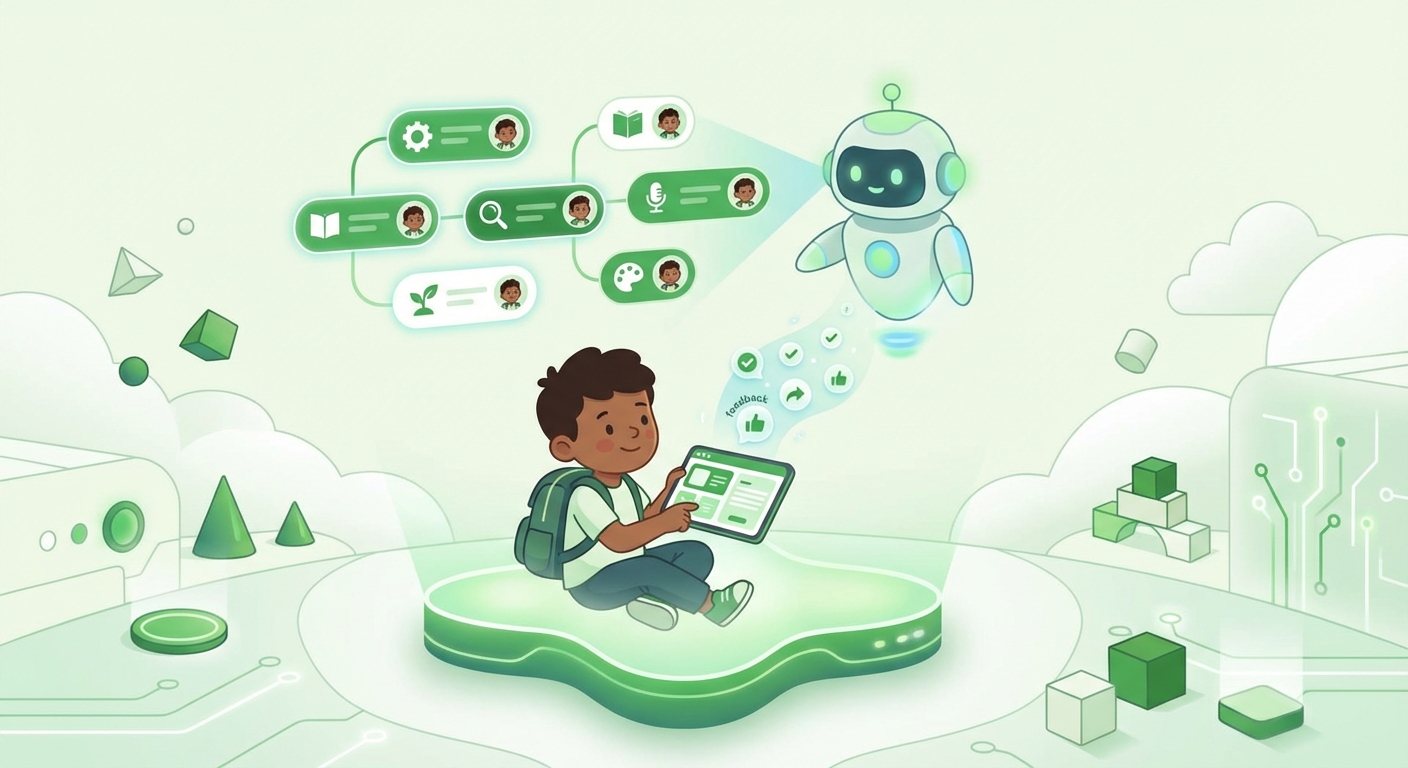
As you explore these options, remember that the goal is to supplement, not replace, traditional learning and play. When used thoughtfully, these tools can be powerful allies. For more insights into educational technology and storytelling, feel free to explore more articles on our blog.