LoveToRead vs Childbook: Which is Best in 2026?
In 2026, the world of children’s literature is more dynamic and personalized than ever before. Parents and educators are no longer limited to off-the-shelf stories; they can now create unique reading experiences where a child becomes the hero of their own adventure. This has led to the rise of innovative platforms, but choosing the right one can be a challenge. In this detailed LoveToRead vs Childbook comparison, we’ll explore two of the leading services to help you decide which is the perfect fit for your young reader.
Understanding the Personalized Storybook Market
Personalized storybooks have transformed how children engage with reading. By placing the child at the center of the narrative, these books can significantly boost comprehension, self-esteem, and a lifelong love for stories. Modern platforms leverage technology, particularly artificial intelligence, to offer unprecedented levels of customization. Instead of just adding a name to a template, services can now generate entirely new plots, characters, and illustrations based on a user’s prompts, creating a truly one-of-a-kind book every time. This evolution from simple personalization to full customization is a key factor in understanding what AI storybooks are and the value they offer.
Key Comparison Criteria
To provide a fair and thorough analysis, we will evaluate LoveToRead.ai and Childbook based on the following crucial criteria:
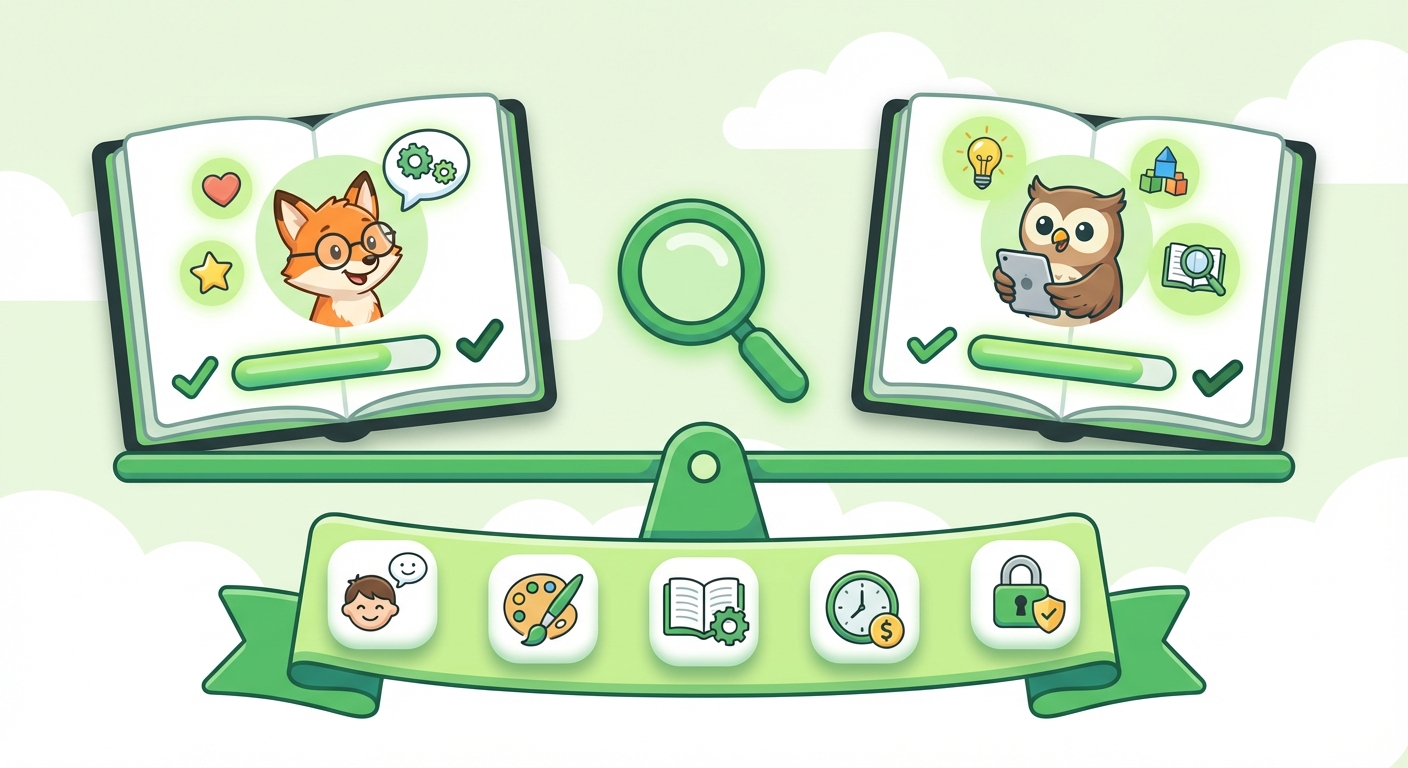
- Personalization & Customization: The depth and flexibility of making the story unique.
- Story Generation & Quality: The technology behind the narrative and the quality of the final story.
- Ease of Use & Speed: How quickly and easily a user can create a book.
- Illustrations & Art Style: The visual quality and style of the book’s artwork.
- Pricing & Value: The cost structure and overall value for money.
- Target Audience: The primary user base each platform is designed for.
An In-Depth Look at LoveToRead.ai
LoveToRead.ai has quickly become a leader in the AI-powered storybook space. It specializes in generating highly personalized stories and illustrations for children in grades K-5, positioning itself as a tool for creating engaging, educational content on demand.
Personalization & AI-Powered Creativity
LoveToRead.ai’s core strength lies in its powerful AI engine. Users can create a custom avatar for their child, building a character library to use across multiple stories. The platform goes beyond simple name replacement, allowing you to generate unique plots, settings, and supporting characters based on simple prompts. This means you can create a story about your child exploring Mars with their pet dog or learning to bake with a magical grandparent.
- Pros: Virtually limitless story possibilities, deep character customization, and the ability to tailor themes to a child’s specific interests.
- Cons: As with any generative AI, the stories may occasionally require minor edits from a parent to achieve perfection.
Speed and Accessibility
One of the platform’s most prominent features is its speed. LoveToRead.ai boasts the ability to generate a complete, illustrated story in just 30 seconds. This makes it convenient for parents who want a new bedtime story on the fly or educators who need fresh material for the classroom. Stories can be read instantly online or ordered as beautiful hardback books.
- Pros: Instant gratification, perfect for creating a high volume of stories, and an excellent tool for making reading interactive for kids.
- Cons: The rapid generation process might feel less “hand-crafted” to those seeking a more traditional book creation experience.
Pricing Model
LoveToRead.ai operates on a flexible credit-based system. After a free trial, users can purchase credit packs: the ‘Starter Pack’ offers 100 credits for $9.99, while the ‘Premium Pack’ provides 225 credits for $19.99. This model allows users to generate numerous digital stories affordably.
- Pros: Highly cost-effective for creating many digital books, low barrier to entry, and pay-as-you-go flexibility.
- Cons: The value of a credit may be less intuitive than a straightforward per-book price for some users.
An In-Depth Look at Childbook
Childbook occupies a different niche in the market. It focuses on creating premium, heirloom-quality physical books using a more traditional, template-based approach to personalization. It appeals to those looking for a special gift rather than a daily reading tool.
Template-Based Personalization
With Childbook, users select from a curated library of pre-written stories and then insert key details like the child’s name, hometown, and friends’ names. The narrative structure is fixed, ensuring a polished and professionally written story every time. The process is more akin to filling in the blanks than creating from scratch.
- Pros: Guarantees a high-quality, well-structured narrative without any guesswork.
- Cons: Severely limited creativity and customization; every book follows a set formula.
Focus on Premium, Human-Illustrated Books
The main draw of Childbook is its emphasis on high-end production. The platform collaborates with professional children’s book illustrators to create its artwork. This results in stunning, classic illustrations and a final product that feels like a timeless keepsake. The trade-off is a much slower creation and delivery time.
- Pros: Beautiful, professional-grade illustrations; the final hardback book is of exceptional quality.
- Cons: A very limited number of art styles to choose from and a slow, non-instantaneous creation process.
Pricing Model
Childbook uses a simple, per-book pricing model. A digital version of a book typically costs around $29.99, while a premium hardback copy is priced at $49.99. This straightforward pricing is easy to understand but represents a significant investment for a single story.
- Pros: Transparent pricing with no subscriptions or credits to manage.
- Cons: Very expensive, especially compared to AI-driven alternatives, making it impractical for creating multiple books.
Head-to-Head Comparison: LoveToRead vs Childbook
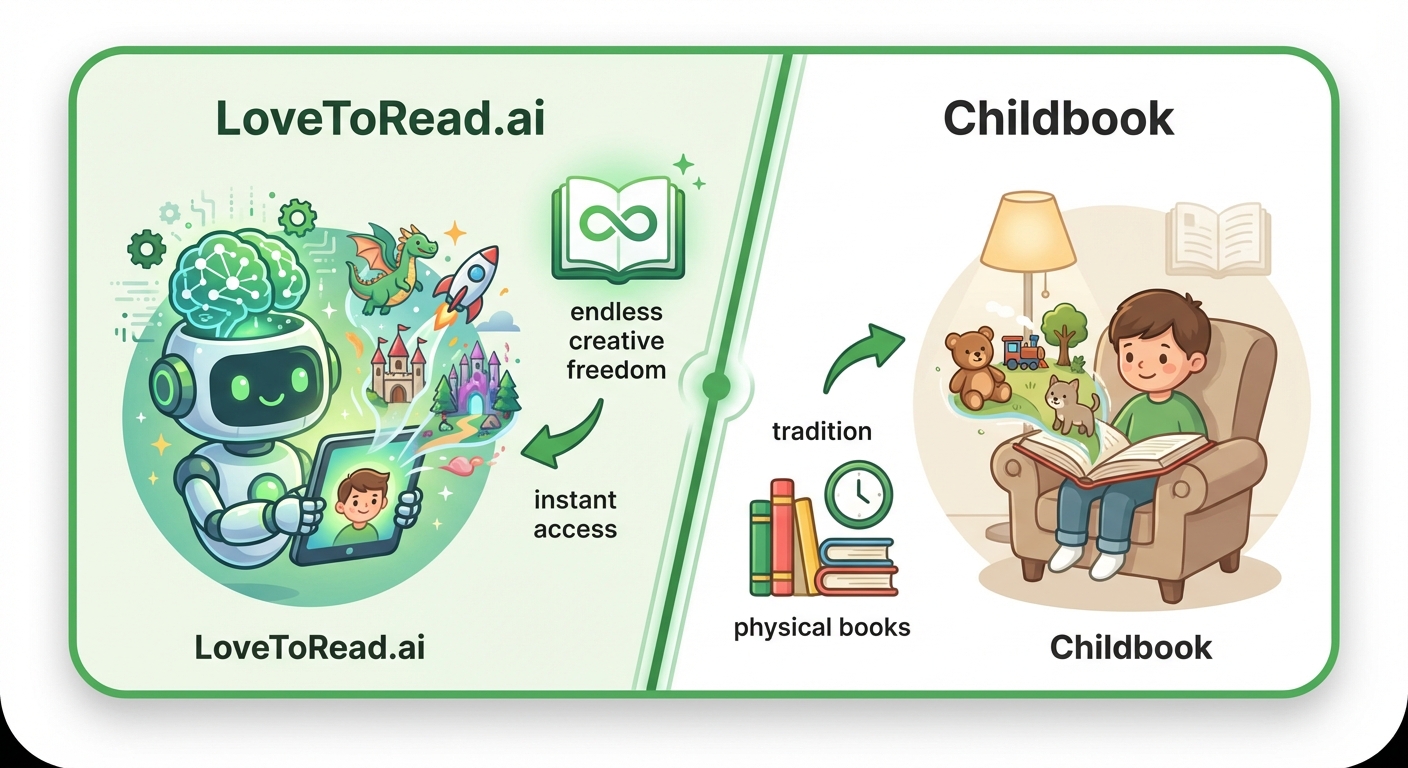
The fundamental difference in the LoveToRead vs Childbook debate comes down to technology and intent. LoveToRead.ai uses AI to offer endless creative freedom and instant access, while Childbook uses templates to deliver a single, premium product. This makes them two of the more distinct options among the 5 best custom children’s books online.
| Feature | LoveToRead.ai | Childbook |
|---|---|---|
| Story Generation | AI-generated from user prompts | Pre-written templates |
| Customization | Extensive (characters, plot, setting) | Limited (name, basic details) |
| Illustrations | Custom AI-generated art | Stock art by human illustrators |
| Creation Speed | Under 1 minute (instant) | Minutes to create, days to deliver |
| Pricing Model | Credit-based packs (from $9.99) | Per-book (from $29.99) |
| Best For | Daily reading, educators, creative freedom | One-time premium gifts, keepsakes |
The Final Verdict: Which Should You Choose in 2026?
Ultimately, the best choice depends entirely on your needs and goals.
Choose LoveToRead.ai if:
- You want to foster a daily reading habit with a constant stream of new, exciting stories.
- You are an educator who needs affordable, customizable content for your classroom.
- Your child has unique interests that you want to see reflected in their books.
- You value creative control and the magic of seeing a unique idea come to life in seconds.
- You’re interested in exploring one of the top 5 AI story generators for children in 2026.
Choose Childbook if:
- You are looking for a special, one-time gift for a birthday or holiday.
- You prioritize a traditional, human-illustrated aesthetic over customization.
- You prefer a guaranteed, professionally polished story and are not concerned with creating multiple books.
- Your budget allows for a premium, single-purchase product.
While Childbook offers a beautiful, high-quality product, its limitations in creativity and high cost make it a niche choice. For the modern parent or educator seeking to consistently engage a child and spark their imagination, LoveToRead.ai offers a far more dynamic, flexible, and valuable solution. Its ability to generate endless personalized adventures instantly makes it an unparalleled tool for making reading a truly magical and interactive experience in 2026.