Create an Unforgettable About Me Book
An about me book is so much more than a simple craft project. At its heart, it’s a personalized story that lets a child capture their own unique life, feelings, and memories. Think of it as a tangible record of who they are right now—a powerful tool that helps build their sense of identity and self-worth.
By creating their own book, a child solidifies their place in their family and community. It’s also one of the best ways I’ve seen to connect the words on a page to their own life, which is a massive leap forward in early literacy.
The Real Impact of an About Me Book
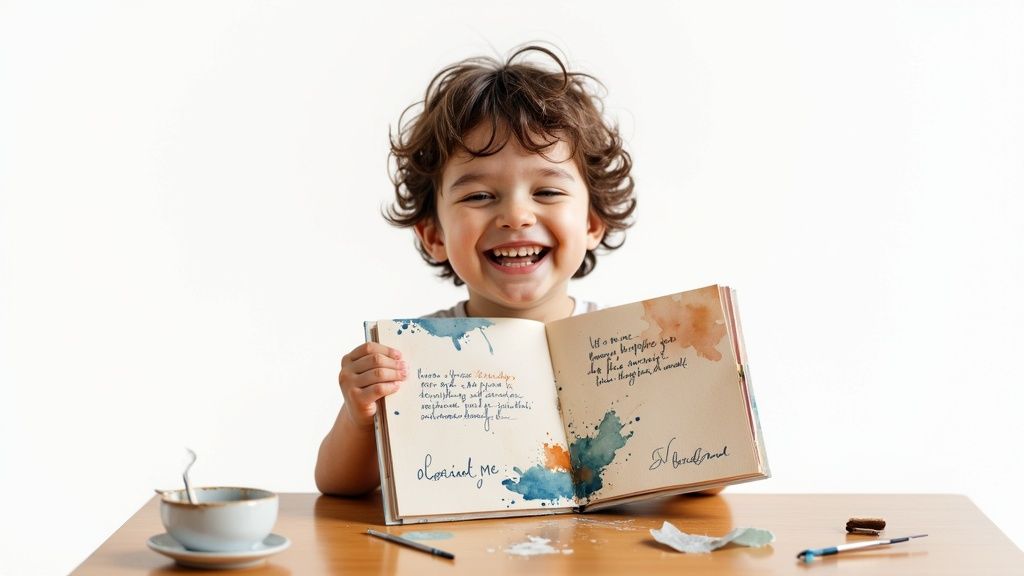
When a child sits down to create an "All About Me" book, they're doing something truly profound. It’s not just about glue sticks and crayons; it’s a foundational experience in their development. This simple project helps them see their own life as an important story worth telling. That's a huge step in building genuine self-esteem.
As they write down their favorite foods, draw pictures of their family, and recall special memories, they are actively piecing together their own identity. This process gives them a concrete way to understand who they are, where they come from, and all the little things that make them special. The finished book isn't just a craft—it's a treasured keepsake that says, "My story matters."
Strengthening Social and Emotional Skills
The "All About Me" book is a secret weapon for social-emotional learning (SEL). The simple act of thinking about and sharing personal stories helps children build emotional intelligence. When they reflect on their relationships with family and friends, they start to appreciate those people on a much deeper level.
And then comes the sharing part. Standing up in front of the class, or even just showing their book to a grandparent, can be an incredible confidence booster. It teaches them how to express their thoughts and feelings—a skill that will serve them for the rest of their lives in building healthy relationships.
This simple, fun activity lays a crucial foundation for development. By connecting personal experiences to the written word, an "About Me" book becomes an essential project for any parent or teacher looking to support a child’s growth holistically.
Building a Bridge to Literacy
From a teacher's perspective, this is where the magic really happens. For a young child, the link between abstract words on a page and their own life can be a tough concept to bridge. An "All About Me" book makes that connection instantly meaningful.
When a child sees their own name, the name of their dog, or a sentence about their favorite playground written down, the words suddenly click into place. Reading and writing become less intimidating and way more exciting because it’s about them. It shows them that language is a tool they can use to tell their very own story.
This project naturally weaves in key literacy concepts without feeling like a formal lesson:
- Narrative Structure: They learn the basics of storytelling—a beginning, middle, and end—by organizing events from their own life.
- Vocabulary Growth: Kids expand their vocabulary as they search for the right words to describe their feelings, family, and favorite things.
- Print Awareness: It reinforces the fundamental idea that those little symbols on the page carry meaning.
An "All About Me" book isn't just a snapshot of a child at a certain age. It’s an active learning experience that nurtures their sense of self, builds emotional skills, and sparks a genuine love for storytelling.
Ready to bring your child's unique story to life? With LoveToRead.AI, you can create personalized stories in seconds. Convert real-life photos into characters, build a reusable character library, choose from the absolute best art styles, and easily order a beautiful hardback copy of your child's creation.
Gathering Ideas for a Truly Personal Story
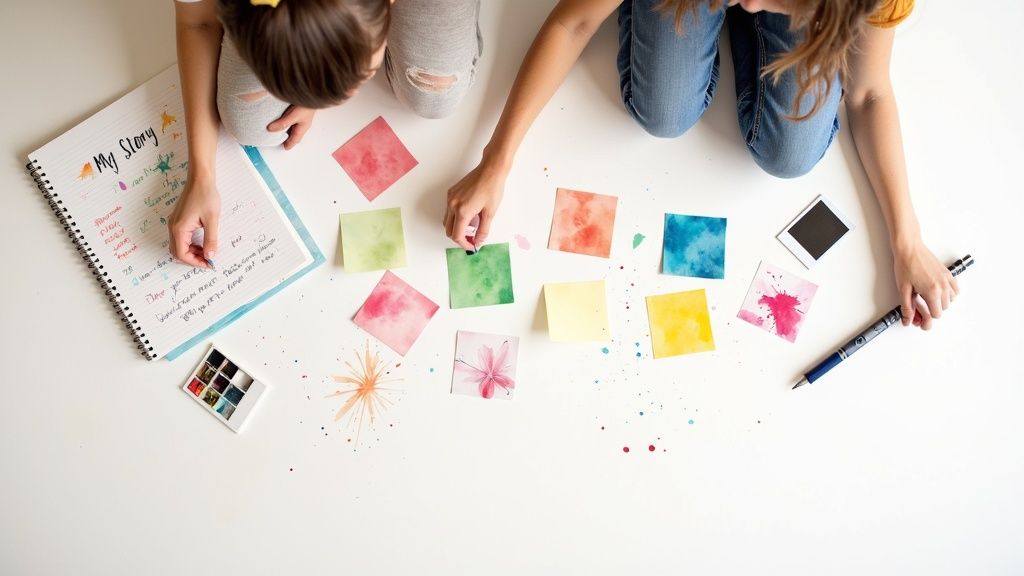
The real magic of an About Me book comes from its authenticity. To create something truly special, you have to go beyond the basic facts and uncover the little details that make a child who they are. This is your chance to capture their personality, their silly quirks, and their unique way of seeing the world.
The first step is a brainstorming session, but it should feel more like a fun chat than an interview. Grab some snacks, find a cozy spot, and just start talking. Your goal is to collect genuine thoughts and stories straight from the source.
Sparking Meaningful Conversations
Getting great stories often comes down to asking great questions. A simple shift in how you phrase a question can open up a world of imagination. Instead of "What's your favorite color?" try asking, "If you could paint our whole house any color, what would it be and why?" You'll get a much richer answer.
Here are a few conversation starters I’ve found work wonders for getting kids to open up:
- Feelings and Emotions: "Can you remember a time you felt super brave?" or "What's something that always makes you laugh so hard your tummy hurts?"
- Relationships: "What’s the coolest thing about your best friend?" or "Tell me about your favorite memory with Grandma."
- Imagination and Dreams: "If you had a secret superpower, what would it be and what's the first thing you'd do with it?"
These kinds of prompts move you past simple likes and dislikes and into the heart of what makes them tick: their memories, feelings, and big dreams.
The appetite for real, personal narratives is huge. The global nonfiction book market, which includes memoirs and personal stories, hit $14.02 billion in 2022—a 5.7% jump from the year before. It just goes to show how much we all value these kinds of stories. You can read more about the power of personal stories and their impact.
Using Photos as Story Starters
One of the best tricks I know for jogging a child's memory is to pull out the photo albums. Each picture is a tiny doorway to a story just waiting to be told.
Scroll through your phone or flip through a physical album together. That picture from a family vacation might spark a hilarious story about a seagull stealing a sandwich. A photo of their first day of school could bring back a mix of nerves and excitement. It’s a fantastic, low-pressure way to get the conversation flowing.
This is also where some really neat tools can come in handy. Platforms like LoveToRead.AI let you take this a step further. You can actually convert your real-life photos into characters for the book, creating a cast of familiar faces—mom, dad, siblings, even the family pet. This not only makes the book incredibly personal but also ensures you get the absolute best art styles and character persistence from page to page.
Organizing Ideas for Different Ages
Of course, how you approach this brainstorming will change depending on the child's age. The questions that light up a five-year-old might fall flat with a fifth grader. Tailoring your prompts is key to keeping them engaged and getting age-appropriate content.
I've put together a simple guide to help brainstorm questions tailored to different developmental stages. It's a great starting point for making sure the book is engaging for every child.
Age-Appropriate Prompts for Your About Me Book
A guide to brainstorming questions tailored to different developmental stages, ensuring the book is engaging for every child.
| Age Group (Grade) | Theme Focus | Example Prompts |
|---|---|---|
| Preschool-K | Favorites & Family | "What is your favorite animal sound to make?" "Who are the people in our family?" |
| Grades 1-2 | Experiences & Accomplishments | "Tell me about a time you learned to do something new." "What's your favorite game to play at recess?" |
| Grades 3-5 | Opinions, Goals & Identity | "If you could change one rule at school, what would it be?" "What are you most proud of and why?" |
By thinking about their age, you can collect a wonderful assortment of ideas that will become the heart and soul of their book. From here, you’re all set to weave these memories and dreams into a story they'll want to read again and again, with the option to easily order any hardback copy to keep as a treasured memento.
Weaving Your Notes Into a Story
Alright, you've got a fantastic pile of notes, memories, and photos. Now for the fun part: turning that collection of ideas into a real story. This is where we shape all those brainstormed gems into a narrative your child will treasure and want to read again and again. The goal is to create a book that flows naturally and captures a snapshot of who they are right now.
For an "About Me" book, a simple structure is usually the most powerful. Think of it as a short, sweet biography. You can kick things off with a simple introduction, then dedicate different "chapters" or pages to the most important parts of their world.
This approach helps you organize everything you've gathered in a logical way. Each page becomes a mini-story, making the book super easy for young readers to follow and enjoy.
Laying Out the Pages
Before you start writing, I've found it helps to sketch out a quick outline. It doesn't need to be fancy—just a list of what you want on each page. This little roadmap ensures you don't forget any of the important themes you and your child talked about.
Here’s a sample structure you can run with:
- Page 1: The Grand Opening: A title page with their name, age, and a great self-portrait or favorite photo.
- Pages 2-3: My Crew: Introduce the key players in their life—parents, siblings, and of course, any beloved pets.
- Pages 4-5: All My Favorites: This is where the personality really shines! Dedicate these pages to their favorite foods, colors, toys, and things to do.
- Pages 6-7: That One Time…: Pick one or two of the best stories from your brainstorming session and give them their own spotlight.
- Pages 8-9: My Awesome Friends: A page to celebrate their buddies and what makes those friendships so special.
- Pages 10-11: When I Grow Up…: A snapshot of their current dreams and aspirations for the future.
This layout gives you a solid foundation. From here, you can easily add more pages for hobbies, school life, or family traditions. Feel free to make the book as detailed or as simple as you like.
Capturing Their Real Voice
This is the most important part. The words on the page absolutely have to sound like your child. Their unique personality and the way they talk should come through loud and clear. As you were brainstorming, did you notice any funny phrases they used or the specific way they described things? Weave those in.
For younger kids, stick with simple, direct sentences. "I love my dog, Rusty. He has floppy ears," is so much more impactful than something long and complicated. For older kids, you can go into more detail and encourage them to use bigger, more descriptive words to get their feelings across.
The global book market is thriving, with projected revenues expected to hit approximately $142.72 billion in 2025. This shows a powerful, sustained interest in reading and storytelling worldwide. You can explore more book market statistics to see just how important books continue to be.
One of the best tricks to keep the voice authentic? Write it together. Let them dictate sentences to you. If they're old enough, have them write a few pages themselves. When they have that sense of ownership, the final book becomes so much more meaningful.
A Modern Shortcut for Storytelling
Let's be real: pulling together a compelling story and pairing it with great visuals can be a huge time-sink. Fortunately, some amazing tools have popped up that can fast-track this process while adding a layer of personalization that's tough to do by hand.
Platforms like LoveToRead.AI offer a fantastic shortcut. Instead of just dropping photos onto a page, you can actually convert your real-life photos into characters, creating a custom cast for the story. This means your child, their friends, and your family can appear as beautifully illustrated characters with the absolute best art styles and character persistence on every single page.
You can genuinely create personalized stories within seconds. The platform helps structure the narrative for you, keeping it age-appropriate and engaging. Plus, it lets you create a library of characters to reuse in all sorts of different stories, opening up a world of future adventures. And when you're done, you can easily order any hardback copy, turning your project into a professional-quality keepsake that will last a lifetime.
Bringing Your "About Me" Book to Life: DIY or Digital?
Once you’ve captured your child's personality on the page, it’s time for the fun part: turning those words into a real book. This is where the story truly comes alive! You have two main paths to choose from—the classic, hands-on charm of a DIY project or the polished, professional finish you can get from a digital tool.
Neither way is better than the other; it really just boils down to your goals, your time, and how much glitter you’re willing to clean up.
The Crafty and Creative DIY Route
There's something special about making a book by hand. It’s a sensory experience that gets kids directly involved with textures, colors, and the simple joy of creating something from scratch. Gathering the supplies—cardstock, yarn, crayons, family photos—can be an exciting part of the process itself. This approach is all about the journey, turning book-making into a memorable afternoon craft session.
Of course, a handmade book takes time, and the final result might not be as sturdy as a professionally printed one. It's a fantastic choice for a classroom project or a weekend activity. But if you're hoping for a durable keepsake to treasure for years, a digital option might be a more practical fit.
Want to give it a try? You don't need much. Here’s a simple way to create a sturdy, homemade book:
- Prep Your Pages: Heavy cardstock or construction paper works best. Just fold each sheet in half to form the pages.
- Design a Cover: Grab a thicker piece of cardboard for the front and back. This is where your child can go wild with paint, markers, or a collage of their favorite things.
- Bind It All Together: Punch three holes along the folded edge of your pages and cover. Weave a colorful ribbon or some sturdy yarn through the holes and tie it off. This simple binding is surprisingly strong and easy enough for little hands to help with.
The beauty of the DIY method is in its imperfections. Kids can glue in scraps of fabric, add pop-up drawings, or cover every page in stickers. Those little smudges and crooked lines are what make it uniquely theirs.
The Polished and Professional Digital Option
If you're short on time or want a high-quality keepsake that will last, digital tools are a fantastic alternative. The book world has changed dramatically, with about 35% of total revenue now flowing through digital channels. This shift has made self-publishing more accessible than ever. You can discover more insights about the book market to see just how much technology is shaping how we create and read.
This decision tree can help you choose the best writing style based on your child's age, whether you're going the DIY or digital route.
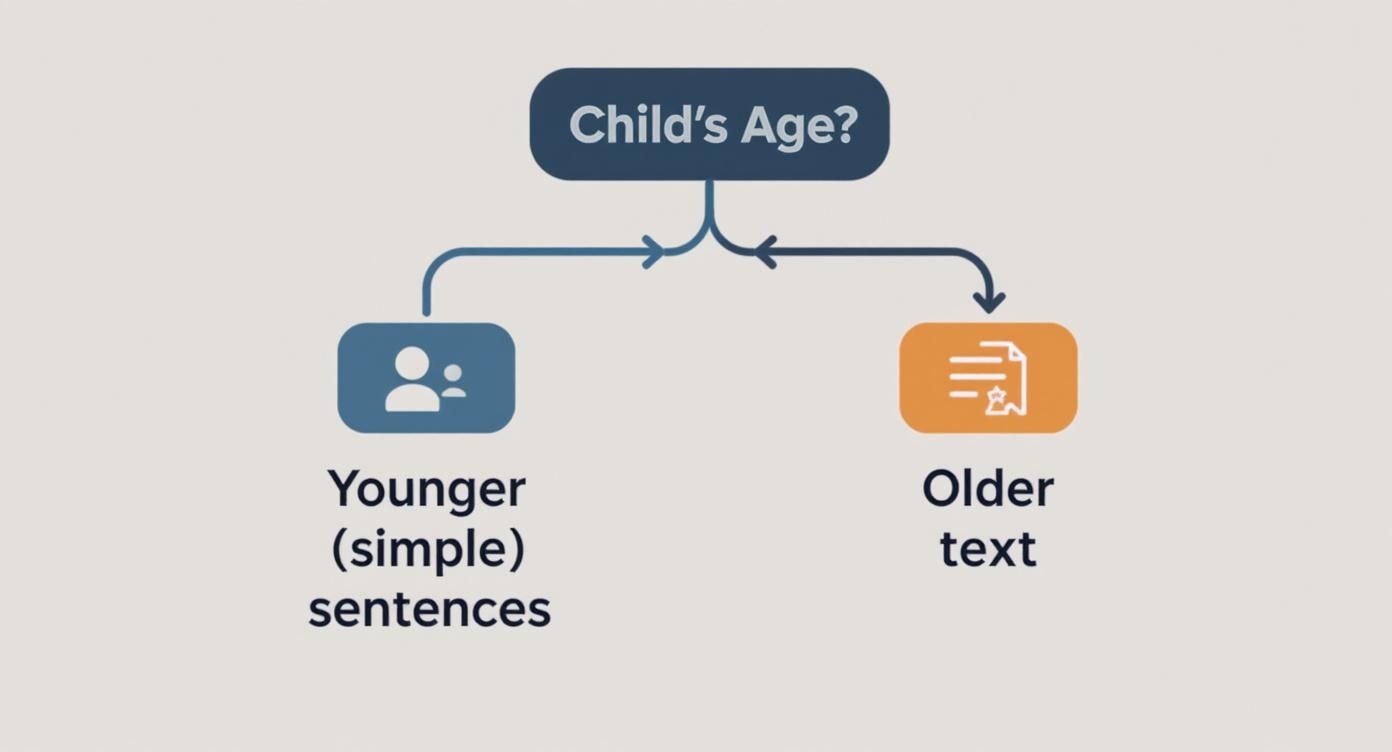
As the graphic shows, the key is tailoring the book’s complexity to the child's developmental stage. This is what keeps them engaged, no matter how you decide to create the book.
So, why spend hours with scissors and glue when you can get an incredible result in just a few minutes? Platforms like LoveToRead.AI give you the best of both worlds: deep personalization with a stunning, professional finish.
The real magic of a digital tool is that it lets you create something beautiful without needing to be an artist. You can pour all your energy into the story, and the technology takes care of the illustrations and layout.
With a tool like this, you can do some amazing things. Imagine being able to convert your real life photos into characters, letting your child and family star in their own story with perfect consistency. You can choose from the absolute best art styles to fit their vibe and even create a library of characters to reuse in future stories. The whole process takes just seconds.
When you're happy with your creation, you can easily order any hardback copy. This transforms a fun little project into a permanent, cherished memento that will sit proudly on your bookshelf for years to come—the perfect way to preserve this little snapshot of who they are right now.
Using About Me Books in the Classroom
Let's be honest, the "About Me" book is way more than just a cute first-week-of-school icebreaker. When you really lean into it, this project can become a powerhouse teaching tool that anchors your curriculum for weeks. It’s a natural fit for hitting literacy goals, building a strong classroom community, and supporting social-emotional learning all at once.
Instead of treating it as a one-and-done craft, think of the "All About Me" book as a semester-long project. It’s a hands-on way for students to practice narrative writing, understand character development (with themselves as the main character!), and even get their feet wet with public speaking in a super supportive setting. This project gives every single kid a platform to feel seen and heard.
Connecting to ELA and Literacy Standards
One of the best things about this project is how easily it weaves into your English Language Arts standards, especially for narrative writing. Students aren't just filling in blanks; they're crafting a personal narrative, which is a massive skill in the elementary grades.
This project hits several key learning targets:
- Narrative Structure: Kids learn to organize events logically, whether they're introducing their family or telling the story of a favorite memory. It’s a real-world lesson in beginning, middle, and end.
- Descriptive Language: You can push students to use juicy adjectives and vivid verbs to describe their world. A simple prompt like, "What does your favorite food really taste and smell like?" can unlock some amazing descriptive writing.
- Author's Voice: This might be the most valuable part. Students discover that writing is a way to let their unique personality shine through.
The intimidation factor that often comes with writing assignments just melts away when the subject is something they are the world's foremost expert on—themselves. It’s a huge confidence booster.
Differentiating for Every Learner
Every classroom is a beautiful mix of different learners, and the "About Me" book is wonderfully flexible. Differentiation here isn't about creating a dozen different assignments. It's about giving kids different ways to get to the same finish line, and this project makes that simple.
Here are a few ways I’ve adapted this in my own classroom:
- For Emerging Writers: Sentence starters are your best friend. Think "My favorite color is…" or fill-in-the-blank sentences like "I love to play with my ______." Having them dictate their stories to you or a classroom aide is a fantastic option, too.
- For English Language Learners: Go heavy on the visuals. Encourage them to draw, use photographs, and label things in both their home language and English. It validates their background while building new vocabulary.
- For Advanced Learners: Challenge them to dig deeper. Ask them to write a chapter about a time they overcame a challenge or have them interview a family member to include a short biography in their book.
The real goal is to champion personal expression over perfect punctuation. This mindset ensures every student walks away with a book they are genuinely proud of.
Celebrating and Sharing Student Stories
The final piece of the puzzle is the celebration. This is where you see the community-building magic really happen. When students share their stories, they start to understand and respect their peers on a whole new level, learning about different family traditions, backgrounds, and interests.
By creating a space for every child to share their story, you are actively building an inclusive classroom culture. Students begin to see the rich diversity within their own community, which fosters connection and reduces feelings of isolation.
An "Author's Showcase" is one of my favorite ways to wrap this up. We set up the classroom like a little bookstore or an art gallery, with each book on display for everyone to see. We'll invite parents, our buddy class, or even the principal to come "meet the authors."
During the showcase, kids can stand by their books to answer questions, or you can set up a special "author's chair" where a few students get to read a favorite page aloud each day. It’s great public speaking practice, but more importantly, it shows them just how much their personal stories matter. When their work is celebrated like this, they learn that their voice has real value.
Questions We Often Hear About Making an About Me Book
Starting a new project, even a fun one, always brings up a few questions. To help you dive in with confidence, I've pulled together the most common questions I hear from teachers and parents about creating an about me book, along with some straightforward answers from my own experience.
Let’s clear up any uncertainties so you can focus on the fun part: making something special.
How Can I Motivate a Reluctant Child?
What do you do when your child or student just isn't interested? The trick is to find their "in." Connect the book directly to whatever they're obsessed with right now. If it's dinosaurs, their "About Me" story can be a prehistoric adventure. If they love superheroes, they become the star of their own comic.
Let their passions drive the theme and the creative decisions.
Give them the director's chair. When they have control over the story and the look, it becomes their project, not just another assignment. Try adding interactive elements, like little lift-the-flaps to reveal funny secrets or small pockets to tuck away drawings. And remember to keep the work sessions short and sweet. A focused 15-minute burst of creativity is way more effective than a drawn-out hour of frustration.
The secret to engagement is ownership. When a child feels like they are the director of their own story, their hesitation often transforms into excitement. This project should empower them, not feel like another homework assignment.
What Are the Best Materials for a DIY Book?
If you're making a book by hand, you want it to last. For pages that can handle lots of page-turning (and maybe some snack-time smudges), your best friends are cardstock or heavyweight paper. For ultimate durability, laminating the pages makes them practically kid-proof.
When it comes to putting it all together, here are a few simple and sturdy binding methods:
- Three-Ring Binder: This is the easiest option by far. It's fantastic because you can add new pages as the child grows and has new stories to tell.
- Yarn or Ribbon: Punch a few holes down the side of the pages and tie them together with colorful yarn. It gives the book a really sweet, handcrafted feel.
- Stapling: For a smaller book, a good heavy-duty stapler along the edge can create a simple, clean spine.
How Long Should This Project Take?
There’s really no one-size-fits-all answer here. The timeline should fit your needs. A family could knock out a fantastic book over a single creative weekend. It could be a great rainy-day project!
In a classroom, on the other hand, this could easily stretch over a few weeks. You could dedicate one language arts block to brainstorming, an art session to illustrating, and so on.
The best way to tackle it is to break the project into smaller, bite-sized pieces. Think in stages: brainstorming, writing, drawing, and assembling. This approach keeps everyone from feeling overwhelmed and helps maintain excitement from start to finish.
Ready to skip the DIY hassle and create a stunning, professional-quality book in minutes? At LoveToRead.AI, you can create personalized stories in seconds. Convert your real-life photos into characters, build a reusable library of familiar faces, and choose from the absolute best art styles. When you're done, you can easily order a beautiful hardback copy. Explore the possibilities on LoveToRead.AI.