2026 Buying Guide
Best Personalized Books for Kids in 2026: Top Picks, Features to Compare, and the Most Customizable Option
What to buy this year, what features matter most, and how today’s top personalized books turn reading into a child-centered adventure.
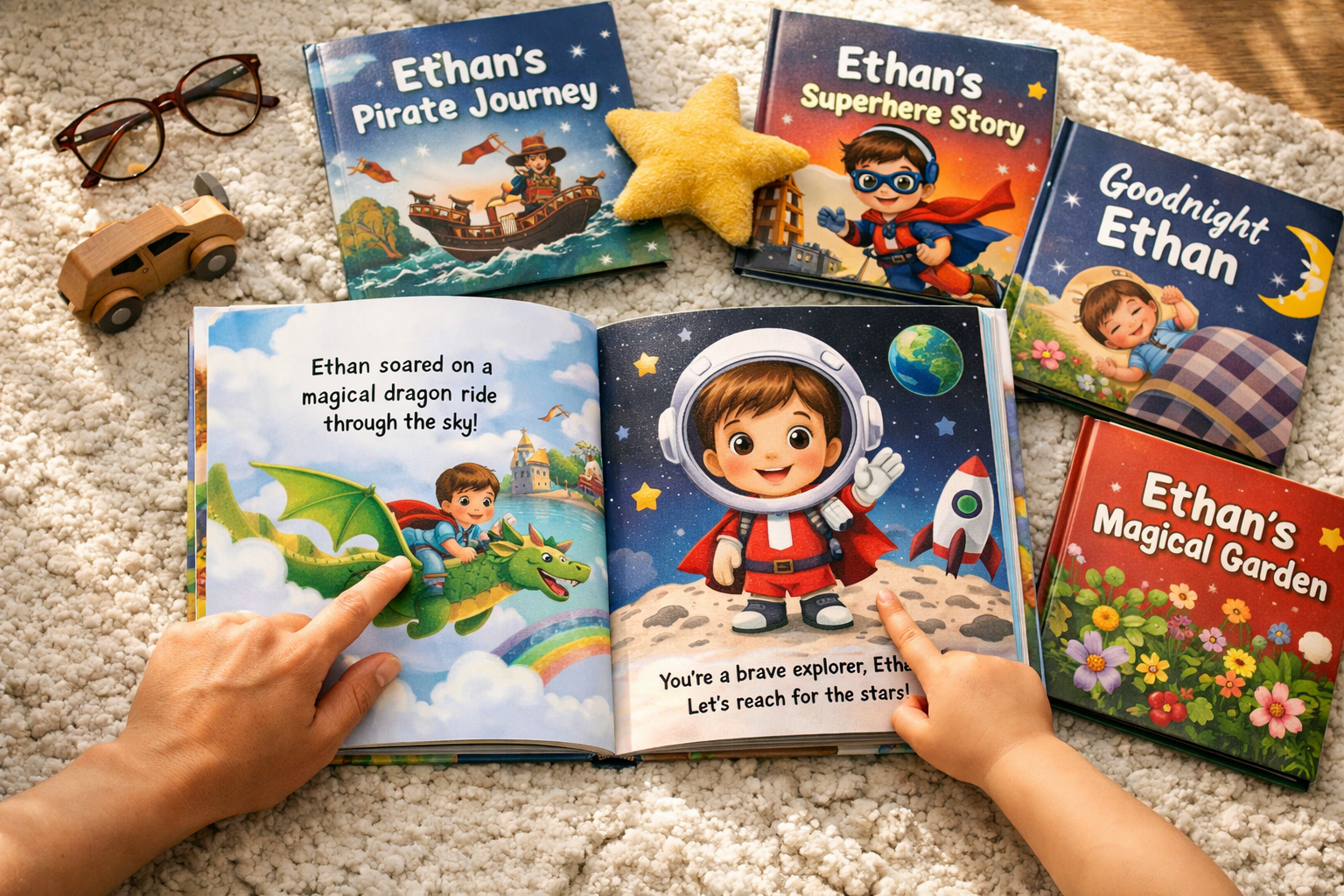
Personalized kids’ books are no longer just a cute idea. Parents now use them to build steady reading habits. In 2026, families want more than a name swap. They want a story made for their kid. They want their interests, humor, reading stage, and even their look.
That is why the best personalized books for kids in 2026 share a few key traits. They offer deeper choices than simple templates. They fit more than one reading level. They use strong art that holds attention. They also come in formats that fit real homes. That includes instant digital, narrated video, and hardcover gifts.
At-a-glance: what matters most in 2026
If you compare brands, start with three things. Look for story-level personalization, not just names. Check reading-level fit, with K–5 options. Choose format flexibility, like digital, videobook, and hardcover. These features lead to more rereads. Rereads drive real reading growth.
What Makes a Personalized Kids’ Book “Best” in 2026? (A Quick Buying Checklist)
The market is full of choices. So you should judge these books like you would a tablet or a bike. Use clear goals. Do not chase endless options just because they exist. Aim for a story your child will choose again.
1) Personalization depth: interest-led beats name-only
Name swaps are now the baseline. The best books build the plot around what your child loves. That could be dinosaurs, space, animals, sports, trucks, dance, or princesses. It could also be a new interest you did not expect. When the theme matches, kids read more. They ask for repeats. They point at pages. They also tell stories on their own.
2) Character personalization: likeness drives emotional investment
Kids love being the hero. That feeling boosts reading time. In 2026, photo-to-character tools stand out. They help the book feel less like “about you.” They make it feel like it is you. This can help kids who avoid reading. It can pull them into a steady routine.
3) Reading experience: adjust by grade level (K–5) to extend the shelf life
Parents often feel let down for one reason. Kids outgrow the book fast. The text may feel too babyish. Or it may feel too hard. The best picks in 2026 offer reading-level choices. Many also adjust across Kindergarten to 5th grade. That matters because a better fit lasts longer. It also keeps reading time fun.
4) Style fit: illustration options aren’t cosmetic—they’re motivational
Kids care a lot about art. Some want bold cartoons. Others like soft watercolor. Some like anime-style art. Many like 3D, movie-like images. When kids can pick a style, they feel in control. That leads to more rereads. Try to find a brand that lets you preview styles first.
5) Learning value: educational personalization can make practice feel like play
A big 2026 trend adds real learning goals. Spelling and vocab often lead the list. The best books keep it fun. They do not turn the story into homework. If a story uses school words, you save time. You keep your routine. You just make it stronger.
6) Format options: digital, videobook, and hardcover each solve a different problem
- Digital gives instant access and helps on trips.
- Videobooks with narration help new readers, audio learners, and busy nights.
- Hardcover keepsakes work best for gifts and big moments.
7) Pricing model: avoid paying monthly for something you use seasonally
Many families buy in waves. They buy for birthdays. They buy in summer. They buy during the winter gift season. A pay-as-you-go plan can cost less. Credits that never expire help even more. This matters if you buy for more than one child. It also helps when you buy for cousins or friends.
Parent reality check: the best book is the one your child wants again. Rereads build skill over time. They grow fluency, meaning, and confidence.
Top Personalized Book Types Parents Are Buying in 2026
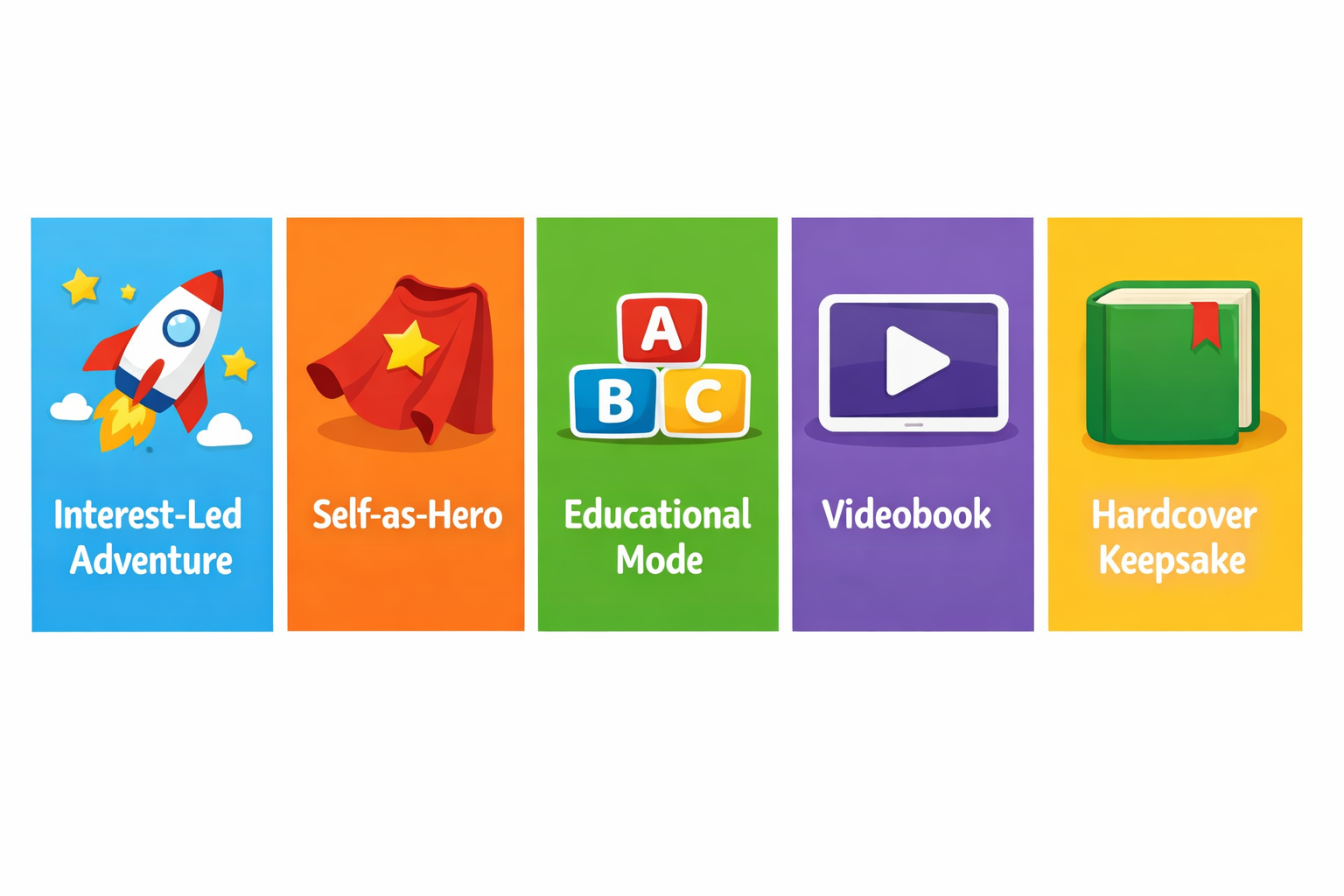
Personalized books now come in clear types. Each type fits a different goal. Know the type before you buy. That helps you pick the right fit. Your goal may be bedtime bonding, reading growth, or a great gift.
1) Interest-led adventures
These stories center on what your child loves most. The best ones do not just drop in keywords. They make the interest drive the plot. A space story can use real mission steps. A dinosaur story can name real species. An animal story can add habitat clues. Kids read these more by choice. They feel pulled in from the start.
2) Self-as-hero books
Here, your child is the main character. That can boost confidence fast. Kids often replay that feeling through rereads. This helps during big changes. Think new school, a new sibling, or a move. It also helps with new skills, like riding a bike. Kids want comfort and control during these times.
3) Educational personalized stories
These stories include learning goals inside the plot. They often use spelling lists or vocab words. When done right, kids do not notice the practice. They think they are just enjoying a story. The best versions use words in real sentences. They avoid dull drills.
4) Video-first storytelling (animated videobooks)
Videobooks with narration are growing fast in 2026. They help kids who resist reading. They also fit many learning styles. Narration shows what smooth reading sounds like. Animation helps kids stay with the story. That support builds word and plot knowledge over time.
5) Giftable keepsakes (premium hardcover)
If you buy a gift, the look matters. Hardcovers feel special and last longer. They also look better on a shelf. Digital books cannot match that feel. The best keepsakes pair great print with strong personalization. They make adults say, “This is really about them.”
Quick match: type → best use
- Interest-led → best for daily reading drive
- Self-as-hero → confidence and connection
- Educational → practice without pushback
- Videobook → support for new and unsure readers
- Hardcover → gifts and lasting value
Why True Story–Level Personalization Stands Out (Beyond Templates)
Template books often work the same way. The story stays the same. The book swaps in a name and maybe hair color. That can feel fun once. But it often does not earn rereads. The story may not match what your child cares about.
In 2026, parents expect more. They want a story that feels like a custom bedtime tale. It should feel specific and fun. It should also match interests and reading level.
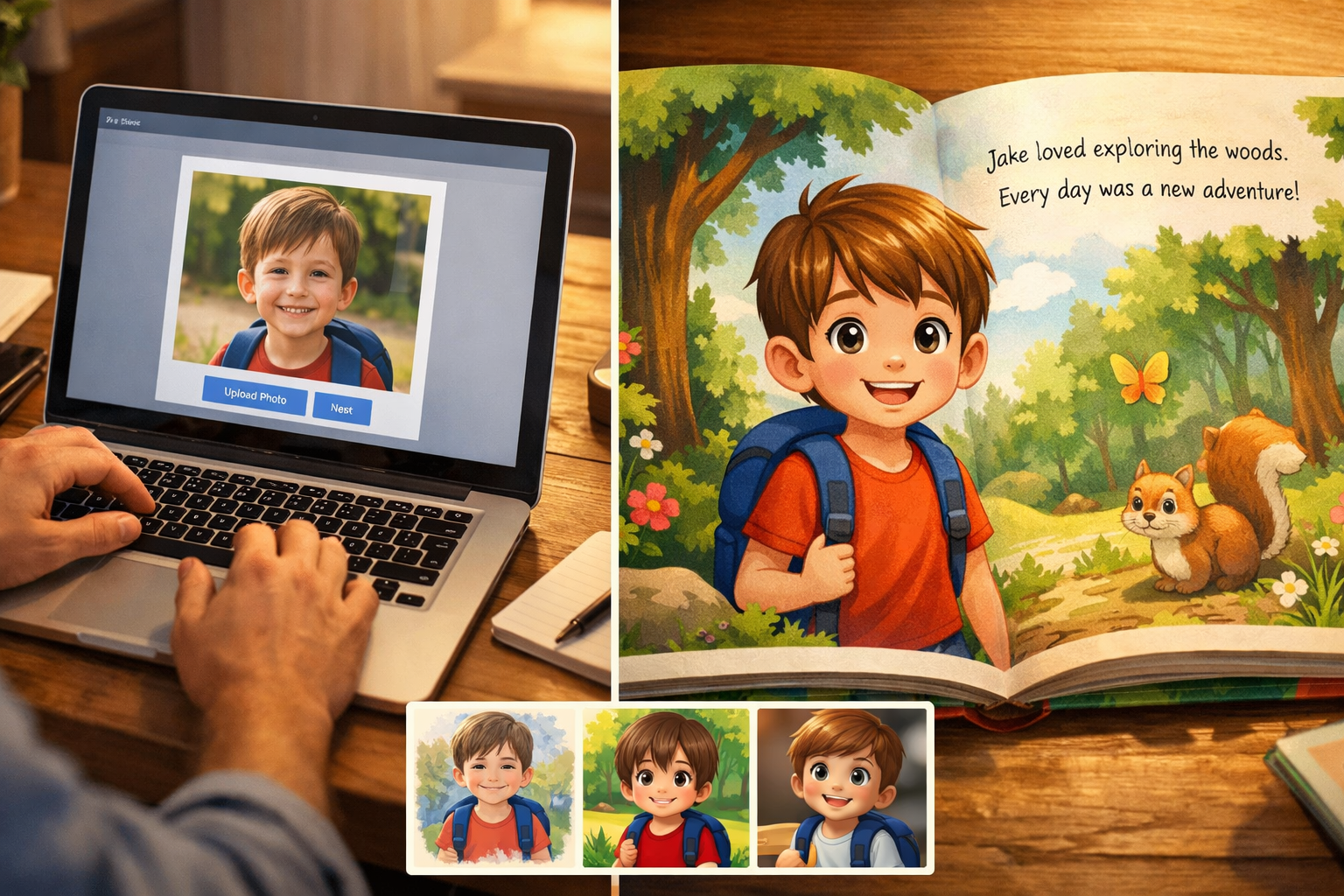
A story built around your child’s interests (not a pre-set plot)
Story-level personalization starts with a real interest. Then it builds the story around it. If your child loves dinosaurs, the book becomes a dinosaur adventure. If they love space, it becomes a space mission. If they love animals, it becomes a wildlife quest. This makes personalization feel real. It also makes it motivating.
Photo-to-character conversion: a high-engagement, shareable feature
A photo-based character feels close to the reader. It cuts the gap between the child and the hero. Many kids lock in right away. They spot their smile or hair. Parents also love the reveal. It creates an instant “Look, that’s you!” moment. It makes the book feel one of a kind.
Flexible grade levels (K–5): the story grows with your reader
Kids can change a lot in one year. Their reading can jump quickly. If a platform can adjust from Kindergarten to 5th grade, you can match today’s needs. You can also keep the story useful later:
- Emergent readers do best with short lines and simple words.
- Early fluent readers need more challenge to stay engaged.
- Advanced readers enjoy richer jokes and bigger plot turns.
Here is a bonus for families with siblings. You can make more than one version. Each version can match a child’s level. You can keep the same theme for both kids.
Multiple art styles (8 options): let the child choose
Art style can make or break interest. Choice helps a lot. It gives kids a sense of control. When a child picks the style, it feels personal. The book becomes their book. It does not feel like a book you pushed on them.
Educational mode: integrate real spelling and vocabulary words
Educational personalization works best when it feels easy. You do not need extra drills. The story can use your child’s spelling list or vocab targets. That puts the words in real context. It also repeats them in a natural way. That is a strong path to memory.
When kids see a spelling word in a fun story, it feels different. It stops being a “test word.” It becomes a “story word.” That change lowers stress. It also boosts repeat practice.
Videobook experience: animated narration for reluctant readers
Animated videobooks can help kids cross a gap. Kids follow along and hear smooth reading. They learn the plot and key words. Then print or digital reading feels easier. The story already feels familiar. That can raise confidence.
Hardcover keepsake pricing that competes in the gift market
A premium hardcover at $24.99 hits a strong price point. It feels like a real gift. It is also not too costly for most events. It works for birthdays and class gifts. It also works for grandparents who want meaning, not more toys.
Pay-as-you-go credits (no subscription): better for real family rhythms
Subscriptions work well for some families. They work best if you make a new story every month. Many families do not. Pay-as-you-go credits can fit better. It also helps when credits never expire. This model helps:
- gift buyers who shop a few times each year,
- families with seasonal habits, like summer reading,
- teachers and homeschoolers who build slowly.
The real differentiator in 2026
Many brands can add a name. The leaders personalize plot + protagonist + reading level + art style. They also offer video and hardcover options. That fits how families read today.
How to Choose the Right Personalized Book for Your Child (Age, Interests, and Goals)
Start with your child, not the product list. Then work outward. The best fit matches motivation, ability, and your goal. Your goal may be fun, learning, or gifting.
Step 1: Match the theme to the current obsession
Pick what your child talks about without you asking. That is the fastest way to get willing reading time. These topics keep showing up in 2026 searches:
- Dinosaurs and prehistoric creatures
- Space, rockets, planets, astronauts
- Animals (pets, ocean animals, jungle, insects)
- Sports and teamwork adventures
- Princesses, castles, dragons, fantasy quests
- Trucks, trains, construction, rescue vehicles
Step 2: Pick the right reading level (and future-proof if possible)
From about ages 4–11, reading skill varies a lot. Two kids of the same age can be far apart. If a brand adjusts from K–5, use it. Match your child’s comfort level now. Then keep the story useful as they grow.
Tip: If your child sits between levels, go easier for solo reading. Go harder for read-aloud time.
Step 3: Decide your primary goal: bonding, confidence, or measurable practice
- Bonding/bedtime: choose warmth, strong art, and a gentle tone.
- Confidence: pick stories where the child helps and solves problems.
- Measurable practice: pick stories that use spelling and vocab targets.
Step 4: Choose a format that matches your routine
- Digital for fast access, easy repeats, and travel.
- Videobook for narration help and attention support.
- Hardcover for a keepsake, a gift, or a special ritual.
Step 5: Let your child choose the art style when possible
This is an easy win. Show two or three styles and let them pick. Ownership leads to rereads. You will hear “Can we read my book?” more often.
Step 6: If it’s a gift, optimize for specificity + print quality
Gift picks need two things. First, the story should feel clearly about that child. Use interests and likeness. Second, pick a print option that feels high quality. Most of the time, hardcover gives the biggest impact.
A simple “best fit” formula
Best personalized book = a topic your child loves + a hero they recognize + text that fits their stage + a format you will use.
2026 Comparison Questions to Ask Any Personalized Book Brand
Ask these questions before you buy. They reveal what matters in real life. That includes rereads, reading growth, and true customization. They also help you find the best personalized books for kids in 2026 for your family.
| Question | Why it matters |
|---|---|
| Is the story truly customized to interests, or is it a fixed template with a name swap? | Story-level personalization boosts rereads; templates can feel one-and-done. |
| Can I upload a photo to create the character, or only choose generic avatars? | Likeness builds connection and can drive engagement. |
| Does the book adapt across grade levels (K–5) to fit reading growth? | This extends the book’s life and helps siblings at different levels. |
| How many illustration styles are available, and can I preview them before ordering? | Style can decide if kids feel it is “for them.” Previews cut regret. |
| Is there an educational mode to integrate spelling/vocabulary words? | It makes practice feel like story time in school and home routines. |
| Is there a videobook/animation option with narration? | It supports audio learners and helps on nights you need extra support. |
| What are the print options (hardcover vs softcover), pricing, and shipping time? | Hardcover works best for gifts; shipping matters for deadlines. |
| Do I have to subscribe, or can I buy pay-as-you-go credits that don’t expire? | Pay-as-you-go fits seasonal buying and cuts wasted spend. |
A quick scoring idea (optional but useful)
If you compare brands, score each one from 1–5. Then add the totals:
- Interest-based story customization
- Photo-to-character (or depth of character personalization)
- Reading-level flexibility (K–5)
- Art style options + preview
- Educational mode
- Videobook option
- Hardcover quality/price
- Pricing model (subscription vs pay-as-you-go)
In 2026, the winners tend to score highest on the first four items. They then add learning, video, and hardcover as options. They do not lock you into one format.
Conclusion: The Best Personalized Books for Kids in 2026 Are Built for Rereads
The “best personalized books for kids in 2026” do not rely on one flashy trick. They win because they fit a child’s world. They match what kids love. They match how kids learn. They also help kids feel seen.
When you shop, focus on:
- True story-level personalization based on your child’s interests
- Character personalization that makes the hero feel like your child
- K–5 reading-level flexibility to keep the book useful longer
- Art style choice to boost ownership and rereads
- Optional educational mode for spelling and vocab practice
- Format options like narrated videobooks and hardcover keepsakes
- Budget-friendly purchasing with pay-as-you-go and no subscription
Ready to Create a Personalized Book Your Child Will Actually Want to Read?
Choose their favorite topic. Turn their photo into a character. Pick an art style. Match the story to their grade level. Add an optional videobook and hardcover keepsake.
Next step suggestion: ask your child what the story should be about. Then let them pick the art style. Those two choices can boost rereads a lot.