A Guide to DIY Children’s Books at Home
Making a DIY children's book is one of the most rewarding projects you can take on. It’s a chance to create something truly unique, building powerful family bonds and sparking a love of reading that can last a lifetime. You get to turn your own family's memories, inside jokes, and special moments into a keepsake that no store-bought book could ever replicate.
The Magic of a Book Made Just for Them
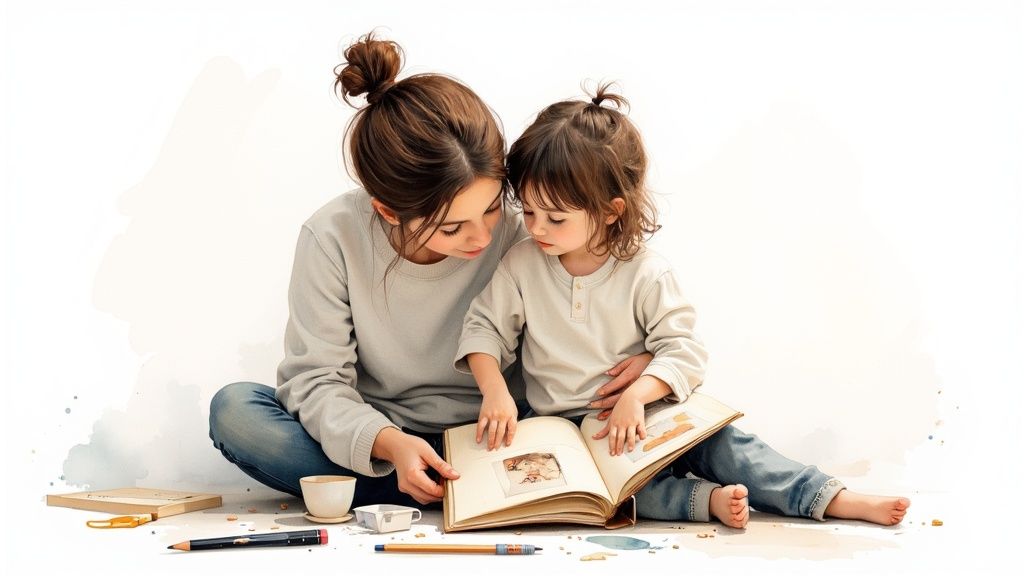
There’s a special kind of wonder that lights up a child's eyes when they see themselves as the hero of a story. When you create a book by hand, it becomes more than just a craft project. It’s an act of love that shows a child their stories, ideas, and experiences are important. The process itself becomes a cherished memory, forging a deep connection between the storyteller and the listener.
The real heart of a homemade book is its personal touch. You can capture the silly sound the dog makes, turn a memorable family vacation into an epic adventure, or write a comforting tale to ease the nerves before the first day of school. These details make reading feel intimate and relatable, which is a game-changer for early literacy.
More Than Just a Story
A DIY book is a powerful tool for growth and connection. The benefits ripple out far beyond the last page, helping build crucial skills and strengthening family ties in some really meaningful ways.
- Boosts Confidence and Creativity: When kids get to help make their own book, they see their ideas come to life. This is a huge confidence booster and shows them just how powerful their imagination can be.
- Encourages Reluctant Readers: For a child who isn’t naturally drawn to reading, a story starring them, their friends, or their favorite teddy bear can be the perfect hook to get them engaged.
- Creates Lasting Keepsakes: A toy might be forgotten in a few months, but a handmade book is a tangible piece of your family's history that you’ll treasure for years to come.
A personalized story speaks directly to a child’s heart. It validates their world, their feelings, and their importance, turning the act of reading from a passive activity into an exciting, personal adventure. This is where the foundation for a lifelong passion for books is built.
The Modern Approach to Personalization
While there’s nothing wrong with scissors, glue, and crayons, technology has made it easier than ever to create a book that looks truly polished and professional. If you want to take your project to the next level with incredible visuals, there are some fantastic shortcuts available.
For example, imagine turning a photo of your child into a storybook character instantly. With a tool like LoveToRead.AI, you can do just that. It lets you create personalized stories in seconds, convert your real-life photos into characters, and build a reusable library of your family to star in different adventures. You can even order a professionally printed hardback copy, transforming your heartfelt idea into a library-quality masterpiece with the absolute best art styles and character persistence.
This guide will walk you through every option—from classic crafting to a little bit of modern magic.
Finding Your Story in Everyday Moments
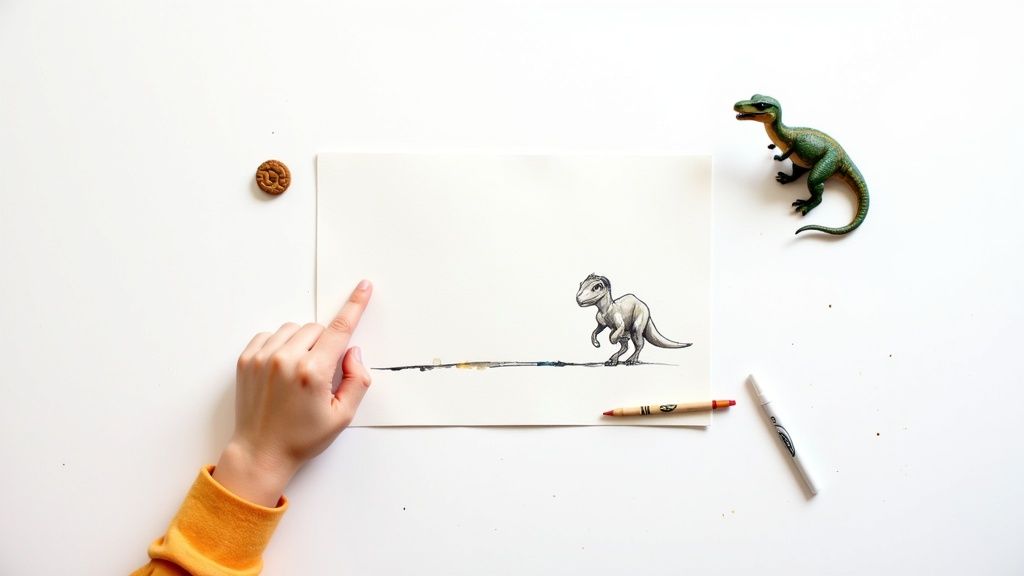
Here's a secret: the very best stories for kids aren't born from epic fantasies or complicated plots. They bubble up from the small, wonderful, and sometimes silly details of everyday life. You absolutely do not need to be a professional author to create a story your child will cherish for your DIY children's book. In fact, your unique viewpoint as their parent or caregiver is your biggest advantage.
Inspiration is hiding in plain sight. The real trick is to spot a simple idea that will click with your child and then spin a short, satisfying little tale around it.
Uncovering Ideas in Your Daily Routine
Believe it or not, your family's life is a goldmine of story ideas. Kids love seeing their own world reflected back at them, which is why simple, relatable moments make for the most captivating books. Just think about what makes your family yours.
- Family Traditions: Do you have a special Saturday morning pancake ritual? A story about "The Magical Pancake that Wouldn't Be Eaten" can turn a simple breakfast into a grand adventure.
- Overcoming Small Fears: A child's first haircut, a trip to the dentist, or the wobbly journey of learning to ride a bike are huge deals in their world. Weaving a story around these moments can make them less scary and celebrate your child’s courage.
- Memorable Outings: A walk in the park can become a quest for the world’s greatest stick. A visit to the zoo could spark a tale about a cheeky monkey who borrows a little girl's favorite hat for the afternoon.
These are the moments filled with genuine emotion and detail, making them the perfect raw material for a story that feels real and full of heart. All you need to do is take a real memory and sprinkle on a tiny bit of "what if" magic.
Your story doesn't need to be complex. For young children, a straightforward structure—a clear beginning, a small challenge, and a happy, reassuring ending—is far more effective than a convoluted plot. It's the emotional connection that truly makes the story stick.
Structuring a Simple, Satisfying Plot
Once an idea grabs you, giving it a little structure makes the writing part so much easier. Most classic children's stories follow a simple three-part formula that you can easily borrow.
The Beginning: Introduce Your Hero
Start by setting the scene. Who is our main character (probably your child!), and what are they up to? For example, "Leo loved his bright red boots more than anything. He wore them everywhere, even on the sunniest days."
The Middle: Present a Small Problem
This is where you introduce a gentle challenge. It shouldn't be truly scary, but it should require the hero to do something. To continue our story, "One day, while splashing in a giant puddle, one of Leo's red boots got stuck deep in the mud!"
The End: A Happy Resolution
The story wraps up with the problem being solved, leaving everyone with a warm, fuzzy feeling. Often, the hero learns a little something along the way. For instance, "With a big PULL from his dad, the boot popped free! Leo learned that even the best boots need a little help sometimes."
Crafting a Book They Can Grow With
Thinking about your child’s age is key. A toddler will be captivated by simple, repetitive phrases and bold pictures, while an older child can follow a story with more twists and turns.
| Age Group | Story Focus | Example Concept |
|---|---|---|
| 1-3 | Simple routines, naming objects, and sensory experiences. | A "Goodnight, Room" style story about saying goodnight to all their favorite toys. |
| 4-5 | Solving simple problems, making friends, and big feelings. | A story inspired by "The Day the Crayons Quit," but about their own toys. |
| 6-8 | Adventures with friends, learning new skills, and family. | A tale about building the "best fort ever" in the living room and defending it from a tickle monster. |
If coming up with a story from scratch still feels a bit overwhelming, modern tools can help you get there. For a truly polished and almost effortless experience, platforms like LoveToRead.AI can generate personalized stories in just a few seconds. A really neat feature is its ability to turn real photos of your child into characters with fantastic art styles and consistency. You can even build a whole library of reusable characters and order a beautiful hardback copy, turning your simple idea into a timeless family treasure.
Bringing Your Story to Life with Illustrations
Now for the fun part! With your story mapped out, it’s time to add the magic: the illustrations. This is where your characters get their faces, your world gets its color, and your story truly comes alive on the page.
Don’t worry if you’re not a professional artist. The goal here isn’t a masterpiece for a museum; it's about creating visuals that connect with your little reader. The art is what pulls a child into the story, helping their imagination fill in the blanks. From simple, love-filled stick figures to colorful collages, every picture you create makes the book that much more special.
Illustration Methods for Your DIY Book
Choosing how to illustrate your book can feel like a big decision, but it really comes down to your skills, budget, and how much time you want to spend. I've seen amazing books made with just crayons and construction paper, and equally stunning ones created with a little help from technology. Let's break down the most common approaches.
| Method | Required Skills | Cost | Time Investment | Best For |
|---|---|---|---|---|
| Traditional Art | Basic drawing, painting, or crafting. Enthusiasm is key! | $ (Low) – Uses common art supplies. | High | A hands-on, crafty feel. Perfect for getting kids involved in the creative process. |
| Photo-Based | Basic photo editing or scrapbooking skills. | $ (Low) – Mainly printing costs. | Medium | Creating a highly personalized keepsake that features your child and family as the stars. |
| Digital Design | Familiarity with simple design apps or software. | $-$$ (Low to Medium) – Free tools available, but some have costs. | Medium | A clean, polished look with lots of flexibility for edits and changes. |
| AI-Powered Tools | None! Just need a clear idea and photos to upload. | $$-$$$ (Medium to High) – Subscription or per-book costs. | Low | Effortlessly creating professional, consistent illustrations from your own photos. |
Ultimately, there’s no right or wrong answer. The best method is the one that feels exciting and achievable for you.
The Classic Touch: Hands-On Illustration
For many, the real charm of a homemade book is in its handmade feel. Digging into art supplies you probably have lying around the house is a fantastic way to create something tangible and unique. Plus, it’s a wonderful screen-free activity to do with your kids.
Here are a few ideas to get you started:
- Drawing and Painting: This is the go-to for a reason. Grab some crayons, colored pencils, markers, or even a simple watercolor set. The key is not to stress about perfection. A drawing from you, filled with character and love, means more than any flawless illustration from a stranger.
- Collage Creations: Not confident with a pencil? Collage is your best friend. Snip pictures from old magazines, use colorful construction paper, or add texture with fabric scraps and buttons. You can build entire scenes this way, creating rich, layered worlds for your story.
- Stamping and Printmaking: This one is always a hit with the little ones. Carve a potato into a simple shape, use a sponge, or even get your child’s fingerprints involved to create fun patterns and characters. It adds a playful, repetitive element that young readers adore.
The real job of an illustration is to capture the feeling of the story. A simple, charming drawing that hits the right emotional note will always be more powerful than a technically perfect one that feels cold.
Going Digital: Photos and Design Apps
If getting out the paint and glitter feels a bit overwhelming, don’t sweat it. Modern tools can help you create a polished, professional-looking book without needing a single paintbrush.
One of the most touching ways to illustrate a story is by using your own family photos. You can simply print them out and paste them onto the pages, creating a beautiful scrapbook-style narrative. This makes the book instantly meaningful—your child gets to see themselves, your family, and your pets as the main characters!
Digital design apps also open up a huge world of creative possibilities. Free tools allow you to mix and match clipart, add text, and arrange digital backgrounds on a computer or tablet. This gives you tons of flexibility to tweak and rearrange things until every page is just right. This corner of the market is growing fast; the interactive children's book world, which includes this kind of customizable content, was valued at $2.18 billion and is expected to more than double in the next decade. You can discover more insights about this growing market and its trends.
The Best of Both Worlds: An AI-Powered Solution
What if you could have the deeply personal touch of your own photos but with the artistic flair of a professionally illustrated book? This is where some incredible new technology comes into play.
For a truly stunning result without the steep learning curve, an AI platform can act as your personal illustrator. Instead of spending hours drawing, you can generate beautiful, consistent artwork in a matter of seconds.
This is exactly what a tool like LoveToRead.AI was designed for. It completely changes the game by letting you:
- Turn real photos into storybook characters. Just upload a picture of your child, a grandparent, or even the family dog, and the AI will transform them into an illustrated character you can use on every page.
- Build a library of reusable characters. Once a character is created, you can save it and drop it into future stories, ensuring they always look exactly the same. No more trying to redraw Fido perfectly on page 12!
- Choose from gorgeous, high-quality art styles. Whether you’re dreaming of a soft watercolor look or a bright, bold cartoon vibe, you can pick a style that perfectly matches the tone of your story.
- Order a professionally printed hardback. When your book is finished, you can order a durable, library-quality hardback copy. It turns your project into a lasting keepsake that can be passed down for years.
This approach takes the biggest hurdle—creating the art—off your plate. It lets you focus on telling a great story, knowing the visuals will be nothing short of breathtaking. It’s the perfect blend of a personal touch and a professional finish for your one-of-a-kind children’s book.
Assembling Your Masterpiece From Pages to Book
You've done it. The story is on paper, the illustrations are finished, and now you're holding a stack of pages that are just begging to become a real book. This is the moment where the magic really happens, turning your project into something you can actually hold and read.
Putting it all together is one of the most satisfying parts of the whole process. You’ll see your hard work physically take shape, page by page, into the keepsake you imagined from the very beginning.
Simple At-Home Binding Techniques
Good news: you don't need a fancy bookbinding studio to give your project a charming and sturdy finish. A few basic craft supplies and a little patience are all it takes to create that classic homemade feel.
Here are a few of my favorite go-to methods:
- Saddle Stitching: This sounds technical, but it’s surprisingly simple. Just stack your pages, fold them in half like a booklet, and use a needle and some sturdy thread to sew along the center crease. Three or four stitches are usually plenty to keep a small book held together tight.
- Japanese Stab Binding: If you’re after a more decorative, elegant look, this is a fantastic option. Instead of sewing the fold, you'll punch a few holes through the entire stack of pages near the spine edge. Then, you weave thread through them to create a beautiful, visible pattern.
- Simple Gluing: Not a fan of sewing? No problem. A strong craft glue or even a hot glue gun can work wonders. Just stack your pages neatly, apply a generous line of glue along the spine, and press a piece of sturdy cardstock over it to form the cover's spine.
Before you get to binding, you've likely spent a lot of time on the creative part inside.
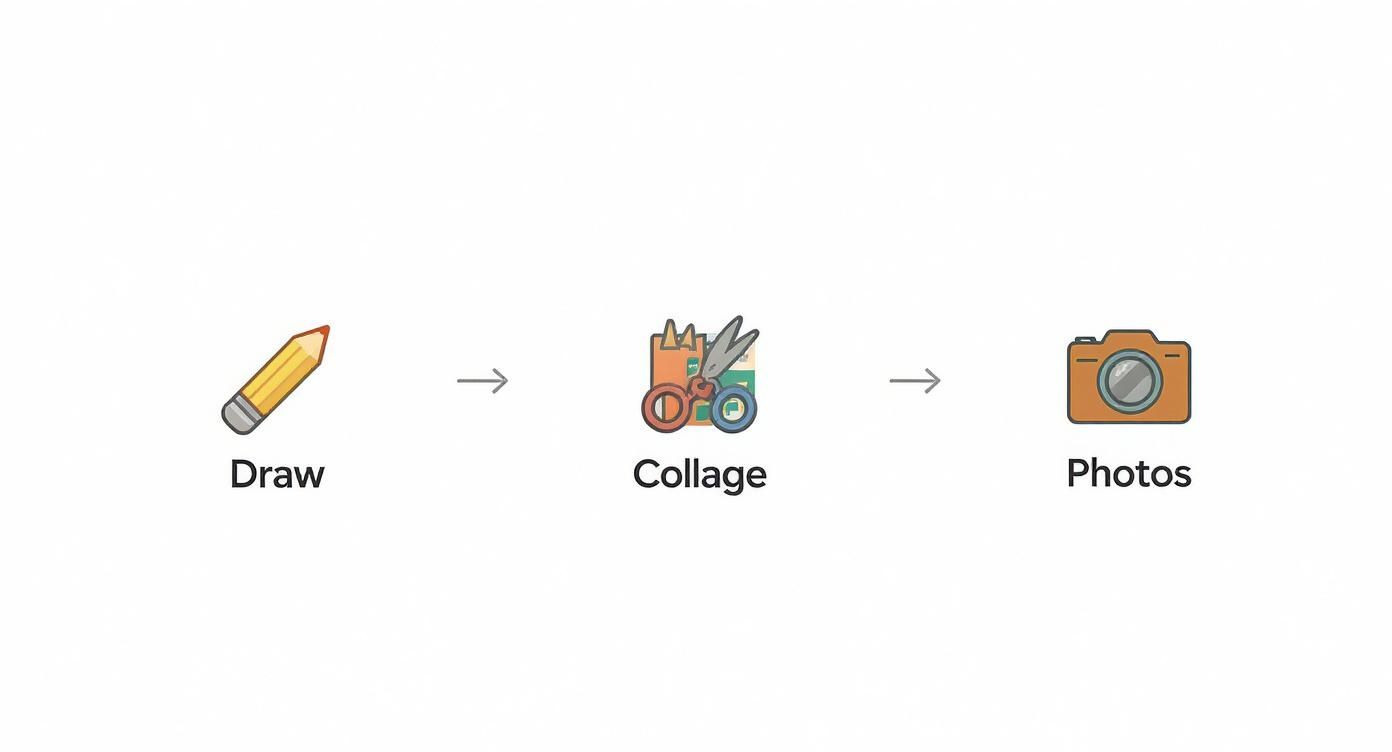
Each of these hands-on approaches gives your book its unique personality even before you bind the pages together.
Choosing Your Cover and Finishing Touches
The cover is your book’s first impression, so make it count! A thick piece of cardstock, some decorated cardboard, or even a piece of fabric can make for an inviting and durable cover. This is your chance to add the title and, of course, the author’s name—don’t forget to give your child a byline if they helped create it!
A little detail I love is adding a title page with a personal dedication. Something simple like, "For Lily, the best adventurer I know. Love, Mom" instantly makes the book a priceless treasure. For extra durability against spills and grabby hands, consider laminating the cover.
The imperfections of a handmade book are part of its charm. A slightly crooked stitch or a smudge of glue is a reminder that it was made with love, not by a machine. Embrace these unique details—they are what make your book one-of-a-kind.
When to Go for a Professional Finish
There’s a special magic to a purely handmade book. But sometimes, you write a story that feels so important you want it to last for generations. If you’re dreaming of a library-quality keepsake with a durable hardback cover and flawless printing, professional options are more accessible than you might think.
This desire for quality isn't just a feeling; it’s a huge trend. The global children's book market was recently valued at around $12.16 billion, and personalized storybooks are a major reason for that growth. As more families look for unique reading experiences, the demand for custom-made books is climbing. You can read the full research about the children's book market to see just how big this is getting.
This is where a service can perfectly bridge the gap between a heartfelt DIY idea and a polished, professional product.
If you’ve poured your heart into a story and want to see it transformed into a timeless hardback, LoveToRead.AI makes it incredibly simple. Our platform is built to create stunning, personalized storybooks from your ideas. We stand out because we offer:
- Personalized stories in seconds, complete with beautiful illustrations.
- The ability to convert your real-life photos into characters and build a reusable library of your family and friends.
- The absolute best art styles with unmatched character consistency from page to page.
- The option to easily order any story as a beautiful hardback copy.
We handle all the technical production headaches, letting you go from a digital creation on your screen to a gorgeous, professionally bound book delivered right to your door. It’s the perfect way to give your heartfelt project the lasting, high-quality finish it truly deserves.
What Does It Really Cost to Self-Publish a Children's Book?
So, your handmade book is finished, and it’s a smash hit with the family. The kids love it, your partner loves it, and now a little voice in your head is asking, “Could this be a real book?”
It’s a fantastic thought. Turning that personal project into something you can sell is exciting, but it’s a big leap. Before you dive headfirst into the world of self-publishing, it's wise to get a clear-eyed look at what it actually costs.
Making a book for your own child is a labor of love, costing little more than art supplies and your time. But taking that same book to the public? That means creating a professional-level product, and professionalism comes with a price tag.
Breaking Down the Budget
When you shift from making a family keepsake to a product for the marketplace, a whole new set of costs pop up. Your goal is to create something that looks just as good as the books from big publishers, and that requires investing in quality.
Here’s where the money typically goes:
- Professional Illustrations: If you're not a professional artist, this is almost always the biggest expense. A talented illustrator can make your story sing, but their skills can easily run into the thousands of dollars.
- Editing and Proofreading: This is the step too many first-timers skip. A good editor will make sure your story flows, the grammar is perfect, and it’s engaging for young readers. It's absolutely critical.
- Book Design and Formatting: Someone has to take your words and pictures and lay them out perfectly for printing. This involves everything from font choice and page layout to designing a cover that grabs attention.
- Printing: The cost per book goes down the more you print, but you're still paying for that first batch of inventory upfront.
These costs stack up fast. A professionally produced, self-published picture book often requires an initial investment of anywhere from $5,000 to $15,000. To even get that money back, you’d likely need to sell between 1,000 and 3,000 copies. That's a tall order when you find out that the median sales for a self-published children’s book are under 500 copies. You can learn more about the profitability of children's books to get a better sense of the financial side.
The Uphill Battle of Breaking Even
And production is just the start. You still have to market the book. That means building a social media presence, maybe running some ads, and doing outreach—all things that cost even more time and money. The royalties you earn from each sale are often small and rarely cover your initial investment without a massive sales volume.
For many people, the most fulfilling route is to let their DIY book remain a treasured family project. The joy and emotional value of a story made with love is priceless and doesn't need a financial return to be a huge success.
A Modern Way to Get a Polished Book
But what if you want that professional quality without the huge financial risk of traditional self-publishing? There’s a fantastic middle ground these days, thanks to modern tools that let you create something gorgeous and personal for a clear, manageable cost.
This is exactly why we created LoveToRead.AI. We wanted to remove those intimidating hurdles. Here, you can generate a personalized story in seconds, complete with beautiful, professional-grade illustrations. Our platform even lets you turn your own photos into storybook characters and build a reusable library of your family, so the characters look right in every single story.
With top-tier art styles at your command, you can easily order any story you create as a high-quality hardback book. It’s the perfect way to get that polished, professional finish for your personal masterpiece, without breaking the bank.
Got Questions About Making Your Own Children's Book?
As you start dreaming up your story, a few practical questions will probably bubble to the surface. It’s one thing to have a great idea, but turning it into a real, physical book for your child can feel a little daunting.
From figuring out how to make a book that survives a toddler's "love" to worrying that your stick figures aren't good enough, let's walk through some of the most common things people ask.
At What Age Can My Child Actually Help Out?
This is a big one, but the wonderful answer is: any age! The key isn't hitting a specific number, but tailoring the tasks to what your child can do and, most importantly, what they’ll find fun.
-
Toddlers (ages 2-3): Keep it simple and sensory. Let them be your "abstract artist" by scribbling on a page you later use as a background. They can point to the paint colors they want or help you smear glue with a glue stick. It's all about exploring and being part of the process.
-
Preschoolers (ages 4-5): Their imaginations are firing on all cylinders at this age. Let them be the storyteller! Have them dictate the plot to you, dream up silly character names, and create their own drawings. You're the scribe and engineer; they're the creative genius.
-
Early Elementary Kids (ages 6-8): They're ready to be a true co-creator. They can help you write the actual sentences, draw entire scenes on their own, and even help with the assembly, like punching holes or threading yarn for a simple binding.
Remember, the goal here is connection, not perfection. Matching the project to their abilities keeps it from getting frustrating and makes the whole experience something you'll both cherish.
How Can I Make a Book That Will Actually Last?
Ah, durability. This is a very real concern for anyone making something for a child who loves to chew, tear, and test the limits of gravity. A paper book in the hands of a determined toddler has a short life expectancy unless you build it tough.
A simple upgrade is to print on heavy cardstock instead of flimsy printer paper. If you want to go full-on toddler-proof, laminating each page before you bind it is the way to go. It makes the pages nearly impossible to tear and, as a bonus, completely wipeable.
Another fantastic route is creating a fabric "soft book." Use squares of felt or soft cotton for your pages and create the illustrations from different textured fabrics. You can either sew them on or use a good non-toxic fabric glue. The result is a cuddly, washable book that’s perfect for the littlest hands.
When it comes to binding, think stronger than staples or string. A few sturdy metal binder rings, threaded through holes you’ve reinforced with grommets, can withstand a surprising amount of pulling and page-flipping.
Do I Need to Worry About Copyright?
This is a great question, but for most people making a personal book, the answer is refreshingly simple. If you're creating a one-of-a-kind book as a gift for your own child or family, you don't need to worry about copyright at all. Feel free to be inspired by anything and everything.
However, the game changes completely if you plan to sell or distribute your book.
If you want to list copies on Etsy, share a PDF online, or publish it in any capacity, copyright is something you absolutely must respect. Your own original story and art are automatically copyrighted to you, which is great. But this also means you cannot use characters, images, or specific plot points from other people's work (think: no pasting a picture of Peppa Pig into your story). That’s copyright infringement. If publishing is your dream, every single element has to be 100% your own creation.
What If I Can’t Draw to Save My Life?
This is probably the #1 fear that stops people in their tracks. But I promise you, you don't need to be an artist to make a visually stunning book. Some of the most charming and personal books I’ve ever seen involved zero drawing.
Collage is your best friend here. Grab some old magazines, wrapping paper, or catalogues and a pair of scissors. You can cut out textures, colors, and images to build entire scenes. Another beautiful method is to use your own photos! A story featuring pictures of your child, your family, and your pets makes the book incredibly personal and meaningful.
Digital tools have also opened up a world of possibilities. But what if you want that perfect blend of personal photos and professional-looking art without all the work?
That’s exactly where a service like LoveToRead.AI comes in. You can sidestep the creative roadblocks and jump straight to the fun part. We help you create personalized stories in just a few seconds. Our platform can even turn your real-life photos into storybook characters that you can use again and again, ensuring the art style is always consistent and beautiful. When you've crafted the perfect tale, you can order it as a gorgeous hardback book.
You can learn more about creating your own professional-quality book on the LoveToRead.AI website.