How to Develop a Love for Reading: A 2026 Guide
In an increasingly digital world, the ability to focus, imagine, and empathize is more valuable than ever. Reading is the cornerstone of these skills, offering a gateway to new worlds and a deeper understanding of our own. But for many, the question remains: how to develop a love for reading in a world of endless distractions? The good news is that fostering this passion isn’t about force; it’s about creating an environment of discovery and joy. This guide provides a clear, step-by-step approach to help you or your child cultivate a lifelong relationship with books.
Why Fostering a Love for Reading Matters in 2026
Before we dive into the ‘how,’ let’s touch on the ‘why.’ A 2025 study from the National Literacy Trust highlighted that children who read for pleasure are not only more likely to achieve academic success but also report higher levels of well-being and empathy. In our fast-paced, AI-driven society, reading provides a unique space for quiet contemplation, critical thinking, and emotional development. It’s an investment in a child’s cognitive and emotional future, providing skills that will serve them for a lifetime. For more ideas on getting started, check out our comprehensive guide on how to inspire kids to read in 2026.
Step 1: Start Early and Build a Consistent Routine
The foundation for a love of reading is built on positive association and routine. The earlier you start, the more ingrained and natural the habit will become.

Integrate Reading into Daily Life
Make reading a non-negotiable part of your day. The most classic example is the bedtime story. This ritual does more than just prepare a child for sleep; it creates a warm, secure, and cherished memory associated with books. Even 15-20 minutes of reading together each day can have a profound impact.
It’s Never Too Early
Don’t wait until a child can understand the words. Reading to infants helps them recognize the rhythm of language and associate your voice with the comfort of a story. Use durable board books with bright colors and varied textures to engage their senses.
Step 2: Create an Inviting Reading Environment
Your physical space can either encourage or discourage reading. The goal is to make books a visible, accessible, and appealing part of your home.
- Designate a Reading Nook: This doesn’t need to be a whole room. A comfortable chair, a beanbag in a quiet corner with good lighting, and a small bookshelf can signal that this is a special place for stories.
- Keep Books Within Reach: Store books on low shelves where children can easily see the covers and pick them out for themselves. Rotate the selection every few weeks to keep it fresh and exciting.
- Offer Variety: Stock your shelves with a diverse mix of genres and formats. Include picture books, non-fiction, graphic novels, magazines, and poetry. A rich literary diet exposes children to different styles and helps them find what they truly enjoy.
Step 3: Empower Them with Choice and Personalization
Autonomy is a powerful motivator. When children have a say in what they read, reading shifts from a task to a privilege. This is a critical step in learning how to develop a love for reading.
Let Them Lead the Way
Take regular trips to the library or a local bookstore and give your child the freedom to explore and choose their own books. Even if their choice isn’t a literary classic, honor it. The goal is to build positive momentum and confidence. Reading anything is better than reading nothing.
Make Them the Hero
One of the most effective ways to engage a child is to put them at the center of the story. Modern technology makes this easier than ever. Platforms like LoveToRead.ai use AI to generate unique stories where your child is the main character. Seeing their own name and a personalized avatar in an adventure makes the story instantly relevant and captivating. This level of personalization can be the spark that ignites a lasting passion. Explore some of the best personalized books for kids in 2026 to see how powerful this can be.
Step 4: Make Reading an Interactive Experience
Reading doesn’t have to be a passive activity. Transforming storytime into an interactive experience makes it more memorable and fun.
- Use Your Voice: Read with expression. Create different voices for characters, vary your pace, and use sound effects. Your enthusiasm is contagious.
- Ask Questions: Pause to ask open-ended questions like, “What do you think will happen next?” or “How do you think that character feels?” This encourages critical thinking and active participation.
- Connect to Their World: Relate the story’s events or characters to your child’s own experiences. If a book is about a trip to the zoo, talk about your own family visit. This makes the narrative more meaningful. For more tips, our guide on how to make reading fun is packed with creative ideas.
Step 5: Be a Powerful Reading Role Model
Children are expert observers. One of the most impactful things you can do is let them see you reading for pleasure. When they see that you value books and make time for them in your own life, they will internalize that message.
Set aside a family-wide quiet reading time, even if it’s just for 10 minutes. Everyone grabs a book, comic, or magazine and enjoys it together. Discuss what you’re reading at the dinner table. Sharing your own excitement about a story demonstrates that reading is a rewarding activity for all ages.
Common Mistakes to Avoid
As you work to cultivate a love for reading, be mindful of these common pitfalls that can inadvertently create negative associations:
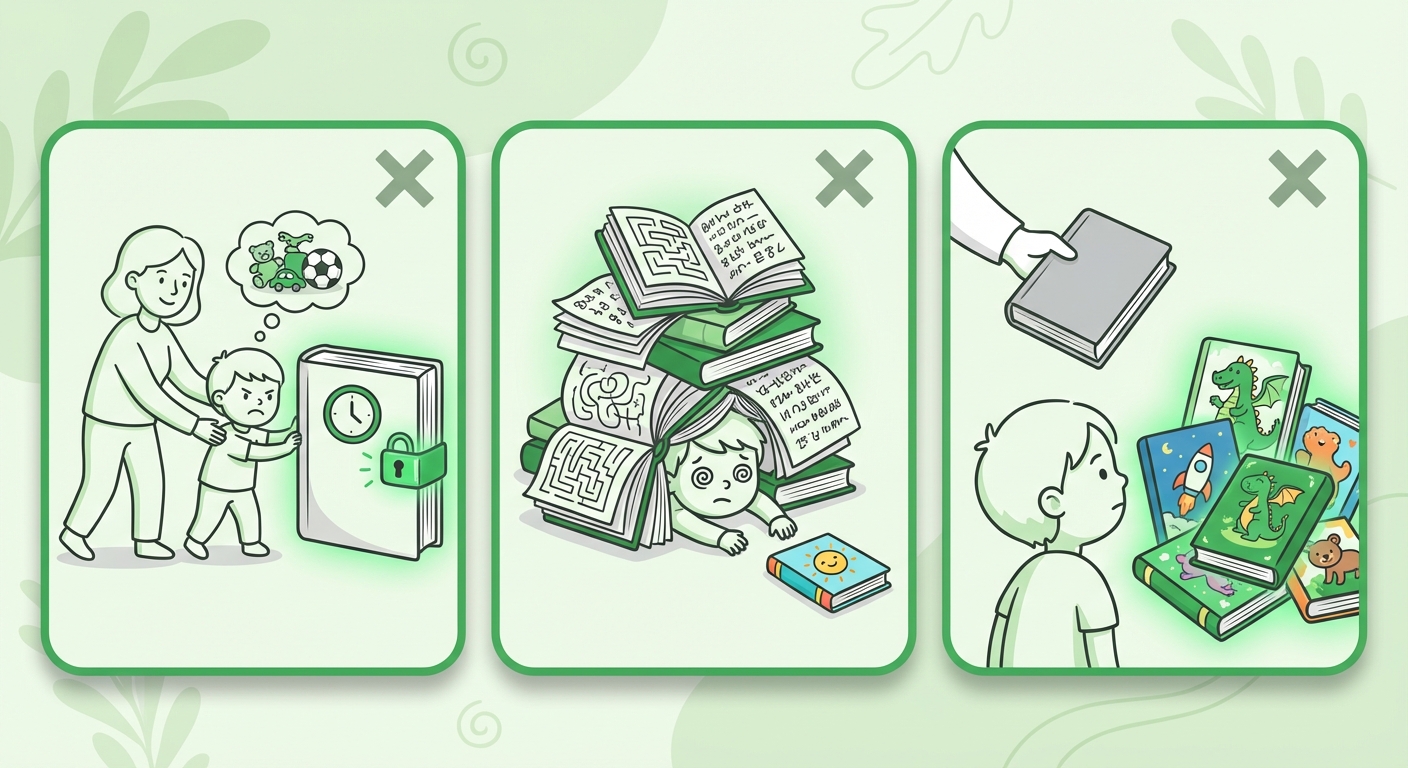
- Forcing It: Never use reading as a punishment or force a child to finish a book they clearly dislike. This will make it feel like a chore.
- Over-Analyzing: Avoid turning every reading session into a quiz. While asking questions is good, constantly testing for comprehension can suck the joy out of the story.
- Criticizing Mistakes: When a child is reading aloud, resist the urge to correct every single mistake. Let them build fluency and confidence. You can gently address recurring issues at a different time.
- Comparing Progress: Every child learns at their own pace. Comparing their reading ability to that of a sibling or classmate can create anxiety and shame.
The Expected Outcome: A Lifelong Reader
By following these steps consistently, you are not just teaching a child to read; you are creating a reader. The expected outcome is a child who sees books as a source of comfort, adventure, and knowledge. They will begin to read independently, seek out new books on their own, and develop a richer vocabulary and a more expansive imagination. Ultimately, you will have given them a gift that provides lifelong enjoyment and a powerful tool for learning and personal growth.
Conclusion: Your Journey to Raising a Reader
Developing a love for reading is a journey, not a destination. It requires patience, consistency, and a focus on joy over performance. By establishing a routine, creating an inviting environment, offering choice, and modeling the behavior yourself, you can set the stage for a lifelong passion. Remember to keep it light and fun, celebrating the magic of stories.
Tools and technologies can be incredible allies on this quest. Exploring innovative platforms like LoveToRead.ai, which allows you to create personalized stories in just 30 seconds, can make your child the hero of their own tale, forging an unbreakable bond between them and the world of books.