How to Foster Creativity in Kids: A 2026 Guide
In our rapidly evolving world, creativity isn’t just a fun hobby—it’s a critical life skill. A 2026 report from the World Economic Forum highlighted creative problem-solving as one of the most in-demand skills for the future workforce. As parents and educators, our role is to nurture this innate ability in our children, equipping them to become the innovators and thinkers of tomorrow. This guide provides a clear, step-by-step approach on how to foster creativity in kids, turning everyday moments into opportunities for imaginative growth.
Why Nurturing Creativity is More Important Than Ever
Before we dive into the ‘how,’ let’s understand the ‘why.’ Fostering creativity goes beyond encouraging a knack for drawing or painting. It’s about developing a mindset that embraces curiosity, resilience, and original thinking. Children who are encouraged to be creative are better communicators, more confident in their ideas, and more adaptable to change. They learn to see challenges not as roadblocks, but as puzzles waiting to be solved. By nurturing their creative spirit, you’re giving them a powerful toolkit for academic success and personal fulfillment in 2026 and beyond.
Step 1: Designate a Space for Creative Exploration
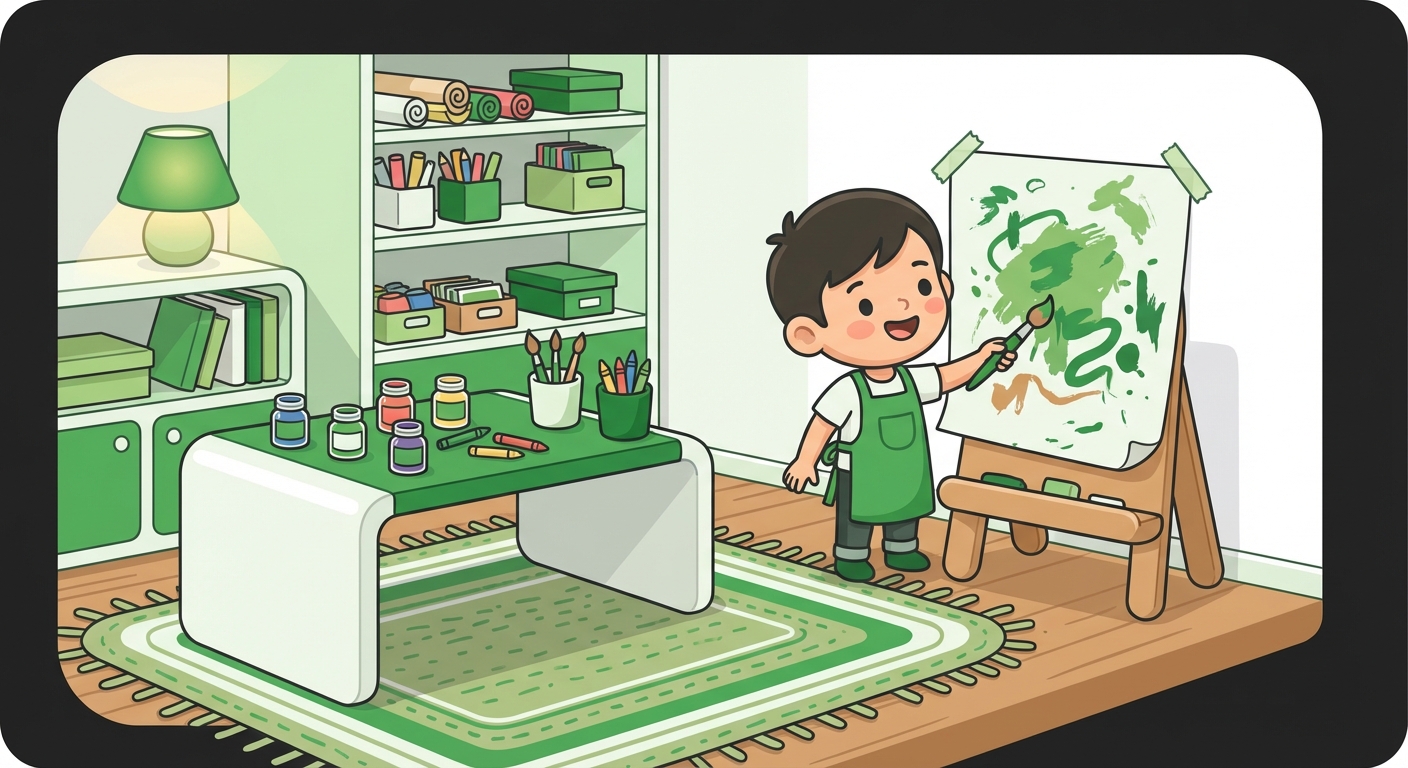
Every artist needs a studio, and every child needs a space where they are free to make a mess and explore their ideas without inhibition. This doesn’t need to be an entire room; a small corner, a designated table, or even a portable ‘creativity kit’ can work wonders.
What to Include in a Creativity Zone:
- Open-Ended Materials: Stock the space with items that can be used in multiple ways. Think LEGOs, plain paper, clay, cardboard boxes, fabric scraps, and recycled materials like tubes and containers.
- Art Supplies: Provide a variety of tools like crayons, markers, paint, scissors, and glue. The goal is to offer options, not to overwhelm.
- Accessibility: Keep materials at the child’s level so they can access them independently whenever inspiration strikes.
Tip: Focus on the process, not the product. The value is in the act of creating—the experimenting, the thinking, the doing—not in producing a perfect-looking piece of art.
Step 2: Champion Unstructured, Child-Led Play
In a world of packed schedules and structured activities, the simple power of unstructured play is often overlooked. This is playtime with no set rules, goals, or adult direction. It’s where a cardboard box becomes a spaceship and a blanket fort becomes a dragon’s lair. This freedom is the bedrock of imagination.
Unstructured play allows children to:
- Invent their own rules and scenarios.
- Solve problems independently (e.g., “How can we make this tower taller without it falling?”).
- Develop social skills by negotiating roles and ideas with peers.
Warning: Be mindful of overscheduling. While lessons and sports are valuable, children need ample downtime to simply be and let their minds wander. Boredom is often the spark that ignites the most creative ideas.
Step 3: Ask Open-Ended Questions to Spark Thinking
The questions we ask can either shut down a conversation or open up a world of possibilities. Instead of questions with a simple ‘yes’ or ‘no’ answer, practice asking open-ended questions that encourage deeper thought.
Examples of Creativity-Boosting Questions:
- Instead of: “Did you have fun?” -> Try: “What was the most surprising part of your day?”
- Instead of: “Is that a dog?” -> Try: “Tell me about what you’re drawing.”
- Powerful starters: “What if…?”, “I wonder…”, “How else could we…?”
This questioning technique is a fundamental part of how to encourage storytelling in kids, as it prompts them to build narratives and explore ideas.
Step 4: Unleash Imagination Through Storytelling
Stories are the language of imagination. They teach children about structure, empathy, and cause and effect, all while expanding their perception of what’s possible. Make storytelling a regular part of your routine, whether it’s reading before bed or making up silly tales in the car.
To take this a step further, embrace personalized storytelling. When children see themselves as the hero of a story, it validates their own experiences and empowers their imagination. Platforms like LoveToRead.ai are revolutionizing this space by using AI to create custom books where your child is the main character. In just a few seconds, you can generate a unique adventure that reflects their interests and appearance, making reading a truly immersive and creative act. Understanding what is personalized storytelling can open up a new avenue for engaging your child’s creative mind.
Step 5: Reframe Mistakes as Learning Opportunities
Nothing stifles creativity faster than the fear of failure. It’s crucial to create an environment where children feel safe to take risks, try new things, and make mistakes. When a project doesn’t turn out as planned, treat it as a discovery.
Instead of saying, “That’s not right,” try asking, “What did you learn from that?” or “What would you do differently next time?” Celebrate the effort, the courage to try, and the resilience to try again. This teaches children that creativity is a journey of experimentation, not a quest for perfection.
Step 6: Broaden Their Horizons with New Experiences
Creativity is fueled by new inputs and connections. The more a child sees, hears, and experiences, the richer their well of ideas becomes. You don’t need a round-the-world trip to achieve this; new experiences are all around us.
- Explore your community: Visit a new park, a local museum, or a farmer’s market.
- Engage the senses: Cook a new recipe together, listen to a different genre of music, or plant a small garden.
- Travel through books: Reading is one of the easiest and most effective ways to introduce children to different cultures, ideas, and perspectives, which is a key part of how to make reading fun.
Common Mistakes to Avoid
Even with the best intentions, it’s easy to accidentally hinder a child’s creative development. Be mindful of these common pitfalls:
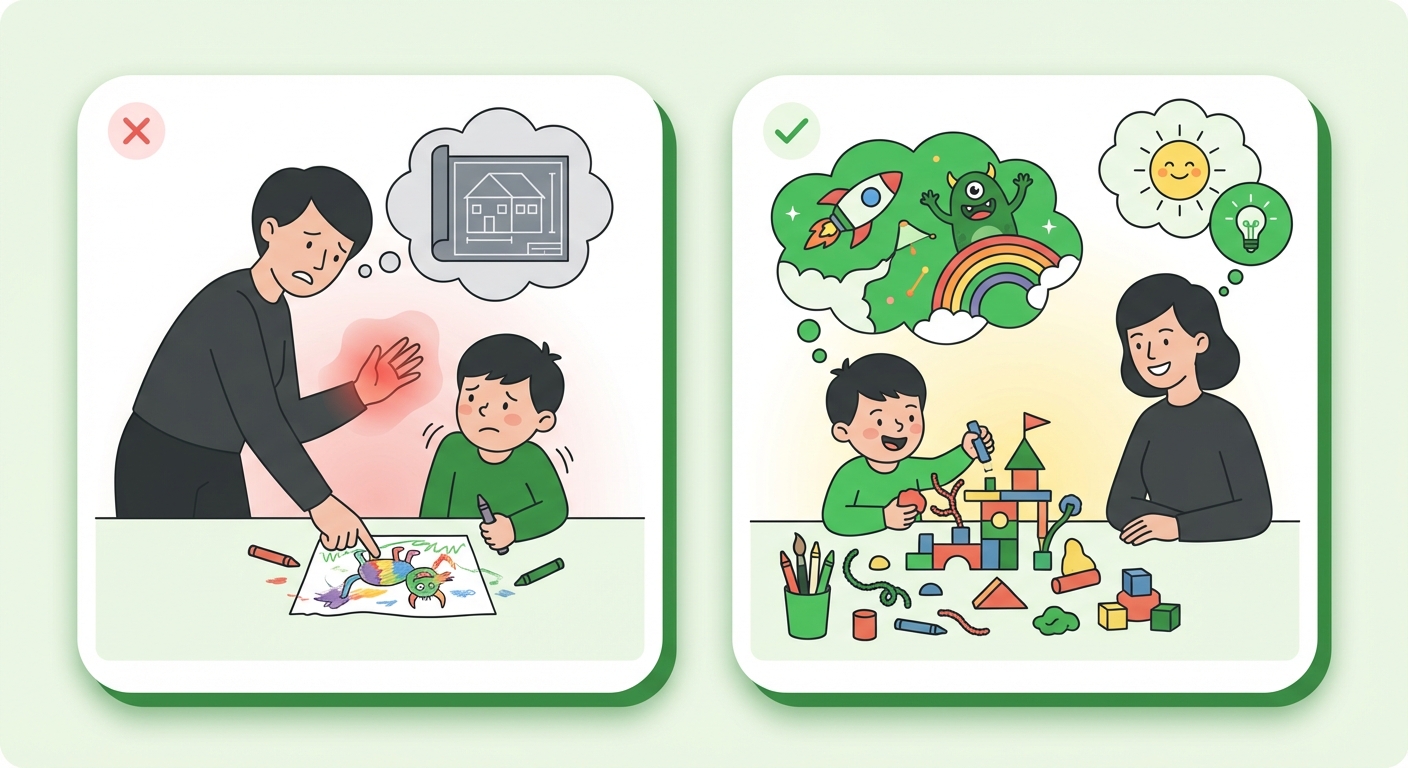
- Micromanaging Play: Avoid dictating how a toy should be used or what a drawing should look like. Let them lead.
- Overpraising with Empty Words: Instead of a generic “You’re so creative!”, offer specific feedback like, “I love the bright colors you chose for the sky! It makes me feel happy.”
- Providing Instant Solutions: When your child is stuck on a problem, resist the urge to jump in with the answer. Encourage them to brainstorm solutions first.
- Pushing for a Finished Product: Don’t rush the creative process. Sometimes, the most valuable part is the exploration that happens along the way, even if it doesn’t result in a completed project.
Expected Results: The Benefits of a Creative Upbringing
By consistently applying these steps, you are not just teaching a skill; you are nurturing a way of being. Children raised in a creativity-supporting environment are more likely to become:
- Resilient Problem-Solvers: They see challenges as opportunities and are not afraid to try different approaches.
- Confident Communicators: They are better able to express their unique ideas and perspectives.
- Curious, Lifelong Learners: Their inquisitive nature drives them to continue exploring and learning throughout their lives.
- Innovative Thinkers: They can connect seemingly unrelated ideas to create something new.
Ultimately, the goal of learning how to foster creativity in kids is to raise adaptable, resourceful, and imaginative individuals who are prepared to thrive in an ever-changing world.
As you build an environment rich with questions, play, and new experiences, remember the power of stories to tie it all together. Tools that place your child at the center of the narrative, like the unique and engaging stories from LoveToRead.ai, can be a wonderful spark for their creative journey, transforming them from passive listeners into the active heroes of their own imaginative worlds.