How to Inspire Kids to Read: A 2026 Guide
In our fast-paced, digital world of 2026, competing for a child’s attention can feel like an uphill battle. With interactive games and endless video streams at their fingertips, how can a simple book compare? The good news is that it can. Learning how to inspire kids to read is not about forcing a habit, but about nurturing a lifelong love for stories. This journey is one of the most valuable investments you can make in their future, boosting their vocabulary, empathy, and critical thinking skills.
Reading is more than just an academic requirement; it’s a gateway to new worlds, a tool for understanding complex emotions, and a foundation for lifelong learning. A 2026 report from the Children’s Literacy Foundation found that children who read for pleasure are, on average, more creative, articulate, and academically successful. This guide provides actionable steps to help you cultivate that passion in your child.
Step 1: Create a Reading-Rich Environment
Your home environment is the first and most powerful influence. Children are more likely to pick up a book if reading is a visible, normal, and enjoyable part of daily life. The goal is to make reading an easy and attractive choice.
Build an Accessible Home Library
- Variety is key: Stock your shelves with a diverse range of materials—picture books, chapter books, graphic novels, magazines, and non-fiction. Let your child see that reading comes in many forms.
- Keep books at their level: Place books on low shelves or in baskets where your child can easily see and reach them without needing to ask for help.
Designate a Cozy Reading Nook
Create a special spot dedicated to reading. It doesn’t have to be elaborate; a comfy chair, a beanbag with good lighting, or even a pile of pillows in a quiet corner can signal that this is a place for relaxation and stories. Making the physical act of reading comfortable makes the experience more appealing.
Tip: Be a reading role model. Let your children see you reading for pleasure. When they see you enjoying a book, it sends a powerful message that reading is a worthwhile and enjoyable activity for everyone, not just a school assignment.
Step 2: Empower Them with Choice
Autonomy is a powerful motivator for children. When kids feel in control of their reading journey, it ceases to be a chore and becomes an adventure. Let them be the captain of their literary ship.

- Regular library or bookstore visits: Make trips to the library a regular, exciting outing. Let them browse freely and check out anything that catches their eye, even if it’s the same book for the tenth time.
- Respect their taste: They might be drawn to graphic novels, silly joke books, or books about video game characters. Embrace it! Any reading is good reading. The goal is to build positive associations and fluency. You can find more ideas in our guide on how to make reading fun.
Warning: Never use reading as a punishment. Forcing a child to read because they misbehaved will create a negative association that can be difficult to undo.
Step 3: Make the Story All About Them
One of the most effective ways to capture a child’s imagination is to place them directly at the center of the story. When a child sees themselves as the hero, the connection to the narrative becomes personal and deeply engaging.
Personalization transforms a passive activity into an interactive experience. This is where technology can be a remarkable ally. Platforms like LoveToRead.ai use AI to create unique stories where your child is the main character. You can create a custom avatar that looks just like them, build a library of their adventures, and generate a new story in under a minute. This level of customization makes a child feel seen, valued, and excited to find out what they do next in the story.
Seeing their own name and likeness in a book validates their importance and shows them that stories are not just about distant characters, but about them and their world. It’s a powerful method to hook a reluctant reader. For more ideas, explore some of The Best Personalized Books for Kids in 2026.
Step 4: Connect Reading to Their Interests
Bridge the gap between your child’s existing passions and the world of books. By linking reading to what they already love, you show them that books are a source of knowledge and entertainment for their favorite subjects.
- If they love dinosaurs, find exciting non-fiction books about fossils and captivating stories about prehistoric adventures.
- If they are obsessed with building, find books about architecture, engineering, or creative construction.
- If they love art, find biographies of famous artists or books with stunning illustrations.
This strategy demonstrates that reading is not an isolated activity but a tool that can enrich every aspect of their lives.
Step 5: Leverage Technology Wisely
While we often see screens as the enemy of reading, 2026 offers incredible tools that can support literacy. The key is to choose high-quality, engaging digital content that promotes reading rather than replacing it.
- Audiobooks: These are fantastic for car rides or quiet time. They help children develop an ear for language, cadence, and storytelling, even if they aren’t decoding the words themselves.
- Interactive Reading Apps: Many apps turn stories into interactive experiences. Look for apps that focus on story and vocabulary, not just mini-games. For a curated list, check out The 5 Best Kids Reading Apps of 2026.
- AI Story Generators: As mentioned, tools like LoveToRead.ai use AI for good, making it easy for parents to create fresh, personalized content that keeps kids engaged.
Step 6: Make Reading a Shared Experience
Reading doesn’t have to be a solitary activity. Turning it into a social, shared experience can build positive memories and strengthen family bonds.
- Read aloud daily: The benefits of reading aloud extend far beyond the toddler years. It’s a chance to connect, tackle more complex stories together, and model expressive reading.
- Talk about books: Discuss the story as you read. Ask questions like, “What do you think will happen next?” or “How do you think that character felt?” This builds comprehension and critical thinking skills.
- Encourage storytelling: After reading, ask your child to tell you the story in their own words or to create an alternate ending. This reinforces the narrative and builds their own creative confidence. Learn more in our guide on How to Encourage Storytelling in Kids: A 2026 Guide.
Common Mistakes to Avoid
As you work on how to inspire kids to read, it’s just as important to know what not to do. Avoid these common pitfalls:
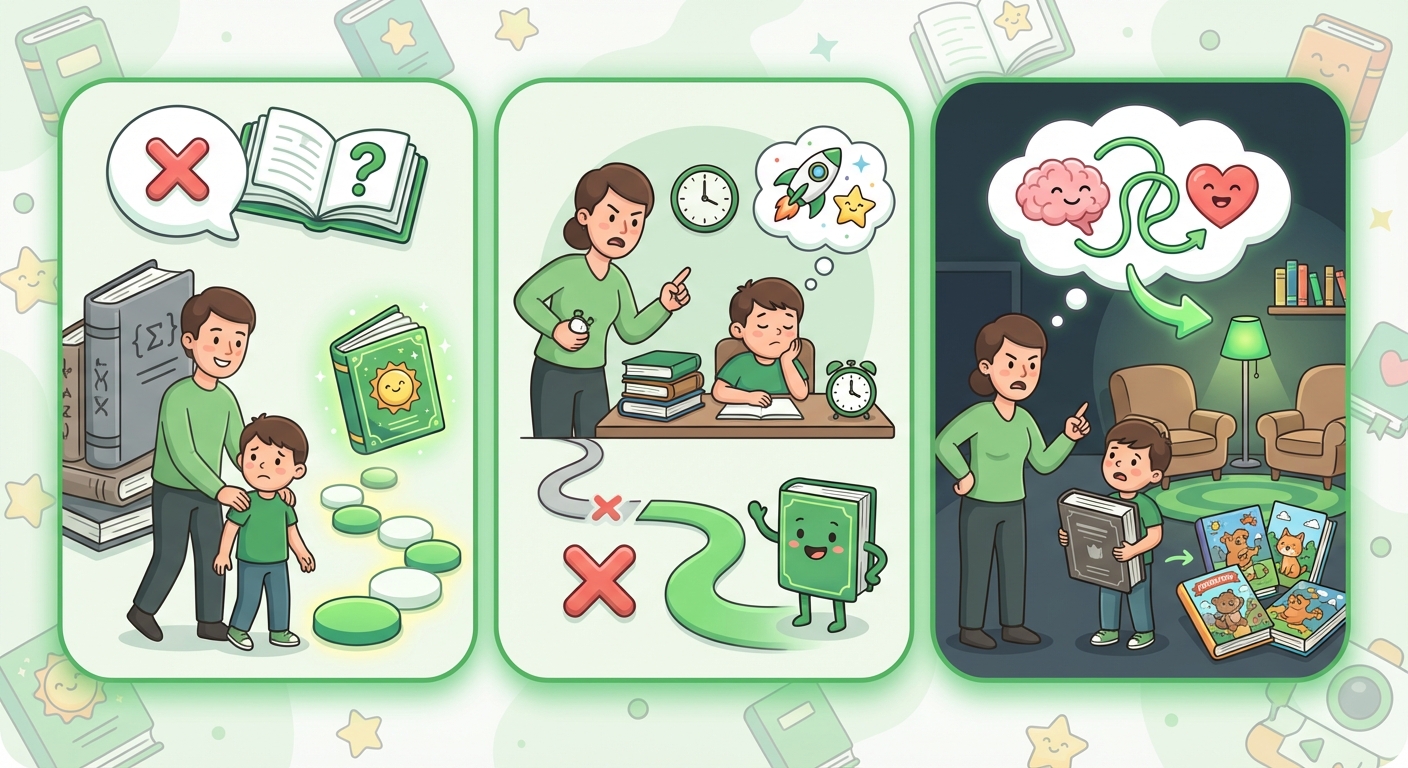
- Forcing a specific reading level: Pushing a child into books that are too difficult can lead to frustration and a sense of failure.
- Over-correcting their mistakes: When they read aloud, avoid correcting every single error. This can make them self-conscious and hesitant to try.
- Comparing them to siblings or peers: Every child’s reading journey is unique. Comparison creates pressure and anxiety.
- Giving up too soon: If a child resists reading, don’t assume they’ll never love it. Try a different approach, a new genre, or a new format.
Expected Results: A Lifelong Love of Reading
By consistently applying these strategies, you are not just teaching a skill; you are cultivating a mindset. The expected outcome is a child who sees reading not as a chore, but as a source of joy, comfort, and endless discovery.
You can expect to see:
- Increased curiosity and a desire to learn more about the world.
- Improved academic performance across all subjects, not just language arts.
- Greater empathy as they explore the world from different characters’ perspectives.
- A strong foundation for critical thinking and creative problem-solving.
Inspiring your kids to read is a journey of patience, creativity, and connection. By making reading a personalized, positive, and shared experience, you give them a gift that will enrich their entire lives. For a powerful and exciting way to start this journey, consider making them the hero of their own story with a personalized book.