Create Custom Story Books in 2026: A Parent’s Step-by-Step Guide (LoveToRead.ai)
From choosing a theme and adding your child’s name and traits to generating AI illustrations, reading online for free, and upgrading to a printed hardback gift book.

“Custom story books” used to mean picking your child’s name and selecting one of a few preset characters. In 2026, it means your child can genuinely star in a story that matches their personality, interests, and even the exact tone you want at bedtime—complete with AI-generated illustrations that look like they belong in a real picture book.
This guide shows you how to create a personalized story on LoveToRead.ai step by step: choosing a theme, building a main character, generating consistent illustrations, reading online for free, and (when the moment is right) upgrading to a hardback keepsake. If you’ve ever wondered “how do I make a personalized story book for my child that actually feels like them?”—this is the workflow.
- Pick a theme based on your reading goal (calm, confidence, learning, values, milestone).
- Personalize your main character with name, traits, and a few specific “comfort details.”
- Generate AI illustrations with a consistent style and recognizable character cues.
- Read online for free to preview pacing, edit, and make it bedtime-ready.
- Upgrade to a printed hardback when you want a gift-quality keepsake.
What “Custom Story Books” Mean in 2026 (and Why Parents Love Them)
In 2026, custom story books typically combine three elements:
- Personalized narrative: your child’s name, pronouns, family context, and the kinds of challenges they relate to (first day jitters, sibling changes, trying something new).
- Child-specific details: appearance cues (hair, skin tone, glasses), personality traits (curious, brave, thoughtful), and interests (dinosaurs, ballet, rockets, ocean animals).
- Tailored illustrations: images generated to match the story’s “world,” while keeping your main character consistent across pages.
Why this format works so well for kids
Parents love personalized storybooks for the novelty, but children often respond for deeper reasons. When a story mirrors a child’s identity and interests, you typically see:
- Stronger engagement: kids focus longer when they recognize themselves in the story.
- Confidence boosts: stories can gently rehearse bravery, kindness, persistence, and self-regulation.
- Better bedtime attention: personalization can reduce “one more book” resistance because the book feels special.
- More bonding: the creation process becomes a shared parent-child project, not just a reading task.
Parent mindset shift: the goal isn’t to make your child “the hero of everything.” It’s to make reading feel relevant—so they practice the emotional skills and language you want them to grow into.
What’s new in 2026 vs. earlier personalized books
Today’s best platforms have closed the gap between “cute idea” and “real book quality.” In practice, you’ll notice improvements in:
- Faster generation: story drafts and illustration sets can come together in minutes rather than hours.
- Style control: you can steer visuals toward watercolor, modern flat, bright cartoon, or cinematic fantasy.
- Smoother preview-to-print: online previewing helps you catch issues before you commit to a hardback.
If you’re comparing different platforms, you may also like: Top Custom Storybook Options for Kids (2026 Guide) and Best Personalized Books for Kids in 2026: Top Picks.
Finally, there’s a practical 2026 decision most parents make: digital vs. print.
- Choose digital when you want everyday bedtime reading, quick iteration, and the freedom to try different themes without pressure.
- Choose print when the story is meant to be a keepsake: a birthday, holiday, “new sibling” gift, or a book you’ll pull off the shelf for years.
Step 1: Choose the Perfect Theme (Adventure, Bedtime Calm, Learning, or Values)
The fastest way to make a custom story book feel “right” is to start with a clear reading goal. Theme isn’t just decoration—it determines the pacing, language, and emotional temperature of the story.
Start with the reading goal (not the plot)
Use this simple question: What do I want my child to feel when we close the book?
- Soothing bedtime: calm rhythm, gentle repetition, cozy settings, lower-stakes conflicts.
- Confidence-building: a small challenge, encouragement, and a clear “I can do hard things” resolution.
- Curiosity / learning: fun facts woven into a story arc (space, animals, weather, vehicles).
- Values: kindness, empathy, honesty, teamwork, patience—shown through choices, not lectures.
- Milestones: starting school, moving houses, potty training, new sibling, first big trip.
Theme ideas that personalize well
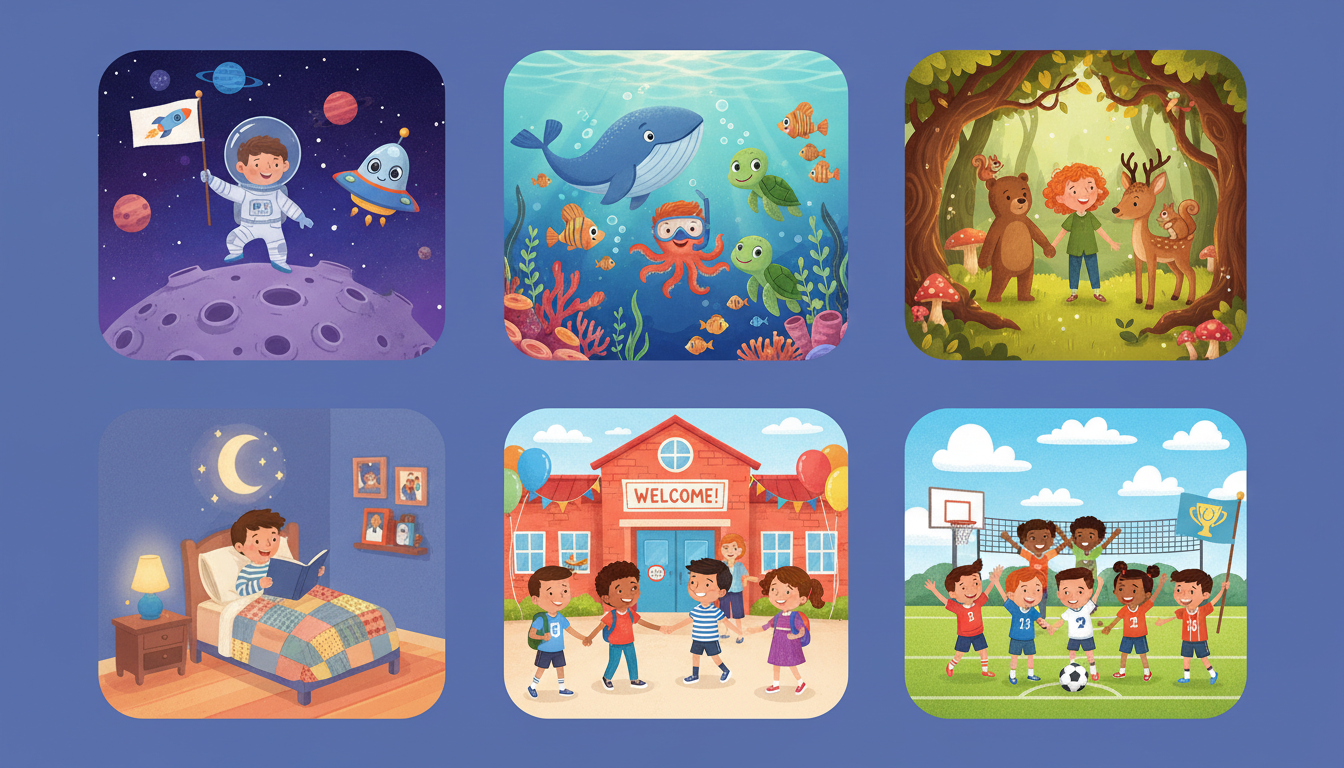
Some themes naturally “invite” customization because there are many places to insert your child’s preferences and strengths. Popular, high-success options include:
- Magical quests (your child finds a map, solves gentle riddles, helps a friend)
- Animal friends (a favorite animal becomes a sidekick; great for shy kids)
- Space explorer (planets, “mission control,” and bravery as curiosity)
- Princess/knight/fairy-tale remix (modernized with kindness and consent-driven heroism)
- Sports/teamwork (practice, perseverance, cheering for others)
- Friendship stories (sharing, apologizing, including others)
- Kindness and empathy (the child notices feelings, helps solve social problems)
Match tone and pacing to age
When parents say a story “didn’t land,” it’s often a pacing mismatch—not the theme itself.
- Toddlers (2–4): short scenes, lots of warmth, predictable structure, very simple challenges.
- Preschool (4–6): slightly longer arc, a problem to solve, playful surprises, repeating phrases they can say with you.
- Early readers (6–8): clearer stakes, humor, mystery elements, and more specific goals.
Pick a theme that matches your child’s current obsession—dinosaurs, unicorns, trucks, ocean animals—and pair it with a value you’re already reinforcing (kindness, trying again, using words when upset). The interest pulls them in; the value gives the story staying power.
If you want a broader framework for selecting books beyond personalization, see How to Choose Children’s Books: A 2026 Guide.
Step 2: Personalize Your Main Character: Name, Traits, and Details That Make the Story Feel “Theirs”
This is the step where “custom story book” becomes truly personal. The trick is to provide enough detail to feel specific, but not so much that it becomes fragile (or hard to keep consistent across scenes).
Use your child’s name naturally (and consider a nickname)
Use the name the way you actually say it at home. If your child is “Amelia” on school forms but “Mia” at bedtime, you can use “Mia” as the in-story name. That small choice often increases emotional resonance immediately.
- Keep spelling consistent across every page.
- If the story uses a repeated refrain (common in bedtime stories), double-check the name fits the rhythm.
- If you plan to share the book publicly, consider first name only or a nickname.
Pick 2–4 core traits (more is not better)
Traits help the narrator “know” your child. But if you include too many, the story may feel scattered. A good rule is 2–4 traits that you want reflected consistently.
Examples that work well in children’s stories:
- Brave (tries even when nervous)
- Curious (asks questions, explores)
- Kind (helps others, notices feelings)
- Determined (keeps going, practices)
- Thoughtful (plans, considers)
- Silly (brings joy, relieves tension)
Tip for parents: choose at least one “strength trait” (brave, kind) and one “process trait” (curious, determined). Strength traits shape identity; process traits shape behavior your child can practice.
Add “comfort details” for instant connection
Comfort details are the quickest way to make a story feel like it belongs to your child. Think small, emotionally meaningful specifics:
- A beloved bedtime object (blanket, stuffed bunny, tiny pillow)
- Favorite animal (as a sidekick or guide)
- Favorite color (a scarf, cape, backpack, or bike)
- A hobby (soccer, drawing, dancing, building)
- A food they love (a celebratory snack at the end)
These details are especially effective if they show up at key moments: when your child needs courage, when they help a friend, or when they return home at the end.
Keep age-appropriate specificity
Younger children don’t need (and often don’t enjoy) long descriptive passages. Older kids, however, love specificity—quirks, goals, and humorous preferences that feel like “inside jokes.”
- For toddlers: “Sam loves the moon and a soft blue blanket.”
- For older kids: “Sam always packs a ‘mission notebook’ and asks at least three questions before breakfast.”
If you expect the story to be shared beyond your immediate family, avoid last names, school names, addresses, or highly identifying details. First name or nickname is typically the safest approach.
If you want a more advanced approach to consistency across multiple stories, a character library helps. See How to Create a Character Library: A 2026 Guide.
Step 3: Generate AI Illustrations That Match Your Child and the Story World
Illustrations are the “believability engine” of personalized children’s books. Even a great story can feel generic if the visuals don’t match the child—or if the character looks different from page to page. In 2026, you have more control than ever, but consistency still requires intention.
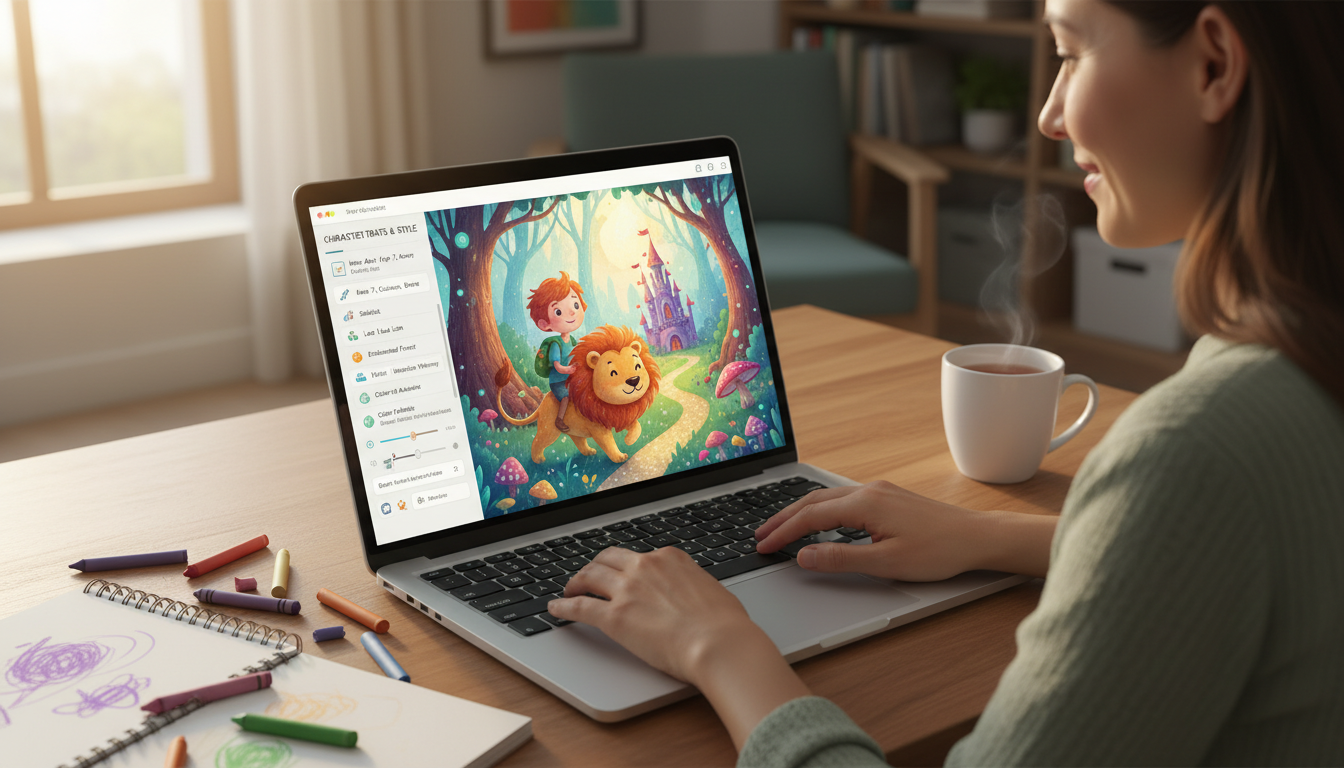
Choose an illustration style that fits the mood
Before you generate images, decide what visual “language” best supports your theme:
- Classic watercolor storybook: gentle, timeless, ideal for bedtime calm and younger ages.
- Modern flat illustration: clean shapes, bright colors, great for learning and humor.
- Bright cartoon: expressive faces, energetic scenes, perfect for playful adventures.
- Cinematic fantasy: dramatic lighting and depth, great for epic quests (usually better for older kids).
If you’re still exploring options across platforms, this comparison can help: Custom Illustrations for Kids Books: 5 Top Options (2026).
Lock in a few “identity anchors” for consistency
To keep your child recognizable across pages, use 3–5 anchors and repeat them consistently:
- Hair: style (curly/straight), length, and color
- Skin tone and general facial features (kept respectful and age-appropriate)
- Glasses (if applicable) or a signature accessory (headband, cape, backpack)
- Color palette: one or two signature colors (e.g., teal hoodie, yellow sneakers)
- Outfit cue: not every page needs the exact same clothes, but a recurring element helps
Consistency rule of thumb: if you change the outfit every scene, keep the hairstyle and accessory stable. If you change the hairstyle, keep outfit cues and palette stable. Change one major thing at a time, not all of them.
Use concrete details to guide the art (and avoid vague prompts)
When illustrations miss the mark, it’s often because inputs were abstract (“make them cute,” “make it magical”). Concrete cues produce better results:
- Instead of “brave,” try “standing tall, shoulders relaxed, gentle smile.”
- Instead of “space scene,” try “small spaceship cockpit, star map glow, planet out the window.”
- Instead of “ocean animals,” try “sea turtle friend, coral garden, rays of sunlight underwater.”
Iterate intentionally: small tweaks, big improvements
In a step-by-step custom story book workflow, regeneration is not “failure”—it’s polishing. When you review images, focus on a short checklist:
- Recognizability: does the child look like your intended character across pages?
- Emotion match: do facial expressions match the story beat (surprise, bravery, calm)?
- Clarity: can your child understand what’s happening at a glance?
- Continuity: consistent setting cues (same forest style, same spaceship design, etc.)
Pause after generating your core set of illustrations and scan them like a reader, not a creator. If any page feels confusing or “off character,” fix it now. It’s much easier to refine before you build bedtime routines around the story—or before you print.
For a broader look at the tools and techniques behind AI storytelling, see How to Use AI for Storytelling: A 2026 Guide.
Step 4: Read Online for Free: Preview, Edit, and Make It Bedtime-Ready
This is the step many parents skip—and it’s the step that turns a good personalized book into a great one. Reading online first lets you “hear” the story the way your child will experience it.
Preview for flow: pacing, repetition, and tricky words
When you read your custom story book online, look for three things:
- Pacing: do scenes move too quickly, or does it linger too long?
- Repetition: are there repeated phrases your child can join in with (especially ages 3–6)?
- Word difficulty: are there names or terms that will trip your child up at bedtime?
One simple fix is swapping a complicated word for a familiar one. Another is adding a gentle repetition pattern (“and then… and then…”) for younger kids.
Do a “parent edit pass” (the essentials)
Before you call it finished, do a quick edit pass with a practical checklist:
- Name spelling (especially in repeated lines)
- Pronouns and family references
- Trait consistency (curious kids ask; determined kids try again)
- Gentle moral landing (no lecturing; show choices and outcomes)
- No accidental “scariness” if your child is sensitive (dark forests, loud monsters, etc.)
Bedtime filter: if a scene adds tension, make sure it also adds reassurance on the same page or the next one. For many kids, unresolved suspense = “I’m not sleepy anymore.”
Make it interactive (without turning it into homework)
Personalized stories shine when you pause and invite your child into the narrative. A few low-effort prompts:
- “What would you do next?”
- “Can you spot your favorite color in the picture?”
- “How do you think the friend feels right now?”
- “What do you predict will happen on the next page?”
This supports comprehension and emotional vocabulary—two pillars of literacy.
Want more ways to build reading habits beyond the book itself? Pair this with How to Develop a Love for Reading: A 2026 Guide and How to Enhance Children’s Literacy: A 2026 Guide.
Turn one story into a ritual (then a series)
A powerful 2026 strategy is using a single personalized story for a week—then creating a sequel. Kids love familiarity, and sequels give you an easy way to rotate themes without losing the “this is mine” feeling.
- Week 1: cozy bedtime calm story
- Week 2: confidence story (trying something new)
- Week 3: learning story (space, ocean, animals)
- Week 4: values story (kindness, empathy, teamwork)
Read it once alone (to edit), then read it once with your child (to observe). The best edits come from watching where they lean in, where they get wiggly, and which pages make them smile.
Step 5: Upgrade to a Printed Hardback Gift Book (Keepsake-Quality Tips)
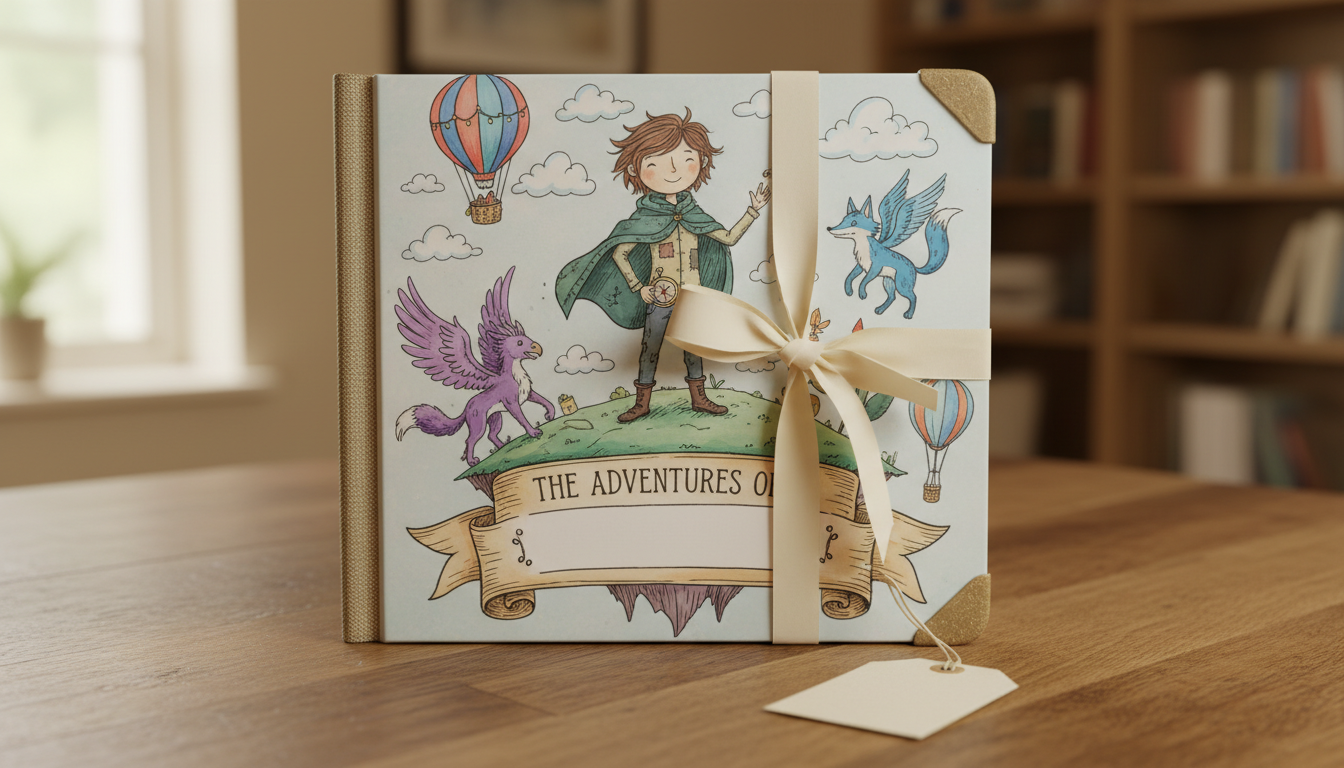
Digital is perfect for nightly reading and quick iteration. Print is for moments you want to keep. A hardback custom story book becomes a physical artifact of your child’s childhood—something they’ll recognize years later.
When print is worth it
Consider upgrading to a printed hardback when the story is tied to a meaningful moment:
- Birthdays and holidays
- Starting school (or moving up a grade)
- Welcoming a new sibling
- A special achievement (learning to ride a bike, finishing a reading milestone)
- A family trip (turn it into a “memory book” story)
Pre-print checklist: what to verify on every page
Before you commit to print, do one last slow review. You’re looking for small issues that feel minor online but permanent in hardback:
- Character consistency: hair, glasses, accessory, and general look remain stable
- Name details: spelling, nickname use, capitalization
- Plot clarity: each page “makes sense” without extra explanation
- Awkward phrasing: edit lines you wouldn’t enjoy reading aloud repeatedly
- Emotional tone: the ending resolves calmly and warmly
Print mindset: you’re not just printing a story—you’re printing a reading experience you’ll likely repeat dozens of times.
Keepsake upgrades that add real emotional value
The most treasured printed personalized books usually include one or two human touches:
- Add a dedication (“For Mia, who always asks brave questions.”)
- Include the year (it becomes a time capsule)
- Reference a real memory (a beach trip, a favorite park, a family tradition)
- Make it a series (a yearly “Volume 1, Volume 2…” tradition)
Gift pairings that feel thoughtful (not expensive)
If you’re giving a hardback as a gift, pairing it with a small item can make the moment feel complete:
- A matching bedtime plush (the sidekick animal from the story)
- A handwritten note from the giver (why they chose this theme)
- A “reading night” kit (hot cocoa mix, a small flashlight, cozy socks)
Related reading (helpful next steps)
- How to Create Personalized Stories for Kids in 2026 (broader strategy, more examples)
- Top 5 Personalized Avatar Storybooks for 2026 (if you’re comparing options)
- Best Kids Books for Creativity in 2026 (for inspiration and variety)
Conclusion: Your 2026 Custom Story Book Plan (Simple, Repeatable, Gift-Ready)
Making a personalized children’s book in 2026 is less about “getting it perfect” and more about using a repeatable process that consistently produces stories your child wants to hear again and again.
- Start with a theme tied to a reading goal (calm, confidence, learning, values).
- Personalize with intention: name + 2–4 traits + a few comfort details.
- Generate illustrations using a consistent style and a handful of identity anchors.
- Read online for free to edit pacing, language, and bedtime tone.
- Print in hardback when it’s time for a keepsake-quality gift.
Ready to Create Your First Custom Story Book?
Pick a theme, personalize your child’s character, generate illustrations, read online, then upgrade to a hardback keepsake when it’s gift time.