how to make reading fun: quick tips for kids
Turning reading from a chore into a joyful adventure is all about connection. When we link stories to a child's own world through personalization and play, we create an environment where they actually choose to pick up a book. This doesn't just build literacy skills; it ignites a genuine, lifelong love for learning.
Why Making Reading Fun Matters Now
In a world buzzing with notifications and endless video streams, the simple act of reading can feel like a quiet rebellion. But it's so much more than a "nice-to-have" skill. It’s the bedrock of a child’s entire academic and personal future. When reading is something they enjoy, it stops being a task and becomes their personal gateway to discovery.

The focus isn't on forcing kids to read. It's about creating a space where stories are so inviting, they can't help but be drawn in. That simple shift changes everything.
Building More Than Just Literacy
A positive reading experience does far more than just teach a child how to sound out words. It sparks curiosity, builds empathy, and expands their vocabulary in a way passive screen time simply can't match. Every story introduces new ideas, cultures, and perspectives, giving kids a much richer understanding of the world.
The goal is to cultivate a passion for stories that gives children a powerful advantage. When they see reading as a source of pleasure, they are more likely to read independently, which directly correlates with higher academic achievement and stronger critical-thinking skills.
This is a big deal on a global scale, too. While literacy has seen incredible growth—87% of adults are now literate compared to just 68% in 1979—there's still work to do. Making reading engaging is a critical piece of the puzzle for closing that gap. Discover more about global literacy trends and why reading matters.
The Power of Choosing to Read
At the end of the day, the biggest win is fostering that inner drive. When a child reads because they want to, not because they have to, they develop a habit that will serve them for life. That self-driven desire to learn and explore is the ultimate prize.
To get there, we need to reframe the question. Instead of asking, "How can I get my child to read?" we should be asking, "How can I make this story so irresistible they can't put it down?" The answer often lies in making the experience deeply personal and interactive, transforming your child from a passive reader into the hero of their own tale.
Make Your Child the Hero of Their Own Story
Picture this: your child's face lights up, not just because they're enjoying a good book, but because they are the hero of that book. It’s a simple shift, but it’s a powerful one. Personalizing a story turns reading from a passive activity into an active, creative experience where your child’s world takes center stage.
When kids see themselves, their family, or even their beloved golden retriever as the main characters, the story suddenly clicks. It becomes instantly relevant and way more exciting. For a hesitant reader or a child who gets distracted easily, this connection is pure magic. It builds a bridge from the words on the page directly to their own life, making the story matter on a personal level.
From Reader to Main Character
The real power here is capturing a child's imagination in a way that generic stories just can't. Instead of reading about some random "brave knight," your child is the knight, saving the kingdom in armor that looks suspiciously like their favorite rain jacket. That personal investment is a total game-changer for keeping them engaged.
This is where a little bit of technology can be an incredible ally. Modern tools are making it surprisingly simple to craft these one-of-a-kind adventures right from your own home.
In fact, you can create a custom story for your child in just a few seconds.
An interface like this puts incredible creative power right at your fingertips, turning a simple photo into a storybook-ready character.
Building a World of Familiar Faces
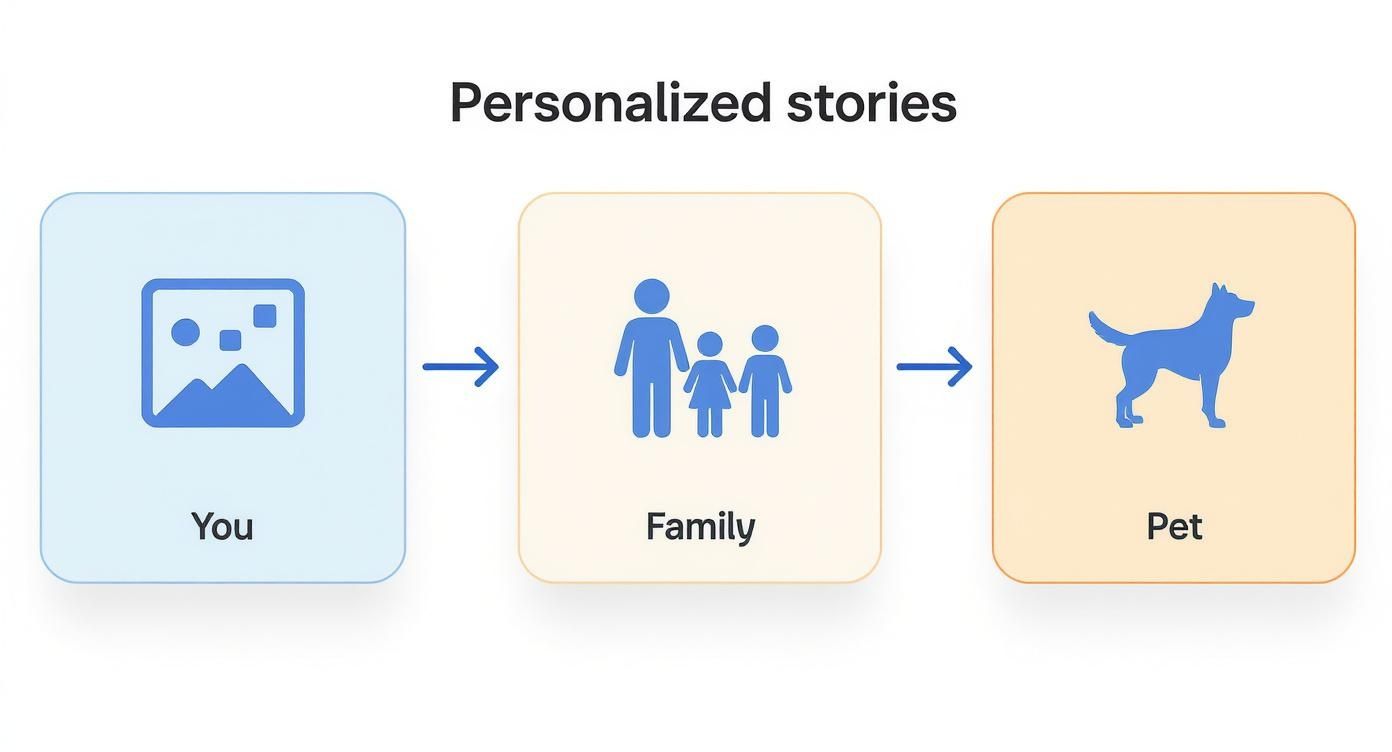
One of the coolest parts of personalization is building a whole library of characters your child already knows and loves. You can upload photos of your child, their siblings, grandparents, and the family dog to create a cast of familiar faces ready for any story you can dream up.
- Your Child as the Hero: Turn a favorite photo into a storybook character who can explore ancient ruins, blast off to Mars, or solve the mystery of the missing cookies.
- Family and Friends as Co-Stars: Why not bring siblings, parents, or best friends along for the ride? Creating stories that mirror your child’s real-life relationships makes them even more meaningful.
- Pets Joining the Adventure: Of course, the family cat or dog can become a trusty sidekick, adding another layer of fun and familiarity to the tale.
Once you’ve created these characters, you can use them again and again. This consistency gives kids a real sense of ownership and continuity. They'll start to wonder, "Where will my character go next?"
Personalization isn't just a cute gimmick; it's a genuine strategy. By placing a child at the center of the narrative, we show them that stories aren't just things they read—they are worlds they can actually belong to.
This creates a fantastic feedback loop. The more they enjoy seeing themselves in stories, the more they’ll want to read. We're not just trying to get them to finish a book; we're aiming to spark a genuine love for reading that starts with seeing their own life reflected in the magic of a story.
Ready to make your child the star of their next big adventure? You can create personalized stories in seconds and see the difference for yourself.
Turn Reading Time Into Playtime
Okay, so you've created a story that stars your child. That's a huge first step. But now comes the real magic: turning that story into an adventure. The goal is to get the words to leap off the page and into the real world, transforming quiet reading into a dynamic, hands-on experience. This is especially effective for those kids who just can't sit still.
This doesn't mean you need a Hollywood-level production budget or a trunk full of props. Honestly, the simplest ideas are often the best. Have you ever built a reading fort with a few blankets, some pillows, and a flashlight? That simple act transforms the living room floor into a secret cave or a magical castle, signaling that this isn't a chore—it's special.
Bring the Story to Life
Think of yourself as the director of a play, not just a narrator. Encourage your child to become part of the story. Use silly voices for the talking squirrel, or get them to roar like the friendly dragon. If the hero jumps over a bubbling stream, lay a blue towel on the floor and take a running leap over it together. This physical connection makes the story stick in their minds in a way that just sitting and listening never could.
Remember, the personalization you did earlier is the secret ingredient here. By featuring your child, family, and even the family dog as main characters, you’ve already built a powerful emotional connection.
When the main character is them, acting out the adventure becomes a deeply personal and exciting game of make-believe.
Another fun trick is the story-based scavenger hunt. As you're reading, pause when an object is mentioned. "The brave knight found a shiny red apple…" Stop right there. "Quick! Can you find something red in this room?" This little game keeps them hanging on every word and builds a bridge between the story world and their own.
Interactive Reading Activity Ideas
To get you started, here are a few low-prep, high-impact activities you can pair with almost any book.
| Activity Idea | Best For Ages | What You Need | Primary Skill Boosted |
|---|---|---|---|
| Character Puppets | 3-6 | Paper bags, markers, socks | Storytelling, Creativity |
| Story Scene Diorama | 5-8 | Shoebox, craft supplies, clay | Comprehension, Fine Motor |
| Act It Out! | 4-9 | Just your imagination! | Narrative Skills, Empathy |
| "What Happens Next?" | 6-10 | Paper and pencils | Predictive Thinking, Writing |
| Sound Effects Crew | All Ages | Household items, your voice | Auditory Processing, Engagement |
These activities are just a starting point. The key is to find what clicks with your child's personality and the story you're reading together.
Celebrate the Joy, Not Just the Pages
It can be tempting to set up a reward system based on pages read or books finished. But be careful—a "read 10 pages, get a sticker" approach can accidentally frame reading as a task to be completed for a prize. We want the reading itself to be the reward.
The best rewards don't end the fun; they extend it. Instead of a toy or screen time, the prize could be getting to stay up 15 minutes later to finish a chapter, choosing the next book, or having a special "book club" snack together.
Here are a few ways to build a reward system around the experience:
- Activity Jar: When a book is finished, your child pulls a slip of paper from a jar. On it is a fun, related activity: "Draw your favorite character," "Build the story's setting with LEGOs," or "Put on a play of the final scene."
- "Bookworm" Coupons: Create some homemade coupons they can earn for things like "One Family Read-Aloud Night" (where everyone participates) or "Gets to Pick the Reading Fort Theme."
- Progress Chart: Ditch the page-counting. Instead, use a chart with fun stickers to mark each day you read together, purely for enjoyment. Once the chart is full, celebrate with a special trip to the library or a local bookstore to pick out a new adventure.
By focusing on play and connection, you're not just teaching a child how to make reading fun; you're creating cherished memories and nurturing a genuine, lifelong love for stories.
Create a Reading-Friendly Home Environment
What does your home say about what your family values? When books are just as visible and easy to grab as a tablet or a remote control, it sends a clear message: reading is a big part of daily life. This isn't about building a massive library; it's about making reading feel like a natural, inviting choice—a treat, not a task.

A comfortable space is everything when it comes to helping a child relax and get lost in a story. You can make reading infinitely more appealing just by setting up a spot that feels special and is dedicated to the magic of books.
Design an Irresistible Reading Nook
You don't need a spare room to create an amazing reading spot. A "reading nook" can be as simple as a small corner of a bedroom or living room, made special with just a few thoughtful touches. The goal is to create a cozy, comfortable destination that your child will start to associate with quiet enjoyment and adventure.
Think about what makes a space feel welcoming:
- Soft Seating: A beanbag chair, a pile of big floor pillows, or even a super fluffy rug can instantly define the area and make it comfy.
- Good Lighting: A small, warm lamp or a clip-on reading light makes a world of difference and helps prevent eye strain.
- Accessible Books: Use a low shelf or a few forward-facing baskets. When kids can see the covers, they're much more likely to choose their own adventure.
The struggle to keep reading engaging isn't just a household challenge; it's reflected in broader trends. In the U.S., for instance, only 48.5% of adults reported reading at least one book in the past year, which is down from 52.7% in 2019. These numbers really underscore why we need fresh, creative ways to spark a love for reading from an early age. You can discover more insights about U.S. reading habits to see the full picture.
Be a Reading Role Model
Let's be honest: kids are expert mimics. When they see you genuinely enjoying a book, it speaks volumes. Modeling this behavior is one of the most powerful things you can do to show them that reading is a worthwhile and fun activity for people of all ages.
Make sure your child sees you reading for pleasure—not just scrolling on your phone or answering work emails. Talk about the book you're reading, share a funny part out loud, or mention how excited you are to find out what happens next. It's these little things that normalize reading as a lifelong habit.
When you treat reading as a gift rather than a chore, your child will too. They see it as a special time for relaxation and adventure, not just another item on the to-do list.
This simple shift in perspective organically builds positive feelings around books, making it far more likely they’ll pick one up on their own.
A great way to put this into practice is to set aside a dedicated, "unplugged" family reading time. It doesn't have to be long. Even just 15-20 minutes a day where everyone puts their screens away and reads together can completely change the atmosphere. It becomes a shared ritual the whole family can look forward to, reinforcing both family connection and the simple joy of a good story.
How to Use Technology to Spark a Love for Reading
Technology often gets blamed for pulling kids away from books, but it doesn't have to be the bad guy. When we use it intentionally, digital tools can actually be a huge help in our mission to make reading fun. The trick is to move kids from being passive screen-watchers to active participants in stories that build real literacy skills.
For kids who are auditory learners, audiobooks are an absolute game-changer. They can transform a boring car ride into a thrilling journey, building vocabulary and comprehension along the way without the pressure of decoding every single word. Likewise, well-designed e-books with tasteful interactive features can grab a tech-loving kid's interest and act as a friendly gateway into the world of stories.
From Just Reading to Actually Creating
The real magic happens when technology helps kids become creators, not just consumers. Think about it: instead of just reading a story, what if your child could be the star of it? This is where some of the newer tools can completely flip the script for a hesitant reader.
There are now platforms that let you create entire, beautifully illustrated storybooks where your child is the main character. Can you imagine the look on their face when they see themselves, their siblings, and even the family dog as the heroes of a fantastic adventure?
This shift from passively reading to actively participating is everything. When a child's own life is woven into the story, it becomes instantly meaningful and engaging. That personal connection makes the reading experience something they'll never forget.
Finding a Smart Digital Balance
Embracing tech doesn't mean you have to ditch physical books. Not at all. The aim is to nurture a love for stories in all their forms. A healthy mix might mean listening to an audiobook in the car, exploring an e-book on a tablet before dinner, and then snuggling up with a classic paperback at bedtime.
This strategy recognizes that technology can be a powerful hook, especially for kids who aren't naturally drawn to reading. The UK's National Literacy Trust has found that digital platforms can make reading feel more accessible and exciting. Read more about how tech supports reluctant readers and see how it can make a difference.
The key is to use these tools to build momentum and confidence. For example, creating a custom story about your child's obsession—whether it's dinosaurs, space, or ballet—can light a fire that spreads to all kinds of reading.
If you want to see this in practice, you can easily create personalized stories in seconds. With a tool like LoveToRead.AI, you can turn real-life photos into characters and build a library of them to reuse across different stories. With the best art styles and character persistence available, you can even order a physical hardback copy of your creation. By putting your child right in the middle of the action, you're not just showing them how to make reading fun—you're making them the hero of their own learning journey.
Answering Your Top Questions About Making Reading Fun
Even with the best game plan, you're going to hit a few snags. It's completely normal. Let's walk through some of the most common hurdles I hear from parents and teachers and find some practical ways to get over them.
"My Kid Says Reading Is Boring. Where Do I Even Start?"
The first thing to do is find a way to connect books directly to what they already love. If your child is obsessed with dinosaurs, your mission is to find the most action-packed T-Rex story you can get your hands on. Or maybe a non-fiction book overflowing with incredible fossil photos. The idea is to show them that books aren't a chore; they're a portal to more of what they find exciting.
A really powerful way to do this right now is to literally put them in the story. Imagine creating a book where your child is the hero of a wild dinosaur safari. Suddenly, reading isn't just a passive activity—it's a personal adventure they get to star in. This simple shift can completely change how they see books.
"How Can I Possibly Compete with Video Games and Tablets?"
Here's the secret: don't try to compete. Instead, find ways to blend reading with technology and create a healthy balance. You can use tech to your advantage with things like audiobooks or interactive story-creation platforms that have a game-like feel. This teaches them that screens aren't just for watching videos; they're also for building amazing stories.
At the same time, carve out dedicated family time that's totally tech-free, where reading takes center stage. Make it an event! Build a pillow fort, grab some popcorn, and dive into a story together. The goal isn't to demonize screens, but to show that a good book offers a unique kind of magic that's just as captivating.
"How Much Should My Child Be Reading Every Day?"
Forget the clock. Seriously. It’s far better to focus on building a positive, consistent habit than to stress over a specific number of minutes. A happy 15-20 minutes of reading together every day will do a thousand times more good than a frustrating, forced hour that ends with everyone upset. It's the consistency that builds a lifelong love of reading.
A great way to make this time feel special is to give your child some control. Let them pick the book, choose where you read, or decide who reads which page. These small choices give them a sense of ownership, making reading feel like a comforting ritual rather than a rigid requirement.
"What Should I Do When My Child Gets Frustrated and Wants to Give Up?"
In these moments, praise their effort, not their performance. When they get stuck on a word, don't just give them the answer. Gently help them sound it out, and when they get it, celebrate the fact that they pushed through. The message you want to send is loud and clear: "I am so proud of you for trying so hard."
It also helps to strategically pick books that are just a little bit below their official reading level. This allows them to build momentum and confidence. Another great technique is shared reading, where you take turns reading pages. This takes the pressure off and keeps the story flowing, which is what it's all about.
Frustration is the enemy of fun. If a child feels defeated, they won't want to read. Your job is to make it easier, more collaborative, and focused on celebrating their effort. That's how you rebuild their confidence and help them finally see the joy in a good story.
Ready to make your child the hero of their very own tale? With LoveToRead.AI, you can craft personalized stories in seconds. Convert your real-life photos into characters and create a library of them to reuse across a variety of different stories. Featuring the absolute best art styles and character persistence, you can easily order any hardback copy of your creation.
Start building those unforgettable reading memories today. Give LoveToRead.AI a try!