10 Timeless Moral Stories in English for Young Readers
Moral stories in English have been a cornerstone of childhood education for generations, shaping character while building crucial literacy skills. These timeless tales do more than just entertain; they provide a powerful framework for understanding complex concepts like honesty, perseverance, and kindness. For parents and educators of K-5 students, these narratives are invaluable tools for sparking meaningful conversations and instilling lifelong values. When a child can see the consequences of a character's actions, abstract ideas like integrity and compassion become concrete and understandable.
This curated guide is designed to be a practical resource for your classroom or home. We've compiled 10 essential moral stories, organizing them by recommended grade level to help you select the perfect tale for your young readers. Each entry provides a concise summary, the core moral, targeted discussion questions to foster critical thinking, and simple, actionable activities to reinforce the lesson. This structured approach helps bridge the gap between storytelling and real-world application, making each narrative a memorable learning experience.
Furthermore, we'll explore how modern tools can amplify the impact of these classic fables. Imagine your child as the persistent tortoise or the honest woodcutter. With platforms like LoveToRead.AI, you can create personalized stories in seconds. You can even convert your real-life photos into characters and build a library of familiar faces to reuse across a variety of different stories. This unique approach, combined with stunning art styles and character persistence, makes the morals deeply personal and unforgettable. You can even easily order any story as a hardback copy. This list provides the foundation for those important lessons.
1. The Boy Who Cried Wolf
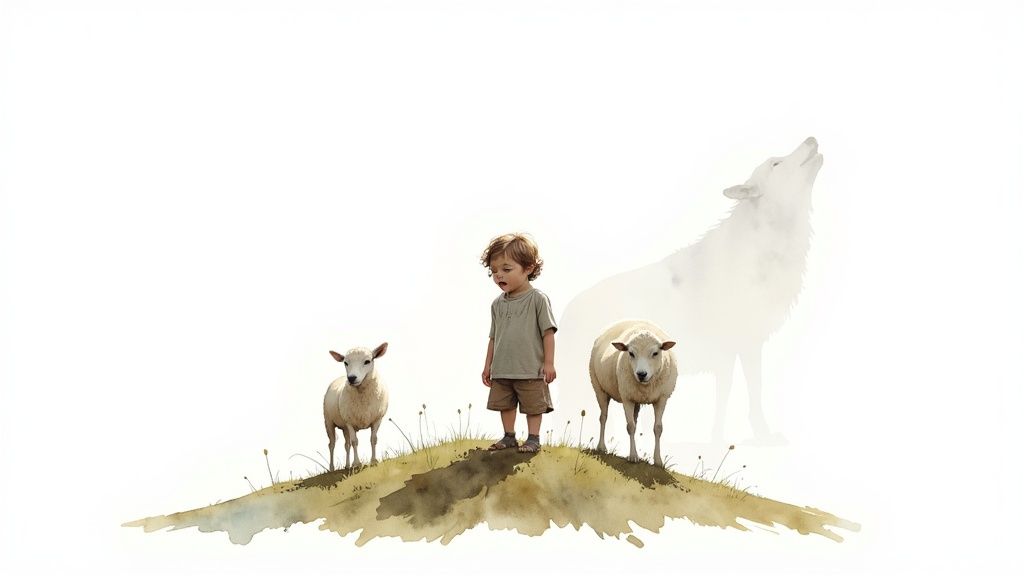
A cornerstone among moral stories in English, this classic Aesop’s Fable tells of a shepherd boy who, out of boredom, repeatedly deceives nearby villagers by shouting that a wolf is attacking his flock. Each time, the villagers rush to help, only to find him laughing at their concern. When a real wolf finally appears, his genuine cries for help are ignored, and he loses his sheep. The story powerfully illustrates that liars are not believed, even when they tell the truth.
Core Moral & Reading Level
- Moral: Honesty is crucial; lying destroys trust and credibility, leading to dire consequences.
- Suggested Reading Level: Grades K–3. The simple narrative and clear cause-and-effect structure make it accessible to young readers.
Discussion & Activities
To bring this story to life, engage children with thoughtful questions that connect the fable to their own experiences. Start with simple comprehension checks like, "Why did the villagers stop believing the boy?" Then, move to more complex, real-world applications.
Actionable Tip: Ask students, "What are small lies people sometimes tell? How can even a small lie, like saying you've finished your homework when you haven't, hurt someone's trust in you?"
Another effective activity is role-playing. Have students act out the final scene from the perspective of a villager who chose to ignore the boy's cries. This helps them understand the other side of the story and the natural consequences of broken trust.
Personalize the Tale
You can make the lesson even more impactful by creating a personalized version of the story. Using a tool like LoveToRead.AI, you can generate a custom illustrated storybook in seconds. Imagine your child as the new, honest shepherd who teaches the village the importance of truth, or create a modern version where a child learns not to fabricate stories online. LoveToRead.AI allows you to turn real-life photos into story characters, building a reusable library for endless storytelling possibilities.
2. The Tortoise and the Hare
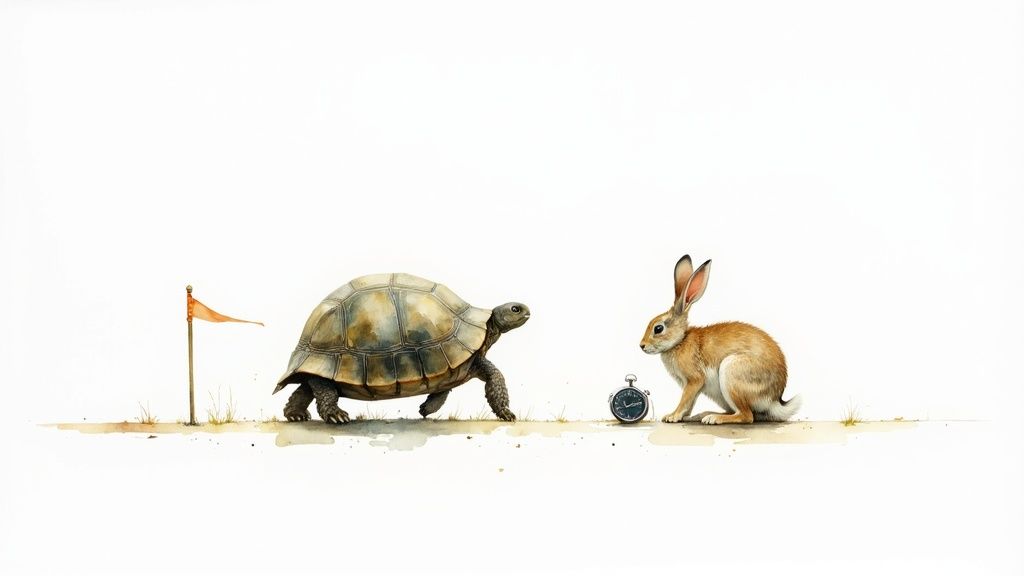
A universally beloved moral story, this Aesop's Fable presents a seemingly mismatched race between a swift, overconfident hare and a slow, methodical tortoise. The hare, so sure of his victory, decides to take a nap midway through the race. Meanwhile, the tortoise plods along without stopping, his consistent effort ultimately carrying him across the finish line first. The story is a timeless lesson that perseverance and consistency can overcome arrogance and raw talent.
Core Moral & Reading Level
- Moral: Slow and steady wins the race; consistency and hard work are more valuable than natural talent without dedication.
- Suggested Reading Level: Grades K–3. The simple plot and clear contrast between the characters make the moral easy for young children to grasp.
Discussion & Activities
This tale is perfect for encouraging a growth mindset. Begin by asking children, "Why did the tortoise win even though he was much slower?" This helps them identify the key theme. Then, connect the lesson to their academic and personal lives to make it more tangible.
Actionable Tip: Ask students, "Can you think of a time when you worked hard on something for a long time, like learning to ride a bike or practicing a song? How is that like being the tortoise?"
A great classroom activity is to set a long-term goal, like reading a certain number of books over a month. Track daily progress on a chart, celebrating the small, consistent efforts (the tortoise's steps) that lead to achieving the bigger goal (winning the race).
Personalize the Tale
Deepen the connection by placing your child at the center of the narrative. With a tool like LoveToRead.AI, you can generate a personalized, illustrated storybook where your child is the determined tortoise who succeeds through hard work. You can turn real-life photos into characters, creating a library of familiar faces to reuse in countless stories. Imagine a tale where your child, as the tortoise, patiently builds a magnificent block tower while the hare quickly gives up, reinforcing the value of perseverance in a fun, visual way.
3. The Golden Goose
Another timeless entry in the collection of moral stories in English, this fable follows a poor man who discovers his goose lays a solid golden egg every day. Initially thrilled, his joy soon turns to greed and impatience. Believing the goose must be full of gold, he kills it to get all the eggs at once, only to find it empty. His foolish desire for instant riches destroys the source of his good fortune.
Core Moral & Reading Level
- Moral: Greed destroys the source of good; appreciate steady gains over the illusion of instant wealth.
- Suggested Reading Level: Grades 1–4. The straightforward plot effectively demonstrates the negative consequences of impatience and greed.
Discussion & Activities
This story is a perfect springboard for discussions on financial literacy and the value of patience. Begin by asking, "What mistake did the man make? What could he have done differently to stay wealthy and keep his goose?" This helps children identify the core error in his thinking.
Actionable Tip: Connect the story to real-world concepts like saving money. Ask students, "Is it better to get one dollar every day for a month, or to ask for twenty dollars right now and get no more? Why?" This exercise teaches the principle of delayed gratification and sustainable growth.
You can also explore themes of needs versus wants. Have students create two columns on a worksheet, one for "Needs" (like food, water) and one for "Wants" (like a new toy). Discuss how the man’s focus shifted from having his needs met to chasing excessive wants, leading to his downfall.
Personalize the Tale
Modernize this classic lesson with a personalized storybook that resonates with today’s children. Using a tool like LoveToRead.AI, you can craft a unique narrative in seconds. Imagine a story where your child receives a magical piggy bank that adds a coin each day they do a good deed, teaching them the rewards of consistent effort over a get-rich-quick mindset. LoveToRead.AI lets you convert your own family photos into story characters and build a reusable library, making each moral tale a deeply personal experience. You can even order your creations as beautiful hardback books.
4. The Ant and the Grasshopper
A timeless entry among moral stories in English, this Aesop’s Fable contrasts the lives of a hard-working ant and a carefree grasshopper. Throughout the warm summer, the ant diligently gathers and stores food for the coming winter. The grasshopper, however, spends his days singing and playing, mocking the ant for his tireless efforts. When winter arrives, the grasshopper is cold and starving, while the prepared ant is safe and well-fed. The story is a powerful lesson in foresight and the rewards of hard work.
Core Moral & Reading Level
- Moral: It is wise to prepare for the future; hard work and planning today ensure security tomorrow.
- Suggested Reading Level: Grades 1–4. The clear contrast between the two characters and the direct consequence of their actions make the moral easy for young readers to grasp.
Discussion & Activities
This fable provides a fantastic opportunity to discuss the concept of planning and responsibility. Begin with questions like, "Why didn't the grasshopper have any food in the winter?" Then, bridge the story to real-world scenarios, such as a student who studies consistently versus one who crams for an exam at the last minute.
Actionable Tip: Frame the moral around "preparation" and balance, not just constant work. Ask students, "How can the grasshopper enjoy his summer and still be ready for winter? What small steps could he take each day?"
For a hands-on activity, introduce simple goal-setting. Have students choose a long-term goal, like finishing a book report, and work backward to create small, daily tasks. This teaches them to break down large responsibilities into manageable steps, just like the ant gathering food one grain at a time.
Personalize the Tale
Modernize this classic lesson by creating a personalized story where your child is the hero. With a tool like LoveToRead.AI, you can generate a custom illustrated storybook in seconds. Imagine your child as a clever inventor who helps the grasshopper build a greenhouse for the winter, teaching the value of both innovation and preparation. You can even use real family photos to create a library of reusable characters, making each story deeply personal and engaging.
5. The Kind and the Unkind
This traditional moral tale, found in folklore across many cultures, presents a powerful dichotomy between two characters: one who is consistently kind and helpful, and another who is cruel and selfish. The story follows their separate journeys, where the kind individual’s actions lead to blessings and good fortune, while the unkind person’s selfishness results in misfortune and isolation. It’s one of the most foundational moral stories in English for demonstrating that kindness is a rewarding virtue.
Core Moral & Reading Level
- Moral: Kindness and generosity lead to positive outcomes and a strong community, while cruelty and selfishness lead to loneliness and hardship.
- Suggested Reading Level: Grades 1–4. The direct contrast between the characters makes the moral clear and easy for young readers to grasp.
Discussion & Activities
The direct comparison in this story makes it an excellent tool for discussing empathy. Start by asking children to describe how the actions of each character made others feel. Then, connect the lesson to their daily lives by exploring the concept of "karma" or "what goes around, comes around."
Actionable Tip: Pose a scenario: "If you see a classmate struggling to carry their books, what would the kind character do? What would the unkind character do? What do you think happens next in both situations?"
An impactful activity is creating a "Kindness Tree" in the classroom or at home. Each time a child performs an act of kindness, they can add a leaf to the tree with a short description of their action. This provides a visual representation of how small, kind acts collectively create something beautiful and strong.
Personalize the Tale
Make the concept of kindness tangible by placing your child at the center of the narrative. Using a tool like LoveToRead.AI, you can generate a personalized, illustrated storybook where your child is the kind hero who helps magical creatures or new friends. The platform allows you to convert real-life photos into story characters, creating a library of familiar faces to use across endless adventures. Imagine a story where your child’s kindness helps a grumpy giant find happiness, turning a classic fable into a memorable, personal lesson.
6. The Fox and the Grapes
Another of Aesop's timeless moral stories in English, this fable introduces a clever fox who spies a tempting bunch of grapes hanging high on a vine. After leaping repeatedly to reach them and failing each time, the fox gives up and walks away with his nose in the air, declaring, "They were probably sour anyway." This tale is the origin of the phrase "sour grapes" and masterfully demonstrates the human tendency to belittle what we cannot have.
Core Moral & Reading Level
- Moral: It is easy to despise what you cannot get; people often pretend to dislike things they can't achieve to protect their pride.
- Suggested Reading Level: Grades 2–4. While the story is simple, the underlying psychological concept of rationalization makes it a great topic for slightly older elementary students.
Discussion & Activities
This story provides a perfect opportunity to discuss feelings of disappointment and how we react to them. Begin by asking, "Were the grapes really sour? Why did the fox say that?" This helps children identify the core conflict between the fox's desire and his pride. Then, connect it to their world.
Actionable Tip: Ask students, "Can you think of a time you really wanted something you couldn't have, like a toy or to win a game? How did it make you feel? Is it easier to say 'I didn't want it anyway' than to admit you're disappointed?"
A useful activity is to have students brainstorm healthier ways the fox could have reacted. Could he have asked for help, tried a different strategy, or simply acknowledged his disappointment? This teaches them to recognize "sour grapes" thinking in themselves and choose more constructive responses to failure.
Personalize the Tale
Modernize this lesson on emotional intelligence with a custom story. Using a tool like LoveToRead.AI, you can create a personalized illustrated storybook in seconds. Imagine your child as a character who learns to handle disappointment gracefully after not being picked for the school play, or a modern fox who learns to build a ladder instead of giving up. LoveToRead.AI lets you transform real-life photos into story characters and build a reusable library, making every moral tale a personal journey.
7. The Lion and the Mouse
A timeless Aesop’s Fable, this story explores the themes of mercy and mutual respect. It tells of a powerful lion who catches a tiny mouse. The mouse begs for its life, promising to repay the kindness one day. The lion, amused, lets the mouse go. Later, the lion is trapped in a hunter’s net, and his roars are futile. The small mouse, hearing his cries, comes and gnaws through the ropes, setting the mighty lion free.

Core Moral & Reading Level
- Moral: No act of kindness, no matter how small, is ever wasted. Mercy and compassion have rewards, and everyone, regardless of their size or status, has value.
- Suggested Reading Level: Grades K–3. The story’s straightforward plot and endearing characters make it a favorite among young children.
Discussion & Activities
This tale is perfect for discussions about empathy and judging others. Start with comprehension questions like, "Why did the lion laugh at the mouse's promise?" Then, bridge the fable to real-life situations to explore its deeper meaning and its place among classic moral stories in English.
Actionable Tip: Ask students, "Can you think of a time when someone who seemed different or smaller than you was able to help in a big way? How does this story teach us not to look down on anyone?"
For a hands-on activity, create a "web of kindness" using a ball of yarn. Have students sit in a circle and pass the yarn, sharing a small act of kindness they have done or received. This visually demonstrates how everyone is connected and can support one another, just like the lion and the mouse.
Personalize the Tale
Modernize the lesson by creating a story that reflects a child’s own world. With a tool like LoveToRead.AI, you can generate a personalized illustrated storybook in seconds. Imagine a story where the most popular kid in school is helped by a shy classmate, or a tale set in a bustling city where different animals help each other. LoveToRead.AI lets you transform real photos into a library of reusable characters, making the moral of compassion and interconnectedness truly personal and unforgettable.
8. The Three Little Pigs
A staple of moral stories in English, this tale features three pigs who each build a house: one of straw, one of sticks, and one of sturdy bricks. A big, bad wolf easily blows down the first two houses, but the brick house stands firm, protecting the diligent pig and his brothers. The story is a timeless lesson on the value of hard work, foresight, and building on a solid foundation, showing that taking shortcuts leads to disastrous results.
Core Moral & Reading Level
- Moral: Hard work, diligence, and planning pay off. Shortcuts and laziness lead to failure.
- Suggested Reading Level: Grades K–2. The repetitive structure and clear, tangible outcomes make it ideal for young learners.
Discussion & Activities
The story provides a perfect opportunity to discuss the concept of effort versus reward. Begin by asking, "Why was the brick house the only one that was safe?" This can lead to a broader conversation about real-life situations where effort makes a difference.
Actionable Tip: Connect the story to schoolwork. Ask students, "Is it better to rush through your homework to finish quickly (building a straw house) or to take your time to do your best work (building a brick house)? What might happen to the 'straw house' homework?"
For a hands-on activity, challenge students to build small structures using different materials like straws, popsicle sticks, and building blocks. They can then test the strength of each structure, providing a physical representation of the story’s core lesson.
Personalize the Tale
Modernize this classic lesson by creating a story that reflects your child’s own projects. With a tool like LoveToRead.AI, you can generate a personalized illustrated storybook in seconds. Imagine your child building a magnificent LEGO tower with a strong foundation or carefully coding a video game instead of using a glitchy shortcut. By turning your child’s photo into a custom character, you can create a reusable hero for countless stories, reinforcing the idea that hard work and quality effort lead to success in their own world.
9. The Selfish Giant
A beautiful and moving fairy tale by Oscar Wilde, this story introduces a giant who owns a magnificent garden. To keep it for himself, he builds a high wall around it, forbidding children from entering. His selfishness brings an eternal winter to his garden, which only thaws when the laughter of children finally finds its way back inside. The giant’s heart melts along with the snow, and he learns that sharing brings more joy than selfishly hoarding beauty.
Core Moral & Reading Level
- Moral: True happiness and joy are found in sharing and generosity, while selfishness leads to isolation and misery.
- Suggested Reading Level: Grades 3–5. The story’s rich, symbolic language and deeper emotional themes are best suited for slightly older elementary students.
Discussion & Activities
The Selfish Giant is a perfect launchpad for conversations about generosity and community. Start by asking, "Why did the giant think the wall would make him happy? What really brought him joy?" This helps children unpack the core emotional journey of the main character. Then, connect it to their world.
Actionable Tip: Ask students, "What are some things we can share in our classroom or neighborhood to make it a happier place, like the giant’s garden?" This can lead to a class project, like starting a shared book box or organizing a toy drive.
Discuss the difference between healthy personal boundaries and selfish barriers. A great activity is to have students draw two gardens: one with a "selfish wall" listing things that push others away, and one with an "open gate" listing acts of kindness and sharing.
Personalize the Tale
To make this classic one of the most impactful moral stories in English for your child, create a modern version where they are the hero. Using LoveToRead.AI, you can generate a custom illustrated storybook in seconds. Imagine your child as a character who teaches a lonely neighbor the joy of starting a community garden. You can convert real-life photos into story characters, creating a reusable library for endless adventures in kindness and generosity.
10. The Honest Woodcutter
A timeless moral story found in various cultures, this tale introduces a poor woodcutter who accidentally drops his axe into a river. A deity or magical being, often Mercury or a river spirit, appears and tests his integrity by offering him a golden axe, then a silver one. The woodcutter honestly refuses both, stating his axe was plain and simple. For his honesty, the being rewards him with all three axes, demonstrating that integrity brings its own reward.
Core Moral & Reading Level
- Moral: Honesty and integrity are more valuable than material wealth and are often rewarded in unexpected ways.
- Suggested Reading Level: Grades 1–4. The straightforward plot and clear moral lesson make it easy for young readers to grasp.
Discussion & Activities
This story provides a perfect opportunity to discuss the concept of integrity. Begin with comprehension questions like, "Why did the woodcutter refuse the golden axe?" Then, transition into discussions about real-life choices where honesty might be difficult but is ultimately the right path.
Actionable Tip: Pose a scenario to students: "If you found a wallet on the playground with money inside, what would the honest woodcutter do? What makes that choice difficult, and why is it still the best one?"
For a hands-on activity, create "honesty scenarios" on cards. Have students draw a card, read the situation aloud (e.g., "You accidentally broke a friend's toy and they don't know it was you"), and explain how an honest person would handle it. This exercise builds character and prepares children for real ethical dilemmas.
Personalize the Tale
Bring the virtue of honesty into your child’s world with a custom story. Using LoveToRead.AI, you can create a unique, illustrated storybook where your child is the main character who finds a lost item and makes the honest choice to return it. You can upload a photo of your child to create a reusable character, placing them at the center of this and other moral stories in English. This personalized approach makes the lesson about integrity deeply personal and memorable.
Comparison of 10 Classic Moral Stories
| Story | 🔄 Implementation complexity | ⚡ Resource needs | 📊 Expected outcomes | 💡 Ideal use cases | ⭐ Key advantages |
|---|---|---|---|---|---|
| The Boy Who Cried Wolf | Low — simple, direct plot | Minimal — story or short read | Clear lesson on credibility loss | Early honesty lessons; classroom behavior | Memorable moral; easy for children |
| The Tortoise and the Hare | Low — straightforward contrast | Minimal — read or acted out | Encourages persistence, reduces overconfidence | Motivation; perseverance coaching | Strong motivational archetype |
| The Golden Goose | Low — linear cause-effect | Minimal — storytelling or discussion | Raises awareness of greed and impatience | Financial literacy; delayed-gratification lessons | Powerful warning against materialism |
| The Ant and the Grasshopper | Low — cause-effect emphasis | Minimal — story plus activities | Promotes planning and preparedness | Budgeting, study habits, emergency prep | Practical, directly applicable lessons |
| The Kind and the Unkind | Low — binary comparison | Minimal — roleplay encourages empathy | Encourages prosocial behavior and cooperation | Social-emotional learning; community building | Teaches empathy and relationship benefits |
| The Fox and the Grapes | Low — short, focused fable | Minimal — reflective discussion | Highlights rationalization and self-deception | Cognitive-bias education; growth mindset | Simple entry to cognitive dissonance concepts |
| The Lion and the Mouse | Low — concise moral arc | Minimal — storytelling or skits | Fosters humility, reciprocity, respect | Diversity/inclusion; humility lessons | Shows unexpected value across status |
| The Three Little Pigs | Low–Medium — simple with practical lessons | Low to moderate — can include hands-on projects | Emphasizes quality, planning, resilience | Project management; construction or safety education | Clear analogy for long-term planning |
| The Selfish Giant | Medium — metaphorical, emotional arc | Minimal — read or discussed | Promotes generosity and community restoration | Community service; wellbeing and inclusion | Emotional transformation; community focus |
| The Honest Woodcutter | Low — direct ethical scenario | Minimal — storytelling or case study | Reinforces integrity and trustworthiness | Ethics training; character education | Clear example of integrity rewarded |
Bring These Morals to Life: Create Your Own Personalized Stories
We've journeyed through a collection of ten timeless moral stories in english, each offering a unique lesson that has resonated across generations. From the diligence of the ant to the integrity of the woodcutter, these narratives serve as powerful tools for character development. They provide a common language for parents and educators to discuss complex virtues like honesty, perseverance, humility, and kindness with young learners.
The true power of these stories, however, lies not just in reading them, but in internalizing their messages. The discussion questions and activities paired with each fable are designed to bridge the gap between passive listening and active understanding. By encouraging children to reflect on the characters' choices and connect the morals to their own lives, we transform these classic tales from simple entertainment into foundational ethical lessons.
Beyond the Page: Making Morals Memorable
The core takeaway from our exploration is that moral education is most effective when it is relatable and engaging. A child is more likely to remember the lesson of "The Lion and the Mouse" if they can imagine themselves as the small but mighty mouse. They are more likely to grasp the importance of hard work from "The Three Little Pigs" if they feel a personal connection to the pig who built his house with brick.
This is where the magic of personalization comes in. While classic tales are universal, their impact can be amplified tenfold when a child sees themselves, their friends, or even their family pet as the hero of the story. This creates an immediate, visceral connection that abstract characters cannot always provide.
Personalization transforms a moral lesson from something a child learns into something a child experiences. This direct involvement deepens comprehension and enhances emotional resonance, making the values stick.
From Classic Fables to Custom Adventures
The next evolutionary step in teaching with moral stories in english is to move from consumption to creation. By empowering children to become part of the narrative, we give them ownership over the very morals we aim to instill. Imagine crafting a story where your child learns the value of honesty, not as the anonymous woodcutter, but as themselves, facing a dilemma in their own backyard.
This is the future of storytelling, and it’s accessible right now. Modern tools allow you to take the foundational themes we've discussed and weave them into entirely new, deeply personal narratives.
- Custom Characters: You can turn a simple photo of your child into a recurring storybook character. This consistency across different moral adventures builds a strong sense of identity and heroism.
- Tailored Dilemmas: Create scenarios that mirror a child's real-life challenges. A story about sharing a favorite toy or being kind to a new classmate becomes a powerful, practical guide for behavior.
- Visual Reinforcement: With unique, high-quality art styles, you can create a visually stunning world that captures your child’s imagination, making the learning process even more enchanting. The ability to order these creations as physical hardback books turns a fleeting digital experience into a treasured keepsake.
By creating personalized moral stories, you are not just reading to your child; you are building a custom library of their own ethical adventures. You are crafting a legacy of values that they can see, hold, and revisit for years to come. This active, creative process solidifies the lessons of these classic fables in a way that is both powerful and profoundly personal. The stories become theirs, and so do the morals within.
Ready to turn timeless lessons into a personal adventure for your child? With LoveToRead.AI, you can create stunning, personalized moral stories in english in seconds. Convert your real-life photos into characters and build a library to reuse across a variety of different stories. With the absolute best art styles and character persistence, you can easily order any hardback copy to cherish forever at LoveToRead.AI.