Create Photo Personalized Children’s Books in Minutes
There's something truly magical about turning your child into the hero of their own story. It’s more than just a novelty; it sparks a unique connection to reading that an off-the-shelf book just can't match. This guide will walk you through exactly how to take a simple photograph and transform it into a beautifully illustrated, custom-printed book that your child will cherish for years to come.
Why Seeing Themselves in a Story Matters
Picture the look on your child's face when they open a book and see not just their name, but their actual face on every page. That's the real power of photo personalization. It creates an immediate, emotional connection to the story, making reading a deeply personal and immersive experience.
When a child sees themselves as the main character, the story becomes their adventure. It validates their identity and sends a powerful message: they are important enough to be the hero. This isn't just about fun; it’s a foundational tool for building self-esteem and fostering a positive relationship with books from day one.
Building a Lifelong Love for Reading
For many kids, especially reluctant or early readers, the biggest hurdle is just getting them engaged. A story about a generic character might be interesting, but a story starring them is completely captivating.
This personal connection can be the very thing that unlocks a lifelong passion for books. Reading shifts from a passive activity to an active one where they are at the center of the action.
The Developmental Edge of Personalization
Seeing themselves reflected in media helps children process the world around them and understand their place in it. This has profound impacts on their cognitive and emotional development.
Why Photo Personalization Boosts Early Literacy
| Benefit | Impact on Child Development |
|---|---|
| Increased Engagement | When a child is the protagonist, their attention and focus on the story skyrocket, improving comprehension. |
| Boosted Self-Esteem | Seeing themselves as a capable hero in a story reinforces a positive self-image and builds confidence. |
| Stronger Print Awareness | The personal connection makes them more curious about the words on the page, accelerating their understanding of text. |
| Enhanced Memory | Children are 77% more likely to recall details from a story when it's personalized with their own name and likeness. |
Ultimately, these benefits work together to create a positive feedback loop. The more they enjoy reading, the more they want to read, and the stronger their literacy skills become.
How Modern Tools Make It Easy
In the past, creating a high-quality, photo-personalized book was a complicated and often expensive undertaking. Thankfully, that's no longer the case. New platforms have made the entire process incredibly straightforward.
With a tool like LoveToRead.ai, you can upload a few photos and generate a consistent, reusable storybook character in just a few seconds. From there, you can build a whole library of characters and drop them into endless stories, choosing from gorgeous art styles to bring your vision to life.
This guide is designed to show you every step, from picking the perfect photo to ordering a professionally printed hardback book that will last a lifetime.
The goal here isn't just to make a fun book. It's to create a meaningful keepsake that captures your child's unique spirit and sparks their imagination in a way nothing else can.
Selecting the Perfect Photo for Your Character
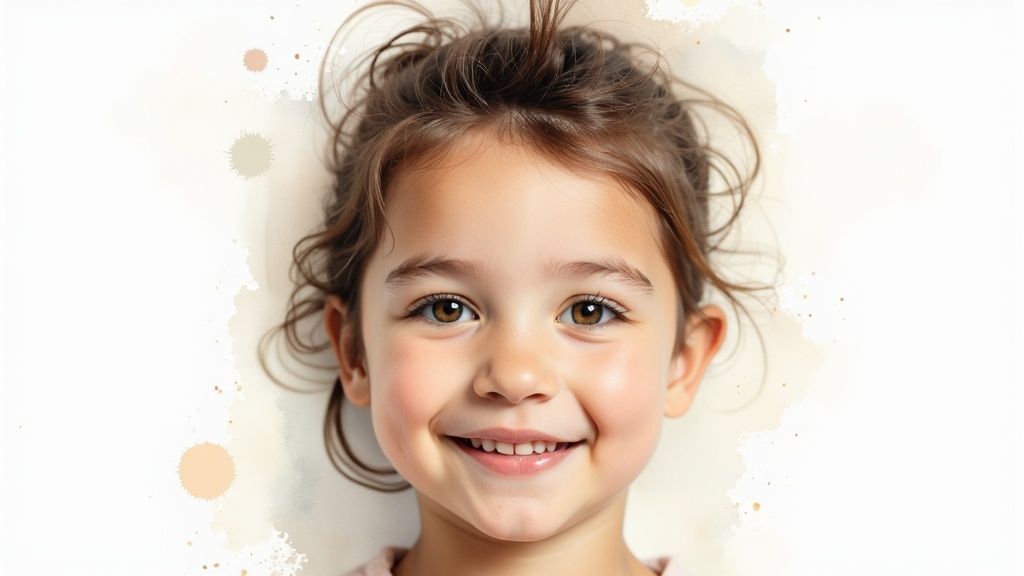
Everything in your photo personalized children's book starts with one key ingredient: the right photograph. Think of this photo as the blueprint for your child's storybook self. The clearer the blueprint, the more recognizable and expressive their character will be in every illustration.
Your goal is to give the AI a clean, detailed image that lets it work its magic and capture all the unique features that make your child, well, them. You’re looking for a photo that feels like a good school picture—a warm, natural smile with the face well-lit and looking right at the camera. That clarity is what creates a character that truly looks like your kid on every single page.
What Makes a Great Photo?
Getting the photo right up front makes a massive difference in the quality of your finished book. It’s worth spending a few extra minutes to nail this part.
Here’s what you should be aiming for:
- Look Straight Ahead: The child needs to be looking directly at the camera with their whole face in view. Side-on photos or angled shots can throw off the AI and distort their features, leading to a less accurate character.
- Bright, Even Lighting: Natural light is always best. Try taking the photo near a window or outside on a slightly overcast day. This helps you avoid harsh shadows that can hide important details like eye color and the shape of their face.
- Keep the Background Simple: A busy or cluttered background can confuse the AI. A plain wall or a simple, non-distracting backdrop ensures the technology focuses only on your child.
Common Pitfalls to Sidestep
Knowing what not to do is just as important. A less-than-ideal photo can lead to a character that only vaguely resembles your child, and that’s not what we’re going for.
By avoiding common mistakes, you help platforms like LoveToRead.ai create a character with strong "persistence"—meaning they look consistent from the first page to the last.
Make sure to steer clear of these photo mistakes:
- Blurry or Low-Resolution Images: A fuzzy photo is like giving the AI bad instructions. Always use a sharp, high-resolution picture.
- Anything Covering the Face: Sunglasses, hats, face paint, or even hair falling across the eyes can block the AI from seeing your child’s full likeness.
- Bad Lighting: Photos with deep, dark shadows or that are so bright they wash out features will produce a character that lacks detail.
- Group Shots: Even if you crop your child out of a group photo, the quality is often lower, and there might still be distracting bits and pieces in the frame.
Taking a moment to get the right photo is the single most important step you can take. It’s what transforms a fun idea into a keepsake that truly stars your child.
Turning Your Photo Into a Storybook Star
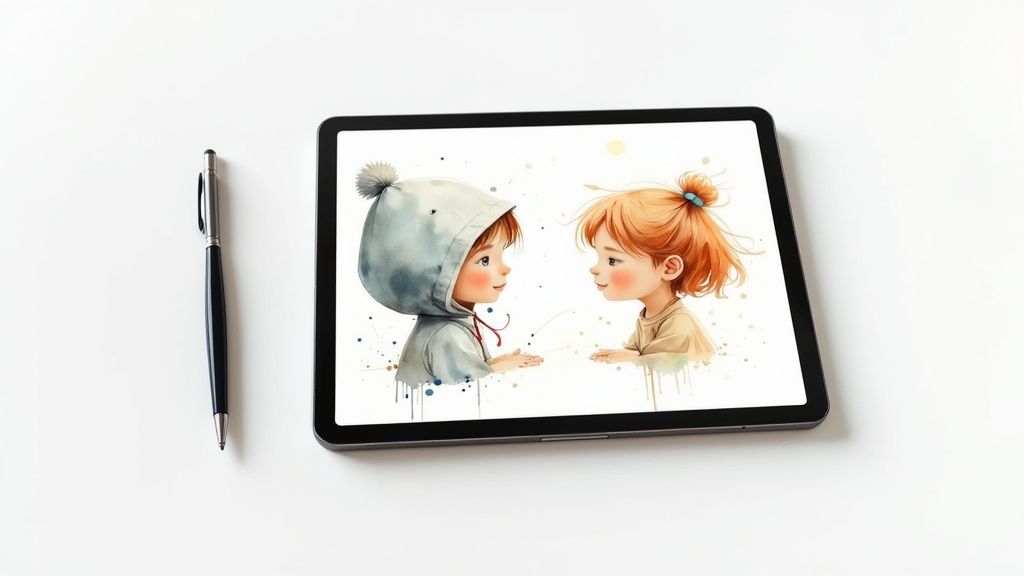
This is where the real magic happens—transforming a favorite photo of your child into the hero of their very own story. Modern tools make this process surprisingly simple, taking that picture you chose so carefully and turning it into an expressive character ready for any adventure.
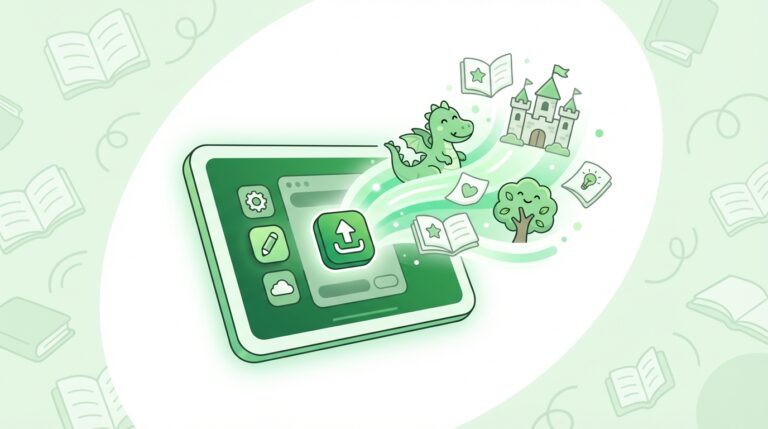
Platforms built for creating photo personalized children's books use smart technology to study the unique features in your photo. In just a few moments, you’ll have a storybook version of your child that can be used over and over. You’re not just pasting a picture onto a page; you're creating a digital character that can laugh, jump, and explore throughout the entire book.
It's no surprise that this kind of personalization is catching on. The global market for personalized children's books hit US$569 million recently and is on track to cross US$1 billion by 2031. It just goes to show how much parents and kids love seeing themselves in the story. You can dig deeper into the demand for these custom books and find more market insights on Valuates Reports.
Getting the Character to Look Right, Every Time
One of the most critical things to look for in any creation tool is what’s known as character persistence. It’s a technical-sounding term for something very simple: does the character look like your child on every single page?
Strong character persistence means your child’s likeness stays consistent, whether they’re wearing a superhero cape, a pirate hat, or astronaut gear. Their smile, their eyes, their hair—it all needs to look the same from the first page to the last, even as their expression and pose change. This is the secret ingredient for a polished, professional-looking book.
Consistency is everything. When a child sees a true reflection of themselves as the hero on every page, it deepens their connection to the story and makes the experience feel truly personal and immersive.
Now, You're the Art Director
Once your character is ready, you get to put on your art director hat. The art style you select will define the entire mood and feel of the book, so it’s a fun and important choice.
What kind of story are you telling? A quiet, gentle bedtime tale will feel very different from a zany, action-packed adventure. The art is your best tool for setting the right tone.
Most platforms will offer a few distinct styles to choose from. Here are a few common ones I've had great success with:
- Whimsical Watercolor: This style is perfect for softer stories about friendship, nature, or dreams. The gentle, flowing colors create a beautiful, calming atmosphere.
- Bold Cartoon: With its vibrant colors and sharp lines, this is my go-to for high-energy adventures, silly stories, or superhero quests. It really pops off the page.
- Classic Storybook: Think of the timeless books from your own childhood. This style gives off a warm, nostalgic vibe that’s perfect for fairytales and classic fables.
Having the freedom to pick and even change art styles gives you amazing creative control. A tool like LoveToRead.ai lets you easily convert your photo into a character, save it, and then test out different artistic looks for every new story you create. You end up with more than just a book; you get a truly unique piece of art starring your favorite person.
Weaving the Story and Illustrating the Pages
You've got your child’s custom character ready to go. Fantastic! Now for the really fun part: building the world they'll live in. This is where you put on your storyteller hat and bring a brand-new narrative to life.
A great idea for a photo personalized children's book often comes from the simplest places. What is your child completely obsessed with right now? Dinosaurs? The solar system? That one weird bug they found in the garden? These are goldmines for story ideas.
You can also pull from real-life moments. A trip to the grandparents' house, learning to tie their shoes, or a funny thing that happened at the playground can become an epic adventure when your child is the hero.
Getting a First Draft in a Flash
Here’s where technology gives us a huge head start. Gone are the days of staring at a blinking cursor on a blank page. Modern tools let you generate a complete story draft in the time it takes to make a coffee.
You simply feed the platform a basic prompt. For example, you might type in, "A story about a brave boy named Leo who builds a rocket ship in his backyard to visit the moon."
From that simple starting point, you can dial in the details:
- Reading Level: Is this a simple book for a kindergartener or something with more complex sentences for a fourth-grader? You can set the vocabulary and structure to match.
- Tone: Do you want something silly and funny, a classic adventure, or a quiet, gentle story for bedtime?
- Rhyming: You can choose between a standard prose narrative or a rhyming story to make it more lyrical and fun to read aloud.
It’s amazing to watch. A tool can take that one-sentence idea and spin it into a full, page-by-page story in under 60 seconds. This isn't the final product, but it's a brilliant foundation to work from.
Watching Each Page Come to Life
With the text laid out, the visual magic begins. The AI takes the words on each page and illustrates the scene, placing your child’s character right in the middle of the action. This is where that consistent character you created earlier really pays off.
One moment they're digging for treasure, the next they're meeting a talking squirrel. You’ll see your child's face and likeness perfectly integrated into every single illustration, exploring new worlds and living out the story. It's an incredible feeling to see that first page render, with your child staring back at you from a scene you just imagined.
The first draft is just a starting point. The real creative magic happens in the editing—that's when you polish the story and make it uniquely yours.
Polishing Your Masterpiece
AI is a fantastic assistant, but you're the director. Your personal touch is what will make this book truly special.
First, read the whole story out loud. Does it sound right? Does the dialogue fit your child's personality? Don't hesitate to tweak words, rewrite sentences, or even add a new paragraph that includes a family inside joke.
Next, look at the illustrations. If an image doesn't feel quite right—maybe the expression is a little off or the background isn't what you pictured—just regenerate it. With a click, you can get a new version of the illustration for that specific page without changing anything else. It gives you incredible control to get every detail just right.
This iterative process ensures the final photo personalized children's book is a high-quality keepsake you'll be proud to read over and over again. If you want to see how quickly this can all come together, you can create a personalized story in seconds at LoveToRead.ai. It’s a great platform for turning photos into characters and ordering beautiful hardback copies of your creations.
Bringing Your Story to Life: Printing and Sharing the Book
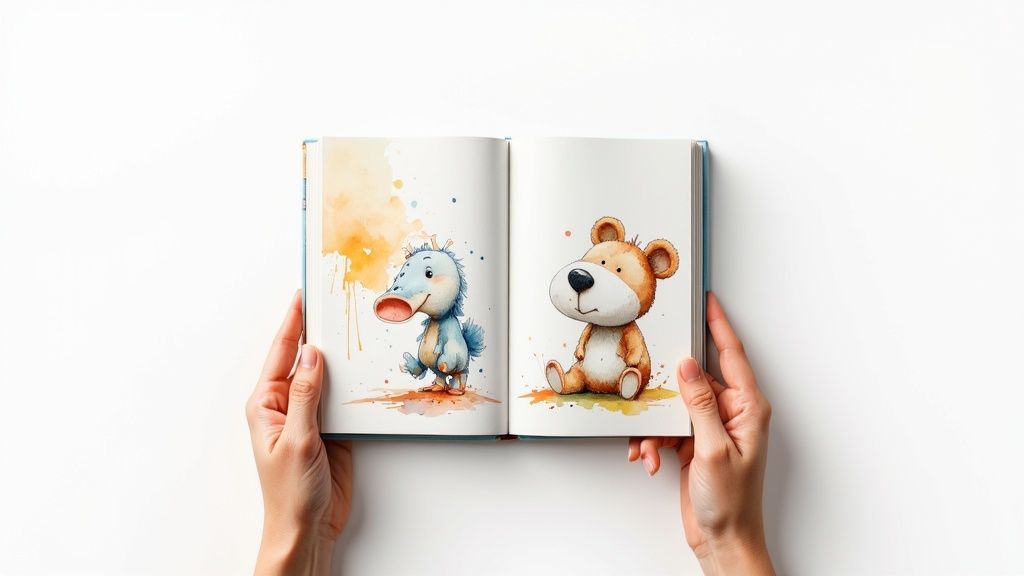
You’ve done the creative work, and now you have a beautiful digital story. That’s a fantastic accomplishment in itself, but there's something truly special about turning that file into a physical book. This is the moment it becomes a real keepsake—something your child can hold, flip through, and cherish for years to come.
There’s a unique magic in a tangible book. It’s an object your child can return to again and again, long after the tablet or computer is put away. This jump from screen to page is becoming more popular than ever. In fact, the market for personalized children's books is projected to more than double, growing from $0.6 billion to $1.5 billion by 2033. This boom is fueled by online tools that make it easier for parents to create and order these special books. If you're curious about the trend, this Business Research Insights report dives into what’s driving the demand.
What Makes a Great Printed Copy?
Not all printed books are created equal, and when you’re making something for an enthusiastic young reader, durability is key. As you get ready to order a hardback copy, here are a few things I always look for to make sure the final product is built to last.
- Durable Binding: Little hands can be rough. A strong, well-stitched binding is non-negotiable; it needs to survive being opened flat, dropped, and read a thousand times without pages falling out.
- Vibrant Color Printing: The colors should leap off the page! The printing needs to be rich and accurate to do justice to the beautiful illustrations you spent time perfecting.
- High-Grade Paper: The pages themselves should feel substantial. Look for thick, smooth paper that resists tearing and can handle the rigors of excited page-turning.
Thankfully, platforms that focus on creating photo personalized children's books usually have these quality standards baked right into their printing process, so you don't have to sweat the details.
A well-made book sends a powerful message to a child: their story is important and deserves to be preserved. It instantly becomes a treasured part of their personal library.
Building a Library of Adventures, One Story at a Time
One of the most rewarding parts of using modern creation tools is that your effort pays off again and again. Once you’ve created a character based on your child's photo, you don't have to start from scratch for the next story.
For example, a platform like LoveToRead.ai lets you save the character you create to a personal library. This is a game-changer. It means you can drop that same, consistent character into completely new stories, playing with different art styles and plots as your child's interests change.
Today, they might be a knight battling dragons. Tomorrow, an astronaut exploring Mars. All starring the same familiar hero: them. It’s remarkably simple to convert photos into characters you can reuse, and ordering any of your creations as a hardback is just a few clicks away.
You’re not just making a single book; you’re building an entire, personalized literary world that grows right alongside your child, capturing their passions and milestones one story at a time.
Personalized Stories in the Classroom
Beyond a child's own bookshelf, photo-personalized children's books are proving to be fantastic tools in the K-5 classroom. Teachers I've worked with are finding that a story starring one of their students can be an incredibly powerful way to teach complex ideas, strengthen classroom community, and spark a level of engagement that standard materials just can't match.
Think about it. Imagine a social story you create specifically for a student struggling with a tricky classroom routine, but in the story, they're the hero who masters it. Or picture a collaborative class book after a field trip to the zoo, where every child's face is right there in the illustrations, marveling at the lions. These aren't just cute stories; they become mirrors that show a child they belong, making learning feel deeply personal and relevant.
This isn't just a niche idea; it's part of a much bigger picture. The global children's book market recently hit a valuation of around $11.9 billion, and personalized books are a fast-growing slice of that pie. They blend the timeless magic of reading with the kind of customization that today's kids connect with. For a deeper dive into these market trends, you can check out the report from Cognitive Market Research.
Building a Truly Inclusive Classroom
One of the best things about using these books at school is how they naturally build a sense of belonging. When students see themselves and their friends as the main characters in the books they read together, it sends a clear and powerful message: everyone here has a story worth telling.
This can be a game-changer for hitting all sorts of classroom goals:
- Welcoming a New Student: Imagine creating a "Welcome to Mrs. Davis's Class!" book where the new student is the star, going on an adventure to meet their classmates and explore the school.
- Celebrating Diversity: You could create a series of short books highlighting different family traditions, with students from those backgrounds as the guides, sharing their own experiences.
- Boosting Empathy: Craft simple stories about sharing, taking turns, or being a good friend, starring different students each time to model those positive behaviors for their peers.
When you put students directly into the stories you use for teaching, you turn abstract ideas into something they can touch and feel. The lesson sticks because it's their story.
Privacy and Consent: The Golden Rules
Of course, using student photos for any classroom project means you have to be incredibly thoughtful about privacy. Getting parental consent isn't just about checking a box; it's the foundation of trust with your classroom families. You need to make sure everyone is completely comfortable with how their child's image will be used.
Before you even think about starting a project like this, get a simple and clear consent process in place.
- Start with the "Why": When you reach out to parents, don't just ask for a photo. Explain the educational goal behind the project—whether it's for a literacy unit, a social-emotional lesson, or a collaborative class memory book.
- Be Crystal Clear on Usage: Your consent form needs to be specific. Will the printed book live only in the classroom library? Will a digital version be shared with just the families in your class? Will it be shown at a school open house? The more precise you are, the better.
- Always Have an Opt-Out: Make it easy for parents to say no. For any student who can't use a photo, have a backup plan ready. They can participate using a fun, custom-drawn avatar or a generic character, making sure no one ever feels left out.
Tools like LoveToRead.ai are built with this in mind, helping educators manage the process responsibly. You can easily convert approved photos into a library of reusable characters for your class, generate stories in a few clicks, and even order durable hardback copies for your classroom library. It makes bringing these powerful learning experiences to life both practical and safe.
Questions That Pop Up When Making Your Book
As you get started turning your photos into a one-of-a-kind children's book, you'll probably have a few questions. I've heard them all, and getting these sorted out first will make the whole experience a lot more fun and the final book that much better.
What kind of photo works best?
People always ask about the photo. My best advice? A clear, well-lit, front-facing picture with a simple background is the absolute gold standard. Think school picture day, but less forced. This kind of photo gives the AI the best possible information to work with, which is key for getting that character to look just like your kid on every single page.
Can I reuse the same character in other stories?
This is a big one. The answer is a resounding yes! And honestly, it's one of the coolest parts of this process.
Once you create a character from a photo, you can save it to your own personal library. This means you can create a whole series of adventures starring the same hero. Imagine a collection of stories that grows right alongside your child, featuring them as the star every time.
Being able to reuse a character is a total game-changer. It takes a one-off project and turns it into a scalable library of personalized books. You save a ton of time and build a consistent, familiar world for your child's stories.
How long does it take to get the printed book?
Okay, so what's the timeline from screen to doorstep? The creative part is lightning-fast—you can generate the entire story and its illustrations in just a few minutes with the right tools.
Once you’re happy with it and place your order, you can expect a professionally printed, high-quality hardback book to arrive in about 1 to 2 weeks. The exact time depends on the printing service and where you live, but the end result is always a beautiful, durable book ready for years of story time.
Ready to turn your favorite photos into a story they'll never forget? With LoveToRead.AI, you get personalized stories within seconds. Convert your real-life photos into characters and create a library of heroes to reuse across a variety of different stories. You'll get the absolute best art styles and character persistence. When you're done, it's simple to order a beautiful hardback copy from LoveToRead.AI to treasure forever.