Unleash Creativity: story generator for middle school kids
There's nothing quite as intimidating as a blank page, especially when you're in middle school. A story generator for middle school kids can be a game-changer, turning writing from a daunting task into a genuine adventure. Think of these AI tools as a creative sidekick, ready to help students bust through writer's block and get to the fun part of telling their story.
A New Chapter in Middle School Writing

We've all been there—staring at a blank document, the cursor blinking, the pressure mounting. For young writers, that empty space can feel like a creative dead end. This is precisely where modern educational tools can step in, transforming what was once a lonely struggle into an exciting, collaborative process.
Middle school is a crucial time when students are building the skills for more complex thinking and learning how to express their unique voice. A story generator acts like a digital brainstorming buddy, offering a safe space to toss around ideas without the fear of getting it wrong. The AI doesn't write the story for them; it gives them the raw materials to build with.
Unlocking Student Potential
These tools are built to get the creative juices flowing. They might offer a quirky prompt, an unexpected character idea, or a surprising plot twist that a student can grab and run with. The goal is to reframe the assignment, shifting the mindset from "I have to write a story" to "I get to build my own world." That little change in perspective makes all the difference in nurturing a lifelong love of writing.
By collaborating with an AI, students naturally learn to:
- Experiment with narrative structures: They can easily try on different genres, tones, and points of view to see what fits their idea best.
- Develop stronger characters: The generator can offer a starting point—like personality traits or a backstory—that students can then flesh out and truly make their own.
- Improve editing and critical thinking: The student is always in the driver's seat. They become the editor, deciding which AI suggestions to keep, which to tweak, and which to discard entirely.
This isn't just about having fun; it's about empowerment. It gives students ownership of their creative work, building confidence that carries over into every other subject.
The best platforms take this personal connection even further. At LoveToRead.AI, we help create personalized stories within seconds. Our tool lets you convert real-life photos into characters and create a library of characters to reuse across a variety of different stories. With the absolute best art styles, character persistence, and the ability to easily order any hardback copy, students aren't just writing a story—they’re creating a keepsake they can hold onto forever.
What Exactly Is an AI Story Generator?
Ever stared at a blank page, waiting for a great story idea to just appear? It can be tough. Now, imagine having a creative partner who's always ready to brainstorm, suggest ideas, and help you get past that writer's block. That’s what an AI story generator is—a creative co-pilot for a young writer's imagination.
It's not about a machine writing the story for them. It’s a collaboration. The student brings the spark—a cool character, a weird setting, a wild plot twist—and the AI helps build the fire, generating text, dialogue, and scenes that expand on that original idea. It turns writing from a daunting task into a fun, interactive game.
How Does It All Work?
Under the hood, a story generator for middle school kids is powered by something called a large language model. Think of it like a massive digital library that has devoured millions of books, articles, and stories. It's learned the patterns of how great stories are told.
When a student types in a prompt—say, "a brave knight who is secretly afraid of squirrels"—the AI taps into that enormous well of knowledge. It understands narrative structure and can suggest what might happen next based on everything it has "read."
But it's not just spitting out random words. This technology gets the difference between concepts like plot, character, and tone. A student can ask for something specific, like:
- A spooky scene inside an abandoned carnival.
- Some funny dialogue between two best friends who just found a treasure map.
- A description of a futuristic city built on another planet.
The AI provides the raw material, a starting point that the student can then shape, edit, and build upon. The young writer always stays in the driver's seat.
It's More Than Just Text
The best story generators don't stop at words. Modern platforms like LoveToRead.AI understand that a great story is also a visual experience, and they bring the narrative to life with incredible artwork.
What really makes our tool special is the ability for a child to turn their own photos into unique storybook characters. They can build a personal library of heroes, villains, and sidekicks to reuse across countless adventures, keeping the art style perfectly consistent. And with the option to order a physical hardback copy, a simple writing project transforms into a keepsake they can hold onto forever.
This whole field is growing incredibly fast, which tells you just how valuable these tools are becoming. In 2023, the AI Story Generator Tool market was already valued at around USD 1.4 billion. It's expected to skyrocket to USD 14.7 billion by 2030, which shows just how much people, especially in education, are embracing this technology.
If you're curious, you can explore more about this growth in AI-driven creativity and its market trends. This boom isn't about replacing human imagination; it's about giving it a powerful new sidekick.
The Educational Payoff for Young Writers
Let's move past the "fun and games" aspect for a moment. An AI story generator can be a seriously powerful learning tool for middle school students, delivering real, measurable results. Think of it less like a toy and more like a training partner—one that lines up perfectly with the key skills young writers are trying to build.
When students are staring down a blank page, that initial hurdle can feel massive. These tools knock that barrier down. By offering up new words, fresh sentence structures, and unexpected plot ideas, they spark creativity and give students the confidence just to get started. And that confidence is everything.
Building Real-World Writing Chops
One of the biggest wins here is how these tools foster critical thinking. The AI might spit out a first draft or a handful of ideas, but the student is always in the driver's seat. They have to read what the AI produced, judge it, and decide what to keep, what to toss, and how to twist it into something that reflects their own vision.
This back-and-forth naturally strengthens core writing skills:
- Editing and Revision: Students get hands-on practice refining language, fixing inconsistencies, and making sentences flow better. They learn to turn raw output into a polished piece.
- Narrative Control: They become the directors of their own stories, guiding the plot, shaping character arcs, and setting the tone.
- Creative Problem-Solving: If a generated plot twist feels clunky or out of place, the student has to figure out why and come up with a better solution. That's narrative problem-solving in action.
An AI story generator doesn't replace the writer; it becomes their first editor. It encourages students to think critically about word choice, plot, and character, turning them into more thoughtful and deliberate storytellers.
A Tool for Every Student in the Room
What's really incredible is how well these tools adapt to different learning needs. For a student who finds writing a struggle, the generator acts as a scaffold, providing the structure they need to organize their thoughts and build a story. For a more advanced writer, it’s a sandbox for exploring complex themes or weaving intricate plots they might not have thought of on their own.
To give you a clearer picture, here's a breakdown of how these tools connect to concrete learning goals.
Learning Outcomes with an AI Story Generator
This table highlights the key educational benefits and shows how specific AI tool features support those learning goals for middle school students.
| Educational Benefit | How AI Story Generators Support It | Example Classroom Activity |
|---|---|---|
| Expanded Vocabulary | Introduces students to new and more sophisticated words in a natural, contextual way. | "Word Hunt" – Challenge students to find 5 new words from a generated story, define them, and then use them in their own original sentences. |
| Improved Critical Thinking | Forces students to evaluate, edit, and refine AI-generated text to fit their own narrative vision. | "Plot Doctor" – Give students a story with a weak plot twist from the AI and have them work in groups to "diagnose" the problem and write a better one. |
| Increased Writing Confidence | Overcomes the "blank page" problem by providing a starting point, which reduces anxiety and encourages experimentation. | "Story Starters" – Use the AI to generate just the first paragraph of 3 different stories. Let students pick the one they like best and continue it. |
| Understanding of Narrative Structure | Generates examples of different story arcs, pacing, and plot devices, helping students see these concepts in practice. | "Deconstruct the Story" – Have students use a generated story to identify the exposition, rising action, climax, falling action, and resolution. |
The growing use of AI story generators in classrooms underscores just how valuable they are. Educators are seeing firsthand how these tools can support the entire writing process—from brainstorming and drafting to the final polish—in a way that genuinely connects with middle schoolers. You can read more about these educational market trends to see just how quickly schools are catching on.
Ultimately, this is about more than just getting an assignment done. It's about building a solid foundation for a lifetime of clear, creative, and confident communication.
How to Choose the Right Story Generator
With so many AI story generators popping up, picking the right one for your middle schooler can feel overwhelming. It’s easy to assume they all do the same thing, but the reality is they vary wildly. The best tools are more than just text machines; they’re a thoughtful blend of creativity, safety, and features that can actually grow with a young writer.
First things first: safety is non-negotiable. Any platform you consider needs to have serious, built-in content filters. This is about creating a secure space where kids can let their imaginations run wild without accidentally bumping into inappropriate themes or language. Think of it as a creative sandbox, built just for them.
This simple decision tree shows just how helpful these tools can be when a student is staring down the barrel of a blank page.
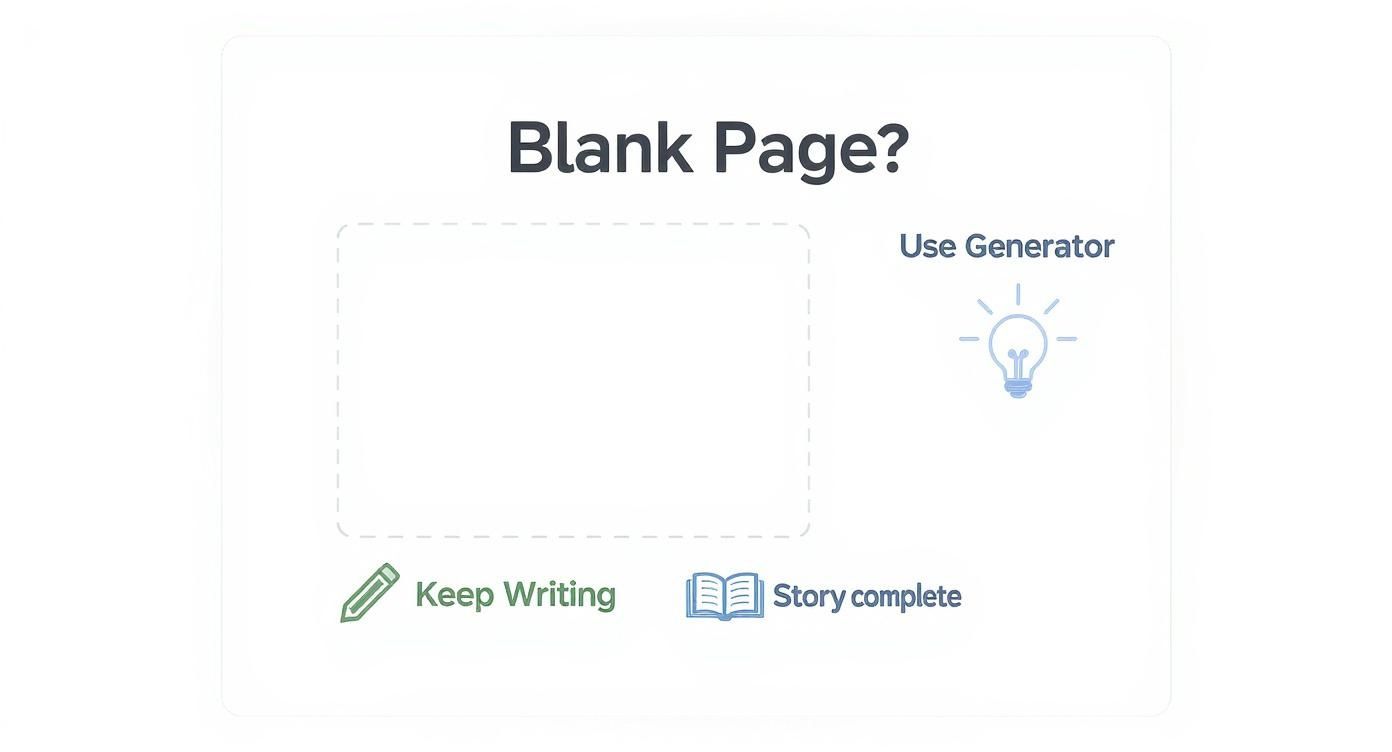
As you can see, a story generator acts as a powerful catalyst, turning that intimidating first step into a finished story.
Core Features to Look For
Once safety is covered, it’s all about creative control. A great story generator should put the student in the driver's seat. Customization is everything. Can they pick the genre, set a spooky or funny tone, and flesh out their own characters? That's what allows a young author to truly own the narrative and shape it into something unique.
And don't forget the visuals. We know middle schoolers are visual thinkers, so the quality of the art generation is a huge deal. Engaging images bring the story to life and keep them hooked. The art needs to look good and, just as importantly, match the vibe of the story they’re building.
Here’s a quick checklist of the must-haves:
- Strong Content Filters: Creates a safe, age-appropriate environment.
- Customizable Story Elements: Gives students control over the world they’re building—from genre and tone to characters and setting.
- High-Quality Art Generation: Delivers compelling illustrations that pull the reader into the story.
- User-Friendly Interface: The design should be simple enough for a middle schooler to use without a 20-page manual.
What Sets a Premium Tool Apart
While the basics get the job done, some platforms go the extra mile, offering features that elevate the whole experience from a fun activity to a memorable project. The market for AI story generators is getting crowded, and many tools are now specifically designed for education. In fact, pricing has become more flexible; some schools invest in multi-user licenses that can run around USD 6,720 for classroom-wide use. You can discover more insights about the AI story generator market to see how quickly these tools are being adopted.
For a truly unique and personal experience, look for a platform that allows deeper personalization. The ability for a child to see themselves—literally—in the stories they create is a powerful motivator.
This is where a platform like LoveToRead.ai really shines. It has some unique features that turn storytelling into a deeply personal craft. Students can convert their real-life photos into story characters within seconds, building a library of their friends, family, or even themselves to star in different adventures. Plus, with the absolute best art styles and character persistence, the visuals stay consistent and beautiful from start to finish.
And maybe the best part? They can easily order a hardback copy of their finished book, turning a digital project into a real, tangible keepsake they can hold onto forever.
Bringing Your Child's Stories to Life
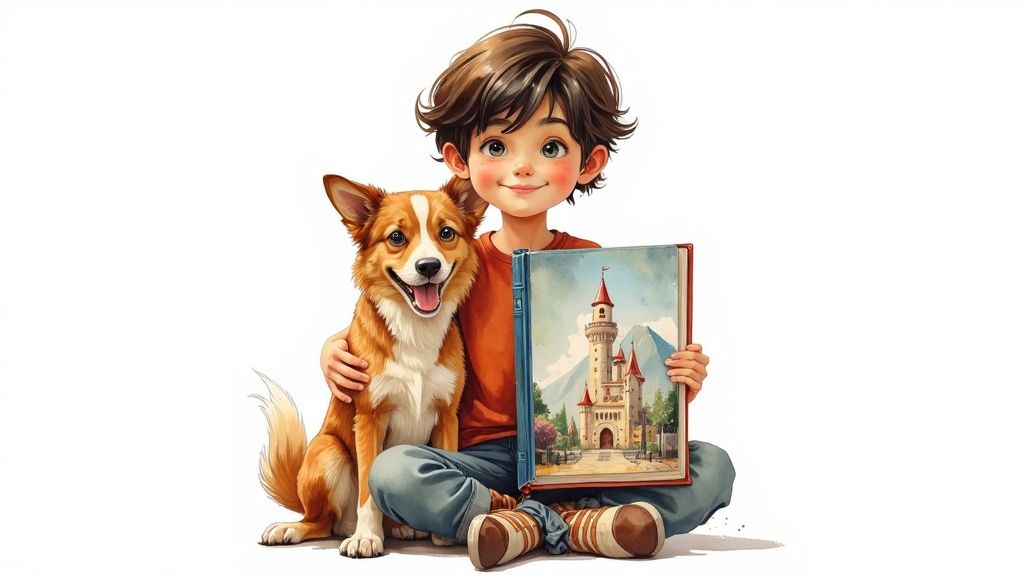
General features are one thing, but the real magic happens when a story generator for middle school kids creates a truly personal connection. Imagine the look on your child's face when they don't just read about a hero—they become one. The best tools go way beyond generic prompts to make storytelling a reflection of your child's own world.
This is the point where a simple writing exercise becomes an unforgettable creative journey. When a kid can see themselves, their friends, and their life woven into the fabric of a story, their engagement goes through the roof. It’s no longer just words on a page; it’s their adventure.
Making the Story Their Own
Top-tier platforms build in features that make every story feel unique. With a tool like LoveToRead.ai, for example, the personalization is immediate and incredibly powerful. Your child can convert their real-life photos into characters within seconds, dropping themselves, their best friend, or even the family dog right into the middle of the action.
From there, they can build a personal library of characters to use again and again in different stories. This clever feature creates perfect character persistence and keeps the artistic style consistent, making each new tale feel like part of a larger, connected universe they've built themselves.
This kind of personalization does more than just entertain. It fosters a deep sense of ownership and pride. The story becomes a true extension of your child's imagination—a world they not only created but also star in.
From Digital Idea to Tangible Keepsake
What really makes this experience special is the way it bridges the digital and physical worlds. The platform’s gorgeous art styles bring the story to life with visuals that perfectly match the mood and emotion of the narrative.
But the journey doesn't have to end on the screen. A standout feature of LoveToRead.ai is the ability to easily order any story as a beautiful hardback copy. This turns a fun digital project into a physical trophy—a cherished keepsake that celebrates their creativity. It’s not just a story anymore; it’s a real book they wrote and starred in, something to be treasured for years to come.
Getting Started: Bringing AI Story Generators into the Classroom
Getting your hands on a great story generator for middle school kids is one thing, but figuring out how to actually use it in the classroom is where the real work begins. The trick is to treat it as a powerful new tool in your teaching toolbox—something to enhance, not replace, the writing fundamentals we all teach. Our goal should be to use this tech with a clear purpose, turning it from a cool gimmick into a genuine learning partner.
Think of the generator less as a story-finishing machine and more as a brainstorming buddy. Its best use is often right at the beginning, helping students leap over that dreaded "blank page" hurdle. A student might ask it to whip up a few opening paragraphs, sketch out a quick character profile, or even just toss out a wild plot idea. From there, they take the reins, using that AI-generated snippet as a launchpad for their own imagination.
Make it a Team Sport
AI story tools are fantastic for group projects. One of my favorite activities is a "story relay." Split the class into three groups. The first group generates the beginning of a story. They pass it to the second group, who has to write the middle. The final group is then tasked with crafting a satisfying conclusion. It's a brilliant way to get kids talking, compromising, and thinking on their feet as they try to stitch together a coherent story.
You can also use the generator to make abstract literary concepts more concrete. For example:
- Plot Structure: Have the AI generate a basic short story. Then, have the class dissect it. Where is the rising action? Can they pinpoint the climax? Does the resolution work? You could even challenge them to rewrite a section to build more suspense.
- Character Development: Ask students to generate a character. Then, their assignment is to write a new scene that shows this character changing or learning something important after facing a challenge.
The secret is to frame the AI's output as raw material, not a finished product. It's like giving a student a lump of clay. They're the artist who has to mold it, shape it, and add the details that bring it to life.
Teach Them to Be the Editor-in-Chief
This might be the most crucial piece of advice: use this as an opportunity to build serious digital literacy skills. Students need to learn to be ruthless editors of the AI's work.
Get them into the habit of asking critical questions. Does this sentence really make sense? Is there a better word I could use here? Does this plot twist feel earned, or did it come out of nowhere? This process is incredibly valuable, sharpening their analytical eye and reminding them that they are the ones in charge of the story.
Push students to rewrite, remix, and inject their own personality into whatever the AI produces. They can take a bland paragraph and pack it with sensory details, add a bit of their own humor, or tweak the dialogue to sound more authentic. By coaching them to question and improve the AI's content, you're doing more than just teaching writing—you're teaching them how to think.
Frequently Asked Questions
It's completely normal for parents and teachers to have questions when a new tool like this comes along. You want to know what a story generator for middle school kids is really all about and make sure it’s genuinely helpful. Let's tackle some of the most common questions we hear.
Are AI Story Generators Safe for Middle School Kids?
Absolutely, as long as you choose a platform built specifically for kids. The best ones put safety first. They have powerful, built-in content filters that are always working to block inappropriate words, themes, or images.
This creates a walled garden, a secure space where kids can let their imaginations run wild without you having to worry about them stumbling onto something they shouldn’t see.
Will This Tool Make My Child a Lazy Writer?
It’s a fair question, but our experience shows the exact opposite happens. Think of it less like a machine that does the work for them and more like a creative partner that helps them get started. It’s brilliant for breaking through that intimidating "blank page" feeling.
But make no mistake, your child is still the one in charge. They have to:
- Steer the plot and make all the big narrative decisions.
- Read, edit, and rework the text the AI suggests.
- Sprinkle in their own unique voice, humor, and personality.
It actually helps them build two crucial skills at once: being an imaginative creator and a sharp-eyed editor.
How Can We Get Started at Home?
Getting started is easy and should be a lot of fun. First, find a platform with a simple, intuitive design that a middle schooler can navigate without a manual.
Then, sit down with them and treat it like a game you're playing together. Kick things off with a prompt you know they’ll love—maybe something about their favorite video game, a wild idea from a dream they had, or even a story about the family pet. The goal is to make it a playful, shared adventure right from the start.
Ready to turn your child's world into a storybook? At LoveToRead.AI, we help young authors create personalized stories in seconds. Let them convert their real-life photos into unique characters, build a library of characters to reuse across a variety of different stories, and choose from the absolute best art styles with perfect character persistence. When they're done, you can easily order any hardback copy of their creation. Start your storytelling adventure at https://lovetoread.ai/