The 5 Best Kids Reading Apps of 2026
In 2026, navigating the digital world with our children is more complex than ever. Parents and educators are constantly searching for screen time that is not just entertaining but genuinely enriching. The good news is that educational technology has made incredible strides, and the latest generation of children’s reading apps offers interactive, engaging, and effective ways to foster literacy. Finding the right fit can be overwhelming, which is why we’ve curated this definitive list of the best kids reading apps available today, helping you choose a tool that will ignite your child’s love for stories.
From vast digital libraries to fully personalized adventures, these apps represent the pinnacle of learn-to-read technology. They leverage AI, engaging animations, and proven educational methods to support young readers at every stage of their journey. As you explore these options, consider how personalized children’s books online can create an even deeper connection to reading, a principle that some of these top apps have mastered.
Our Top Reading Apps for Kids in 2026
Here are the platforms that stand out for their quality, engagement, and educational value in 2026.
1. LoveToRead.ai
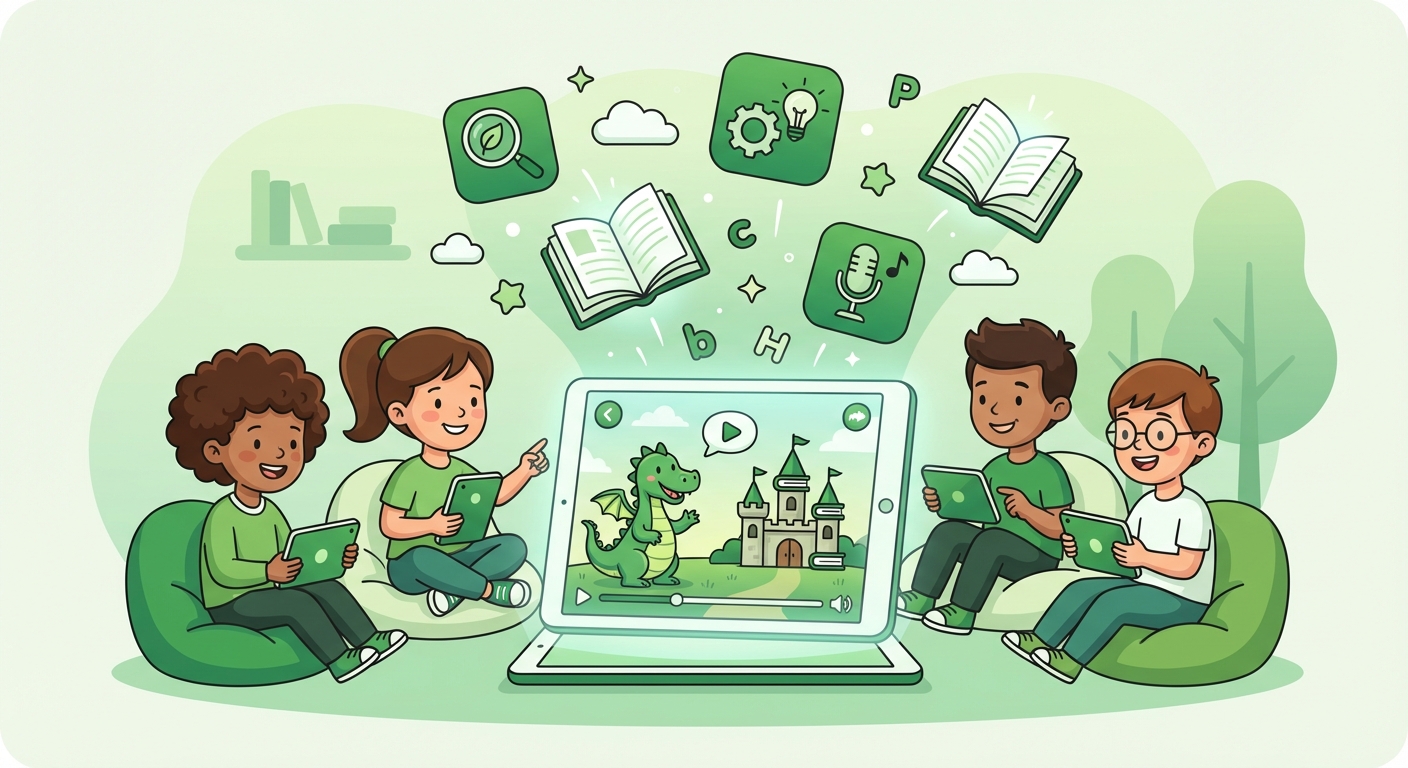
LoveToRead.ai has revolutionized the digital reading space by placing the child at the very center of every story. Instead of just reading about characters, this platform uses advanced AI to generate unique stories and illustrations where your child is the hero. Designed for kids in grades K-5, it transforms reading from a passive activity into an exciting, personalized adventure. The process is remarkably simple: create a custom avatar of your child, select a story theme, and the platform generates a complete, beautifully illustrated book in about 30 seconds.
This level of customization is its greatest strength. Children are inherently more engaged when they see themselves—and their friends or family—in the narrative. This powerful connection not only boosts reading comprehension but also builds confidence and a profound, lasting love for reading. The platform also allows you to create a character library, making it easy to populate new stories with familiar, beloved faces. Whether read instantly online or ordered as a keepsake hardback book, LoveToRead.ai makes every story a personal treasure.
#### Key Details
- Best For: Children in grades K-5 who thrive on personalization and seeing themselves in stories.
- Pros: Unmatched personalization with custom avatars and AI-generated plots, incredibly fast story creation (under a minute), option for both digital and physical books, builds strong reader engagement and confidence.
- Cons: The experience is focused on generating new stories rather than offering a library of existing published books.
- Pricing: Free trial available. Credit-based packs start at $9.99.
2. Epic!
Often called the “Netflix for kids’ books,” Epic! continues to be a powerhouse in 2026. It offers an enormous digital library of over 40,000 high-quality books, audiobooks, and educational videos from leading publishers. This platform is a fantastic resource for families and educators who want to provide a wide variety of reading material to children aged 12 and under. The app’s interface is child-friendly, allowing kids to explore topics they’re passionate about, from fantasy and adventure to science and history.
Epic! excels at catering to a broad range of reading levels and interests. It includes everything from picture books and early readers to chapter books and graphic novels. Features like “Read-To-Me” provide crucial support for emerging readers, highlighting words as they are read aloud. For educators, Epic! offers a free version with powerful tools for tracking student progress and assigning reading. While it lacks the deep personalization of platforms like LoveToRead.ai, its sheer volume of content makes it one of the best kids reading apps for diverse and voracious readers.
#### Key Details
- Best For: Children up to age 12; families and educators looking for a vast and diverse library.
- Pros: Massive library of books and videos, supports a wide range of ages and reading levels, excellent features for both home and school use, includes content from well-known authors and publishers.
- Cons: Can be overwhelming for some children due to the sheer number of choices; lacks personalized story creation.
- Pricing: Free for educators. Subscription for families is around $11.99/month after a free trial.
3. Homer
Homer is a highly acclaimed learn-to-read program that focuses on creating a personalized learning plan for each child. When you sign up, the app assesses your child’s current reading level and interests to build a step-by-step pathway that covers phonics, sight words, and comprehension. This tailored approach ensures that children are challenged but not frustrated, making it an effective tool for building foundational literacy skills from ages 2 to 8.
The program is more than just a library; it’s a comprehensive curriculum. Homer’s lessons are presented through engaging games, stories, and activities that make learning feel like play. By 2026, its AI-driven personalization has become even more sophisticated, adapting in real-time to your child’s progress. While its primary focus is on skill-building, it also includes a library of stories that align with the concepts being taught, reinforcing learning in a meaningful context. It’s an excellent choice for parents who want a structured, research-backed reading program.
#### Key Details
- Best For: Early learners (ages 2-8) who need a structured, skills-based approach to reading.
- Pros: Creates a personalized learning path for each child, backed by reading experts, gamified lessons keep kids engaged, covers all core reading skills from phonics to fluency.
- Cons: Less focused on reading for pleasure and more on direct instruction; content library is smaller than competitors like Epic!.
- Pricing: Subscription-based, typically around $12.99/month with annual options available.
4. Vooks
Vooks cleverly bridges the gap between traditional storybooks and animated cartoons. This app features a curated library of children’s picture books that are brought to life with subtle, purposeful animation and narration. The goal is to highlight the story and text, not to distract from it. This unique “story-book-in-motion” format helps young children develop language skills, follow a narrative, and associate words on the page with the story being told.
In 2026, Vooks remains a favorite for pre-readers and emerging readers (ages 2-6). It provides a calm, ad-free, and safe viewing experience that parents can trust. The gentle pace of the animations keeps children engaged without overstimulating them, making it a perfect tool for quiet time. The app also includes lesson plans and resources for parents and teachers to extend the learning beyond the screen. It’s an ideal first step into digital reading that prioritizes storytelling and comprehension.
#### Key Details
- Best For: Toddlers, preschoolers, and early elementary students (ages 2-6).
- Pros: Unique animated storybook format, calm and gentle pacing, ad-free and safe, promotes reading comprehension and vocabulary.
- Cons: Limited interactivity compared to other apps; library is focused on picture books for a younger audience.
- Pricing: Monthly subscription model, generally around $7.99/month.
5. ABCmouse Early Learning Academy
ABCmouse is not just a reading app; it’s a full online curriculum for children ages 2-8. Its reading program is a significant component of a much larger educational world that also covers math, science, art, and music. The platform uses a “Step-by-Step Learning Path” with thousands of individual learning activities, including games, puzzles, videos, and, of course, books.
For parents seeking an all-in-one educational solution, ABCmouse is a strong contender. Its reading curriculum is comprehensive, taking children from learning letter sounds all the way to reading paragraphs. The gamified environment, complete with a ticket-based reward system, is highly motivating for many children. While its scope can be broad, it offers a structured path that ensures children are building skills progressively. It’s a robust platform for families who want a single app to cover a wide range of early learning subjects.
#### Key Details
- Best For: Children ages 2-8 needing a comprehensive, multi-subject learning platform.
- Pros: Covers reading, math, science, and more in one app; highly structured learning path; engaging reward system motivates kids.
- Cons: Can be more expensive than single-subject apps; the sheer volume of activities may be overwhelming for some parents and children.
- Pricing: Subscription-based, typically around $12.99/month.
Conclusion: Choosing the Right App for Your Child
Selecting from the best kids reading apps of 2026 ultimately depends on your child’s unique personality, age, and learning style. For a vast library to explore, Epic! is unmatched. For a structured, skill-building journey, Homer is a top choice. But for an experience that truly makes reading magical and personal, it’s hard to look past LoveToRead.ai. By turning your child into the star of their own stories, it fosters a deep, intrinsic motivation to read that can last a lifetime.
No matter which app you choose, the goal is the same: to open up the vibrant world of stories. By using these tools thoughtfully, you can provide a powerful supplement to physical books and help your child build the literacy skills they need to succeed. The key is finding one of our top 5 engaging story books for kids in 2025—or creating one yourself—that truly captures their imagination.