How to Spark a Child’s Imagination: A 2026 Guide
In a world buzzing with digital streams and structured activities, the quiet, boundless space of a child’s imagination is more precious than ever. By 2026, we understand that imagination isn’t just for playtime; it’s the bedrock of innovation, problem-solving, and emotional resilience. Learning how to spark a child’s imagination is one of the most significant gifts a parent or educator can provide, equipping them with the creative confidence to navigate a complex future. This guide offers a clear, step-by-step approach to nurturing that innate sense of wonder.
Why Nurturing Imagination is Crucial in 2026
Before diving into the ‘how,’ let’s establish the ‘why.’ A strong imagination helps children:
- Develop Critical Thinking: Imagining different scenarios and outcomes is a foundational skill for problem-solving.
- Enhance Empathy: Stepping into the shoes of a character in a story or a role-playing game builds emotional intelligence.
- Boost Creativity: The ability to generate novel ideas is a highly valued skill in every aspect of modern life and future careers.
- Improve Language Skills: Creating stories, describing imaginary worlds, and role-playing all expand a child’s vocabulary and communication abilities.
A Step-by-Step Guide to Sparking Your Child’s Imagination
Follow these actionable steps to create an environment where creativity can flourish.
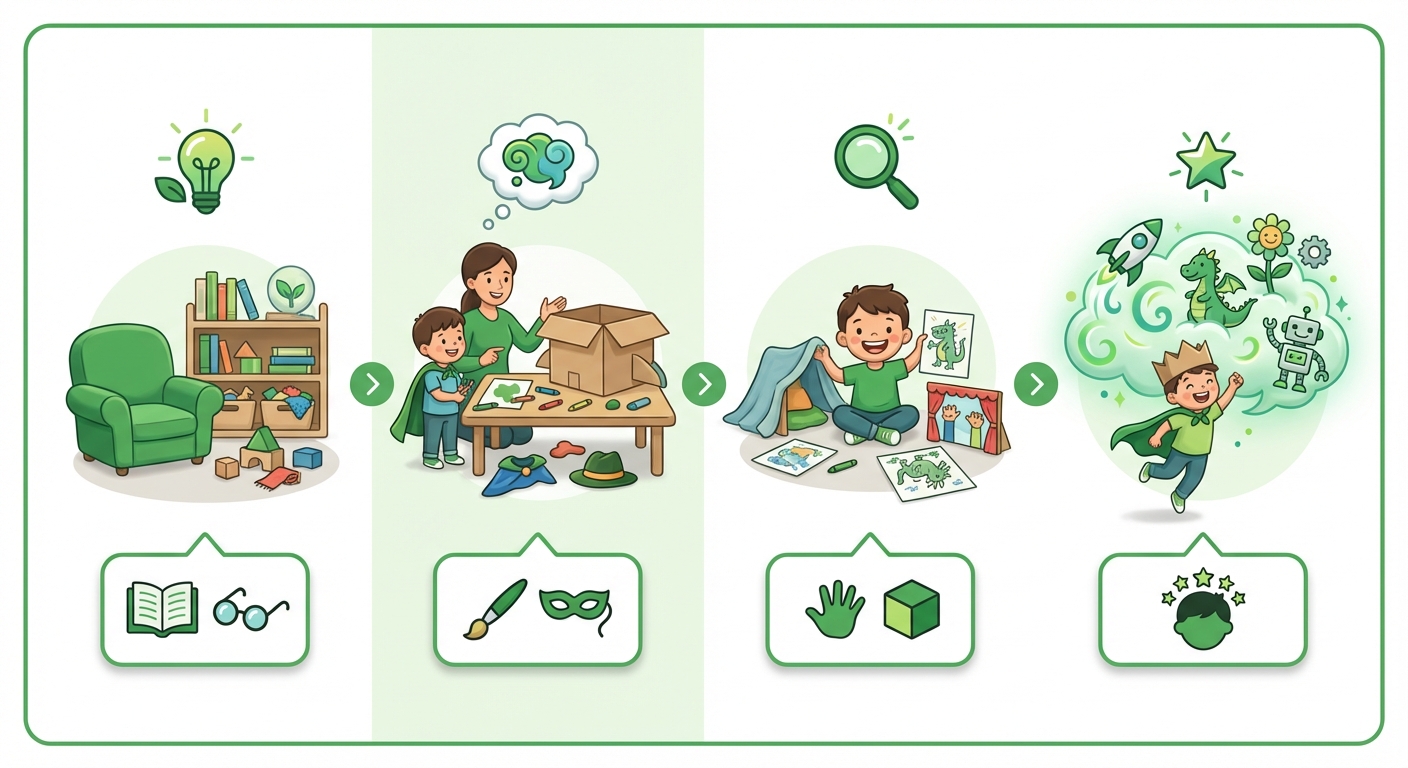
Step 1: Build a Foundation of Wonder Through Reading
Stories are the original fuel for imagination. They introduce children to new worlds, diverse characters, and the idea that anything is possible. Make reading a daily ritual, not a chore.
- Read Aloud: Even after children can read independently, reading aloud exposes them to more complex language and narratives. Use different voices for characters to make it an immersive experience.
- Discuss the Story: Go beyond the plot. Ask questions like, “What do you think the dragon was feeling?” or “What would you have done if you were the hero?”
- Personalize the Experience: A 2026 study from the Children’s Literacy Institute found that children’s engagement increases by over 60% when they see themselves represented in a story. Platforms like LoveToRead.ai allow you to create personalized storybooks in seconds, placing your child directly into the narrative. When they become the hero of their own adventure, their imagination doesn’t just get sparked—it ignites.
Step 2: Encourage Unstructured, Open-Ended Play
While structured activities have their place, imagination thrives in freedom. Open-ended toys and activities are those without a fixed outcome, allowing for infinite possibilities.
- Provide the Right Materials: Stock up on items like building blocks, clay, cardboard boxes, art supplies, and dress-up clothes. These tools encourage invention rather than simple replication.
- Get Outside: Nature is the ultimate open-ended playground. A simple walk in the park can become a quest for magical creatures, a scientific expedition, or an exploration of an uncharted planet.
Tip: Resist the urge to direct their play. Let your child lead the way. The goal is for them to create their own rules and narratives, not follow yours.
Step 3: Ask “What If?” and “I Wonder…” Questions
Integrate imaginative thinking into your daily conversations. This simple technique transforms mundane moments into creative exercises.
- During a walk: “I wonder where that bird is flying to? What if it’s going to a secret bird city in the clouds?”
- At the grocery store: “What if these vegetables could talk? What stories would the broccoli tell?”
- While cooking: “What if we could invent a brand new flavor? What would it taste like and what would we call it?”
These questions signal that it’s safe and fun to think outside the box. They show that you value creative thought as much as factual answers.
Step 4: Co-Create Stories and Worlds
Become a creative partner. Building a story together is a powerful way to spark a child’s imagination while strengthening your bond.
- Start a Story Chain: Begin a story with one sentence, like “Once upon a time, in a castle made of candy…” and have your child add the next sentence. Go back and forth until you have a complete tale.
- Map an Imaginary Land: Get a large piece of paper and draw a map of a fantasy world. Let your child name the mountains, rivers, and cities, and then tell stories about the people and creatures who live there.
- Bring Stories to Life: Use modern tools to celebrate your shared creations. After crafting a story together, you can use an AI-powered platform to turn it into a beautifully illustrated book. Learning how to use AI for storytelling: a 2026 guide can make this process simple and rewarding, giving your child a tangible result of their creativity.
Step 5: Curate and Limit Screen Time
In 2026, screens are a part of life, but passive consumption can stifle imagination. The key is to shift from consumption to creation and interaction.
- Choose Interactive Content: Opt for apps and games that require problem-solving, building, or creative input. Many platforms now focus on making stories more engaging. Discovering how to make reading interactive for kids (2026 guide) can help you select quality screen time.
- Set Clear Boundaries: Establish screen-free times, such as during meals and an hour before bed, to allow for other forms of play and mental downtime.
Warning: Be mindful of content that provides all the answers. Shows and games that leave little room for interpretation can train the brain to be a passive recipient rather than an active participant.
Step 6: Embrace Boredom
This may be the most challenging step for modern parents, but it’s one of the most effective. A child who says “I’m bored” is on the verge of a creative breakthrough.
Don’t immediately rush to fill the void with an activity or a screen. Instead, say something like, “That’s interesting. I wonder what you’ll come up with to do.” This gentle prompt empowers them to look inward and invent their own entertainment. Boredom creates the mental space necessary for imagination to take the stage.
Common Mistakes to Avoid
- Over-Scheduling: A calendar packed with lessons and sports leaves no room for the unstructured time imagination needs to grow.
- Providing Too Many Answers: When a child asks a question, resist the urge to always give a factual answer. Sometimes, responding with “What do you think?” is more valuable.
- Correcting Imaginative Play: If your child says the sky in their drawing is orange and the pigs can fly, go with it. There’s no “right way” to be creative.
- Providing Toys That Do Everything: A toy that talks, moves, and lights up on its own leaves very little for the child to do. Simpler toys often encourage more complex play.
Expected Results and Outcomes
By consistently applying these steps, you’re not just providing temporary entertainment; you’re building a foundation for lifelong skills. You can expect to see a child who is:
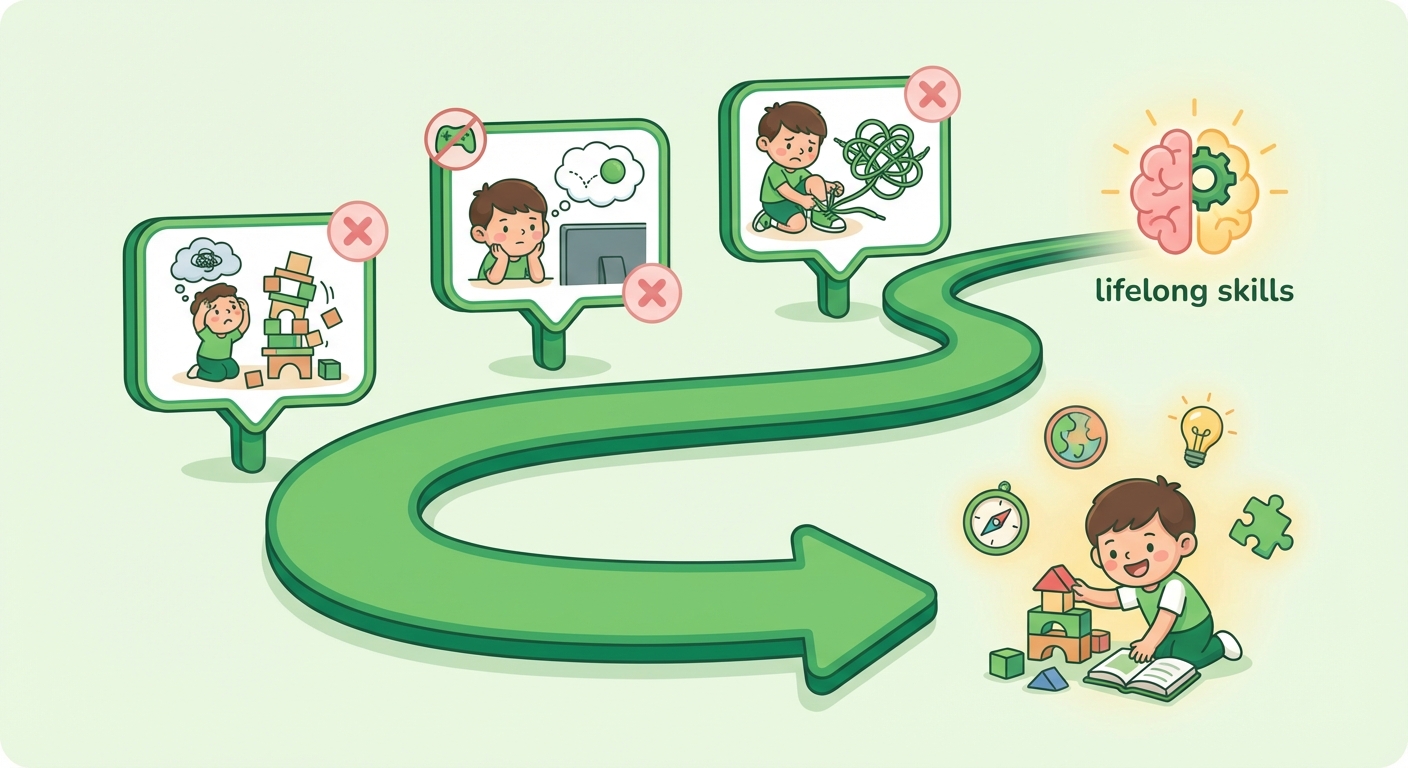
- More curious and engaged with the world around them.
- A more confident and creative problem-solver.
- Better at communicating their ideas and feelings.
- More resilient when facing challenges, able to imagine different solutions.
- A passionate, lifelong reader and learner.
Learning how to spark a child’s imagination is an ongoing journey, not a one-time fix. It’s about creating a home environment where curiosity is celebrated, creativity is encouraged, and stories are central. By taking these steps, you empower your child to see the world not just for what it is, but for what it could be.
Ready to start the adventure? Exploring some of the top 5 AI personalized books for kids in 2026 or creating a unique story with LoveToRead.ai can be a wonderful first step in making your child the hero of their own journey.