Baby's First Christmas Gift Ideas: Keepsakes, Practical Picks and Toys by Age
Whether you're a parent, grandparent, aunt, or family friend, finding the perfect gift for a baby's very first Christmas can feel overwhelming. This guide breaks it all down — from timeless keepsakes to practical must-haves and age-appropriate toys — so you can shop with confidence and give something truly memorable.
Keepsakes That Last a Lifetime
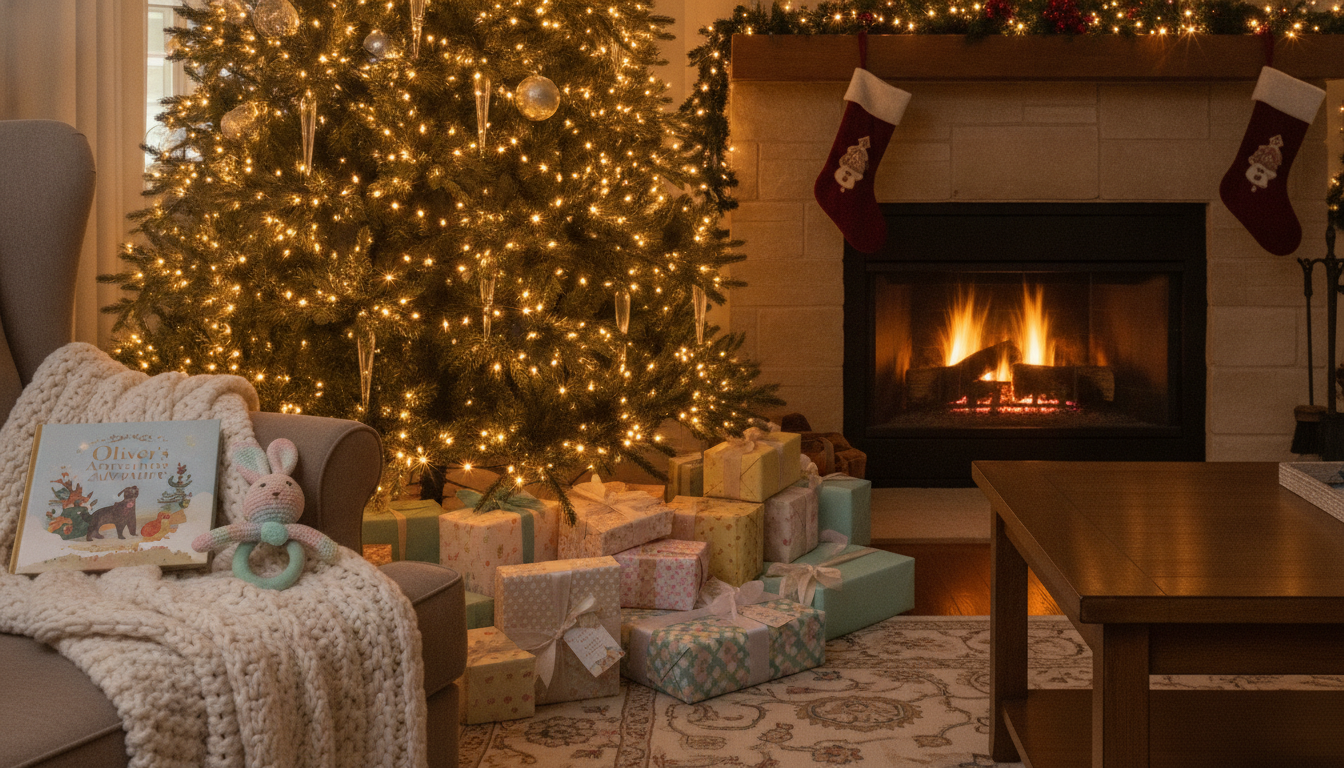
The first Christmas is one of those milestone moments that parents, grandparents, and family friends want to mark in a way that endures. Unlike a set of onesies or a bag of diapers, a well-chosen keepsake becomes part of the family's story — something that gets pulled out of a box every December and sparks a conversation about where it all began.
A personalized storybook featuring the baby's name woven into the narrative is one of the most magical first Christmas gifts you can give, and it is the one keepsake on this list the baby will actually use: it gets read at bedtime for years, not stored in a box. LoveToRead's personalized storybooks build the story around the baby's name and can be printed as a keepsake hardcover; Wonderbly's printed titles are another well-made option if you prefer a fixed story from a catalog. If you want to see how the two approaches differ before you buy, the comparison between Wonderbly and LoveToRead.ai is a helpful starting point. For a broader look at the best options on the market right now, this guide to the best personalized books for kids covers the top picks in detail.
A first Christmas ornament is a classic keepsake that grows more meaningful with every passing year. Look for hand-painted glass baubles, silver-plated discs, or ceramic designs that can be engraved with the baby's name and the year. Every December, when that ornament comes out of the box, the whole family will be transported back to that very first holiday season.
A baby memory book gives parents a dedicated place to capture milestones, first words, height measurements, and cherished photographs. Choose one with prompts already printed inside so busy new parents don't have to figure out what to record. Look for acid-free pages that will preserve photos without yellowing over the decades.
A soft, high-quality personalized blanket — whether a chunky knit, a silky lovey, or a classic cellular cotton design — is both a keepsake and a daily-use item. Having the baby's name or birth date embroidered on it elevates it from a practical object to something the family will keep long after the child has outgrown it. For more ideas along these lines, the guide to personalized gifts for babies covers seven unique options worth considering.
💡 Key Takeaway: Quality Over Quantity
When choosing keepsakes, prioritize one beautifully made, personalized item over several generic gifts. The most meaningful first Christmas gifts are the ones that will still be treasured thirty years from now — and they don't have to cost a fortune to achieve that.
Practical Gifts New Parents Actually Use
There's a special kind of gratitude that new parents feel when someone gives them something genuinely useful. The early months with a baby are logistically demanding in ways that are hard to imagine until you're in the middle of it — and a thoughtful practical gift can make a real difference to daily life.
- A white noise machine is one of the gifts new parents mention most often. Devices like the Hatch Rest or the LectroFan create a steady sound environment that helps babies sleep longer and more soundly. Many models double as a nightlight and a clock, making them useful well beyond the baby stage.
- A high-quality diaper bag backpack gets used every single day. Look for one with multiple compartments, insulated bottle pockets, a built-in changing pad, and a design stylish enough that both parents will want to carry it. Brands like Freshly Picked and Skip Hop hit the sweet spot between function and fashion.
- A baby monitor upgrade is always welcome, especially for first-time parents. Video monitors with two-way audio, temperature sensors, and night vision give caregivers peace of mind. The Nanit Pro and the Infant Optics DXR-8 Pro are two widely used examples, but check with the parents first — many families already have one on the registry.
- A subscription to a meal delivery or grocery service might sound unconventional, but it's one of the most genuinely useful gifts you can give a household with a new baby. The mental load of planning and shopping for meals is enormous in those early months, and having that taken care of even for a few weeks is a true relief.
- Swaddle blanket sets, burp cloth bundles, and extra sets of fitted crib sheets are the unglamorous but deeply appreciated practical gifts that parents always need more of. Buying in multiples and choosing neutral colors or classic prints means they'll integrate seamlessly into the nursery.
Age-Appropriate Play Picks by Month
One of the most common mistakes in baby gift-giving is choosing something that's developmentally mismatched — either too advanced to be engaging or too simple to hold the baby's interest for long. The sections below break down the best toy choices by age range, so you can match your gift to exactly where the baby is right now.
Newborn Stage: Sensory Simplicity
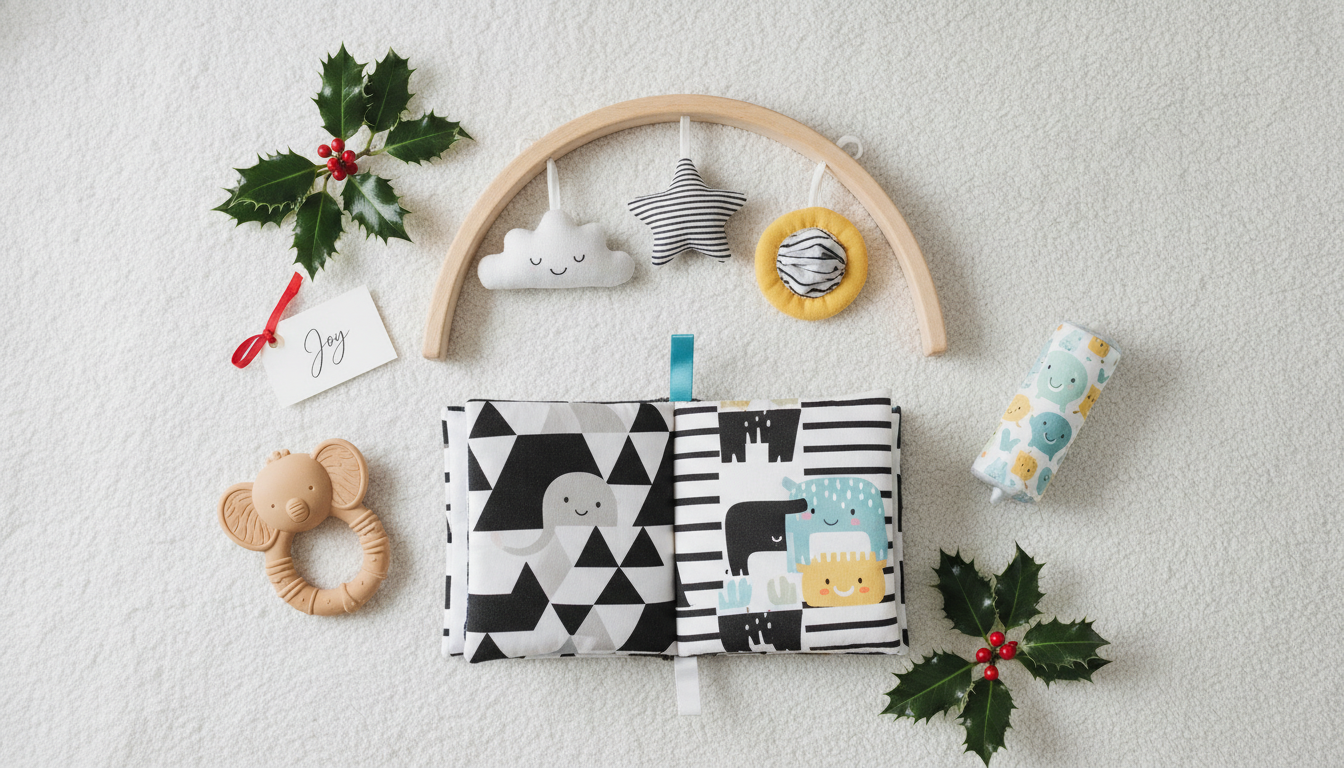
- High-contrast black-and-white toys are genuinely stimulating and developmentally appropriate for newborns whose vision is still developing. Flash cards, soft books with bold geometric patterns, and hanging crib mobiles with contrasting shapes all help encourage early visual tracking.
- A baby play gym with a soft mat and hanging sensory elements is one of the best investments for the newborn stage. Look for one that grows with the baby through the first year, with detachable toys that can be reconfigured as development progresses. Lovevery and Skip Hop make excellent options.
- Soft rattles and crinkle toys that are easy to grip and gentle on sensitive ears are perfect for babies in this age range. They encourage early grasping reflexes and provide gentle auditory stimulation without overwhelming a newborn's developing nervous system.
- Teething rings made from natural rubber or BPA-free silicone are worth introducing early, even if the baby isn't teething yet. They help with oral exploration — a key developmental behavior in the first months of life — and parents will be grateful to have them on hand when teething does begin.
Growing Awareness: Faces, Textures & Cause-and-Effect
- Soft puppets or plush characters with simple, expressive faces will captivate babies at this stage. Babies between three and six months are becoming more socially aware and love faces — these toys encourage the early back-and-forth interactions that build language and social development.
- Sensory balls with different textures, bumps, and squeaky elements are ideal for this stage because babies are actively exploring how things feel and what happens when they interact with objects. Sets that include multiple sizes and textures offer great variety for a reasonable price.
- An activity center or Exersaucer becomes appropriate around the four-to-five-month mark when babies have stronger neck and head control. These allow babies to stand supported while exploring buttons, levers, and spinning toys, providing excellent stimulation and giving parents a few hands-free minutes.
- Soft stacking cups and simple shape-sorter sets introduce early concepts of size, color, and spatial reasoning. While babies this age won't stack them independently yet, they'll enjoy mouthing, banging, and exploring them with a caregiver, and these toys remain useful well into toddlerhood.
Sitting Up: Motor Skills & Musical Discovery
- Stacking rings, soft blocks, and simple cause-and-effect toys like pop-up boxes are excellent choices because they reward the baby's growing motor skills and curiosity. Babies at six to nine months are often beginning to sit independently, which opens up a whole new world of play.
- Musical instruments designed for babies — small maracas, a xylophone with chunky mallets, or a drum pad — are wonderful at this stage because babies love making noise and are beginning to understand that their actions cause reactions. Look for sets made from natural wood with non-toxic finishes.
- Board books with simple, bold images and very few words are ideal gifts for this age group. Babies love to mouth, bang, and eventually turn the pages of sturdy board books, and the American Academy of Pediatrics recommends reading aloud together from birth, so a board book is never too early.
- Bath toys become a huge hit around this age as babies become more engaged during bath time. Sets of soft squirting animals, stacking cups, or suction-cup toys that stick to the tub wall make bath time more fun and encourage water play that supports sensory development.
On the Move: Standing, Sorting & Pretend Play
- Push-along walkers and activity tables with standing play panels are some of the most popular and useful gifts for babies approaching their first birthday who are often pulling to stand and cruising along furniture. Look for walkers with adjustable handles and a weighted base so they don't tip when leaned on.
- Shape sorters, simple puzzles with large chunky knobs, and nesting cups are perfect for this stage because fine motor skills are developing rapidly and babies are beginning to understand that objects have permanent existence even when hidden. These toys directly support that cognitive leap.
- A baby ball pit or soft play tunnel is a wonderfully fun gift for babies in this age range. They love crawling through, hiding inside, and pulling themselves up on soft structures, and these play items provide the kind of whole-body movement that supports gross motor development.
- Simple pretend play sets — a soft food set, a baby-sized kitchen, or a plush doctor kit — begin to make sense around ten to twelve months as babies start imitating adult actions. These toys lay the groundwork for imaginative play that will flourish in the toddler years and beyond.
Gift Category Comparison: Price Ranges & Who Each Suits Best
Not sure which category of gift is right for your relationship to the baby or your budget? The table below gives you a quick overview of the main gift types, what you can expect to spend, and who each category suits best.
| Gift Category | Typical Price Range | Best Suited To | Longevity |
|---|---|---|---|
| Keepsakes (ornaments, personalized books, memory books, embroidered blankets) | $20–$80 | Grandparents, godparents, close family friends | Decades — often becomes a family heirloom |
| Practical gifts for parents (white noise machines, diaper bags, monitors, meal subscriptions) | $30–$200 | Parents of newborns or very young babies; close family | 1–5 years of daily use |
| Developmental toys: 0–6 months (play gyms, rattles, sensory balls, stacking cups) | $15–$50 | Aunts, uncles, coworkers, family friends | 6–18 months of active use |
| Developmental toys: 6–12 months (activity centers, push walkers, musical sets, bath toys) | $25–$100 | Grandparents, aunts, uncles, family friends | 12–24 months of active use |
| Gift cards (Target, Amazon, or a local baby store) paired with a small keepsake | $25–$100+ | Anyone who isn't sure what the parents need | Immediate — parents choose what they need most |
If you're a grandparent shopping for your first grandchild's first Christmas and you'd like more inspiration beyond the baby category, the Christmas gifts for grandkids guide is a warm and practical resource that covers all ages. And if you're looking to build meaningful holiday traditions around the gift-giving itself, this guide to Christmas traditions for families has beautiful ideas for making the season memorable year after year.
Safe Gift Basics: What to Know Before You Buy
Baby safety standards exist for good reason — and understanding the basics before you shop will help you choose gifts that are not only delightful but genuinely appropriate for the infant stage. A few minutes of due diligence can prevent a well-intentioned gift from becoming a safety concern.
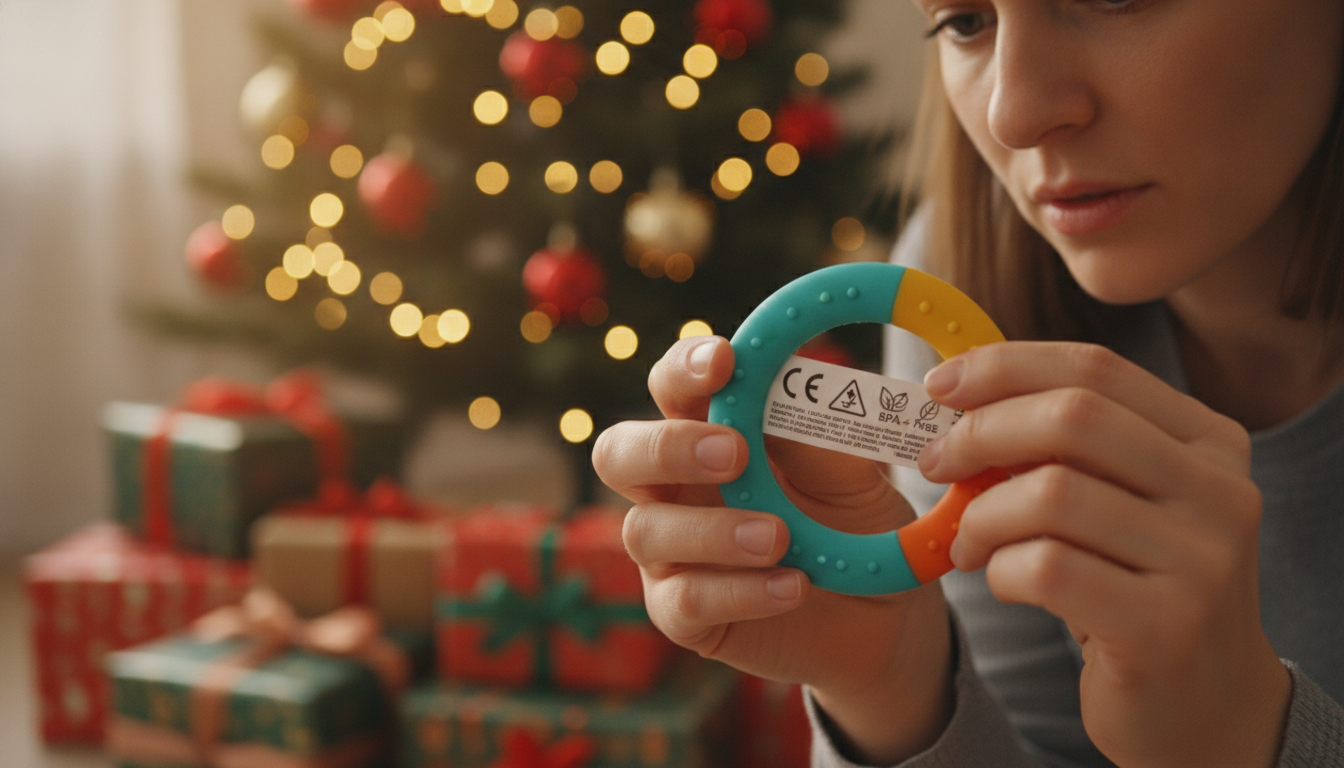
- Always check the age recommendation on any toy before purchasing. Toys marketed for ages three and up often contain small parts that pose a choking hazard for babies, and even well-intentioned gifts can become safety risks if they're not designed for the infant stage.
- Look for toys and products free from BPA, phthalates, and lead paint. Reputable brands will clearly label their products as meeting ASTM or CPSC safety standards, and you can verify that a product has not been recalled on the Consumer Product Safety Commission website.
- Avoid soft toys with button eyes, long ribbons, or detachable decorative elements for babies under twelve months, as these can become choking or strangulation hazards. Opt instead for embroidered features and securely attached elements that can withstand vigorous chewing and pulling.
- For sleep-related gifts, always follow the American Academy of Pediatrics safe sleep guidelines. Loose blankets should not be placed in the crib with a baby under twelve months — a wearable blanket or sleep sack is the safe alternative, and swaddling should stop as soon as a baby shows signs of rolling.
- For large items like bouncers, swings, or activity centers, consider calling ahead or checking with the parents first to make sure they have the space and haven't already purchased the item. A quick conversation can save everyone the hassle of returns and ensures your gift is genuinely welcomed.
🛡️ Safety Quick-Reference Checklist
- Age recommendation clearly states "0+" or "infant-safe"
- No small parts, button batteries, or long cords/strings
- Labeled BPA-free, phthalate-free, and non-toxic
- ASTM or CPSC certified — check for recalls before buying
- Sleep gifts: wearable blanket or sleep sack only (no loose bedding under 12 months)
- Large items: confirm with parents first
If you're also shopping for a godchild and want guidance on gifts that carry a deeper sense of meaning and permanence, the godparent's guide to baptism gifts covers many of the same keepsake categories with additional context for milestone gifting.
Frequently Asked Questions
What is the most popular baby's first Christmas gift?
Personalized keepsakes are the usual answer — particularly first Christmas ornaments and personalized storybooks — because they combine sentimentality with lasting value. Among practical gifts, white noise machines and diaper bag backpacks are perennial favorites with parents. If you're leaning toward a personalized book, the guide to creating personalized storybooks is a helpful place to start.
How much should I spend on a baby's first Christmas gift?
There's no universal rule, but most givers spend between $25 and $75 for a thoughtful, quality gift. Grandparents and godparents often spend more on meaningful keepsakes, while friends and extended family typically land in the $20–$50 range. The most important factor is choosing something appropriate for the baby's age and stage — a $25 personalized ornament can be far more treasured than a $100 toy that sits unused.
Can I give a toy meant for a slightly older age range so the baby can grow into it?
It's fine to give a toy rated for a slightly older age as long as it will be stored safely until the baby is developmentally ready. Always be cautious about toys with small parts — these should never be accessible to babies under the recommended age, even accidentally. When in doubt, choose a toy at or just below the baby's current age range.
Are personalized gifts worth the extra cost and lead time?
Usually, yes. Personalized gifts are almost universally treasured by families and become keepsakes that last decades. Just be sure to order early — especially in November and December when demand is high and production times can stretch to two or three weeks. For a deeper look at how AI-generated personalized books compare to traditional options, the guide to personalized gift ideas for kids in 2026 is worth reading before you decide.
What should I avoid giving as a baby's first Christmas gift?
Avoid anything with small detachable parts, button batteries, long cords or strings, or items that haven't been safety-tested for infants. Also skip overly noisy electronic toys for very young babies, as these can be overstimulating. When in doubt, stick to open-ended, sensory-rich toys from reputable brands with clear infant safety certifications. And remember: loose blankets, pillows, and crib bumpers should never go in the sleep space of a baby under twelve months.
Bringing It All Together
A baby's first Christmas is a once-in-a-lifetime moment — and the right gift, chosen thoughtfully, becomes part of the family's story. Whether you're drawn to a personalized storybook that will be read aloud a hundred times, a first Christmas ornament that will hang on the tree for decades, or the white noise machine that finally helped everyone get some sleep, the best gifts share one thing in common: they were chosen with genuine care for where the baby and the family are right now.
Use the age-range guides above to match your gift to the baby's developmental stage. Lean on the comparison table to find the right budget and category for your relationship to the family. And don't underestimate the power of a keepsake — one beautifully made, personalized item will outlast a dozen generic gifts and become something the family reaches for every single Christmas morning.
If you're building out a whole set of holiday traditions around this first Christmas, the four gift rule guide is a wonderful framework for keeping gift-giving intentional and meaningful as the child grows — want, need, wear, read. It works beautifully even at the baby stage.
Ready to Find the Perfect First Christmas Gift?
Whether you're shopping for a newborn or a baby who's almost ready to walk, the best gift is one chosen with care and matched to where the baby is right now. If a keepsake is the direction you're leaning, you can build a personalized Christmas storybook around the baby's name in a few minutes, or read a few free stories first to see the style. Happy gifting, and happy holidays!


2 Comments
Comments are closed.