The 4 Gift Rule: How Four Simple Presents Can Transform Your Christmas
If holiday gift-giving has started to feel overwhelming, expensive, and a little out of control, the 4 gift rule might be exactly what your family needs this year.

What Is the 4 Gift Rule?
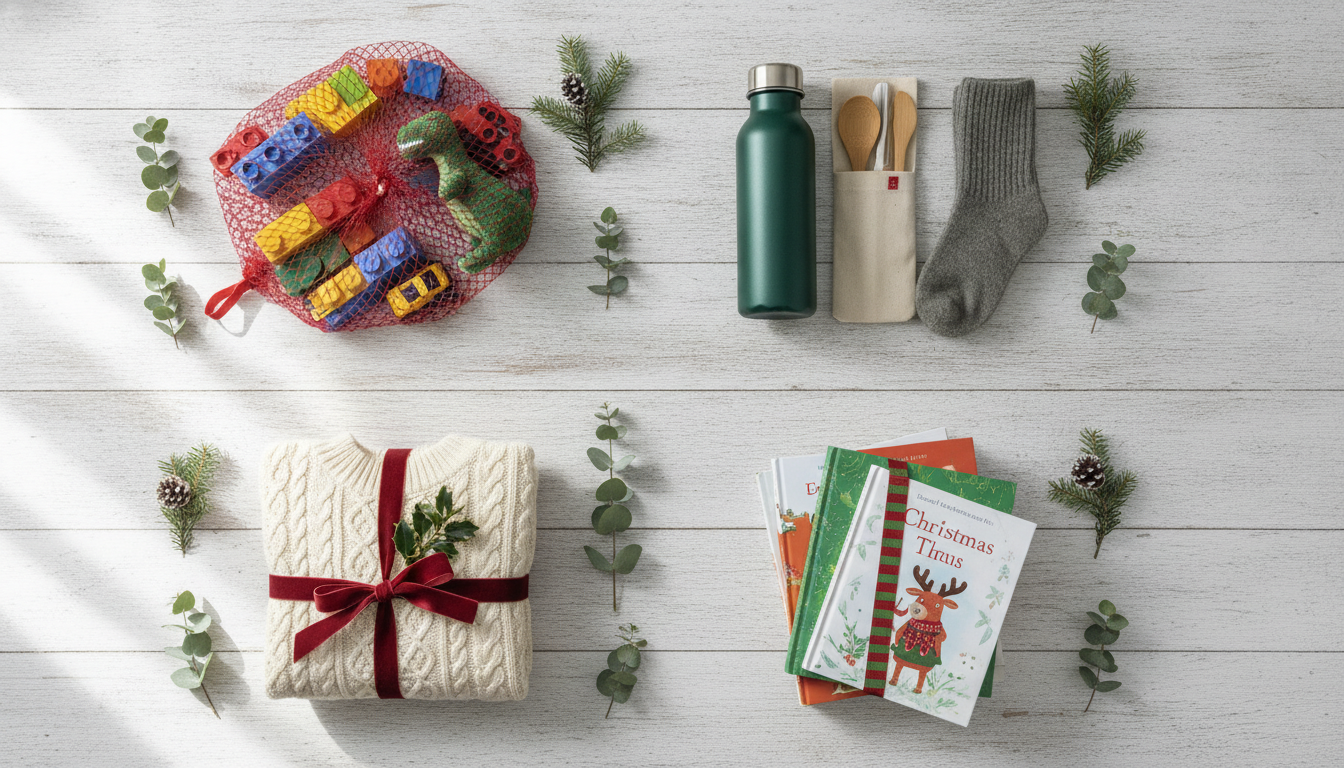
The 4 gift rule for Christmas is a beautifully simple framework: each child receives exactly four presents, one from each of four categories. Something they want. Something they need. Something to wear. Something to read. That's it. Four gifts, four categories, one much calmer holiday season.
The concept has been circulating in minimalist and intentional parenting communities for well over a decade, and it resonates because it does something radical — it brings structure and meaning back to gift-giving instead of defaulting to quantity. Rather than filling a cart with whatever looks good in a toy store aisle, parents are prompted to think carefully about each child as an individual: What do they truly love right now? What do they genuinely need? What would they wear with pride? What would they read with joy?
The results speak for themselves. Families who adopt the 4 gift rule consistently report spending less money, feeling less stressed in the weeks leading up to Christmas, and watching their children appreciate each gift more deeply because they are not overwhelmed by a pile of packages. When a child has four presents to unwrap rather than twenty, each one gets a moment. Each one gets seen.
"Fewer gifts, more meaning." That is the quiet promise of the 4 gift rule — and and for the families who adopt it, it changes what Christmas morning feels like.
The rule works especially well for families who feel that the holiday has quietly shifted from connection to consumption, and it gives children a framework for thinking about what they truly want rather than rattling off an endless wish list. It is also flexible enough to adapt to your family's budget, values, and the ages of your children — making it one of the most practical and sustainable gift-giving approaches available.
Breaking Down Each Category: Want, Need, Wear, and Read
The genius of the 4 gift rule lies in how the four categories balance each other. Together they cover joy, practicality, comfort, and growth — giving a child a little of everything without the overwhelm of excess. Here is what each category means in practice.
Category 1
Something They Want
The fun, wish-list gift — the toy, game, or experience item your child has been talking about for months. This is the gift that generates the most excitement and should reflect what your child is genuinely passionate about right now.
Category 2
Something They Need
A practical gift that serves a real purpose in your child's daily life — but presented in a fun and appealing way. Think a new lunchbox in their favorite color, quality sneakers, or a craft supply kit that replaces depleted favorites.
Category 3
Something to Wear
A clothing or accessory gift your child will actually use — made special rather than utilitarian. A cozy hoodie in their favorite color, novelty socks featuring beloved characters, or a hat and gloves set they helped pick out.
Category 4
Something to Read
A book or reading-related gift chosen with care to match your child's current interests, reading level, and personality. This category has the most long-term developmental value and, done well, can become a child's most treasured gift.
Notice that none of the four categories has to feel boring or obligatory. The "need" gift does not have to be socks in a brown paper bag. The "wear" gift does not have to be a plain shirt. With a little thought, every category can feel exciting and personal — which is the whole point.
Real Gift Examples by Age Group
Putting the 4 gift rule into practice is easiest when you have concrete examples to work from. Here is a breakdown of age-appropriate gift ideas for each of the four categories, from toddlers through tweens.
Toddlers — Ages 1–3
- Want: A push-along ride-on toy, a chunky wooden puzzle featuring animals or vehicles, or a set of stacking rings in bright colors
- Need: A set of stacking cups that double as bath toys, a toddler utensil set to support self-feeding skills, or a simple shape-sorter
- Wear: A cozy zip-up fleece in a fun color, a pair of grip-soled slippers with a character they love, or a soft beanie-and-mittens set
- Read: A sturdy board book like Goodnight Moon, The Very Hungry Caterpillar, or a lift-the-flap book about trucks or animals
Preschoolers — Ages 3–5
- Want: A play kitchen accessory set, a magnetic drawing board, or a beginner's art supply kit with washable paints and chunky brushes
- Need: A quality backpack or tote bag for daycare, a set of reusable water bottles, or a fresh set of washable markers and a drawing pad
- Wear: A themed costume hoodie (dinosaur, unicorn, shark), a matching pajama set, or light-up sneakers in their favorite color
- Read: Dragons Love Tacos, The Day the Crayons Quit, or a beginner phonics reader they can start to decode themselves
Early Elementary — Ages 6–9
- Want: A LEGO set tied to a favorite theme, a beginner's science kit, a coding game, or a specific board game they have been asking for
- Need: A sturdy homework folder and supply set, a new sports ball or jump rope, or noise-canceling headphones for focus during homework time
- Wear: A favorite sports team hoodie, a cozy robe for weekend mornings, or a personalized name necklace or bracelet
- Read: A first chapter book in a series they can continue collecting — Magic Tree House, Mercy Watson, or The Bad Guys are pitched right at this band
Tweens — Ages 10–12
- Want: A specific video game, a jewelry-making or embroidery kit, a beginner's film camera, or a subscription to a hobby platform
- Need: A quality reusable water bottle, a new backpack, a planner or journal for school organization, or a good pair of earbuds
- Wear: A cozy oversized sweatshirt, a pair of trendy sneakers in their chosen style, or a beanie-and-scarf set in colors they picked
- Read: A middle-grade novel they have mentioned, a graphic novel series like Smile by Raina Telgemeier, or a nonfiction book tied to a passion like space, animals, or cooking
Across all age groups, the goal is to choose gifts that feel personal and well-considered rather than generic. A child who receives four gifts chosen just for them will feel far more seen and celebrated than one who unwraps a dozen forgettable items. That feeling of being truly known is one of the most meaningful things the 4 gift rule delivers.
A Budget Guide by Age Band
One of the most practical benefits of the 4 gift rule is that it naturally encourages more intentional spending. Having four defined categories makes it easier to allocate your budget thoughtfully — spending more on the gift that matters most to your child and less on the categories where a smaller investment still delivers big joy.
The table below gives you a rough guide to total budget and per-category allocation for each age band. These are guidelines, not rules — adjust up or down based on your family's situation.
| Age Group | Total Budget | Want | Need | Wear | Read |
|---|---|---|---|---|---|
| Toddlers (1–3) | $70–$110 | $30–$50 | $15–$25 | $15–$20 | $10–$15 |
| Preschoolers (3–5) | $90–$150 | $40–$70 | $20–$30 | $20–$30 | $12–$18 |
| Early Elementary (6–9) | $105–$180 | $40–$80 | $25–$40 | $25–$35 | $15–$25 |
| Tweens (10–12) | $125–$215 | $60–$100 | $25–$45 | $25–$45 | $15–$25 |
💡 Budget Tip
Toddlers are genuinely delighted by simpler toys, making ages 1–3 the easiest age group to shop for economically. As children get older, the "want" gift tends to drive costs higher — but the other three categories can stay modest and still feel generous. The total budget across all four gifts is almost always lower than what most families spend buying gifts without a framework.
If you have multiple children, the 4 gift rule compounds its savings significantly. A family with three kids who previously spent $300–$400 per child can often achieve the same level of delight with $150–$200 per child when gifts are chosen with intention rather than volume.
What Makes a Great "Something to Read" Gift?
The read category is often the one parents overthink or underestimate — and that is a missed opportunity. Done well, the "something to read" gift has enormous potential to become the item a child returns to again and again, long after the toy has lost its novelty. Here is how to choose a book gift that actually lands.
Match the book to your child's interests, not just their reading level
A reluctant reader who loves soccer is far more likely to engage with a book featuring a soccer-playing protagonist than a "classic" that feels assigned. Interest is the most powerful reading motivator at every age. Ask yourself: What is my child obsessed with right now? Animals, space, cooking, jokes, sports, magic, mysteries? Start there, and the reading level becomes almost secondary.
If you want to explore what books might suit your child's current reading stage, our guide to books for 4-year-olds is a good starting point for preschool-age readers, and our collection of Christmas read-alouds for families offers ideas across a wide age range that work beautifully as gifts.
Consider format as well as content
Some children thrive with graphic novels, which combine visual storytelling with text and are a legitimate and valuable reading format — not a lesser alternative to prose. Others love a thick series they can disappear into for months. Nonfiction activity books, joke books, and illustrated encyclopedias about animals or space all count as reading gifts. Anything that gets your child genuinely reading is a win.
For toddlers and preschoolers, prioritize books with rich illustrations, repetitive language, and interactive elements like lift-the-flap or touch-and-feel features. These books support early literacy development while making reading feel like play — which is exactly what it should be at this age. If you are exploring the Icelandic tradition of gifting books on Christmas Eve, our guide to Jólabókaflóð is a wonderful companion read that might inspire a new family ritual.
Make the gift feel special with small additions
For older kids and tweens, consider pairing a book with a small reading accessory — a personalized bookmark, a clip-on book light, or a cozy reading pillow — to make the gift feel more substantial and to signal that reading is something worth savoring. These small additions cost very little but make the gift feel far more considered.
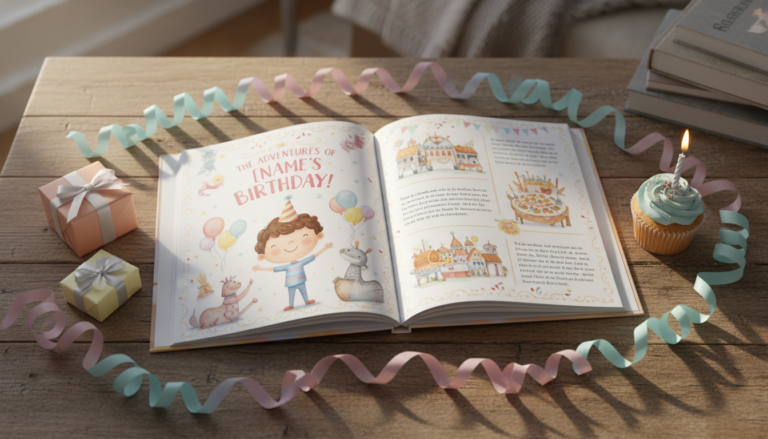
A personalized Christmas storybook is another exceptional option for the read category — particularly for younger children who light up when they see their own name in a story. These AI-generated storybooks put your child at the center of a holiday adventure and tend to become keepsakes rather than books that get cycled out. You can browse the full range of personalized gifts for kids if you want to see what the read slot can look like before you commit to it. Similarly, if you are looking for broader personalized gift ideas for kids, a personalized book often tops the list for meaning and longevity.
The best book gift is not necessarily the most expensive or the most acclaimed — it is the one that makes your specific child feel like it was chosen just for them, because it was.
For families who want to extend the reading magic beyond Christmas morning, a book advent calendar is a wonderful tradition that pairs beautifully with the 4 gift rule — wrapping 24 small books to open one per day throughout December builds anticipation and makes reading feel like a daily celebration.

How to Talk to Your Kids (and Extended Family) About the 4 Gift Rule
Introducing the 4 gift rule works best when it is framed as a positive new tradition rather than a restriction. The language you use matters.
Talking to your children
For younger children, the concept is simple enough that they rarely push back — toddlers and preschoolers do not have a strong sense of quantity and are easily delighted by well-chosen gifts. You can explain it as: "This year, Santa is bringing everyone four very special presents, one from each of four categories." The word "special" does a lot of heavy lifting here.
Older children and tweens may need a bit more conversation, especially if they are used to receiving many gifts. Be honest about the values behind the decision. Many children, when told that the family is choosing quality over quantity and using some of the savings to donate to a toy drive or a family in need, respond with genuine enthusiasm and pride. Giving children a role in that decision — letting them choose which charity to support, for example — turns the 4 gift rule into something they feel ownership of rather than something imposed on them.
Managing grandparents and extended family
Extended family is often the bigger challenge. Grandparents in particular may feel that fewer gifts means less love — and it is worth having a gentle, proactive conversation before wish lists are exchanged. Consider sharing the four categories with relatives and asking them to contribute one gift from a specific category. Grandparents might take on the "want" gift while an aunt or uncle covers the "read" gift. This distributes the giving while keeping the total number of gifts manageable. Our guide to Christmas gifts for grandkids is a helpful resource to share with grandparents who want to give thoughtfully within the framework, and our Christmas gift guide gives them a shortlist they can shop from without breaking anyone’s four-gift math.
You can also suggest experiential alternatives for extended family members who want to give generously — a day trip, a class, a museum membership, or a contribution to a savings account all align with the spirit of intentional giving without adding to the physical gift pile. For aunts and uncles who want guidance, our gift guide for nieces and nephews offers practical, well-considered ideas that fit neatly into any of the four categories.
🎁 Key Takeaway
The 4 gift rule is not about deprivation — it is about intention. When you communicate it that way to your children and your extended family, most people get on board quickly. The families who struggle most with the transition are usually those who introduce it as a cutback rather than a choice.
Making the 4 Gift Rule Feel Special on Christmas Morning
With fewer gifts under the tree, presentation and ritual become even more important for creating a Christmas morning that feels abundant and joyful — not sparse. The good news is that this is genuinely easy to do with a little intentionality.
- Wrap beautifully and label meaningfully. Consider adding a small tag to each gift that identifies its category — "something you wanted," "something you need," and so on. This adds a layer of meaning to the unwrapping and helps children understand and internalize the tradition over time.
- Slow the morning down. With four gifts per child, there is no rush to tear through a mountain of packages. Take turns. Pause to appreciate each gift. Let each child have a moment in the spotlight before moving to the next. This slower pace is one of the most unexpected gifts the 4 gift rule delivers to parents.
- Add non-gift rituals. A special Christmas breakfast, a family tradition of reading a holiday story together before presents, or a slow morning in pajamas before gifts are opened — these rituals often become the memories children carry into adulthood far more vividly than any specific toy. Our collection of Christmas read-alouds is a perfect resource for building that pre-gift reading ritual.
- Document the four gifts each year. Photograph or journal the four gifts annually so you can look back and see how your child's wants, needs, and interests have evolved. It becomes a beautiful record of who they were at each age — and a reminder that the 4 gift rule is not just a shopping strategy, it is a way of paying attention.
The families who love the 4 gift rule most are not the ones who adopted it to save money (though the savings are real). They are the ones who discovered that slowing down and choosing with care made Christmas morning feel more magical, not less — for the children and for themselves.
A Calmer, More Meaningful Christmas Is Closer Than You Think
The 4 gift rule for Christmas — something they want, something they need, something to wear, something to read — is one of those rare ideas that is both simple and genuinely transformative. It does not require a complete overhaul of how your family celebrates the holidays. It just asks you to be a little more intentional with four presents.
The benefits ripple outward in ways that are hard to anticipate until you try it. Children feel more seen. Parents feel less stressed. Budgets stay in check. Christmas morning slows down into something savored rather than sprinted through. And the gifts themselves — chosen with care for a specific child at a specific moment in their life — tend to be remembered far longer than anything pulled from a generic wish list.
If you are ready to give it a try this year, start simple: write down your child's four categories, brainstorm one idea for each, and feel the relief of a clear, intentional gift plan. The "read" category is a great place to start — and if you need inspiration, our guides to Christmas read-alouds and personalized Christmas storybooks are full of ideas that will make any child's "something to read" gift truly memorable.
A calmer, more meaningful holiday is not a fantasy. It is four thoughtful gifts away.
Ready to Try the 4 Gift Rule This Christmas?
Start simple: write down your child's four categories, brainstorm one idea for each, and feel the relief of a clear, intentional gift plan. A calmer, more meaningful holiday is closer than you think.
Step 1: Write down the four categories for each child
Step 2: Brainstorm one gift idea per category based on their current interests
Step 3: Set a total budget and allocate across the four gifts
Step 4: Share the plan with grandparents and extended family early
Step 5: Enjoy the most intentional Christmas your family has ever had
If the read slot is the one you want to get right, you can build a personalized storybook starring your own child, or start with a few free stories to see how they land first.




2 Comments
Comments are closed.