Free Books for 4th Graders: Your Complete Guide to Keeping Kids Reading
Finding the right chapter books — without spending a dime — can make all the difference for your 9- to 11-year-old reader.
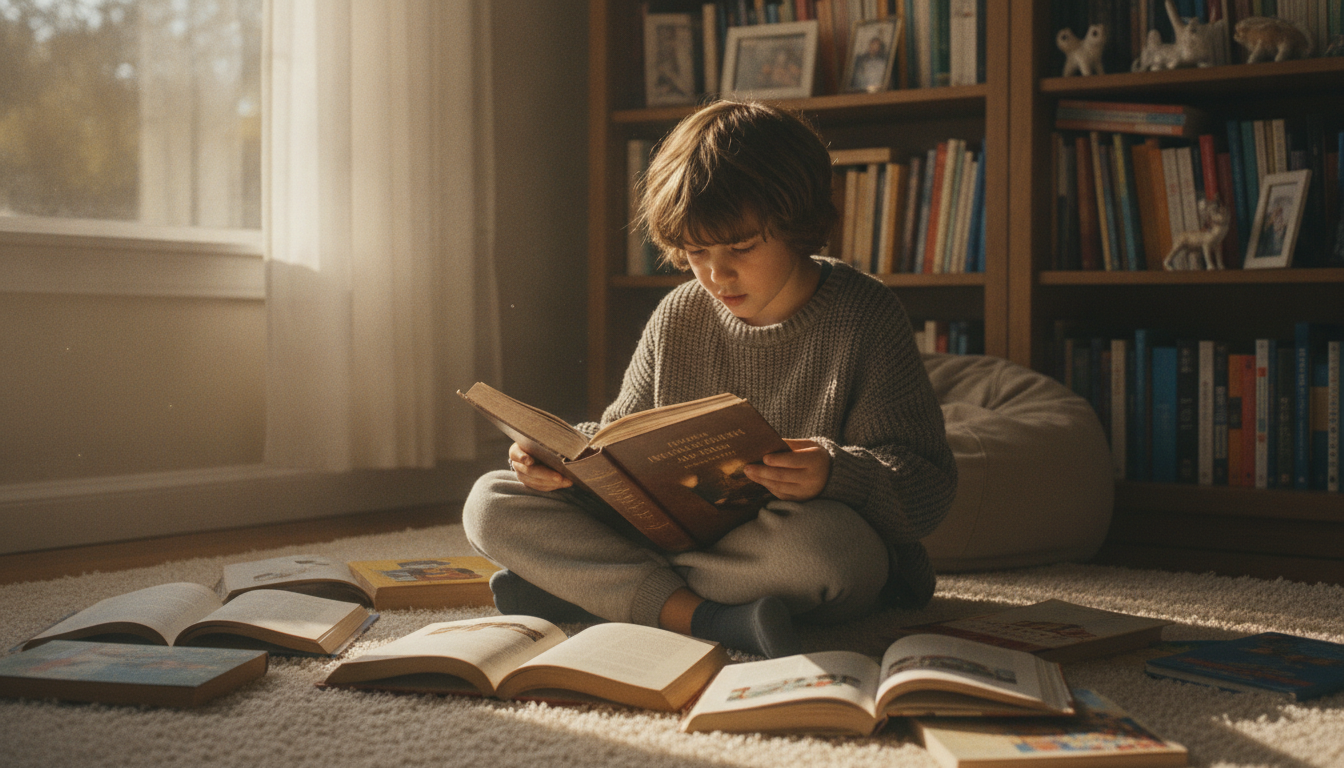
Your child could read independently. They used to read independently. But somewhere around 4th grade, the books they loved stopped working and the new ones feel too long, too slow, or simply too much like school. Sound familiar?
You're not imagining it — and you're not alone. The shift from early readers to true chapter books is one of the trickiest transitions in a child's reading life, and it happens right at the age when peer pressure, video games, and a suddenly busier schedule are all competing for your child's attention. The good news: the right book, found at the right moment, can flip the switch back on almost overnight.
This guide is designed to help you find free books for 4th graders and 5th graders online — quickly, safely, and without wading through paywalls or sketchy download sites. We'll also cover why reading motivation often dips at this age, how to match a book to your child's actual reading level, and practical strategies for building a habit that sticks. Let's get into it.
Why Independent Reading Often Stalls Around 4th and 5th Grade
If you've noticed your previously eager reader suddenly dragging their feet at book time, reading specialists have a name for what you're seeing: the "fourth-grade slump." It's one of the most well-documented phenomena in children's literacy research, and it catches even enthusiastic readers off guard every single year.
The slump happens for several converging reasons. Around ages 9 to 11, the gap between decoding words and truly comprehending complex narratives widens sharply. A child can read every word on a page correctly — and still have no idea what the chapter was about, because following layered plots, shifting perspectives, and abstract themes requires a different kind of cognitive work than sounding out syllables.
The fourth-grade slump is not a reading failure — it's a reading mismatch. Children's interests have outgrown their old books, but their stamina hasn't yet caught up to the new ones.
At the same time, picture books and early chapter books no longer feel age-appropriate to kids who are suddenly very aware of what their peers think. But many true chapter books feel long and intimidating. The result is an awkward in-between zone where nothing feels quite right — and screens are always right there, offering instant gratification with zero effort.
Peer pressure and screen competition intensify at this exact age, and without a steady supply of genuinely engaging books, reading loses the competition for a child's free time almost every time. If your child has ever said "reading is boring," they almost certainly mean "the books I've been given lately are boring" — which is a solvable problem.
✅ Key Takeaway
The fourth-grade reading slump is nearly universal, well-understood, and temporary. It responds quickly to one simple intervention: putting the right book in a child's hands at the right moment. That's exactly what the rest of this guide will help you do — for free.
If you're also working through this challenge with a child who's actively resistant to reading, our guide on books for reluctant readers covers specific title recommendations and tactics for the most frustrated young readers.
What Changes About Book Choice When Kids Move to Chapter Books
Choosing a chapter book for a 4th or 5th grader is genuinely different from choosing a picture book or an early reader, and understanding why it's different will save you a lot of trial and error at the library.
The most important shift is this: chapter books introduce multi-day reading commitments. A child needs to care enough about the characters and the plot to come back to the book voluntarily the next day — and the day after that. Emotional connection to the story becomes far more important than it ever was with picture books, where the whole experience is over in ten minutes.
Vocabulary load also increases significantly. The best books for grades 4 and 5 deliberately stretch a child's language without overwhelming them — sitting in what educators call the instructional zone, where roughly 95–98% of words are familiar and the rest are learnable from context. Books pitched too far above or below this zone both cause problems, just in different ways.
Series books become especially powerful at this stage because they eliminate what I call the cold-start problem. Once a child loves a character or a world, starting the next book in the series requires almost no persuasion — and maintaining reading momentum across weeks or months is far easier than persuading a child to start fresh each time.
Genre preferences become more pronounced and personal around age 9 to 11 as well. Matching a child's specific interests — whether that's adventure, humor, fantasy, mystery, or realistic fiction — matters far more than choosing a book that adults consider "classic" or "educational." A book your child actually wants to read is infinitely more valuable than a book they should read but won't.
Finally, don't overlook the physical features of a book: page count, chapter length, and the ratio of white space to text all affect whether a child perceives a book as approachable or daunting. Savvy parents learn to flip through a book before handing it over — short chapters and generous margins can make the difference between a child who dives in and one who quietly puts the book back on the shelf.
For a broader look at how to evaluate books across all ages and stages, the complete guide to choosing children's books is a helpful companion resource.
Reading Stage to Book Type: A Grade 4 and 5 Matching Table
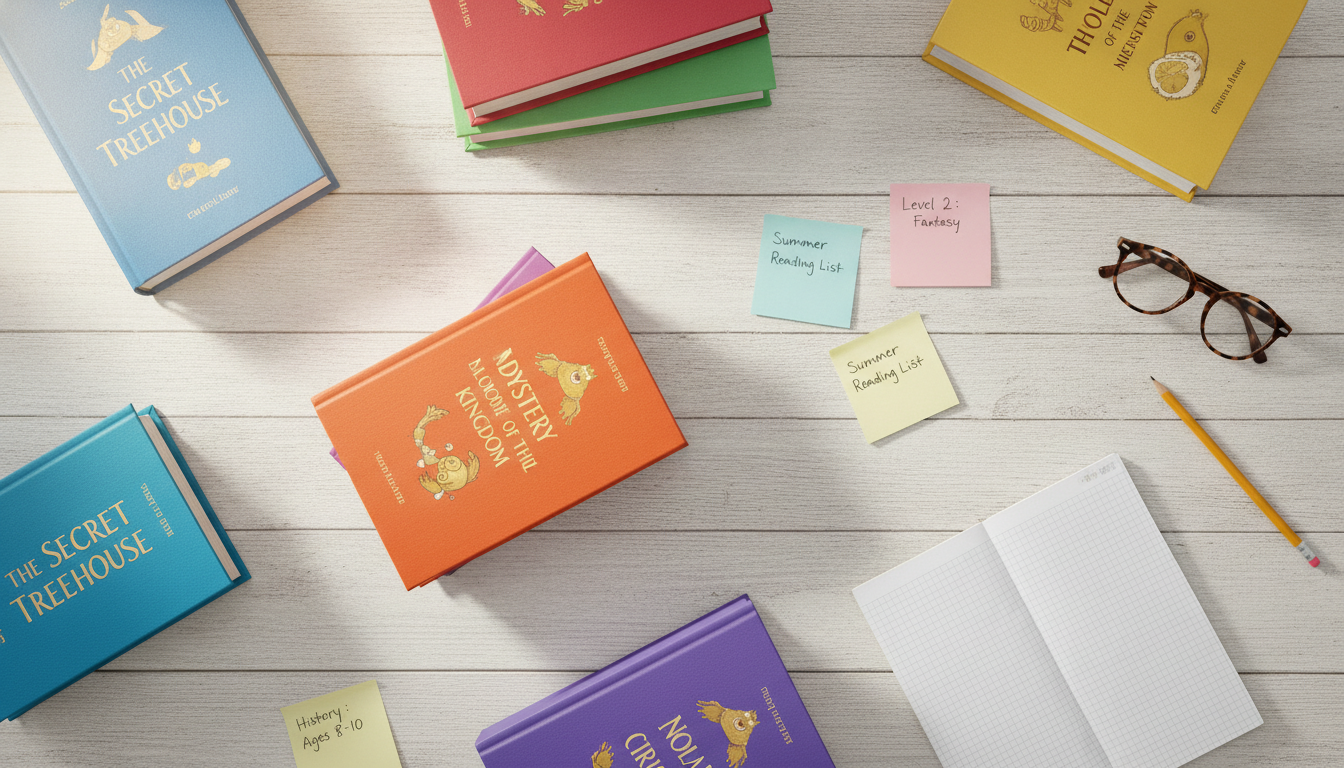
Not all 4th graders read at the same level — and neither do all 5th graders. The table below matches reading stage to book type so you can zero in on the right fit for your child right now, rather than going by grade level alone.
| Reader Profile | Book Features to Look For | Example Titles & Series |
|---|---|---|
| Grade 4 — Building Fluency | Chapters under 10 pages; single clear protagonist; self-contained story arc; lots of white space | Judy Moody, Flat Stanley, My Weird School, Junie B. Jones |
| Grade 4 — On/Above Grade Level | Richer world-building; light subplots; 100–180 pages; humor or action to maintain pace | Diary of a Wimpy Kid, Big Nate, Magic Tree House Research Guides, Dork Diaries |
| Grade 5 — Developing Independence | 150–250 pages; 2–3 recurring characters; central conflict that builds gradually; series format | Percy Jackson, Hilo, The Treehouse Books, Raina Telgemeier's graphic novels |
| Grade 5 — Advanced Reader | Unreliable narrators; time jumps; moral ambiguity; 250+ pages; layered themes | Wonder, From the Mixed-Up Files of Mrs. Basil E. Frankweiler, The Mysterious Benedict Society |
| Any Level — Reluctant Reader | Graphic novel format; illustrated chapter books; humor-led; short bursts of text; high visual interest | Dog Man, Big Nate, Amulet, El Deafo, Real Friends |
A quick note on graphic novels: they deserve a prominent place at every level in this table. Research consistently shows that graphic novels build the same comprehension skills as prose-only books — and they are especially effective for reluctant readers at this age. If your child will read a Dog Man book but won't touch a prose novel, that is a win worth celebrating, not a habit to correct.
Understanding how reading levels are measured can also help you decode the letters and numbers that come home from school. Our plain-English reading level chart guide explains every system — Lexile, DRA, Guided Reading — in one place.
How to Judge Whether a Book Is the Right Difficulty for Your Child
Reading level scores are useful, but they're not the whole picture. Here are five practical ways to assess whether a specific book is the right fit for your specific child — no app or assessment required.
The Five Finger Rule
This is the quickest field test available. Have your child open to any page in the middle of the book and read it aloud. Hold up one finger for each word they stumble over, mispronounce, or skip. If you reach five fingers before the page ends, the book is likely too hard for comfortable independent reading right now. It may still be great for reading aloud together — but it's probably not the right choice for solo reading time.
Listen for Fluency, Not Just Accuracy
A child who reads every word correctly but in a flat, halting monotone is probably working too hard to decode and has little mental energy left for comprehension. Fluent reading sounds like natural speech — with expression, appropriate pacing, and natural pausing at punctuation. If it doesn't sound like that, the book may still be a level too high even if the accuracy looks fine on the surface.
The Recall Check
Ask your child two or three simple recall questions after they finish a chapter — not quiz-style, just conversationally. "So what happened? What did [character] do?" If they can't summarize the basic events or remember a main character's name, comprehension is breaking down even if the reading sounded smooth. This is the clearest sign the book is sitting above the instructional zone.
Watch Body Language
Children's bodies tell you everything. Leaning in, turning pages eagerly, and reading past the agreed stopping point are the clearest signs a book is in the right zone. Sighing, fidgeting, frequent stops to check how many pages are left, and asking "do I have to keep reading?" signal a mismatch — whether the book is too hard, too easy, or simply not interesting enough to your child.
Don't Fear "Too Easy"
"Too easy" is rarely a real problem at this age. Children build reading speed, confidence, and stamina by reading books that feel effortless — and a steady diet of enjoyable easy reads often leads naturally to reaching for harder books within a few weeks. If your child is devouring books that are technically below their grade level, that is a reading success, not a reading problem.
✅ Quick Checklist: Signs a Book Is a Good Fit
✔ Child reads aloud with expression and natural pacing
✔ Can recall basic events after finishing a chapter
✔ Fewer than 5 unknown words per page
✔ Voluntarily picks the book up again the next day
✔ Body language is engaged, not restless
For a deeper dive into building the sustained focus that longer chapter books require, the practical guide to building reading stamina walks through the research and gives you a week-by-week approach that works even for easily distracted kids.
The Best Free Sources of Online Books for 4th and 5th Graders
Here's the part you came for. The good news is that the landscape for free online books for 4th and 5th graders is genuinely excellent right now — better than it's ever been. You don't need to spend anything to keep your child in great books.
1. Your Local Library's Digital Portal (Libby & Hoopla)
This is the single best free resource available to most American families, and it's dramatically underused. If your child has a library card — or you do — you already have free access to thousands of ebooks and audiobooks curated for children. The Libby app (powered by OverDrive) gives you access to your library's full digital catalog. Hoopla is a sister service with no waitlists and a generous simultaneous borrowing limit. Both work on tablets, phones, and computers. If your child doesn't have a library card yet, most libraries now offer instant digital cards online — no in-person visit required.
2. Open Library (Internet Archive)
Open Library lets you borrow scanned copies of real books for free with a simple account, and the loan works like a physical library: you check a book out, read it, and return it. One caveat most guides skip — after publishers won Hachette v. Internet Archive on appeal in September 2024, more than 500,000 titles were pulled from lending, and the Archive no longer lends in-copyright books that publishers already sell as ebooks. That rules out most current bestsellers. What remains is still genuinely useful at this age: public-domain classics, out-of-print titles, and older series volumes your local branch may no longer shelve. Treat it as a deep backlist, not a source for this year's releases.
3. Project Gutenberg
Project Gutenberg offers over 79,000 free ebooks in the public domain (79,302 as of September 2026), downloadable instantly to any device in multiple formats. Most titles skew older, but classics like The Secret Garden, The Wind in the Willows, The Jungle Book, and Little Women are genuinely loved by strong 4th and 5th grade readers. If your child is an advanced reader with an appetite for adventure or classic storytelling, this is a treasure trove.
4. Epic! (Free in Class on School Days, Paid at Home)
Epic is free in classrooms, but only on weekdays between 7am and 4pm local time — so a school login works during the school day and goes quiet in the evening. Its collection of roughly 40,000 books has a strong upper-elementary section with read-to-me audio that helps a struggling reader get at grade-level material independently. At home the picture is different: a free account opens a small rotating shelf rather than the full catalog, and full family access runs $13.99 a month or $84.99 a year (prices checked September 2026). Ask your child's teacher whether the school already has it before paying for anything.
5. ReadWorks, CommonLit, and Newsela
These three platforms provide free nonfiction articles and short passages leveled specifically for grades 4 and 5. They're perfect for children who prefer facts over fiction — and they build the academic reading stamina that standardized tests require. CommonLit also includes short stories and poems, making it more versatile than its name suggests. ReadWorks and CommonLit are genuinely free with a basic account. Newsela is the exception worth knowing about: its free Newsela Lite tier gives you a rotating, hand-picked set of articles at five reading levels, and each article expires after about four weeks — useful for current events, but not an open library you can search.
| Source | Actually free? | What you get |
|---|---|---|
| Libby (library card) | Yes, with a card | Your library's full ebook and audiobook catalog, including current titles. Popular books have holds. |
| Hoopla (library card) | Yes, with a card | Instant borrowing with no waitlists; your library sets a monthly checkout limit. |
| Open Library | Yes, free account | Public-domain and out-of-print scans. In-copyright titles sold as ebooks are no longer lent (2024 ruling). |
| Project Gutenberg | Yes, no account | 79,302 public-domain ebooks (September 2026). Classics only, no modern titles. |
| Epic | In class only | Free in classrooms weekdays 7am–4pm. At home: a small free shelf, or $13.99/mo • $84.99/yr. |
| ReadWorks | Yes, free account | Leveled nonfiction passages with question sets, built for classroom use. |
| CommonLit | Yes, free account | Passages, short stories and poems, grades 3–12. |
| Newsela | Limited free tier | Newsela Lite: a rotating hand-picked set at five reading levels; each article expires after about 4 weeks. |
Every source above was checked for a live response and for its current terms in September 2026. Access rules change, and the ones that change most often are the “free” ones.
For a fully fact-checked directory of free children's book sites — including safety ratings and what's actually free versus what's a trial — see our complete guide to free children's books online. And if your child prefers listening to reading, our guide to free read-aloud books online covers the best audio options in detail.
Tips for Keeping Your Child Reading Once You've Found the Books

Finding great free books is only half the equation. The other half is building the habit and environment that keeps your child reading consistently. Here's what actually works.
Protect a Daily 20-Minute Window
Research shows that just 20 minutes of independent reading per day exposes a child to roughly 1.8 million words per year. That figure traces to Anderson, Wilson and Fielding's 1988 reading-volume study: its most avid readers, at about 21 minutes a day, met some 1.8 million words a year, while a child at the median — roughly 4.6 minutes a day — met about 282,000. You don't need an hour. You don't need a structured "reading program." You need a consistent, low-pressure 20-minute window that happens at roughly the same time every day, ideally before screens rather than after.
Give Explicit Permission to Quit
The fastest way to kill a reading habit is to force a child to finish a book they dislike. Giving explicit permission to abandon a book — and try something else — communicates that reading is about enjoyment, not endurance. Most voracious adult readers abandon books freely; there's no reason children shouldn't have the same freedom.
Read the First Chapter Together
When your child is hesitant to start a new book, read the first chapter aloud together. This removes the cold-start barrier, gives you a natural conversation starter, and often results in a child grabbing the book from you before you've even finished the chapter. It works remarkably consistently — even with kids who claim they hate reading.
Keep a Visible "To-Read" List
Decision fatigue is a surprisingly common reason kids default to screens instead of books when they have free time. Keeping a visible list of three or four exciting options — on the fridge, a whiteboard, or a sticky note on the bookshelf — means your child always has something to reach for without having to make a decision from scratch.
Celebrate Reading Identity, Not Reading as a Chore
Milestones matter, but how you celebrate them matters more. Letting your child stay up 30 extra minutes to read, visiting a bookstore to choose one book, or starting a low-key family book club all reinforce that reading is a pleasure and a privilege — not a homework assignment. Avoid reward charts that treat reading as a task to be completed; they tend to undermine intrinsic motivation over time.
✅ The Parent's Reading Habit Checklist
✔ 20 minutes daily, same time each day, before screens
✔ Child has permission to abandon books they don't enjoy
✔ Always 3–4 appealing options queued up and visible
✔ Read the first chapter together when starting a new book
✔ Celebrate reading as identity, not as compliance
If your child is in an earlier grade and you're building toward this stage, our guides for free books for 3rd graders and free books for 2nd graders, first graders and kindergarten cover the earlier transition points in the same practical format.
Frequently Asked Questions About Free Books for 4th Graders
Are free online books as good as physical books for my child's reading development?
Yes — multiple studies confirm that reading comprehension and vocabulary gains are equivalent whether a child reads on a screen or on paper, as long as the child is genuinely engaged with the text. The best book is always the one your child will actually read. If a tablet makes reading more accessible or appealing to your child, that's a feature, not a compromise.
My 4th grader reads well above grade level. Can I just let them read 7th or 8th grade books?
Reading level and emotional readiness are different things. A 9-year-old may decode a middle school novel perfectly but encounter themes, violence, or relationship content they're not socially or emotionally ready to process. The general guidance is to aim for books that are challenging in vocabulary and plot complexity but age-appropriate in content. When in doubt, read the book yourself first — it takes a few hours and gives you the information you need to decide.
How do I know if a free book site is safe for my child to use independently?
Look for sites run by nonprofits, public libraries, or established educational organizations — the Internet Archive's Open Library, your local library's Libby app, and Epic! are all safe bets. Be cautious of ad-heavy sites that require no account creation and offer unlimited "free" downloads; these may host pirated content or collect data inappropriately. When in doubt, bookmark the site yourself and let your child access it through your bookmarks rather than through a search engine.
My child says they hate reading. Where do I even start?
Start with their interests, not their reading level. A child who loves soccer gets a soccer book. A child obsessed with Minecraft gets a Minecraft novel. A child who loves jokes gets a joke book. A child who loves scary stories gets Goosebumps. Once the habit of voluntarily holding a book is established, genre and complexity can expand naturally over time. The first goal is just getting them to pick something up without a fight.
Should audiobooks count as "real" reading?
Absolutely. Listening to audiobooks builds vocabulary, comprehension, fluency modeling, and a love of story in exactly the same ways that silent reading does — the research on this is consistent and clear. Many literacy experts now recommend pairing audiobooks with the physical or digital text so children can follow along, a practice that is especially helpful for kids who struggle with decoding. If your child is listening to books they love, they are reading.
How many books should a 4th or 5th grader be reading per month?
There's no magic number — volume matters far less than consistency and enjoyment. A child who reads one book per month with genuine enthusiasm and full comprehension is in a much better position than a child who rushes through five books without retaining anything. That said, 20 minutes of daily reading typically yields one to two chapter books per month for an average 4th or 5th grade reader, which is a perfectly healthy pace.
Putting It All Together: Your Action Plan
Finding free books for 4th graders online is genuinely easier than it's ever been — but the books themselves are only part of the picture. Here's a quick summary of everything we've covered, distilled into the steps that matter most:
- Understand the fourth-grade slump — it's normal, it's temporary, and it responds quickly to the right book.
- Match books to your child's actual reading stage, not just their grade level — use the table above as a starting point.
- Use the Five Finger Rule and the recall check to assess whether a specific book is the right fit before committing to it.
- Tap free resources first — Libby, Hoopla, Open Library, Epic!, and ReadWorks give you access to thousands of books at zero cost.
- Build the habit with structure and grace — 20 minutes daily, permission to quit, and a visible queue of options waiting.
- Count audiobooks and graphic novels — they are reading, full stop.
The child who is reading confidently and enthusiastically at the end of 5th grade has an enormous advantage heading into middle school — in every subject, not just English. And the foundation for that confidence is built one chapter book at a time, starting right now, with whatever free resource you open up this week.
Start Building Your Child's Free Reading List Today
Bookmark this guide, pick one free book source to explore this week, and let your 4th or 5th grader choose the first title. The right book is out there — and it won't cost you a thing.
Read Free Stories on LoveToRead →
2 Comments
Comments are closed.