Social Story Examples: A Practical Guide for Parents and Teachers
Real, ready-to-use social story examples for common situations — plus a clear method for adapting any story to fit one specific child.
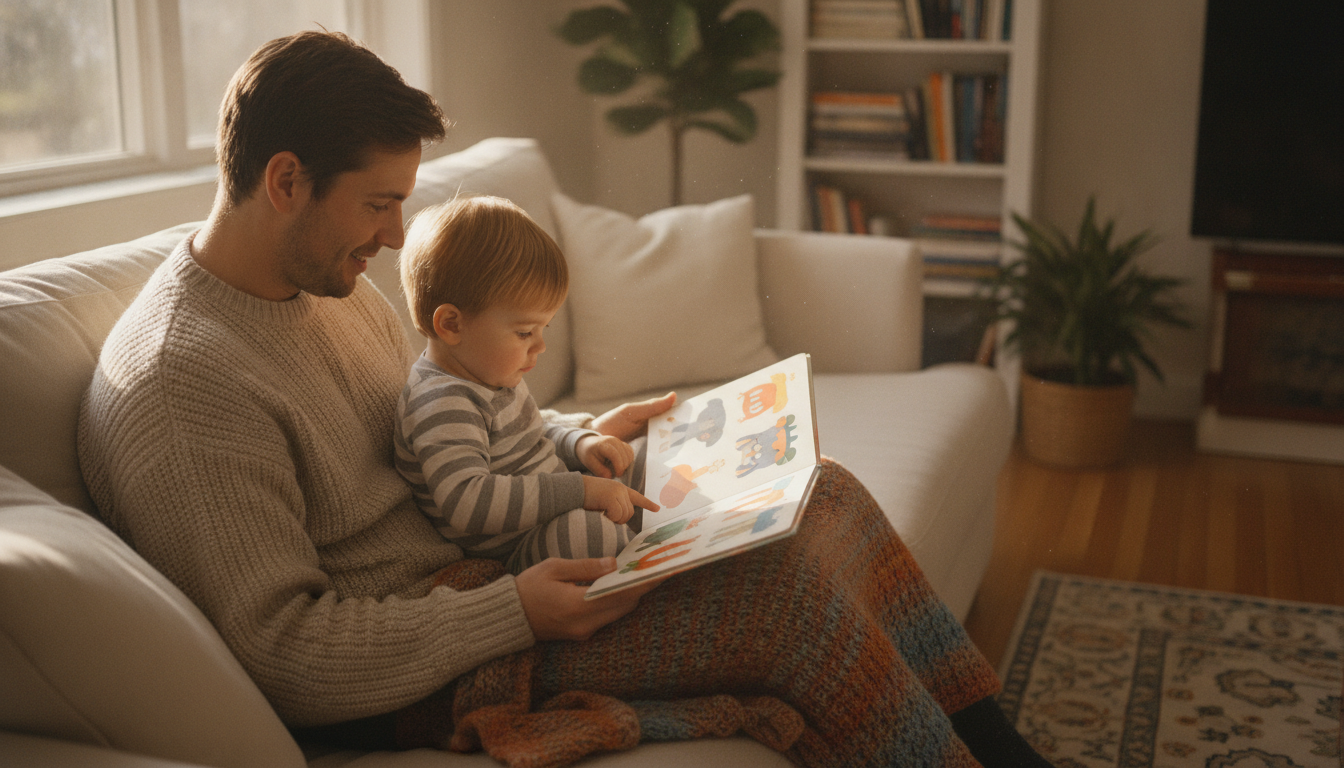
If you have searched for social story examples, you probably already know the general idea: a short, simple story that helps a child prepare for something new or difficult. What is harder to find is a set of examples you can actually copy and use today, along with enough explanation to adapt them to one real child.
That is exactly what this guide covers. You will find complete example stories for eight common situations, a plain explanation of the sentence types that make them work, and practical steps for personalizing any story before you share it. There is also a short FAQ at the end for the questions that come up most often.
What a Social Story Is — and What It Is Not
A social story is a short, first-person narrative written specifically for one child. It describes an upcoming event, situation, or social expectation in calm, factual language — giving the child a mental preview of what to expect, what others might do or feel, and what the child can do in response.
The Social Story method was developed by Carol Gray, and the term "Social Story" is her trademark. The examples throughout this guide are practical teaching tools inspired by that framework, not certified or official Social Stories. If you want to follow Carol Gray's method precisely, her own guidelines and resources are the authoritative source.
Key Point
A social story is a preparation and teaching tool, not a treatment or therapy. It helps a child understand what will happen — it does not diagnose, cure, or clinically treat anything. Make no assumptions about outcomes.
Social stories help many children, not only autistic children. They are equally useful for children with anxiety, children who struggle with transitions, and any child facing a first-time or unfamiliar event. The format is flexible enough to be useful whenever a child needs a calm, clear preview of what to expect.
It is also worth being clear about what a social story is not:
- Not a behavior chart or reward system
- Not a punishment or consequence
- Not a script the child must memorize word for word
- Not a guarantee of any particular outcome
It is simply a story — one that belongs to the child.
The Sentence Types That Make a Social Story Work
Understanding the building blocks of a social story makes it much easier to write or adapt one. There are four main sentence types, and knowing what each one does helps you balance a story so it informs without overwhelming.
Descriptive sentences state facts about a situation without judgment. They form the backbone of any social story and should make up the majority of sentences.
"The dentist's office has a waiting room with chairs and magazines."
Perspective sentences describe what other people might think, feel, or do. These help a child understand that others have thoughts and intentions, which can reduce fear of the unknown.
"The dentist wants to help keep my teeth healthy. She is used to children who feel nervous."
Directive sentences gently suggest what the child can do — always phrased as an option, never a command. Keeping these to one or two per story prevents the story from feeling like a list of rules.
"I can squeeze a small toy while the dentist looks at my teeth. I can take a deep breath if I feel worried."
Affirmative sentences reinforce a shared value or offer reassurance. They give the child permission to have feelings without shame.
"It is okay to feel nervous about new things. Many children feel that way."
Here is how all four types work together in a single, short story:
[Descriptive] "At school, there is sometimes a fire drill."
[Perspective] "Teachers know the drill will be loud, and they will stay close."
[Directive] "I can cover my ears if the sound feels too big."
[Affirmative] "Practicing fire drills helps everyone stay safe."
Notice how the story is mostly facts and perspective, with just one directive and one affirmative sentence. That balance keeps the story from feeling like a list of instructions and makes it feel more like a calm, friendly explanation.
| Sentence type | What it does | Example | How much to use |
|---|---|---|---|
| Descriptive | States plain facts about what happens, where, and who is there. | “At school, there is sometimes a fire drill.” | The majority of the story. |
| Perspective | Describes what other people know, feel, or expect. | “Teachers know the drill will be loud, and they will stay close.” | Several per story. |
| Directive | Gently suggests one response the child can try. | “I can cover my ears if the sound feels too big.” | Sparingly — often just one. |
| Affirmative | Reassures, or explains why something matters. | “Practicing fire drills helps everyone stay safe.” | One or two. |
Social Story Examples for Common Situations
| Situation | When to read it | What to emphasize |
|---|---|---|
| Going to the dentist | A few days before the visit | The order of events, and that the chair moves |
| Starting at a new school | One to two weeks before | Who will be there, and where to go first |
| A new baby arriving | Several weeks before the due date | What stays the same for the older child |
| Using the potty | Once the child shows readiness signs | The steps, in order, with no time pressure |
| Getting a haircut | The morning of, and again on the way | The sounds and sensations to expect |
| Going to a birthday party | The day before | Arrival, presents, cake, and when it ends |
| Fire drills at school | Before the first drill of the year | That it is practice, and it is planned |
| Big feelings | On a calm day, never mid-meltdown | That the feeling is normal and it passes |
The stories below are written to be copied and personalized. Replace [Child's Name] with the child's real name, and adjust any details — the dentist's name, the school's name, the specific teacher — to match the child's real experience. A story that feels personal is far more useful than a generic one.
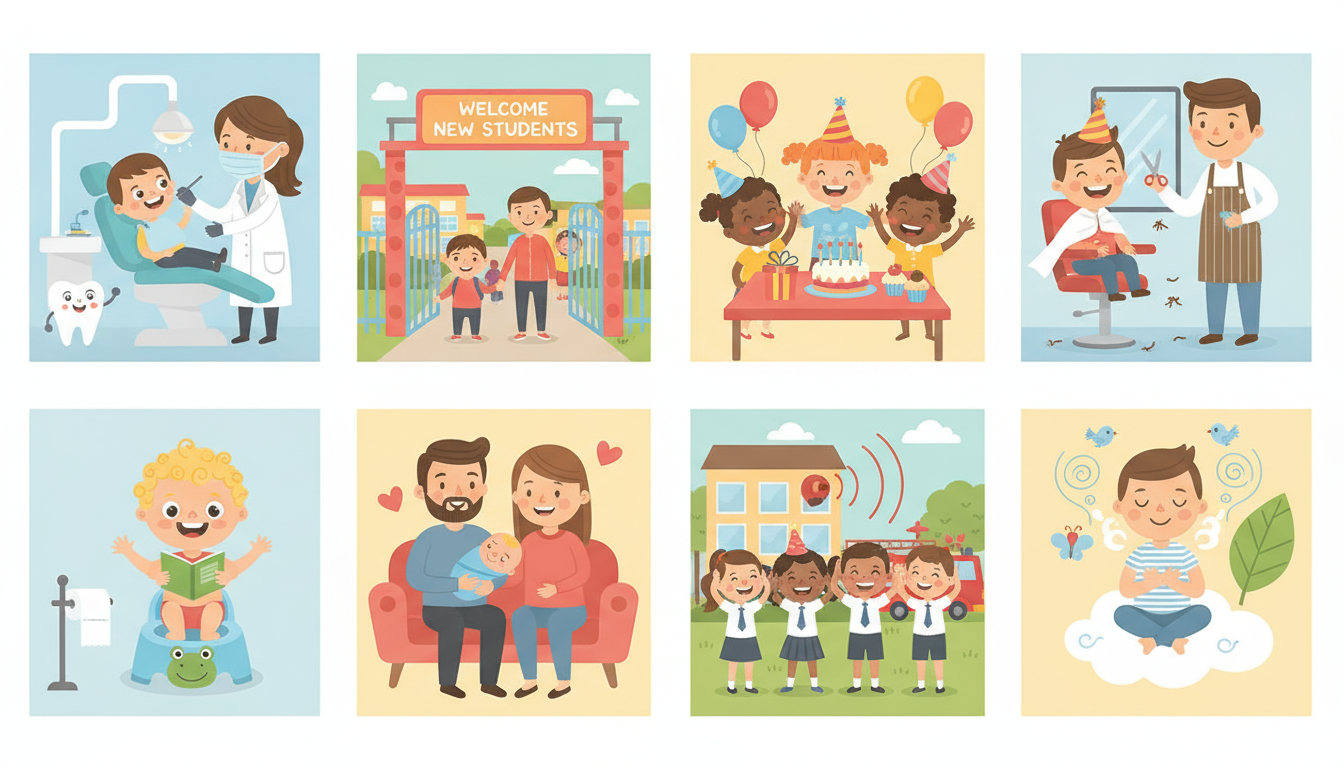
Going to the Dentist
My name is [Child's Name]. Today I am going to the dentist. The dentist's office has a waiting room where I can sit with a grown-up. When it is my turn, I will sit in a big chair that can move up and down. The dentist will look at my teeth with a small mirror and a little light. She wants to make sure my teeth are healthy. The dentist is used to children who feel nervous. I can tell the dentist if something feels uncomfortable. When it is over, I will go home. I did something new today.
Starting at a New School
My name is [Child's Name]. Soon I will go to a new school. My new school has classrooms, a lunchroom, and a playground. On my first day, a teacher will show me where things are. I might not know everyone yet, and that is okay. Learning new names takes time. My grown-up will pick me up at the end of the day. It is normal to feel a mix of excited and nervous about a new place.
A New Baby Arriving
Soon there will be a new baby in our home. The baby will be very small and will need a lot of care. Sometimes the baby will cry. Babies cry because it is the only way they can talk right now. The grown-ups will be busy, and they still love me. I am still important to my family. I can ask a grown-up for a hug whenever I need one. Being a big brother or big sister is something special.
For more on preparing children for a new sibling, our collection of big brother and big sister books offers picture books that reinforce the same reassuring messages in a read-aloud format.
Using the Potty
My name is [Child's Name]. Sometimes I need to use the potty. When I feel a funny feeling in my tummy or bottom, that means my body is telling me something. I can tell a grown-up, or I can walk to the bathroom. I sit on the potty and wait. Sometimes it takes a little while. Afterward, I wipe, flush, and wash my hands. Using the potty is something lots of children learn to do. I am learning too.
Pairing this story with familiar potty training books can help reinforce the message in a relaxed, low-pressure way — especially for children who respond well to story-based learning.
Getting a Haircut
Today I am getting a haircut. The hair salon has chairs and mirrors. The person cutting my hair is called a stylist. The stylist will put a cape around my shoulders to keep hair off my clothes. Scissors make a snipping sound. The stylist will not cut my skin — only my hair. Hair does not have feelings, so a haircut does not hurt. I can hold a toy or talk to my grown-up while it happens. When it is done, my grown-up will be right there.
Going to a Birthday Party
My name is [Child's Name]. I am going to a birthday party. There will be other children there. It might be loud and busy. I do not have to talk to everyone. I can stay near a grown-up if I want to. There will probably be cake and games. The birthday person will open presents. Parties end, and then I go home. It is okay if some parts of the party feel like a lot. I can take a quiet break if I need one.
Fire Drills at School
At school, we practice fire drills. A very loud alarm will ring. This is just practice — it is not a real fire. When the alarm rings, everyone walks quickly and quietly outside. Teachers lead the way. The alarm is loud, and I can cover my ears with my hands. We wait outside until a teacher says it is safe to go back in. Fire drills help everyone know what to do to stay safe.
Big Feelings
Sometimes I have big feelings. I might feel angry, sad, scared, or frustrated. Big feelings are normal. Everyone has them, even grown-ups. When I have a big feeling, my body might feel tight or hot or shaky. I can take slow breaths. I can ask for a hug. I can go to a quiet spot. I do not have to fix the feeling right away. Feelings change. A grown-up can help me when my feelings feel too big to handle alone.
How to Adapt a Social Story Example for One Specific Child
The examples above are starting points. What makes a social story genuinely useful is the degree to which it feels like it was written for this child — not a generic child in a generic situation.
The most important rule: use the child's actual name and refer to real details from their life. Their teacher's name, the specific clinic they are visiting, the color of their bedroom, the name of the toy they like to hold. A story that contains real, familiar details gives the child something to anchor to.
Before writing, spend five minutes observing or asking:
- What does the child already know about this situation?
- What part seems to worry them most?
- What sensory details might matter — sounds, smells, waiting times, physical sensations?
- Are there any specific phrases or words this child responds well to?
Build the story around those specifics rather than a general outline. If a child is anxious specifically about the sound of the fire drill alarm, that detail deserves its own sentence. If a child worries about where their grown-up will be during a haircut, address that directly.
Keep the language at or just below the child's current reading or listening level. Short sentences, simple vocabulary, and present tense ("I am going") work better than past tense or complex clauses. Read the story aloud to yourself before sharing it — if it sounds awkward spoken, revise it.
Timing Matters
Introduce the story a day or two before the event, not the morning of. Read it together calmly, without pressure to discuss or quiz the child on it. Some children like to hear it several times; others need it only once. Follow the child's lead.
If you are unsure how to frame a particular situation — especially for a child with complex communication needs or significant anxiety — consult the child's teacher, speech-language pathologist, or support team before finalizing the story. They may have specific guidance on language, length, or delivery that makes the story more effective for that child. Their input is not optional; it is part of the process.
For children who benefit from seeing themselves in stories more broadly, personalized storybooks can complement social stories by building the habit of reading about oneself as a capable, central character.
Using a Tool to Draft and Illustrate a Personalized Story
Writing a social story from scratch takes time, especially when you want it to feel genuinely personal. LoveToRead can help by drafting and illustrating a story that stars the child by name — which matters because a social story works best when it is clearly about that specific child, not a generic "Alex" or "Sam."
You can explore the social story maker to get a draft quickly, or use the social story creator to build something more tailored. Both tools give you a starting point, not a finished product.
Important: Any story generated by an AI tool must be read carefully by an adult before it is shown to the child. Check that the language matches the child's level, that the details are accurate to their real situation, and that nothing in the story could cause confusion or distress. A generated story does not replace the guidance of the child's support team. Think of any tool — including this one — as a first draft. The adult who knows the child is always the final editor.
Frequently Asked Questions About Social Stories
How long should a social story be?
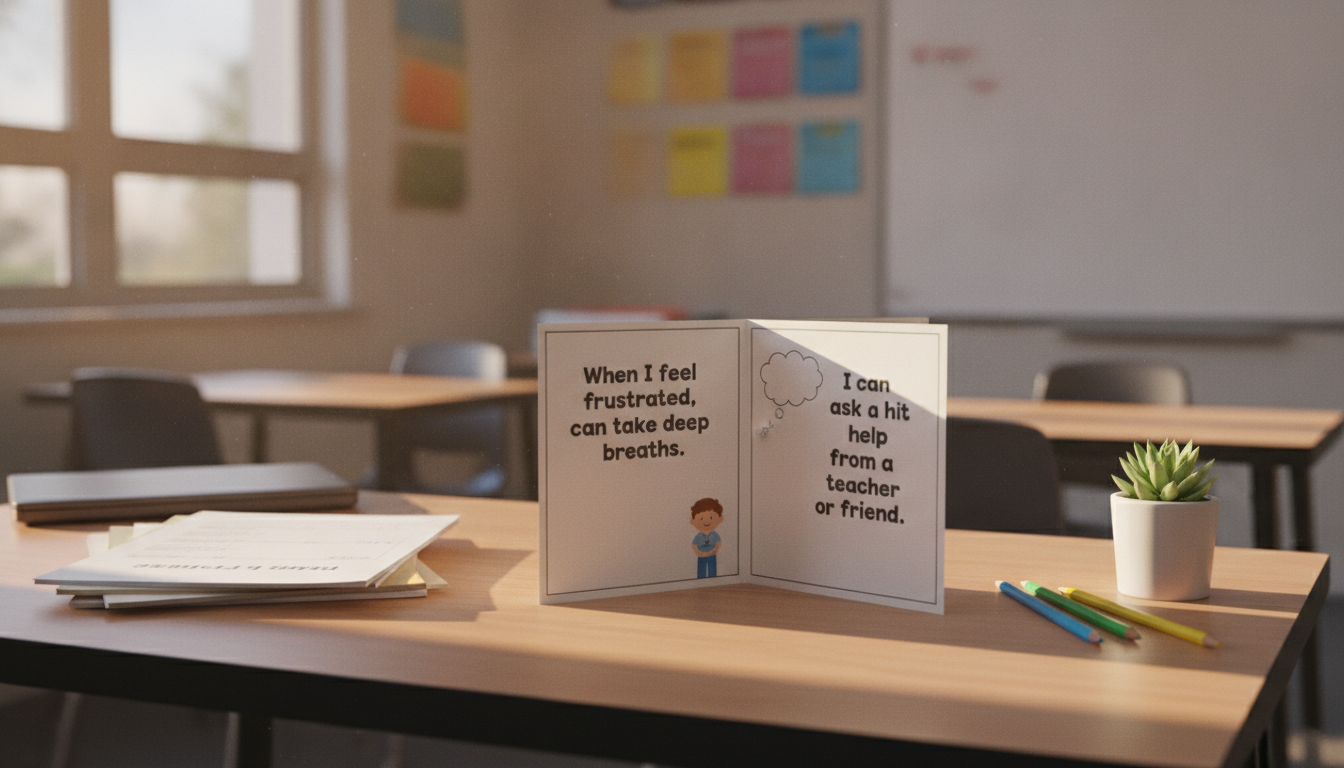
For preschoolers and early readers, aim for five to ten sentences. Older children can handle more, but shorter is almost always better. If the story feels long when you read it aloud, cut it. A story that takes two minutes to read is more likely to be revisited than one that takes five.
Do I need pictures or illustrations?
Images are helpful, especially for younger children or children who are not yet reading. A photograph of the actual place — the real dentist's chair, the real school hallway — can be more grounding than a generic illustration. Simple drawings the child makes themselves can also work well. The goal is anything that makes the story feel concrete and real.
Can I use the same story for more than one child?
You can use a story as a template, but always personalize it before sharing. A story that says "I, [Child's Name]" and refers to their specific teacher and classroom is more effective than one that could belong to anyone. The personalization is not decoration — it is the point.
What if the child does not want to read the story?
Never force it. Offer it calmly, leave it somewhere accessible, and try again later. Some children warm up to a story after seeing it a few times without pressure. Others may prefer to have it read to them rather than reading it themselves. Follow the child's cues.
Are social stories only for autistic children?
No. Social stories help many children — autistic children, children with anxiety, children who are simply facing something new. The method is flexible enough to be useful whenever a child needs a calm, clear preview of what to expect. There is no diagnostic requirement for using one.
What is a social story template?
A social story template is a pre-written story with blank spaces for the child's name and specific details. The examples in this guide function as templates — copy one, fill in the real details, and you have a working story. The key is always to replace the generic details with real ones before sharing the story with a child.
Where can I find free social stories?
The examples on this page are free to copy and adapt. Many school districts and speech-language pathology practices also maintain libraries of story templates. Your child's teacher or support team may have access to resources specific to your child's needs. Always review any story carefully before sharing it — free does not mean ready to use without review.
Putting It All Together
A social story is one of the simplest, most accessible tools available to parents and teachers. It requires no special equipment, no training, and no budget. What it does require is a willingness to slow down, observe what a specific child finds hard, and write something that speaks directly to that child's experience.
The examples in this guide cover eight of the most common situations children face — the dentist, a new school, a new sibling, potty training, haircuts, birthday parties, fire drills, and big feelings. None of them are magic. All of them are starting points.
The most useful thing you can do with any of them is to make it smaller, more specific, and more personal. Use the child's name. Name the real place. Describe the actual sound. Write it in language the child already uses. Read it together, without pressure, before the event happens.
If you want support in drafting or illustrating a story, tools like the social story maker can give you a head start — but the adult who knows the child is always the one who makes the story work.
Ready to Write a Story for Your Child or Student?
Start with one of the examples above, personalize it with the child's name and real details, and read it together before the event. If you want a head start, LoveToRead can draft and illustrate a story starring the child by name — just remember to review it carefully before sharing.
Try the Social Story Creator