Potty Training Books That Actually Work: A Parent's Honest Guide
A warm, no-nonsense guide for parents who want books that help their toddler — and themselves — feel ready for this big step.
Why Books Help in the First Place
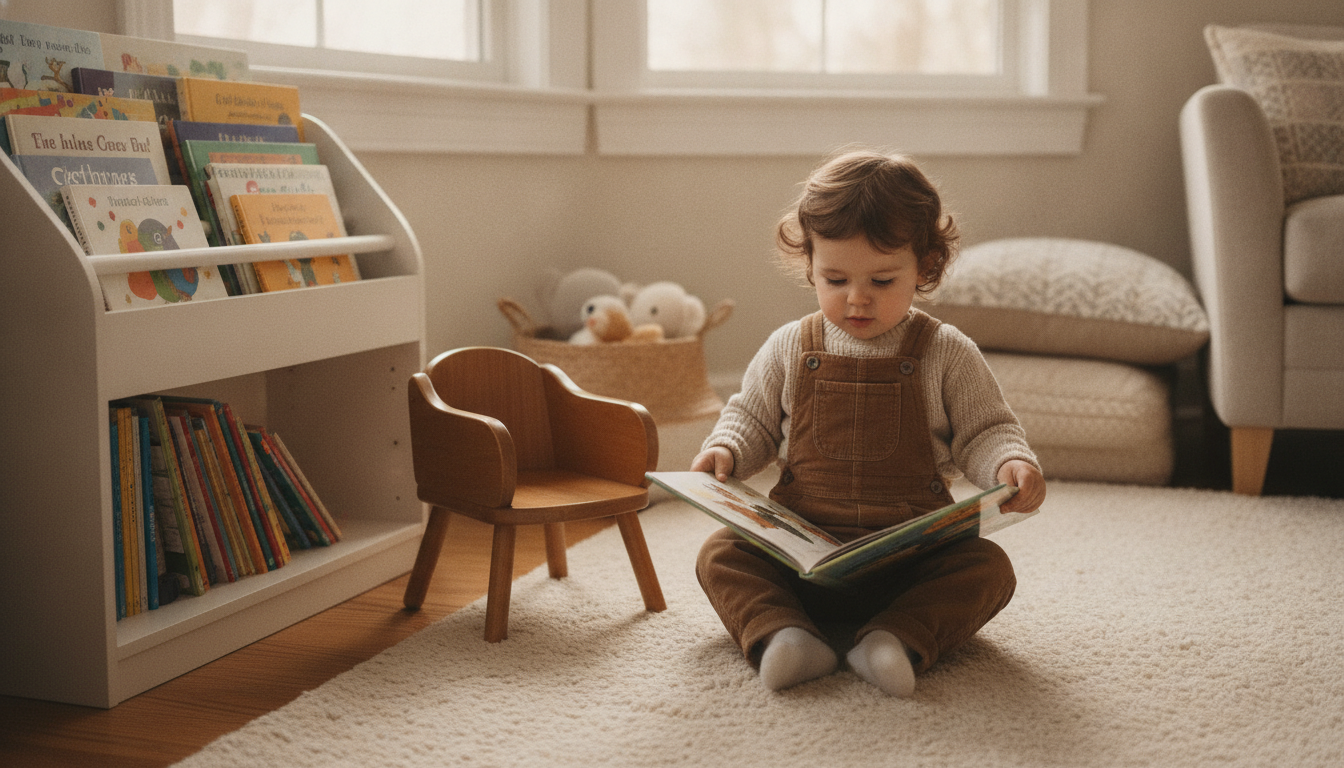
Potty training asks a toddler to do something unfamiliar and, frankly, a little intimidating. A book lets them rehearse the whole experience at a safe emotional distance — no pressure, no wet pants on the line, no one watching and waiting. The story happens to a character. Your child gets to watch, listen, and quietly decide how they feel about it.
There is also a practical benefit for you. A good potty book gives parents a ready-made script. Instead of improvising explanations about body parts and bathroom routines on the fly, you can open the book and let the words on the page do the work. That takes a surprising amount of pressure off.
Toddlers process new experiences through repetition and narrative. Hearing the same story about a character who figures out the potty helps a child build a mental map of what is expected of them. And when a beloved character sits on the potty, feels proud, and goes back to playing, it sends a quiet but powerful message: this is just what people do.
The book also becomes a shared reference point between parent and child. You can say "remember what Ducky did?" and your toddler knows exactly what you mean. That keeps the conversation light and low-stakes, which is exactly where you want it.
"A book lets your child rehearse something new without any of the stakes attached. That's a genuinely powerful thing at two or three years old."
How to Tell Your Child Is Ready
Readiness is individual. There is no universal age at which every child is ready to train, and comparing your toddler to a neighbor's child or a milestone chart will mostly just stress you out. What matters is what you see in your own child, day to day.
Physical signs worth watching for include staying dry for longer stretches, showing awareness that they are about to go or are currently going, and being able to pull pants up and down with some independence. These are practical building blocks — without them, training is harder for everyone.
Behavioral and emotional readiness matters just as much. A child who is curious about the toilet, willing to sit still for a minute or two, and interested in what grown-ups do in the bathroom is sending you green lights. A child who is resistant, anxious, or going through a big transition is sending you a different message — and that is useful information too.
The honest truth about timing
If your child is resistant or you're in the middle of a big life change, it may simply not be the right moment. That is completely okay. Starting before a child is ready tends to lengthen the whole process, not shorten it. Trust what you see.
| Green light | What it looks like in real life | Not a readiness signal |
|---|---|---|
| Staying dry longer | A diaper that is still dry after a nap, or dry for a stretch of the afternoon | Their age — there is no universal number |
| Body awareness | They pause, hide, or tell you during or just before they go | A cousin or classmate who trained first |
| Some independence | They can get pants down and back up with a little help | Being verbally advanced for their age |
| Curiosity | They follow you into the bathroom and ask what you are doing | A daycare or preschool enrollment date |
| Can sit briefly | They will stay put for a minute or two with a book in hand | Your own readiness to be done with diapers |
What Makes a Potty Book Actually Work for a Toddler
Not all potty books are created equal. A few qualities separate the ones that genuinely help from the ones that sit unread on the shelf.
- Short is better. A toddler sitting on a potty has a limited attention window. Books that can be read in two to three minutes hold attention far better than longer picture books. If you find yourself skipping pages, the book is probably too long.
- Matter-of-fact tone wins every time. Books that treat using the potty as a normal, pleasant thing — rather than a huge dramatic achievement — keep the emotional temperature low. Children feel calm rather than pressured, which is exactly where you want them.
- Repetition in the text is a feature, not a flaw. Toddlers love knowing what comes next. A book with a predictable rhythm lets them chime in, which builds confidence and engagement. If your child is finishing sentences before you get there, that is the book doing its job.
- A character the child can identify with makes the story land. Whether that is a baby animal, a toddler who looks like them, or a beloved TV character, the emotional connection is what makes the message stick.
- Board-book format matters more than parents often realize. Potty books get handled constantly, sometimes with damp hands, and they live in a bathroom. A sturdy board book survives that environment where a paperback simply will not. If you are curious about how board books are made and why the format holds up so well, the guide on making your own board books is a genuinely interesting read.
The Books, Grouped by What Each One Does Best
There are twelve titles on this list. All of them are real, tested, and genuinely useful. Rather than ranking them — because no single book is right for every child — here they are grouped by what each one is best at.
For pure simplicity
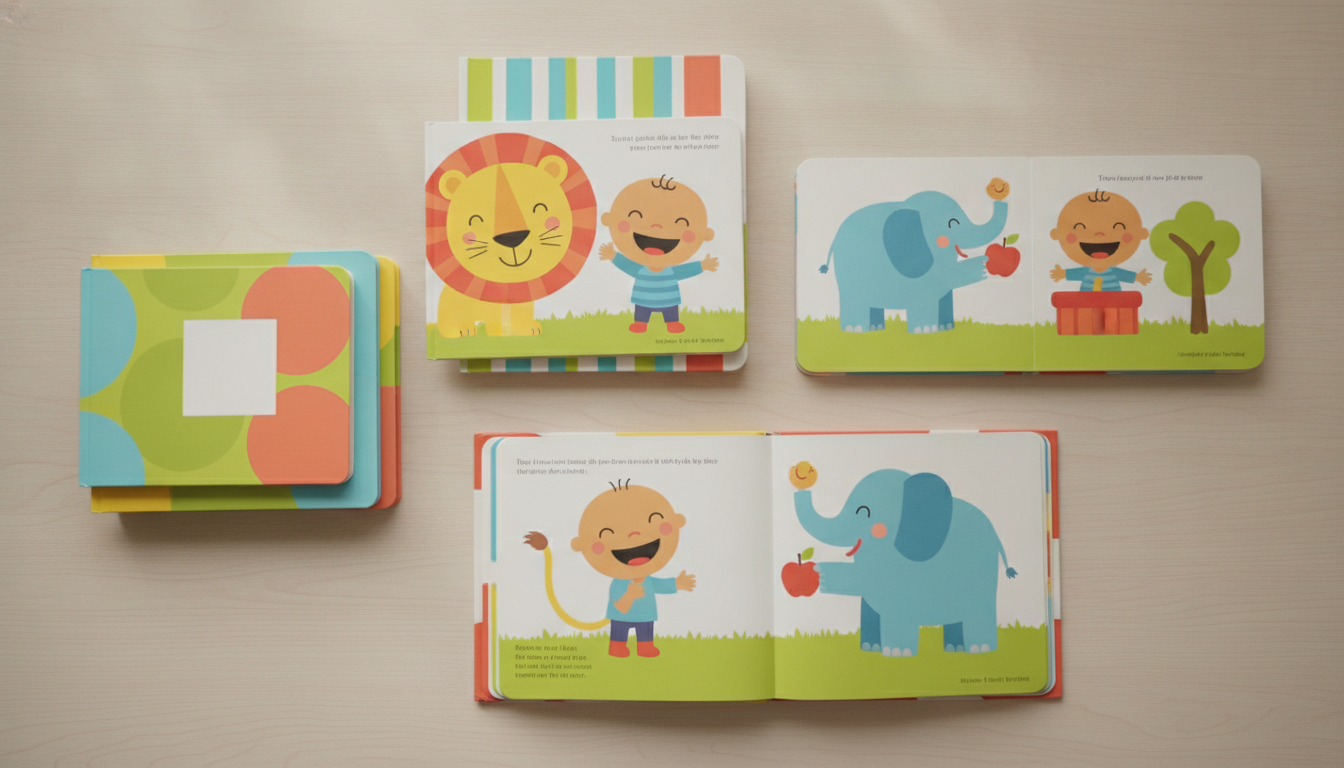
Potty by Leslie Patricelli is about as stripped-down as a potty book gets: a round-headed baby, a few words per page, and a satisfying ending. It is the one to reach for first with a very young or easily overwhelmed toddler. A Potty for Me! by Karen Katz uses lift-the-flap pages to keep little hands busy and builds anticipation well. Diapers Are Not Forever by Elizabeth Verdick is gentle, reassuring, and a good choice for a child who feels anxious about the change.
For normalizing the body
Everyone Poops by Taro Gomi is a classic for a reason. It matter-of-factly shows that every animal and every person does this, which takes the mystery and embarrassment out of the equation entirely. What Is Poop? by Katie Daynes takes a slightly more curious, question-and-answer approach and works well for children who like to know the why behind things. Once Upon a Potty by Alona Frankel is one of the oldest books on this list and still works because it is clear, honest, and uses correct anatomical language without making a big deal of it.
For humor and energy
Time to Pee! by Mo Willems brings his signature funny-faced characters and snappy pacing, and kids who love Elephant and Piggie will feel right at home. Poop or Get Off the Potty! by Margaret McNamara has a title that pretty much sells itself — it is direct, funny, and very effective for toddlers who keep sitting and sitting without committing. Skip to the Loo, My Darling! by Sally Lloyd-Jones is a song-style book with a catchy, repeating rhythm that children love to sing along with.
For gender-specific reassurance
The Potty Book for Girls and The Potty Book for Boys by Alyssa Satin Capucilli each follow a child named Hannah or Henry through the training process in a warm, encouraging way. Some children respond well to seeing a character who matches their own experience specifically, and these deliver that clearly and kindly.
For peer and character motivation
No More Diapers for Ducky! by Bernette Ford uses a duckling learning from a pig friend, which taps into the powerful toddler instinct to do what a peer or slightly older character is doing. Potty Time with Elmo works because Elmo is already a trusted friend for many toddlers — the familiarity lowers resistance and makes the subject feel safe before a single page is turned.
| If your child… | Reach for | Why it fits |
|---|---|---|
| Is very young, or overwhelmed easily | Potty — Leslie Patricelli | A few words per page and nothing to decode |
| Needs busy hands to stay put | A Potty for Me! — Karen Katz | Lift-the-flap pages build anticipation |
| Seems anxious about the change | Diapers Are Not Forever — Elizabeth Verdick | Gentle, reassuring, names the feeling |
| Is secretive or embarrassed about pooping | Everyone Poops — Taro Gomi | Matter-of-fact: every animal does this |
| Asks “why” about everything | What Is Poop? — Katie Daynes | Question-and-answer, curiosity-led |
| Needs plain, correct words for body parts | Once Upon a Potty — Alona Frankel | Correct anatomical language, no big deal made of it |
| Resists anything earnest | Time to Pee! — Mo Willems | Funny and snappy, Elephant & Piggie energy |
| Sits and sits without committing | Poop or Get Off the Potty! — Margaret McNamara | Direct and funny about that exact problem |
| Loves songs and rhythm | Skip to the Loo, My Darling! — Sally Lloyd-Jones | Sing-along book with a repeating refrain |
| Wants a character who matches them | The Potty Book for Girls / for Boys — Alyssa Satin Capucilli | Follows Hannah or Henry start to finish |
| Copies older kids and peers | No More Diapers for Ducky! — Bernette Ford | A duckling learns from a friend |
| Already trusts a familiar face | Potty Time with Elmo | Familiarity lowers resistance before page one |
How to Actually Use These Books
Owning good potty books is only half the equation. How you use them matters just as much as which ones you choose.
- Leave one or two books right next to the potty — not on the bookshelf in the bedroom. Proximity matters. If the book is there when your child sits down, they will pick it up. If it is not there, they will not think to ask for it.
- Read on the potty, not just at bedtime. Bedtime reading is great, but potty books work best when they are read in the actual context — sitting on the actual potty, in the actual bathroom. The setting reinforces the story in a way that reading in bed simply cannot replicate.
- Reread relentlessly and without apology. Your toddler asking for the same book fifteen days in a row is not a problem. It is exactly how toddlers learn. The repetition is doing real work even when it feels boring to you.
- Let your child hold the book and turn the pages. Physical engagement keeps attention longer and gives the child a sense of control, which matters a lot during a process where they are being asked to do something new on someone else's schedule.
- Follow your child's lead on which book they want. If they keep gravitating toward one title over others, lean into it. A book they love will do more good than a book you think is pedagogically superior.
Mistakes Worth Knowing About Before You Start
A few common missteps are worth knowing about in advance, because they are much easier to avoid than to undo.
Avoid books or language — from any source, not just books — that frame accidents as something to be ashamed of. Shame slows training down and makes children anxious around the whole subject. If a book uses language that makes your child shrink, set it aside. There are plenty of others on this list that will not do that.
Try not to start training during a big life change if you can help it. A new sibling arriving, a move to a new house, or a change in childcare are all stressors that can make training much harder. If a new baby is on the way, it is worth thinking about how to support your older child through that transition before training begins — the collection of big brother and big sister books is a good place to start thinking about that side of things.
Do not treat a regression as failure — yours or your child's. Regressions are common, especially during transitions or illness, and they do not erase progress. Step back, return to the books, keep the tone warm, and give it time. Most children get there.
Resist the urge to make potty training a performance. Clapping and cheering can work in the short term, but children who are trained primarily through external reward can struggle when the rewards stop. Aim for a tone that says this is just a normal thing we do rather than this is a spectacular achievement.
"If your child is withholding stool or you're concerned about constipation, stop looking for answers in parenting blogs and talk to your pediatrician. That is a medical question, not a behavior question, and it deserves a medical answer."
An Honest Word on Personalized Potty Books
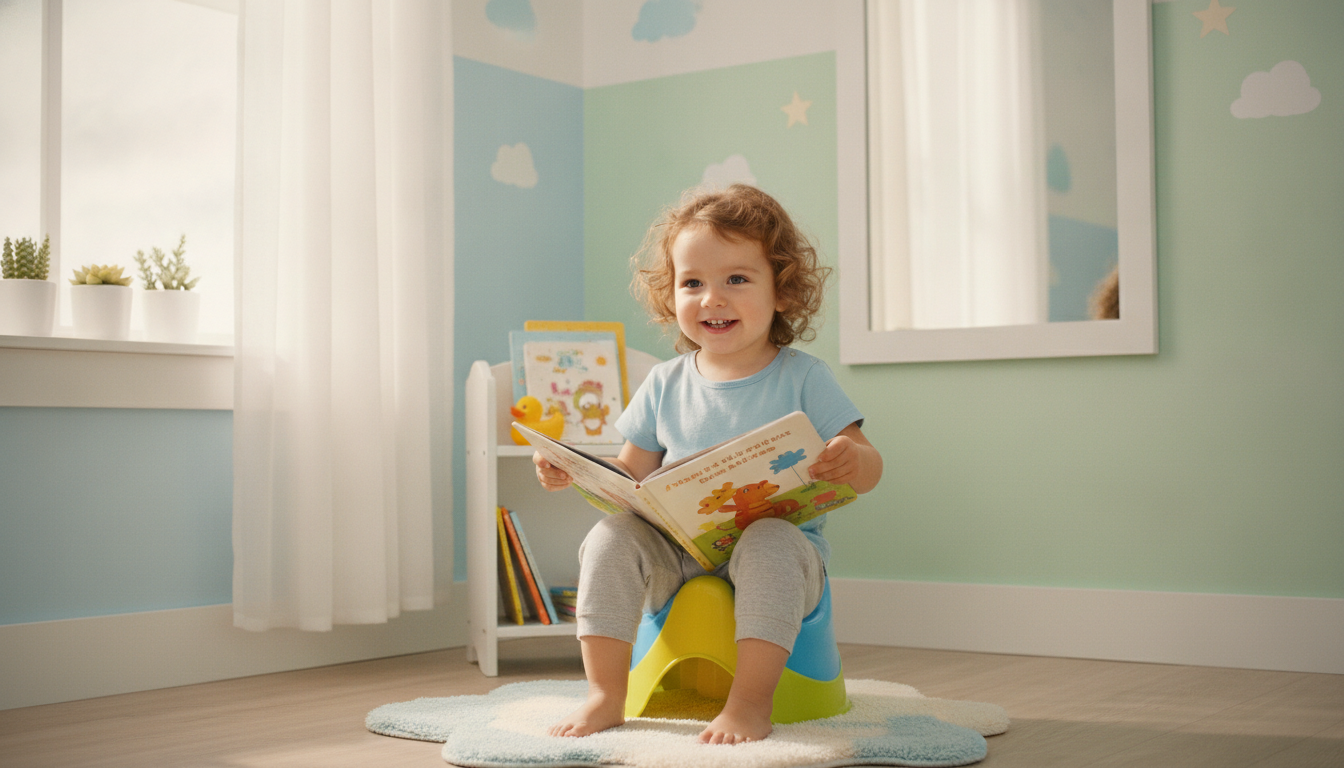
Personalized books — where your child's own name and sometimes their likeness appear in the story — can be genuinely effective for children who are resistant or who seem to disengage from standard books. Seeing yourself as the main character is motivating in a way that seeing a generic toddler character simply is not for some kids.
The honest caveat is that personalized books vary a lot in quality. The story still needs to be well-written, the tone still needs to be calm and matter-of-fact, and the illustrations still need to be engaging. A child's name on a mediocre book does not fix the book.
LoveToRead is one option worth knowing about if you want to explore personalized potty books — they offer customized stories where your child is the main character, and their broader guide on personalized books for different ages gives you a good sense of what is available across the age range.
That said, a personalized potty book works best as a complement to the classics on this list, not a replacement for them. The twelve books above have stayed in print for good reasons — they are tested, durable, and genuinely effective. Use personalization as an extra tool in your toolkit, not the whole toolkit.
If you do go the personalized route, apply the same rules you would to any potty book: read it on the potty, read it often, and keep the whole experience low-pressure.
What Comes After the Potty Stage
Once your child has the hang of the potty, the books that served you so well through training will naturally get set aside — and that is a good sign, not a loss. It means the books did their job.
The reading habits you built during this stage carry forward. A child who learned to sit with a book during a tricky transition is a child who is already comfortable with books as a source of comfort and information. That is a habit worth nurturing long past the potty years.
When you are ready to move on and expand your child's reading life, the collection of books for 4-year-olds is a helpful next step — there is a lot of good reading ahead, and it is worth knowing where to look.
Keep the potty books around for a while even after training is done. Children often want to revisit them during regressions or when a younger sibling starts training, and having them accessible costs nothing. A small basket by the toilet takes up no space and has gotten many a family through a bumpy week.
What carries forward
The skills you practiced during potty training — reading together, talking about feelings, normalizing new experiences through stories — are the same skills that will serve you through every stage of your child's reading life. The potty books were just the beginning. The same approach works for other new experiences: these social story examples include a potty story alongside seven others.
Putting It All Together
Potty training does not need to be a battle, and the right books can make a real difference in keeping the whole experience calm and manageable for everyone involved. The twelve titles on this list cover every temperament and every learning style — the child who needs humor, the one who needs reassurance, the one who wants to see a character just like them, and the one who just needs the whole thing explained simply and without fuss.
Start with one or two titles. Keep them by the potty. Read them without pressure, reread them without apology, and follow your child's lead. You do not need to own all twelve — you need the one or two that your particular toddler keeps asking for.
And when the potty books finally get retired to a box in the closet, take a moment to notice that. It means something went right.
Ready to Build Your Potty Book Collection?
Start with one or two titles from this list, keep them by the potty, and read them without pressure. You and your toddler have got this.