Thanksgiving Activities for Preschoolers: What Actually Works at Home
A calm, practical guide for parents of three-, four-, and five-year-olds — using what you already have in the house, no printables required.
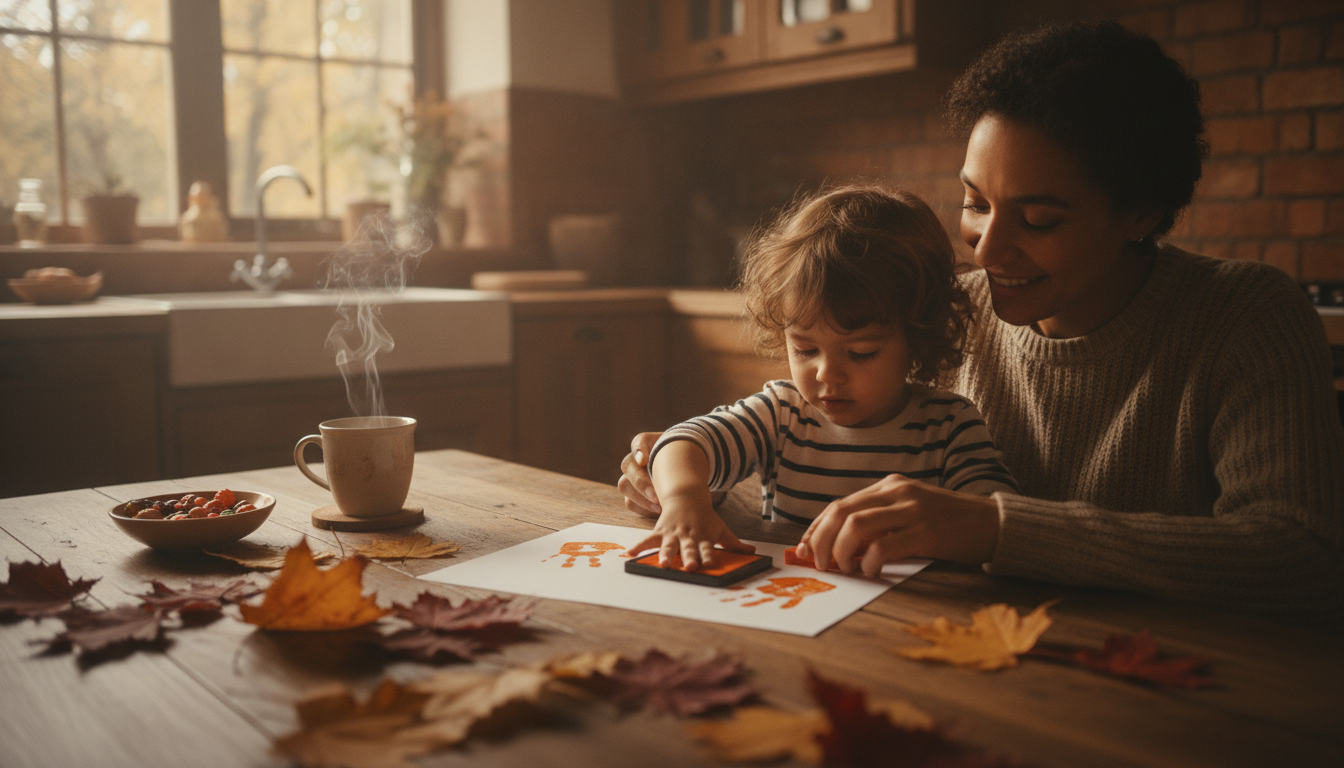
Thanksgiving with a preschooler does not need a lesson plan. It does not need a craft kit, a color-by-number turkey, or a laminated gratitude wheel from a teaching resources website. What it needs is a few deliberate, low-pressure moments woven into the ordinary texture of the day — washing vegetables, reading a familiar story, naming one good thing at dinner.
This guide is written for parents at home, not classroom teachers. Everything here uses materials most households already have. The sections are organized around what actually makes sense developmentally for children aged three, four, and five — because those three ages are genuinely different, and an activity that lands beautifully with a five-year-old can leave a three-year-old bewildered and frustrated.
We will cover what each age can realistically understand about gratitude, a simple family ritual that outlasts November, how to use a bedtime story to make thankfulness feel concrete, and how to involve your child safely in cooking and table setting. There is also a comparison table matching activities to age and supervision level, and a frequently asked questions section at the end.
What Preschoolers Actually Understand About Gratitude (By Age)
Before choosing any activity, it helps to know what you are actually working with. Gratitude is a cognitively complex emotion — it requires understanding that someone else acted intentionally on your behalf, that you benefited from that action, and that acknowledging it matters. That is a lot to ask of a brain that is still working out object permanence and turn-taking.
Age three: pleasure, not abstraction
A three-year-old lives almost entirely in the present moment. Gratitude as an abstract concept — being thankful for health, family, or opportunity — is largely out of reach. What they can genuinely feel is pleasure: the warmth of a hug, the taste of a favorite food, the excitement of a dog greeting them at the door. At this age, naming those pleasures out loud is the most developmentally honest version of gratitude practice. "You look really happy right now. What do you like about this?" is a more useful prompt than "What are you thankful for?"
Age four: the beginning of perspective-taking
Four-year-olds are beginning to understand that other people have feelings and perspectives different from their own — this is the cognitive foundation gratitude is built on. They can start to grasp that someone made or gave something specifically for them, and that saying thank you is a response to that person's effort, not just a social script. This is also the age where a child can begin to connect a gift with the giver: "Grandma chose this because she knows you like dinosaurs."
Age five: cause, effect, and a wider world
Five-year-olds can hold a slightly longer chain of cause and effect in mind. They can begin to understand that food comes from somewhere before the supermarket, that grandparents chose to travel to be with them, and that not everyone has the same things they have. A simple, concrete comparison — "some children don't have a warm coat" — lands without being overwhelming at this age, provided it is offered once, briefly, and without dwelling.
Key principle
None of these ages benefit from lectures about gratitude. What works is brief, specific, repeated moments: "I noticed you smiled when Dad read that story. What did you like about it?" Naming the feeling in the moment, without turning it into a lesson, is far more effective than a structured activity labelled "gratitude time." The goal before age six is not to instil a virtue but to build a habit of noticing.
A Simple Family Gratitude Ritual That Lasts Past November
The most durable gratitude rituals are short, predictable, and attached to something that already happens every day. Dinner or bedtime are the two best anchors because they occur regardless of season, mood, or how busy the week has been. A ritual that requires special conditions — a particular room, a specific prop, a calm household — will not survive a hectic Tuesday in January.
The "one good thing" question
The simplest version: at dinner, each person at the table names one specific thing from their day that they liked. The specificity matters — "my sandwich" is better than "today" because it gives the child something concrete to picture. Parents modelling their own answers without prompting the child first removes any pressure. If the child passes, they pass. No comment, no coaxing.
The gratitude jar
A gratitude jar requires only a jar and torn scraps of paper. Each evening, anyone who wants to can write or draw one thing they are glad about and drop it in. On the first day of each month, or on a slow Sunday morning, you empty the jar together and read them back. Young children who cannot yet write can draw a simple picture or dictate to a parent. The jar becomes a physical record of good moments that would otherwise disappear — and preschoolers respond strongly to physical, tangible objects.
Consistency matters more than elaborateness. A ritual that takes ninety seconds every night will do more than a beautiful Thanksgiving centerpiece activity that happens once.
If the ritual gets skipped for a week, simply resume it without comment. There is no need to restart or explain the gap to a preschooler. The continuity of the habit matters; the continuity of the record does not.
One practical adjustment for three-year-olds: instead of asking an open question, offer a gentle either/or. "Was the best part of today the playground or the pasta?" This reduces the cognitive load of the question and makes participation easier without making it feel like a quiz.
If you are looking for more ways to build positive shared rituals around books and stories, the approach described in dialogic reading — turning any picture book into a conversation with your child — pairs naturally with the kind of reflective habit you are building here.
Using a Bedtime Story to Make Thankfulness Concrete
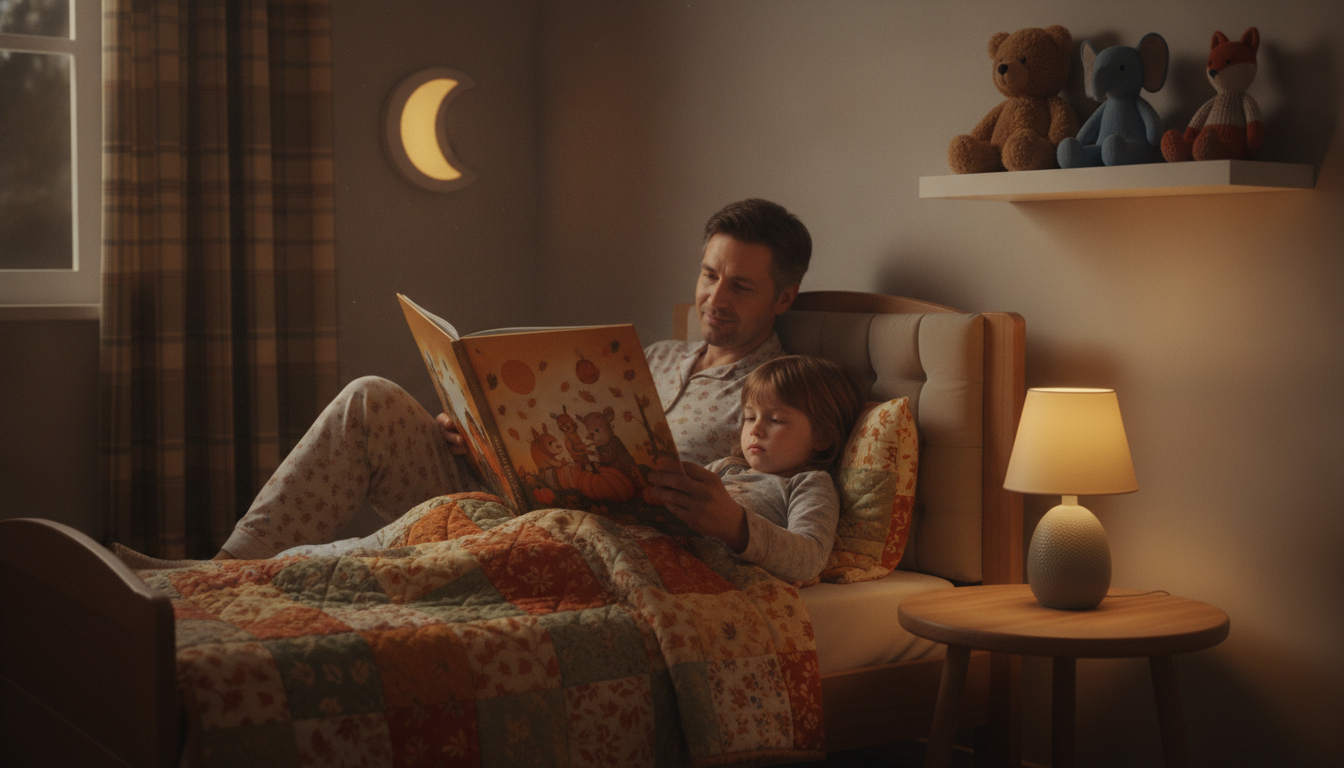
Picture books are one of the most effective tools available to parents of preschoolers because they externalise an idea into a story a child can see, hear, and return to. A book about a character who notices small good things does more to build the habit of gratitude than any worksheet — because the child is not being told what to feel, they are watching a character feel it and identifying with that experience.
Books you may already own
You do not need to buy new books. Several titles already on many home shelves work well for this purpose without being explicitly about Thanksgiving. Owl at Home by Arnold Lobel, A Chair for My Mother by Vera B. Williams, and The Relatives Came by Cynthia Rylant all center on warmth, enough-ness, and the pleasure of ordinary things without being preachy. None of them contain the word "grateful." All of them leave a child with a feeling of quiet contentment — which is closer to gratitude than any definition of the word.
What to say after reading
After reading, one or two quiet questions are enough. "What do you think Owl liked best about his house?" or "How did the family feel when everyone arrived?" You are not testing comprehension — you are inviting the child to inhabit the feeling the story created. If they do not want to talk, that is fine; the story has still done its work. Pressing for a response turns a gentle moment into an obligation.
For a child who is anxious about the disruption Thanksgiving travel or hosting can bring, a familiar bedtime story read in an unfamiliar place — a grandparent's house, a hotel room — provides continuity. The ritual of the story matters as much as its content. This is one reason it is worth building a consistent bedtime reading habit well before any holiday season arrives; if you are interested in how to make that reading feel genuinely interactive rather than passive, this guide on making reading interactive for kids covers the practical techniques.
Creating a small annual tradition
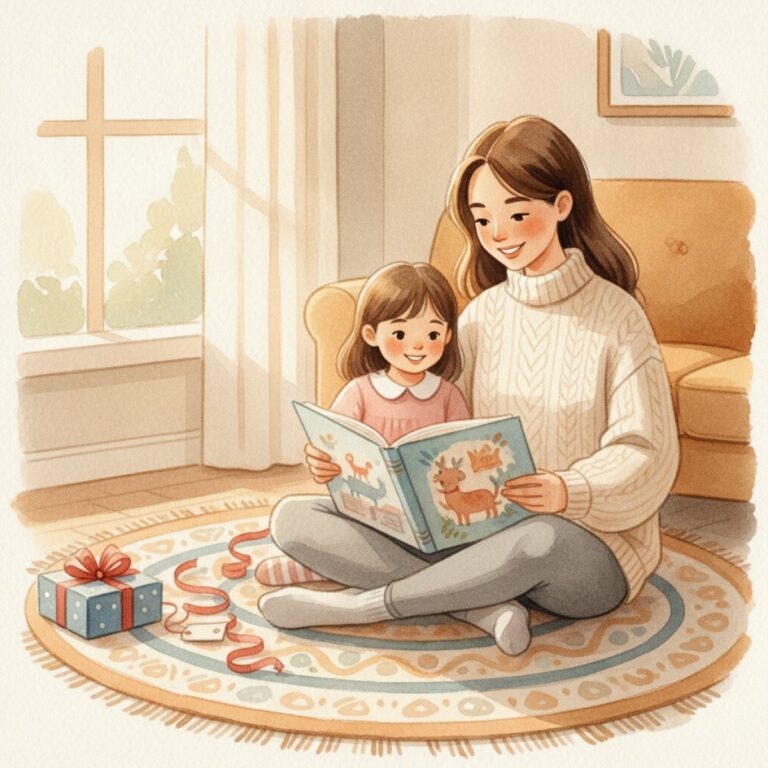
If you want to create a small Thanksgiving reading tradition, choose one book to read only in the days around Thanksgiving each year. By the third or fourth year, the child will ask for it by name, and the anticipation itself becomes part of the ritual. The book does not need to be about Thanksgiving — it simply needs to be the book you read at that time of year. Seasonal repetition is one of the ways young children build a felt sense of time and belonging. If you want that one book to be genuinely theirs, a personalized storybook with your child as the main character works well for this, because a child will happily hear their own name in a story many more times than they will sit through an unfamiliar one.
Activity Guide by Age: What to Try and How Much Help They Need
The table below matches common Thanksgiving home activities to the three age bands covered in this guide, along with a realistic note on the level of adult supervision each one requires.
- Close supervision — a parent is within arm's reach and actively involved
- Nearby — the parent is in the same room and checks in every few minutes
- Independent with setup — the parent prepares the materials and then the child works largely alone
| Activity | Age 3 | Age 4 | Age 5 | Supervision needed |
|---|---|---|---|---|
| Handprint art (paint on paper) | ✓ | ✓ | ✓ | Close |
| Gratitude jar drawing | ✓ | ✓ | ✓ | Nearby |
| Washing vegetables | ✓ | ✓ | ✓ | Close |
| Tearing bread for stuffing | ✓ | ✓ | ✓ | Nearby |
| Stirring batter or mash | — | ✓ | ✓ | Close |
| Setting out napkins and spoons | ✓ | ✓ | ✓ | Independent with setup |
| Placing (unbreakable) cups | — | ✓ | ✓ | Nearby |
| Folding napkins into shapes | — | — | ✓ | Independent with setup |
| Dictating a thank-you message | ✓ | ✓ | ✓ | Close |
| Writing own name on place card | — | — | ✓ | Independent with setup |
The dashes are not hard rules — they are starting points. A confident three-year-old with good fine motor development may manage tasks listed for age four, and a four-year-old having a tired or overwhelmed day may prefer the simplicity of a three-year-old task. Use the table as a prompt, not a prescription.
The supervision column is worth taking seriously on cooking tasks. "Close" supervision on stirring means your hand is available to steady the bowl and you are watching for splashing or tipping. Preschoolers tire quickly of stirring and may abandon a spoon mid-task — which is fine, but means the adult needs to be present to take over without drama.
One principle worth keeping
Ending before the child wants to stop is almost always better than pushing through to completion. A three-minute contribution to cooking that ends on a happy note is more valuable than a ten-minute session that ends in frustration.
Involving Your Preschooler in Thanksgiving Cooking Safely
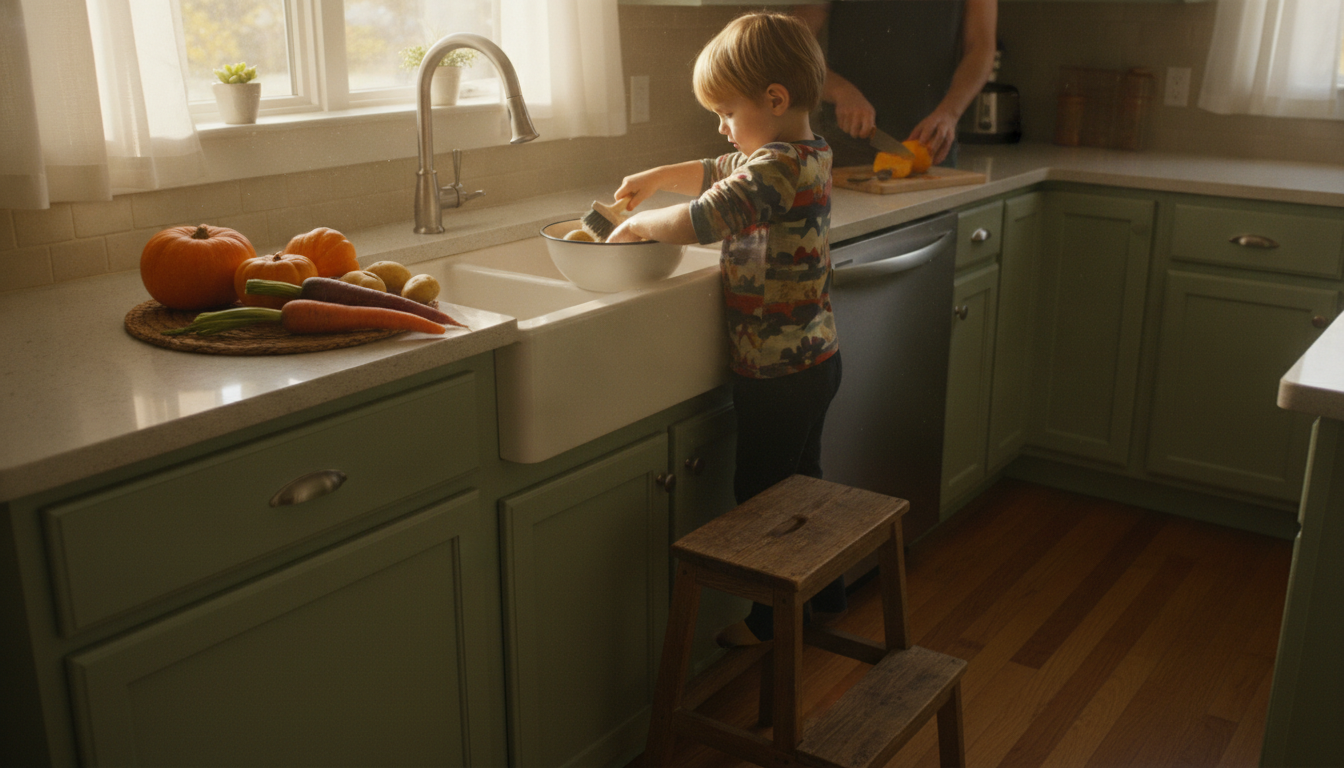
The kitchen is one of the richest environments for a preschooler on Thanksgiving — it is full of interesting smells, textures, and purposeful activity. But it requires some deliberate setup to be both safe and genuinely involving rather than just supervised hovering. The difference between a child who feels like a real contributor and one who feels like a tolerated bystander usually comes down to the specificity of their job.
Give them a defined, completable job
Give the child a defined, completable job rather than a vague invitation to help. "Can you wash all of these potatoes until they feel clean?" is a better brief than "do you want to help?" The first has a clear beginning, middle, and end. A small bowl of water on a low surface — or a step stool at the sink — with a vegetable brush turns potato-washing into a satisfying independent task for a three- or four-year-old. When they finish, they can see that they finished.
Tearing bread: the ideal preschooler task
Tearing bread for stuffing is one of the most genuinely useful kitchen jobs a preschooler can do. It requires no tools, no heat, and no precision, and the result actually goes into the dish. Provide a large bowl and a pile of slightly stale bread slices and let the child tear. Most preschoolers find this deeply satisfying and will work at it for longer than you expect. The tactile quality of pulling bread apart is intrinsically pleasurable for young children, and the low stakes mean there is nothing to get wrong.
Managing stirring safely
Stirring is popular with four- and five-year-olds but requires close management. Use a deep bowl rather than a shallow one, place it on a non-slip surface (a damp tea towel works well), and keep the quantity of mixture low enough that vigorous stirring does not cause overflow. Stand beside the child rather than behind them so you can see what they are doing and steady the bowl from the front. When the child tires — and they will — take over smoothly without drawing attention to the handover.
Keeping the zones clear
Keep the child away from the hob and oven entirely — not because they cannot be trusted, but because Thanksgiving cooking involves frequent opening of the oven, movement of heavy pots, and high heat that is difficult to predict. The best approach is to have a specific "your station" area — a section of the counter or the kitchen table — that is clearly the child's workspace and clearly separate from the cooking zone. Most preschoolers accept spatial boundaries readily if they are established calmly at the start rather than enforced reactively mid-task.
The broader point is that Thanksgiving cooking with a preschooler works best when it is treated as parallel activity rather than joint activity. The child is working at their station; you are working at yours. You are in the same room, you are connected, but you are not trying to do the same task simultaneously. That framing reduces the friction considerably.
Setting the Thanksgiving Table: A Preschooler's Real Contribution
Table setting is one of the most accessible Thanksgiving jobs for preschoolers because it is visual, spatial, and produces a visible result. It also gives a child a genuine role in the preparation of the family gathering, which matters more to young children than adults often realize. A child who helped set the table will notice it during the meal in a way that a child who watched from the doorway will not.
Starting with the unbreakables
Start with the elements that cannot break and do not require precision: napkins, placemats, and spoons. A three-year-old can carry a folded napkin to each chair without help. A four-year-old can place a spoon to the right of each plate if you show them once where it goes. A five-year-old can often manage a complete place setting of unbreakable items independently after a single demonstration. The sequence of showing once and then stepping back is important — it communicates that you trust the child to complete the job.
Place cards as a meaningful task
Place cards are a meaningful addition for families with mixed ages at the table. A five-year-old who can write their own name can make a place card for themselves. A four-year-old can draw a picture on a folded piece of card to mark their own seat. A three-year-old can choose a small object — a pinecone, an acorn, a smooth stone — to place at each setting as a decoration. All of these feel purposeful without requiring adult correction, and all of them give the child something to point to during the meal: "I made that."
A child-led centerpiece
The table is also a good place for a small, child-led decoration project in the days before Thanksgiving. A collection of autumn leaves pressed between books for a few days, or a handful of small gourds and pinecones gathered from outside, arranged by the child into a loose centerpiece, gives them ownership of the table's appearance without requiring any purchased materials. The arrangement does not need to look tidy. It needs to be theirs.
This kind of small creative contribution connects naturally to the broader habit of noticing and appreciating. If you are interested in how to extend that creative impulse beyond seasonal moments, this guide on sparking a child's imagination offers practical, everyday approaches that work year-round.
Frequently Asked Questions
My three-year-old doesn't seem to understand what Thanksgiving is about at all. Should I be worried?
No. At three, a child's understanding of holidays is almost entirely sensory and social: the smell of food, the presence of more people than usual, the disruption to routine. This is completely age-appropriate. The meaning accumulates gradually over many years of repeated experience. Your job right now is simply to make the day feel warm and safe, not to ensure comprehension. A child who associates Thanksgiving with warmth and good food is building exactly the right foundation.
How do I handle it if my child refuses to participate in the gratitude ritual?
Let them opt out without comment. Forcing participation in a gratitude practice is counterproductive and, frankly, a little ironic. If the ritual is a regular part of family life, a child who watches others participate for several months will usually join in on their own terms. The goal is to normalise the habit, not to achieve perfect compliance. A child who consistently opts out is still absorbing the ritual; they are just not ready to perform it yet.
My four-year-old gets overwhelmed when the house is full of relatives. What can I do?
Build in a planned quiet period during the day — ideally before the meal, not as a rescue measure after a meltdown. A short rest in a familiar space with one calm adult or a favorite toy resets the nervous system. Warn the child in advance: "There will be lots of people, and after lunch you and I will have some quiet time together." Predictability reduces anxiety considerably. Knowing the quiet period is coming makes the busy period more manageable.
Are there any Thanksgiving activities that work well for a mixed-age group — say, a three- and a five-year-old together?
Yes. Handprint art works across the age range because each child's result looks different and both are equally valid. Tearing bread for stuffing also works well in parallel — there is no right or wrong, and both children are contributing to the same bowl. Avoid activities with a single "right answer" or any competitive element, as the age gap will make these frustrating for the younger child. The best shared activities are ones where the process is the point, not the product.
We're traveling for Thanksgiving and won't have our usual things at home. How do I maintain any sense of routine?
Pack one or two small items that signal normality: a favorite soft toy, the book you have been reading at bedtime, and perhaps the gratitude jar (or just a small notebook as a substitute). The ritual matters more than the location. Reading the same story in a different house is still the same story. If bedtime reading is already a consistent habit in your household, it will anchor the evening regardless of where you are. For ideas on building that habit more deliberately, the 31-day family reading plan on this site is a practical starting point.
My child asks why we only talk about being thankful at Thanksgiving. What should I say?
This is a good sign — it means the habit is taking root. A simple honest answer works well: "We don't have to only do it at Thanksgiving. We can do it any time." Then continue the dinner-table or bedtime ritual into December and beyond. (A book advent calendar is one easy way to carry the same nightly rhythm straight through December.) The holiday becomes a starting point rather than a container. A child who notices the disconnect between a once-a-year ritual and a genuinely held value is already thinking about gratitude in a meaningful way.
How does Thanksgiving connect to other values I want to teach, like kindness?
Gratitude and kindness share the same cognitive root: noticing that other people have inner lives and that their actions affect you. A child who is building the habit of noticing good things is also building the capacity for kindness. If you want to extend this into a more explicit kindness practice, this guide to World Kindness Day activities for kids offers six concrete things children can do at home — most of them work just as well in November as they do in the spring.
Keep It Simple, Keep It Warm
The best Thanksgiving activities for preschoolers are the ones that feel like a natural part of the day — washing vegetables, tearing bread, naming one good thing at dinner. None of them require special supplies or a perfect plan. Start with one idea from this guide and see how it lands with your child. If it works, do it again next week. That repetition is where the real value lives — not in the activity itself, but in the small, accumulated habit of pausing to notice what is good. And if you want a story to start tonight, you can read a free story together before you commit to anything.


One Comment
Comments are closed.