Free Books Online for 1st Graders: Everything You Need to Get Your Child Reading This Year
A practical, parent-tested guide to finding the right free books online for 1st graders — whether you're heading into a new school year or homeschooling at home.
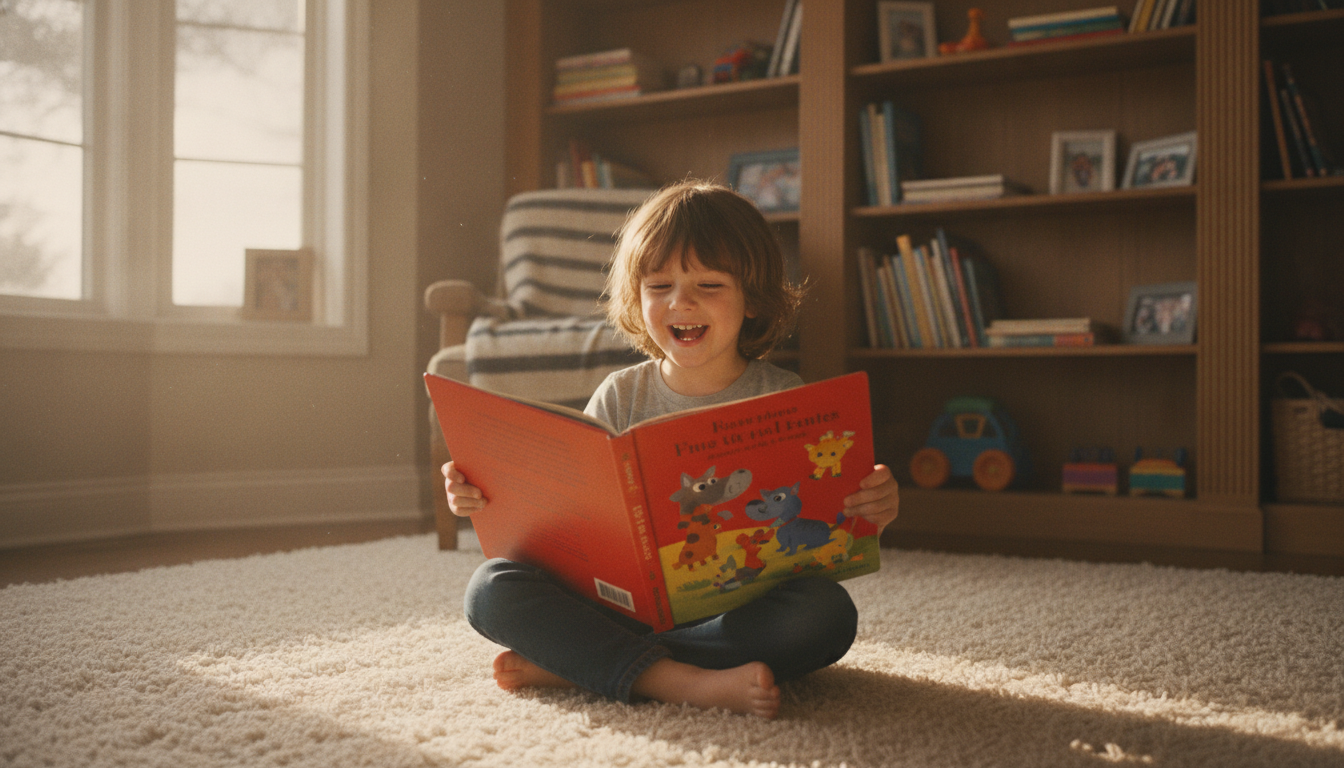
Here's the thing about first grade reading: it looks completely different from child to child, and the books that work for one 6-year-old might frustrate another or bore a third. Some kids start the school year still sounding out three-letter words. Others are already halfway through their first chapter book. Most are somewhere in between, and they move fast — sometimes jumping a whole reading level in a matter of weeks.
The good news is that there are genuinely good free books online for 1st graders, and you don't need a paid subscription to find quality, level-appropriate reading material. This guide covers what the 1st grade reading level actually means, how to tell if a book is right for your child right now, and exactly where to find free books that will actually hold a 6-year-old's attention.
What Does "1st Grade Reading Level" Actually Mean?
The phrase "1st grade reading level" covers a surprisingly wide range. If the letter, number, or code on your child's report card is a mystery, our guide to reading level charts explains what each system actually measures. A child entering first grade in September might be working on CVC words — short, phonics-decodable words like cat, hop, and sun. Plenty of those same children are also working a sight word list from school at the same time; our guide to sight words for kindergarten covers how decoding practice and that list fit together. By the following spring, many of those same kids are reading short chapter books with multiple scenes and dialogue. That's not a small jump; it's one of the biggest reading leaps a child will make in their entire school career.
Two big concepts define what 1st grade reading looks like in practice:
- Decodable text is the backbone of early 1st grade reading. These are books written so that nearly every word follows phonics rules the child has already been taught. Instead of guessing from pictures or memorizing whole words, a child can actually sound out most of what's on the page. Good decodable books feel satisfying to early readers because they can handle them independently.
- Sight words — high-frequency words like the, said, was, and they — don't always follow standard phonics rules, so 1st graders spend a lot of time learning to recognize them on sight. Well-designed leveled readers for this age weave sight words in naturally and repeat them often, which is exactly what you want.
By mid-to-late 1st grade, many children are ready to transition from picture books and leveled readers into very early chapter books — things like the Elephant and Piggie series, or Scholastic Reader Level 2 titles. These have short chapters, large print, and plenty of white space on the page. They're a bridge, not a leap.
These labels are guides, not rules. Use them to narrow down choices, then let the five-finger test (below) tell you whether a specific book is right for your specific child right now.
| Where your reader is | What it usually looks like | What to hand them |
|---|---|---|
| Just out of kindergarten | Knows most letter sounds, reads short familiar words, leans hard on the pictures | Decodable readers; very short, repetitive text |
| Middle of 1st grade | Sounds out most short words, sight-word bank growing, still reads aloud slowly | Early readers with one to three short sentences per page |
| End of 1st grade | Reads short books alone, self-corrects, starting to read silently | Early chapter books; longer picture books read together |
Every child moves through these at their own pace. Use it to pick a book, not to grade a reader.
How to Tell If a Book Is the Right Level: The Five-Finger Rule
You don't need a reading specialist to figure out whether a book is right for your child. The five-finger rule is the simplest tool you have, and it works every time.
The Five-Finger Rule — How It Works
- Open the book to any full page of text.
- Ask your child to read the page aloud.
- Have them hold up one finger for every word they don't know or can't sound out.
- 0–1 fingers: Easy — great for independent reading and confidence-building.
- 2–3 fingers: Just right for reading together, where you can help with tricky words.
- 4–5 fingers: Probably too hard for right now — save it for a few months.
A book that feels just a little bit hard — what teachers call the instructional level — is perfect for reading aloud together. You can pause, help with tricky words, and talk about what's happening in the story without frustration taking over. A book your child can read almost perfectly on their own is their independent level, and these are the ones to stock up on for bedtime reading or quiet time.
Pictures matter a lot at this age. A book with rich illustrations on every page gives early readers context clues that help them push through tricky words — which is why picture books remain valuable well into 1st grade, even as children start tackling longer texts.
If your child is consistently hitting four or five fingers on books labeled as 1st grade level, that's useful information — not a cause for worry. It likely means they'll benefit from starting with late-kindergarten level books and building up. You can find plenty of those in the kindergarten edition of this list, which covers the platforms that work best for that earlier reading stage.
The Best Places to Find Free Books Online for 1st Grade
These are real, well-established resources — not obscure sites that might disappear next month. Each one has something specific to offer, so it's worth bookmarking two or three rather than trying to use all of them at once.
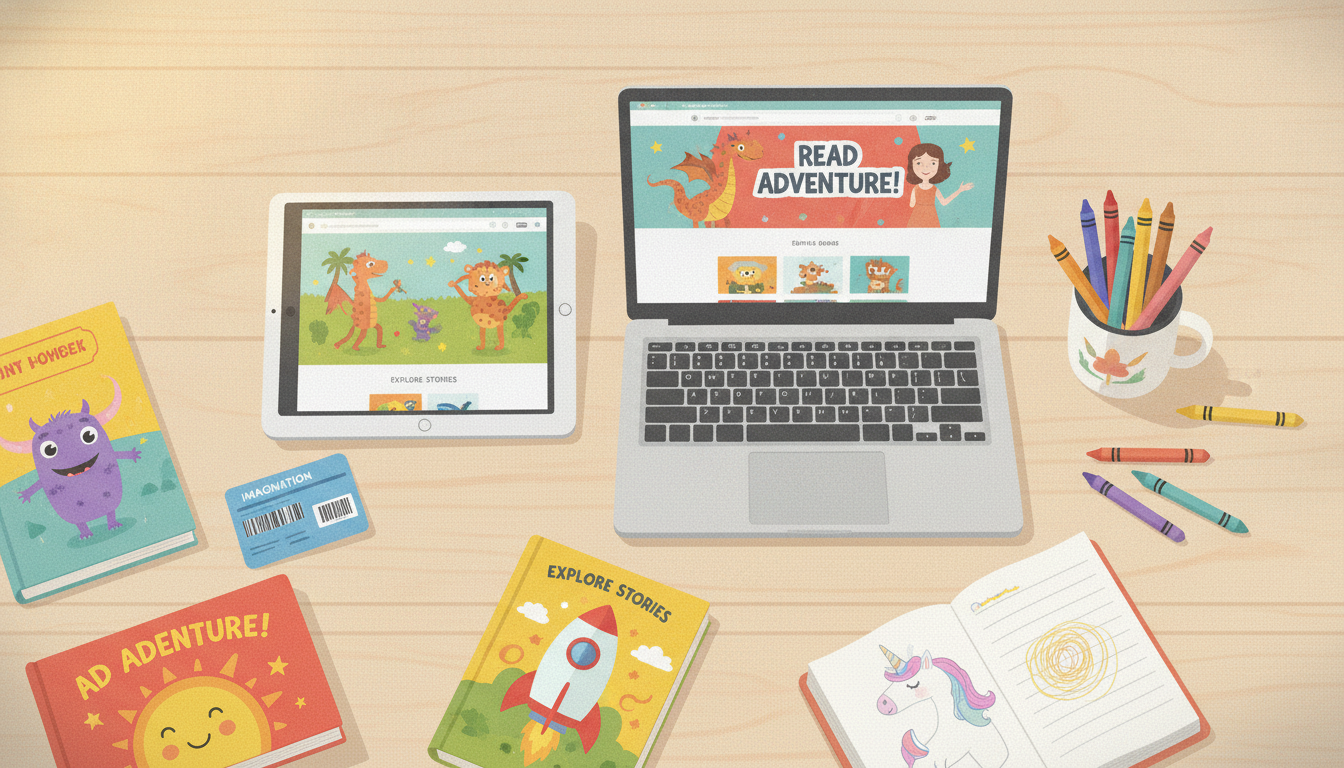
One of the most parent-trusted free reading sites for early elementary kids. Starfall offers interactive phonics-based books and activities designed for the kindergarten through 2nd grade range. The free version has enough content to keep a beginning 1st grader busy for weeks, and the phonics approach aligns well with how most schools are currently teaching reading.
Run by the SAG-AFTRA Foundation, this site features celebrity actors reading picture books aloud on video. Watching a warm, expressive read-aloud is especially good for kids who aren't yet reading independently but need to build vocabulary and a love of stories. It's also a great wind-down activity — put it on while your child follows along with a physical copy of the book if you have one.
A hidden gem. Unite for Literacy hosts a large library of simple, narrated picture books that children can listen to or read independently, many of them focused on science and social studies topics. The entire site is free with no account required, and the non-fiction titles are particularly good for kids who are curious about the world but find fiction less motivating.
The Library of Congress's reading resource page offers a curated collection of classic children's books and reading lists vetted by librarians. It's not an interactive platform, but it's a trustworthy starting point for finding quality titles you can then search for on other free platforms or request at your local library.
Part of the Internet Archive, Open Library lets you borrow digital versions of real published books for free with a free account. The children's section includes leveled readers and picture books. Availability varies depending on how many copies are in the system. Set expectations before you search, though: a 2024 appeal court ruling forced the Internet Archive to withdraw more than 500,000 titles from lending, and most current children's series went with them. Open Library is now strongest on older, out-of-print and public-domain books rather than the title your child heard about at school this week.
Project Gutenberg's children's bookshelf has classic public-domain titles — Beatrix Potter, early fairy tale collections, and classic picture books — free to read in your browser or download. The formatting is plain text, so these work best for slightly more confident readers or for parent read-alouds where you're doing most of the reading.
Your local library's app is one of the most underused free resources available. Libby (by OverDrive) and Hoopla both connect to your library card and give you access to thousands of children's e-books and audiobooks. Libby has holds and wait times like a real library. Hoopla typically lets you borrow a set number of titles per month instantly with no waiting. If you don't have a library card yet, most US libraries let you sign up online in minutes.
For parents who want to go deeper on structured, app-based reading tools, the guide to reading apps for early readers covers tools that work well alongside these free book resources — especially for kids who respond well to games and interactive feedback.
| Resource | What you get | Best for | What it costs |
|---|---|---|---|
| Starfall | Phonics games and read-along stories | Readers still sounding words out | Free section; some content needs a membership |
| Storyline Online | Video read-alouds performed by actors | Listening together; reluctant readers | Free, no account |
| Unite for Literacy | Narrated digital picture books in many languages | Bilingual homes; first solo reads | Free, no account |
| Read.gov | Classic childrens books from the Library of Congress | Older classics and read-alouds | Free, no account |
| Open Library | Borrow scanned real books, one copy at a time | Tracking down a specific title | Free, account required |
| Project Gutenberg | Public-domain ebooks | Classics you already know by name | Free, no account |
| Libby / Hoopla | Your library ebooks and audiobooks | The widest selection of current titles | Free with a library card |
| Epic | Large leveled digital library | Classroom use | Free only through a teacher or school code |
A Note on Epic — and Why School Access Is Different From Home Access
Epic comes up constantly in lists of free reading resources for kids, and it deserves a clear explanation. Epic has an enormous library of 1st grade titles and a genuinely well-designed interface, but free access to Epic is only available through a teacher or school account.
If your child's teacher has set up a class on Epic, your child can log in and read for free during school hours or with a class code. Without a teacher code, Epic requires a paid family subscription. So if you've seen it recommended as a free resource in general lists, that's the catch — it's free for classrooms, not for home use on its own.
💡 Back-to-School Tip
- Ask your child's teacher in the first week of school whether the class uses Epic or any other digital reading platform.
- You might already have free access you don't know about — class codes often work at home too, not just during school hours.
- Other platforms like Raz-Kids and Reading A-Z are also sometimes available through schools — worth asking about at the same time.
Reading Aloud vs. Independent Reading: What to Do at This Age
Reading aloud to your 1st grader — even after they've started reading on their own — is one of the best things you can do for their literacy development. When you read to them, you can use books that are well above their independent reading level, which builds vocabulary, comprehension, and a genuine love of stories. That motivation is what keeps kids pushing through the hard parts of learning to read. On the evenings when your own voice has run out, a video or audio read-aloud does the same job — our roundup of read-aloud books online, free sorts the genuinely free sites from the ones with a paywall behind them, and our full guide to free children's books online does the same across every age band.
Independent reading at this age should feel comfortable and low-stakes. Let your child pick books from the easy pile sometimes, even if they seem too simple. Rereading familiar books builds fluency and confidence, and a child who feels like a good reader is far more likely to read willingly.
That rereading is doing more than building confidence — it is the single most effective fluency practice there is. Our guide to reading fluency and what it sounds like at home explains why the same short passage read a few times across a week works better than a new book every night.
There's no such thing as a book that's too easy if your child is choosing it and enjoying it.A good daily rhythm for a 1st grader might look like 10–15 minutes of independent reading followed by 10–15 minutes of you reading aloud to them. This keeps the experience balanced between effort and pleasure — and it means reading stays something you do together, not just a homework task.
Audiobooks count, too. Listening to a story read aloud — whether through Storyline Online, Libby, or Hoopla — builds the same comprehension and vocabulary skills as being read to in person. For kids who are tired after a school day, an audiobook at bedtime is a genuinely good option, not a shortcut.
Keeping a Reluctant Reader Going
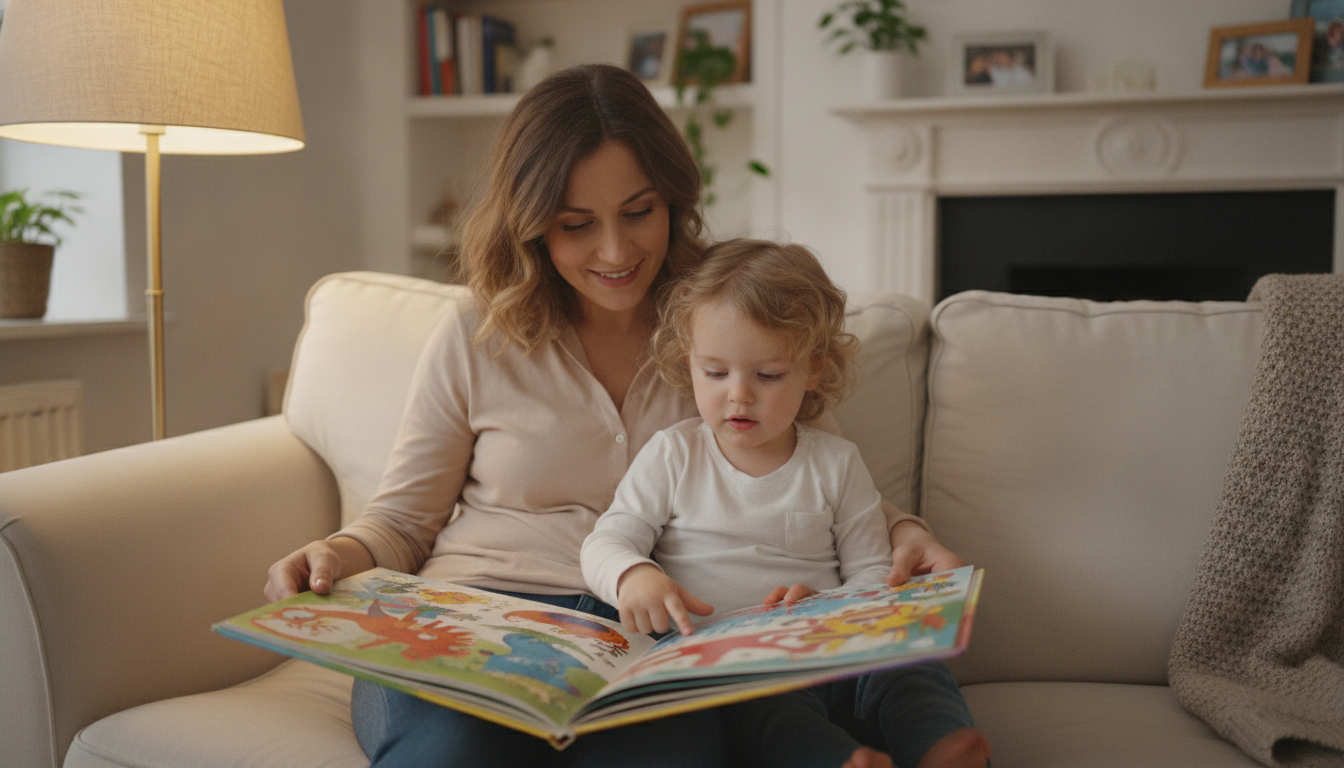
Reluctant readers at this age are almost never reluctant because they dislike stories. They're usually reluctant because reading feels hard, slow, or embarrassing. The single most effective thing you can do is remove the pressure by making read-aloud time about the story, not about the performance. If your child knows they won't be corrected or tested, they'll relax — and relaxed kids learn faster.
Let your child choose the books as often as possible, even if they pick the same three books over and over. Repetition is not laziness — it's practice. A child who has memorized a favorite book and can "read" it confidently is building real reading skills: left-to-right tracking, word recognition, and the understanding that print carries meaning.
- Try non-fiction. A 6-year-old who is obsessed with dinosaurs, trucks, or animals will often push through harder text to find out facts they care about. Unite for Literacy has simple non-fiction titles that work perfectly for this — and the narration feature means your child can listen first, then try reading along.
- Keep sessions short. Five enthusiastic minutes is worth far more than twenty reluctant ones. Ending on a good note — before your child is tired or frustrated — means they're more likely to want to come back tomorrow.
- Use quick-win stories. LoveToRead's free story library has short, engaging stories built for early readers that work well for reluctant readers because they're designed to be quick wins — a full story in just a few minutes gives a child the satisfying feeling of finishing something, which is genuinely motivating at this age.
- Read alongside them. When you sit down and read your own book at the same time your child reads theirs, reading becomes a normal household activity rather than a task assigned to children. It's a small shift, but kids notice.
If you're looking for more ideas on building reading motivation, the 5 best reading programs for children covers structured options that work well for kids who need more than just access to books — some children respond really well to a program with clear progression and rewards built in.
Building a Free Home Library: A Simple Plan
You don't need to spend money to build a rich reading environment. Combining one or two of the free online platforms above with your local library — in person or through Libby and Hoopla — gives you access to more books than any child could read in a year. The key is making it easy and routine, not elaborate.
📚 A Practical Starting Point
- Bookmark Starfall and Storyline Online for screen-based reading time.
- Get a library card and set up Libby on your phone or tablet for e-book borrowing — it's free and takes about five minutes.
- Check Unite for Literacy when your child is interested in a specific topic — the non-fiction section is searchable by subject.
- Rotate books regularly so there's always something new on the current reading shelf. Novelty matters to young readers, and a fresh title feels like a treat even when it costs nothing.
If you used free online books in kindergarten, many of the same platforms — especially Starfall — continue to be useful well into 1st grade for kids who need extra phonics practice. The kindergarten edition of this list covers the platforms that work best for that earlier stage, and it's worth keeping bookmarked even as your child moves forward.
For parents who want to go beyond free book access and explore personalized reading experiences, personalized books for early readers can be a powerful motivator — especially for a child who doesn't yet see themselves as a reader. There's something different about a story where the main character shares your child's name and interests.
The goal for the end of 1st grade is a child who sees themselves as a reader — someone who reaches for books by choice, not just when asked. The free resources available right now make that goal genuinely reachable for every family, regardless of budget.
Start Reading Together Today — For Free
Explore LoveToRead's free story library for short, leveled stories your 1st grader can enjoy right now — no subscription, no sign-up required.
Browse Free Stories →
2 Comments
Comments are closed.