Christmas Read Alouds: Your Complete Guide for Families and Elementary Classrooms
From cozy living rooms to lively classrooms, discover how to choose, schedule, and share the perfect Christmas books this December — and why read-aloud time is the greatest gift you can give young readers.
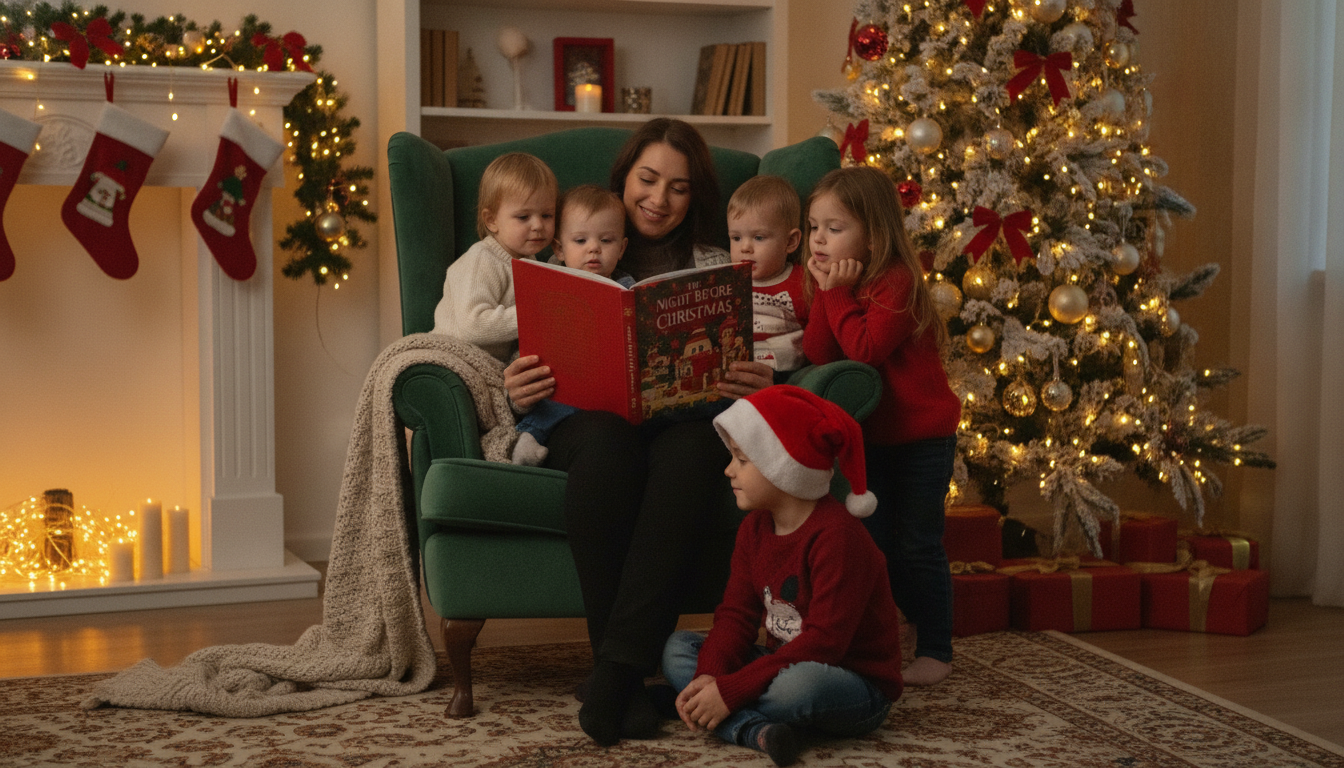
Why Christmas Read Alouds Are More Than Just a Holiday Tradition
There is something quietly extraordinary that happens when a child leans in close to hear a story. Their breathing slows, their eyes widen, and for a few precious minutes the noise of the world falls away. During December, that magic is amplified tenfold. Some families open the season early with a picture book tucked beside the shoes on St. Nicholas Day, December 6. Christmas read alouds are not simply a charming seasonal activity — they are one of the most powerful literacy tools available to parents and teachers, delivered at exactly the moment children are most emotionally open to receiving them.
The emotional memories created during holiday read-aloud sessions are remarkably durable. Children who grow up hearing stories read aloud beside a lit tree or during a classroom morning meeting carry those associations into adulthood, linking books with warmth, safety, and belonging. This is the opposite of the anxiety many children feel around reading as a performance. When a trusted adult reads aloud, books feel like celebrations rather than obligations.
The cognitive benefits are equally compelling. Reading aloud during the holiday season builds vocabulary and comprehension skills at a time when children are naturally motivated to engage. Stories about magic, family, giving, and wonder tap directly into the emotional landscape children are already inhabiting in December. That emotional investment accelerates learning in ways that worksheets and leveled readers simply cannot replicate.
"The single most important activity for building the knowledge required for eventual success in reading is reading aloud to children." — Becoming a Nation of Readers, National Institute of Education
Shared reading also builds empathy. A well-chosen Christmas read aloud exposes children to family structures, cultural traditions, and emotional experiences beyond their own. A read-aloud works best as one thread inside a broader set of Christmas traditions for families. A child from a large, boisterous family might hear a story about a quiet, solitary Christmas and find new compassion. A child who has never experienced financial hardship might encounter a character who does — and begin to understand generosity in a deeper way.
For classroom teachers, December read alouds offer a practical lifeline. The weeks before winter break are notoriously difficult to manage. Attention is fractured, excitement runs high, and the usual routines feel thin. A daily read aloud anchors the room. It gives students something to look forward to, a reason to settle, and a shared experience that binds the class community together at exactly the moment it is most likely to fray. Parents wondering what to give that teacher at the end of it all will find a budget table in our teacher Christmas gift ideas guide.
🌟 Key Takeaway
Christmas read alouds build vocabulary, empathy, and a lifelong love of books — while giving teachers and parents a reliable, low-prep tool for the most distracting weeks of the school year. Research consistently shows that children who are read to regularly develop stronger phonemic awareness, listening skills, and reading motivation. December is a perfect window to deepen that habit.
What Makes a Book Work Well as a Christmas Read Aloud?
Not every Christmas book is a great read-aloud book. Some titles that look beautiful on a shelf fall flat when read aloud — the prose is too flat, the pacing too uneven, or the story too thin to sustain a group's attention for twelve minutes. Understanding what makes a book work in a read-aloud context helps you curate a December stack that consistently delivers.
Rhythm and Musicality
Books with rhyming text, repetitive refrains, or a lyrical prose style give the reader's voice natural momentum. When language has rhythm, reading it aloud feels effortless and pleasurable — for the reader and the listener alike. Think of the rolling cadence of The Night Before Christmas or the gentle repetition in Bear Stays Up for Christmas. Children's bodies respond to rhythm; they lean in, they anticipate, they feel the story in a physical way that prose-heavy books rarely achieve.
Strong, Expressive Illustrations
For younger children especially, illustrations are not decorative — they are half the story. When you hold up a page, the art gives listeners visual context that supports comprehension and gives their eyes somewhere to land while they absorb the words. A book with small, detailed illustrations that cannot be seen from across a rug is a poor read-aloud choice regardless of how beautiful it is up close. Before adding a book to your stack, ask: can every child in the room see what matters most on this page?
A Satisfying Story Arc
A well-paced story arc — with a clear beginning, rising tension or wonder, and a satisfying emotional resolution — holds attention across an entire read-aloud session without losing the room. Books that meander, repeat themselves without purpose, or end ambiguously can frustrate young listeners. The best Christmas read alouds feel complete: you close the cover and the room exhales together.
Opportunities for Participation
Books that invite participation transform passive listening into active engagement. Call-and-response patterns, predictable phrases children can chime in on, or moments that prompt natural questions ("What do you think is inside the box?") keep energy in the room. This is especially valuable in classroom settings where you are reading to twenty or more children at once and need every listener to feel involved.
Emotional Resonance
The secret ingredient in any great read aloud is emotional resonance. The best Christmas books tap into universal feelings — anticipation, generosity, loneliness, joy, the ache of missing someone, the surprise of unexpected kindness — and give children language for experiences they are already having but may not yet have words for. A book that makes a child feel genuinely understood is a book they will ask to hear again.
Matching Books to Age Bands: A Quick-Reference Guide
Choosing the right book for the right age group is the single biggest factor in a successful read aloud. A book that is too simple feels condescending; one that is too complex loses listeners before the first page turn. Use this table as a starting framework, then adjust based on your specific group's experience and attention span.
| Age Band | Grade Level | Book Type | Recommended Titles | Session Length |
|---|---|---|---|---|
| Ages 3–5 | Preschool & Pre-K | Short picture books; bold art; simple, repetitive text; familiar characters | The Snowy Day (Keats), Bear Stays Up for Christmas (Wilson), How to Catch Santa (Reagan) | 10–15 min |
| Ages 5–7 | K–Grade 1 | Longer picture books; more developed plots; richer vocabulary; imaginative worlds | The Polar Express (Van Allsburg), Santa Calls (Joyce), Olive the Other Reindeer (Walsh) | 15–20 min |
| Ages 7–9 | Grades 2–3 | Chapter books in installments; layered themes; rich character development | The Best Christmas Pageant Ever (Robinson), The Christmas Miracle of Jonathan Toomey (Wojciechowski), adapted A Christmas Carol | 15–20 min |
| Ages 9–11 | Grades 4–5 | Complex humor; vocabulary stretch; thematic depth; short story formats | A Christmas Carol (Dickens excerpts), The Gift of the Magi (O. Henry), A Boy Called Christmas (Haig) | 20–30 min |
| Mixed Ages | Family or Multi-Grade | Layered meaning; works on multiple levels; universal emotional themes | The Polar Express, The Shortest Day (Cooper), An Orange for Frankie (Polacco) | 15–25 min |
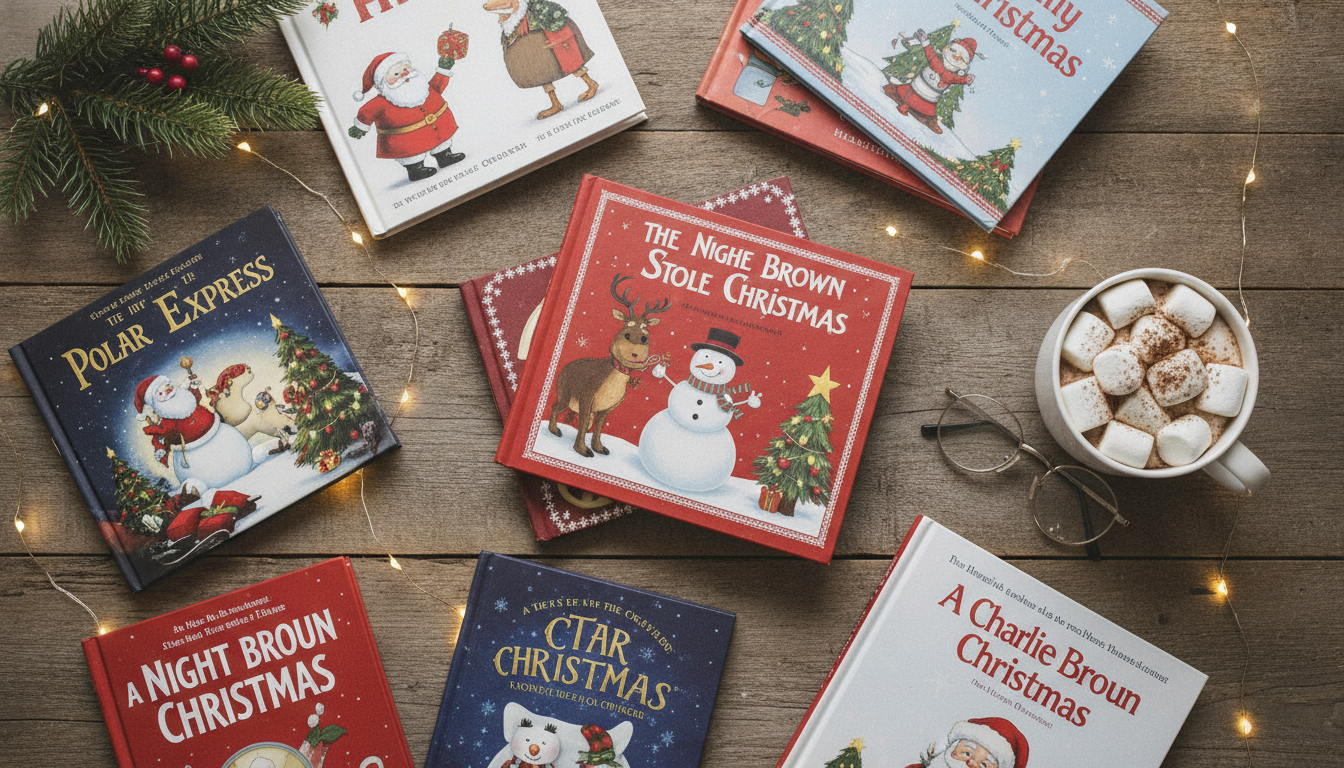
One note on mixed-age groups: the books that work best across a wide age span tend to be ones where the surface story is simple enough for a five-year-old to follow, but the emotional or thematic layer is rich enough to give a ten-year-old something to sit with afterward. The Polar Express is the gold standard example — young children love the train and the bell, while older children and adults feel the weight of what it means to still believe.
If you are looking to expand your holiday reading beyond Christmas, the Hanukkah Books for Kids read-aloud guide offers an equally rich selection organized by night and age group — a wonderful complement to your December stack.
Building a December Read-Aloud Routine That Actually Sticks
A read-aloud routine is only as powerful as its consistency. The families and classrooms that report the most meaningful December reading experiences are not the ones with the most elaborate setups — they are the ones that show up for story time every single day, even when it is inconvenient, even when it is only ten minutes, even when the book chosen is not perfect.
Anchor It to a Fixed Time
Choose a consistent time slot and protect it fiercely. Whether that is the last fifteen minutes of the school day, right after dinner, or during morning meeting, a predictable read-aloud window signals to children that this time is sacred and worth looking forward to. When children know the story is coming, they begin to settle themselves in anticipation — which is itself a valuable self-regulation skill.
Create a Sensory Ritual
Build a physical ritual around the read aloud to prime children's brains for listening. Light a candle, dim the overhead lights, put on thirty seconds of soft instrumental music before you begin, or invite children to bring a special blanket or stuffed animal. These sensory cues are not frivolous — they train the nervous system to shift into a calm, receptive state. After a few days, the ritual itself becomes a signal that story time is beginning, and the room will quiet faster than any verbal instruction could achieve.
Plan Your December Calendar in Advance
Scrambling for a last-minute book choice is the enemy of a great read aloud. Spend thirty minutes in late November mapping 20 to 25 books across the month, including a mix of new titles and beloved classics that children request year after year. If you want a built-in structure, consider a book advent calendar — wrapping each book in paper and numbering them 1 through 24 creates daily anticipation that children find almost unbearably exciting.
Add Brief Before-and-After Conversations
To maximize the educational value of read-aloud time without turning it into a lesson, add short bookend conversations. Spend two minutes before reading previewing the cover and making predictions together. Then spend two to three minutes after with a single open-ended question: "What would you have done in that character's place?" or "What part of this story surprised you most?" This deepens comprehension and builds critical thinking without making story time feel like a quiz.
For families looking to find additional free titles to supplement their December stack, these nine sites offer genuinely free read-aloud books online — a helpful resource when the library hold list is long.
Tips for Reading Aloud Like a Pro (Even If You're Not a Performer)
Many parents and teachers feel self-conscious about reading aloud, worried they are not dramatic enough or that their voices will not hold children's attention. The truth is that children are remarkably forgiving audiences — what they want is not performance, but presence. Here are the techniques that make the biggest difference.
- Slow down more than feels natural. Most readers rush when nervous. A deliberate, unhurried pace gives listeners time to visualize the story and savor the language, especially during descriptive passages. If you think you are reading slowly enough, slow down a little more.
- Use subtle vocal differences for characters. Full theatrical voices can feel exhausting to sustain and distracting for younger listeners. A slightly higher pitch for one character and a lower, slower cadence for another is more than enough to help children track who is speaking.
- Pause strategically. Pause at page turns, after cliffhangers, or before a surprising reveal. These micro-pauses build tension and teach children to notice story structure organically. A two-second pause before a big reveal is worth more than any dramatic voice effect.
- Make regular eye contact. Memorize key phrases so you can look up from the page. This connection keeps wandering attention anchored back to the story and communicates that you are sharing the experience together, not performing at them.
- Practice unfamiliar books at least once beforehand. A single read-through lets you identify tricky words, plan where to pause for page-sharing, and deliver emotional moments with confidence rather than stumbling through them mid-session.
You don't have to be a trained actor to read aloud beautifully. You just have to mean it. Children can feel the difference between a reader who is present and one who is going through the motions — and they will follow a present reader anywhere.
Extending the Magic: Simple Activities to Pair With Your Read Alouds
The single easiest pairing is to build the December 24 read aloud into a Christmas Eve box — pajamas, cocoa, and the book, opened together as one ritual.
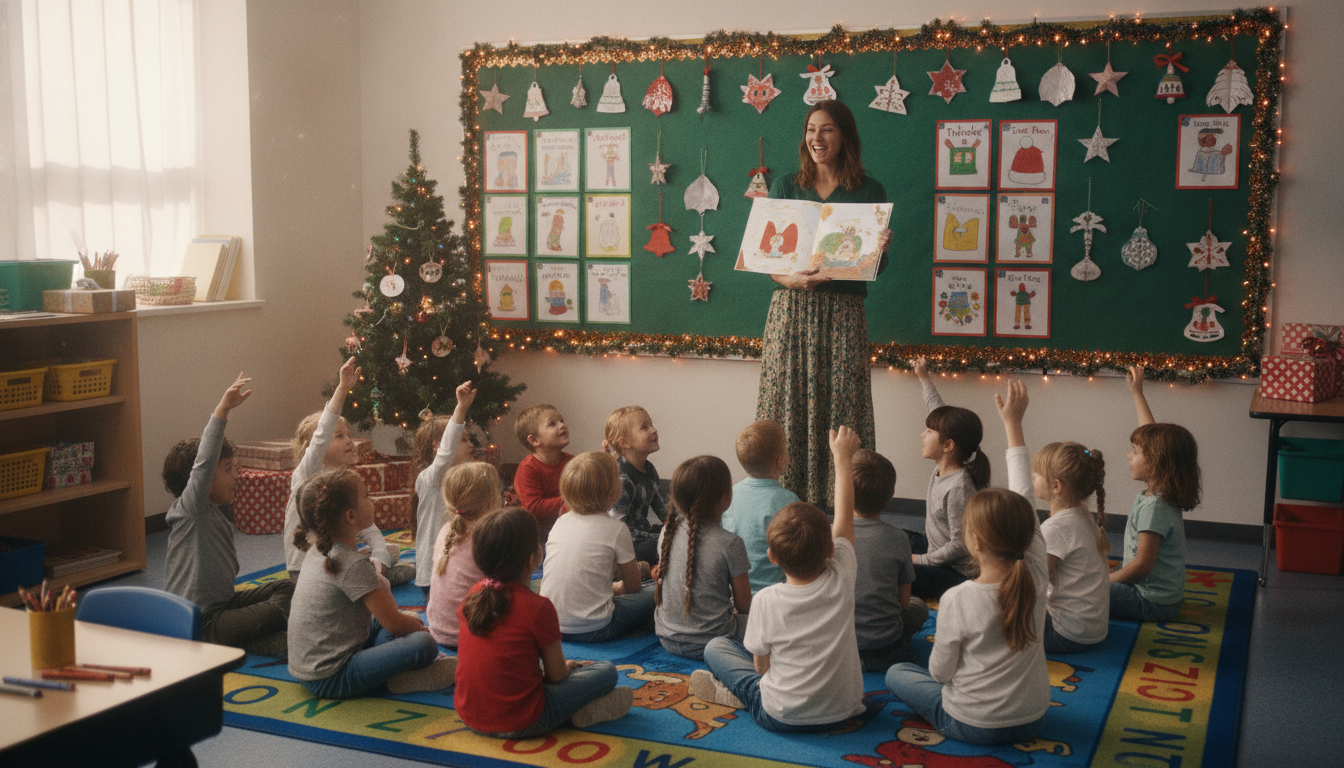
A great read aloud does not have to end when you close the cover. Simple, low-prep extensions can deepen children's connection to a story, reinforce comprehension, and transform a single book into a multi-day experience. None of these require advance preparation or special materials.
One more pairing worth knowing: families who run an Elf on the Shelf often have the elf deliver the night's read aloud, which turns the book into something the child discovers rather than something handed to them. Our easy Elf on the Shelf ideas guide covers how to keep that going for a full December. And if the elf still needs a name, we have 155 Elf on the Shelf names grouped by style.
- Draw the scene. After reading a book with a strong setting — a snowy forest, a cozy village, a toy workshop — invite children to draw or paint their favorite moment. Visual response deepens recall and gives non-verbal learners a way to process the story that words alone cannot provide.
- Launch a kindness challenge. Books that feature giving or generosity, such as The Elves and the Shoemaker or An Orange for Frankie, are natural springboards for a December kindness challenge. Children perform one small act of kindness each day, documented on a shared chart. This connects beautifully with the themes of kindness activities for kids that work year-round.
- Start a reading journal. For older elementary students, a simple journal where they record one sentence per book — a favorite line, a question it raised, or a personal connection — builds reflective reading habits without feeling like homework. Over December, they accumulate a personal record of their reading journey.
- Recreate a sensory element. Make paper snowflakes after a winter read aloud. Bake gingerbread after The Gingerbread Man. Sip hot chocolate while reading The Polar Express. These full-body experiences anchor stories in sensory memory, making them far more likely to be remembered years later.
- Build a December Reading Wall. In the classroom, display each completed read aloud as a hand-drawn ornament or star on a bulletin board. At home, add a paper ornament to a dedicated reading tree. Children love seeing their reading journey made visible — and it doubles as festive decor.
If your family celebrates multiple holidays in December, consider weaving in titles from other traditions to honor that richness. A guide to Diwali stories for kids and a dedicated Hanukkah read-aloud guide can help you build a December stack that reflects the full spectrum of your family's or classroom's traditions.
🎁 December Read-Aloud Advent Idea
Wrap 24 books — a mix of Christmas classics, winter stories, and family favorites — in brown paper numbered 1 through 24. Each morning, one child unwraps the day's book. The anticipation becomes part of the magic. For a full guide to sourcing and building your collection affordably, see this step-by-step book advent calendar guide.
Frequently Asked Questions About Christmas Read Alouds
How long should a read-aloud session be for different ages?
For preschoolers and kindergarteners, 10 to 15 minutes is ideal — enough for one picture book and a brief conversation. Grades 1 through 3 can comfortably sustain 15 to 20 minutes, while grades 4 and 5 can handle 20 to 30 minutes, especially when reading a chapter book in daily installments. These are guidelines, not rules: a particularly gripping book can hold any age group longer than expected, and a restless room sometimes needs a shorter session.
What if I have a child or student who seems disengaged or wiggly during read alouds?
Fidgeting does not always mean inattentiveness — many children listen better when their hands are busy. Try offering a quiet fidget tool, allowing children to draw while listening, or choosing a more interactive book that invites physical participation like clapping or repeating a refrain. If a child consistently struggles to engage, consider whether the book's length or complexity is a match for where they are right now. For younger listeners especially, shorter and simpler is almost always better. A helpful starting point is this guide to books for 4-year-olds, which covers what actually holds attention at this tricky age.
Can I read Christmas books in a public school classroom without it being inappropriate?
Yes, when approached thoughtfully. Focus on books that celebrate the cultural and folkloric dimensions of the holiday — winter, gift-giving, family, community, and wonder — rather than exclusively religious content. Balance your December lineup with books representing Hanukkah, Kwanzaa, and secular winter themes to honor the diversity of your students. The goal is a December read-aloud calendar that every child in the room can see themselves in.
How do I handle a book that sparks a big emotional reaction or a difficult question?
Pause and honor the moment. If a child connects a story about loss or longing to their own family experience, acknowledge it briefly and warmly, then offer to talk more after the group. Keep a few "comfort books" — familiar, gentle titles — on hand for days when the room needs grounding rather than stimulation. Story time is safe space, and how you respond to vulnerability in that space teaches children whether books are a place they can bring their whole selves.
Is it okay to re-read the same Christmas book multiple times?
Absolutely — repetition is not boring for children, it is deeply beneficial. Each re-reading builds fluency, deepens comprehension, and allows children to notice new details they missed the first time. Hearing a beloved book year after year also builds the kind of shared family or classroom culture that children carry into adulthood. The request to "read it again" is one of the highest compliments a young reader can give.
What is Jolabokaflod, and is it relevant to Christmas read alouds?
Jolabokaflod is Iceland's beloved tradition of giving books on Christmas Eve and spending the evening reading them — a perfect model for families who want to make reading central to their holiday. If you want to bring this tradition into your home, this guide to running Jolabokaflod with kids walks you through everything you need to know.
The Gift That Lasts Beyond December
Christmas read alouds are one of the simplest, most powerful things you can do for the young readers in your life. They require no special equipment, no elaborate preparation, and no teaching degree — just a good book, a willing voice, and a child who is ready to listen.
The habits built during December story time ripple outward. Children who are read to regularly during the holiday season develop stronger vocabulary, deeper comprehension, and — most importantly — a felt sense that books are places worth returning to. That association, built story by story across a December of shared reading, is a gift that will outlast every toy under the tree.
Choose books that match your audience. Build a routine you can sustain. Read with presence rather than performance. And do not underestimate the power of a single perfect book, read at the right moment, to a child who needed exactly that story — right now.
Ready to Make December Story Time Unforgettable?
Grab your stack of Christmas read alouds, brew a mug of cocoa, and settle in — the stories you share this December will become the memories your children and students carry for a lifetime. Want to go one step further? Create a personalized Christmas storybook with your child as the hero — a keepsake they will treasure long after the decorations come down.
Create a Personalized Christmas Storybook


8 Comments
Comments are closed.