Free Children's Books Online: Everything a Parent Needs to Know
A warm, practical guide to finding high-quality free books for your child — from preschool storytime to fifth-grade chapter reads — without spending a single dollar.
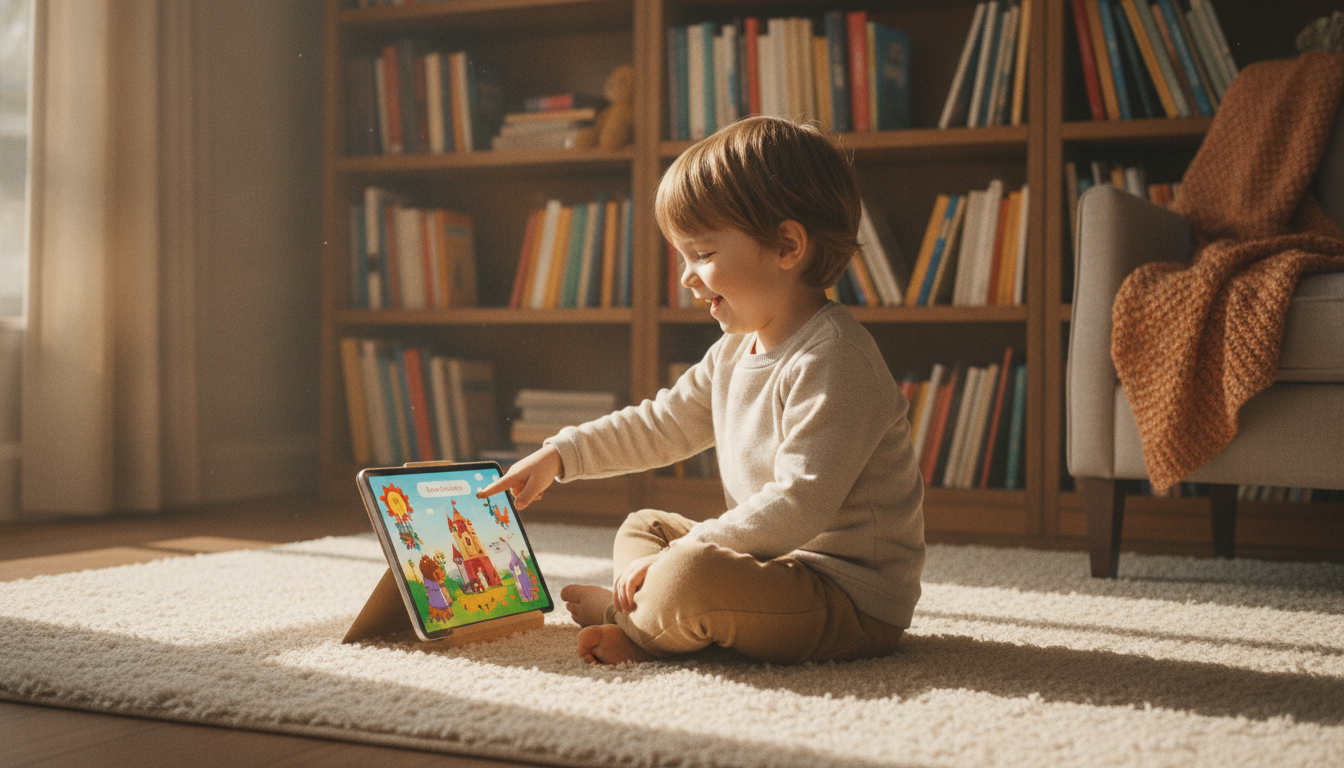
Every parent knows the feeling: your child has devoured every book on the shelf, the library isn't open until tomorrow, and you're staring down a restless evening with nothing new to read together. The good news is that right now, tonight, there are thousands of high-quality free children's books available online — picture books, leveled readers, early chapter books, and classic novels — waiting for your family at no cost whatsoever.
This guide cuts through the noise. We'll show you exactly where to find free books that are actually free, how to match the right format to your child's age and reading stage, and how to build a simple daily reading habit that makes a real difference in your child's development. No subscriptions required. No credit card needed. Just books, a device, and a little time together.
Why Reading Volume Matters More Than You Might Think
Before we get to the where, it's worth spending a moment on the why — because the research here is genuinely striking, and it changes the way you think about finding free books online.
The most-cited numbers here come from Anderson, Wilson and Fielding's 1988 study in Reading Research Quarterly, which tracked how much fifth-graders actually read outside school. Children at the 90th percentile read about 21 minutes a day and met roughly 1.8 million words a year. Children at the 10th percentile read about a tenth of a minute a day — six seconds — and met about 8,000. Halfway up, at the 50th percentile, it is under five minutes a day and 282,000 words. The gap is not between reading and not reading; it opens up between a few minutes a day and twenty.
Reading volume in kindergarten through third grade is one of the strongest predictors of long-term academic success, influencing vocabulary growth, reading fluency, comprehension skills, and even math performance later in school. The early grades are a critical window: children are learning to read through about second grade, then shifting to reading to learn. The more text they encounter during this window, the stronger the foundation they build for every subject that follows. If you want to understand the full picture of how children move through these stages, our guide to the stages of reading development is a great plain-English starting point.
The beautiful thing about free online books is that they remove the single biggest barrier most families face: cost. Keeping a steady supply of fresh, engaging titles flowing means kids never run out of something new to read. Even 15 to 20 minutes of shared daily reading using free digital books can meaningfully close the word-gap between children from different economic backgrounds, giving every child a fair shot at becoming a confident, lifelong reader.
📚 Key Takeaway
- 20 minutes of daily reading = up to 1.8 million words per year
- Reading volume in K–3 predicts vocabulary, fluency, and comprehension for years to come
- Free online books remove cost as a barrier — making high-volume reading accessible to every family
The Four Different Kinds of "Free" You'll Run Into Online
Not all free is created equal, and knowing the difference saves you from frustration — or an unexpected charge on your credit card. Here are the four types of free you'll encounter when searching for children's books online:
1. Truly Free, No Strings Attached
These are books in the public domain — classic titles whose copyright has expired — hosted on sites like Project Gutenberg or the Library of Congress digital collections. You can read, download, and share them freely with no account required and no expiration date. Think Beatrix Potter, L. Frank Baum, and A.A. Milne. The catalog skews older, but there are genuine gems here that children love.
2. Free with a Library Card
Many public library systems offer apps like Libby, hoopla, or Sora that give cardholders unlimited or near-unlimited access to thousands of children's e-books and audiobooks at no cost. This is arguably the most underused free resource in America. If your child doesn't have a library card yet, most libraries now let you sign up online in minutes — and the catalog you unlock is enormous, current, and includes many bestselling titles.
3. Free During a Trial Period
Publishers and ed-tech platforms like Epic! or Raz-Kids often offer 30-day free trials with full access to large catalogs. These are genuinely useful for a month of heavy reading, but set a calendar reminder so you're not surprised by a charge when the trial ends. If you want to compare the best paid reading apps before committing, our review of the 5 best kids reading apps of 2026 breaks down exactly what you get for your money.
4. Free but Ad-Supported or Data-Collecting
Some websites offer free book access in exchange for displaying ads or collecting browsing data. These can still be perfectly usable, but it's worth reading the privacy policy before handing a device to a young child. Look for platforms that are COPPA-compliant, and use an ad blocker where possible to keep the reading experience clean and distraction-free.
Best Places to Find Free Children's Books Online Right Now
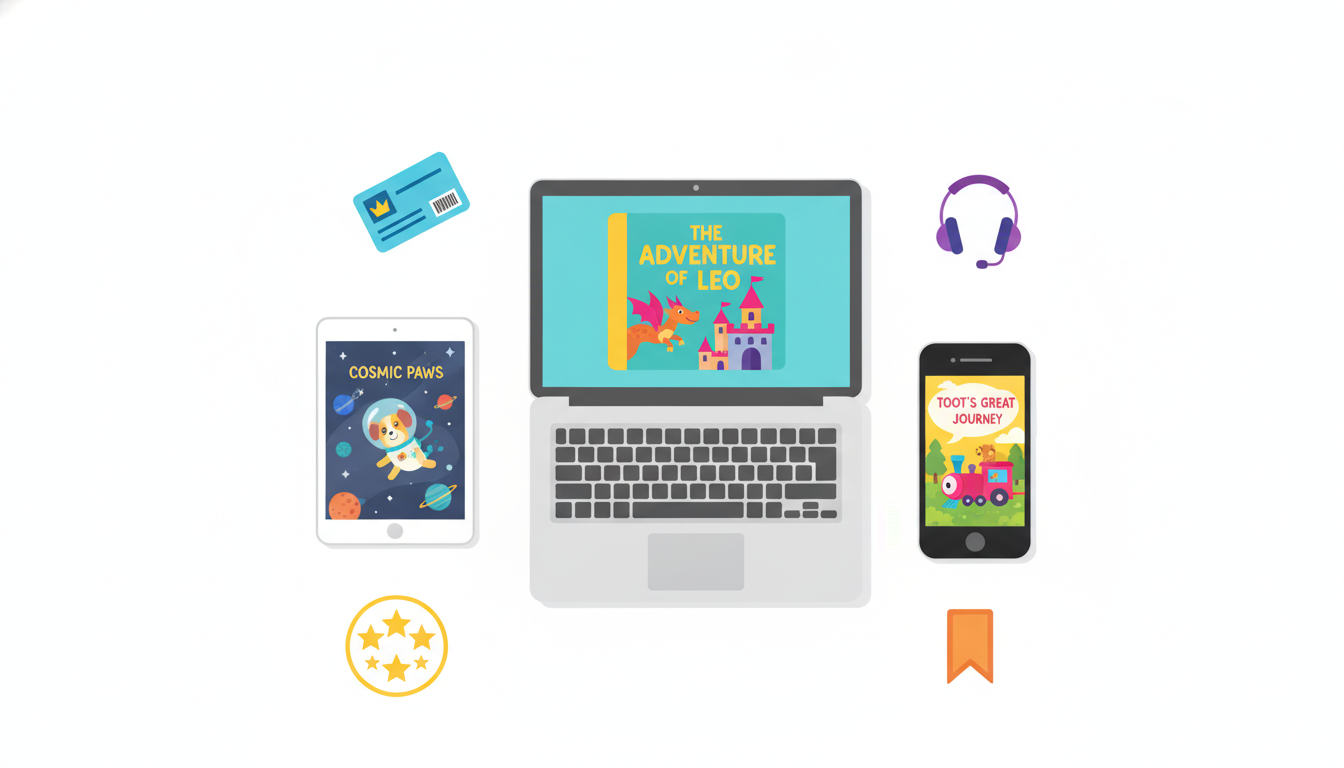
Here are the sources we recommend bookmarking tonight. Each one is genuinely free in at least one of the ways described above, and each has been tested by real families.
- Project Gutenberg (gutenberg.org) hosts more than 79,000 free e-books, including The Wonderful Wizard of Oz, many of Beatrix Potter's tales, and both original A. A. Milne Pooh books — Winnie-the-Pooh and The House at Pooh Corner — all legally free and available in multiple formats including PDF and EPUB. No account required.
- Open Library (openlibrary.org), run by the Internet Archive, lends digital scans of physical books with a free account and no late fees. Set your expectations correctly, though: after the publishers' lawsuit against the Internet Archive was upheld on appeal in September 2024, more than 500,000 titles were withdrawn from lending, and the Archive agreed not to lend books from major publishers that are already sold as ebooks. That covers most current children's series. Open Library is still excellent for older, out-of-print and public-domain titles — it is no longer where you go for this year's bestsellers.
- Storyline Online (storylineonline.net) features celebrity actors reading picture books aloud on video. It's a fantastic option for preschool and early elementary children who love being read to and benefit from hearing fluent, expressive reading modeled by enthusiastic readers. Completely free, no account needed. For a deeper look at the best read-aloud resources available, see our guide to free read-aloud books online.
- ManyBooks (manybooks.net) and Standard Ebooks (standardebooks.org) offer curated, beautifully formatted free classics that are easier to read on screens than raw Project Gutenberg files — great for older elementary readers who are ready for longer chapter books.
- ReadWorks (readworks.org) is a nonprofit providing free nonfiction and fiction passages organized by grade level. You need a free parent account to get in, but nothing is charged. It is particularly useful for parents who want to supplement school reading or find content tied to topics their child is curious about.
- Your local public library's digital portal is often the single most underused free resource available to families. Log in with your library card number to access Libby, hoopla, or your library's own e-book platform and you may find thousands of current, popular children's titles waiting for your child tonight.
Is it actually free? Every site in this guide, checked
I checked each of these against the operator's own pages in August 2026. The column that matters is the last one — plenty of "free" children's book sites are free right up until the card form.
| Site | What you get | Account needed? | Actually free? |
|---|---|---|---|
| Storyberries storyberries.com | 1,700+ bedtime stories, fairy tales and short stories | No | Yes |
| Free Children's Stories freechildrenstories.com | Original stories sorted by age, up to age 10+ | No | Yes |
| Unite for Literacy uniteforliteracy.com | 600+ picture books, narrated in 50+ languages, no ads | No | Yes |
| Free Kids Books freekidsbooks.org | Picture books to young adult, ages 2–13+, read or download | No | Yes |
| Project Gutenberg gutenberg.org | 79,000+ public-domain e-books, multiple formats | No | Yes |
| Library of Congress loc.gov "Free to Use" | Scanned classic children's books, free to reuse | No | Yes |
| Storynory storynory.com | Free audio stories with the text alongside | No | Yes |
| Let's Read letsreadasia.org | The Asia Foundation's library — 50 Asian languages plus English | No | Yes |
| StoryWeaver storyweaver.org.in | Pratham Books' library, hundreds of languages | Only to download | Yes |
| Oxford Owl for Home oxfordowl.co.uk | Free eBook library for ages 3–11 | Yes, free | Yes |
| ReadWorks readworks.org | Leveled fiction and nonfiction passages, K–12 | Yes, free | Yes |
| Open Library openlibrary.org | Borrowed scans — strongest on older and out-of-print titles | Yes, free | Yes |
| Libby / hoopla via your library | Current, popular children's titles, including audiobooks | Library card | Yes |
| Epic getepic.com | Big catalog; classrooms get it free on weekdays 7am–4pm. A home account opens only a small curated shelf | Yes | No — $13.99/mo or $84.99/yr for full family access |
| Vooks vooks.com | Animated read-alouds of picture books | Yes | No — 7-day trial, then $10.99/mo or $69.99/yr |
If you want somewhere to start that costs nothing and needs no sign-up at all, our own free stories library is open to read right now. And if your child is just starting out, the grade-by-grade guides go deeper than this page can: free books online for kindergarten is the best place to begin.
💡 Pro Tip
- Bookmark at least three different sources so you always have a backup when one platform's catalog doesn't have what you need.
- If your child is interested in personalized stories as a complement to free reading, custom storybooks can be a wonderful motivational tool — children who see their own name in a story are often more eager to read it.
Age Band Guide: Matching Book Format to Your Reader
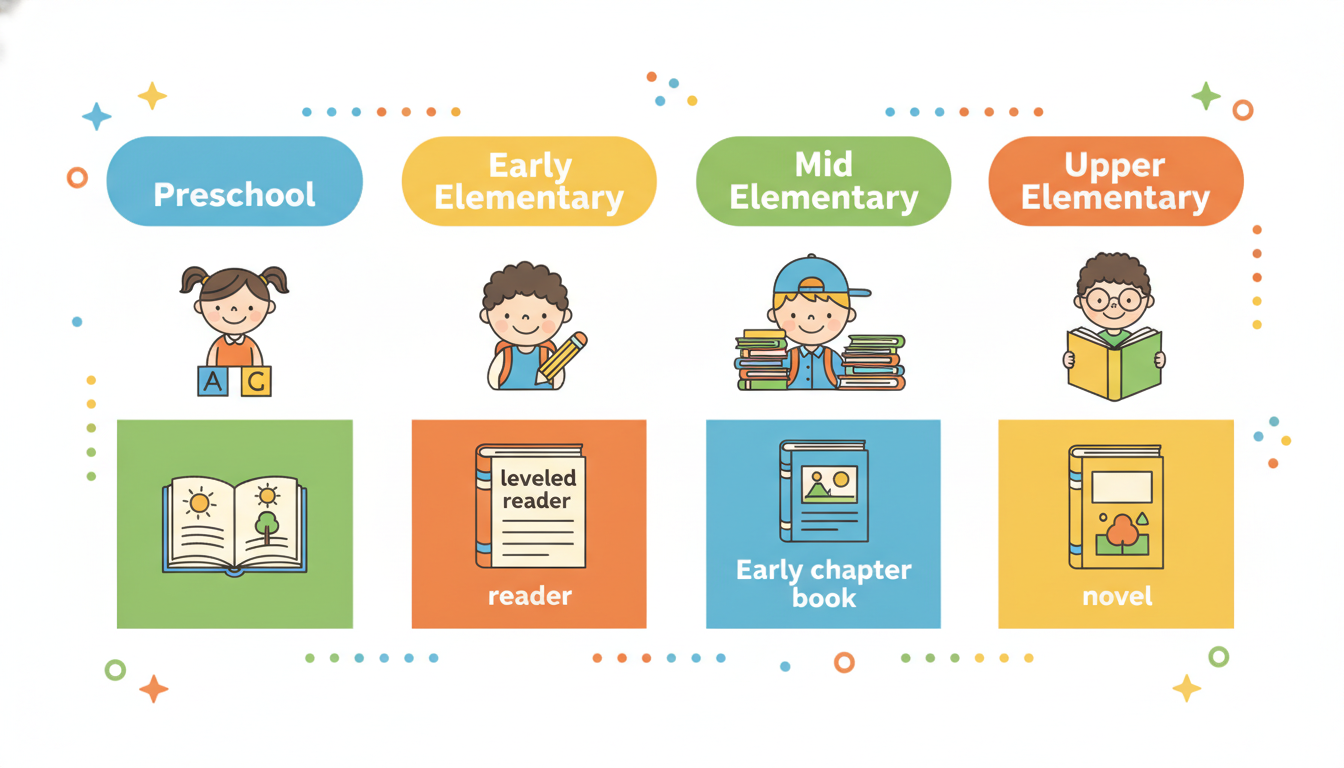
The right book format matters as much as the right book. A gorgeous picture book is perfect for a four-year-old but frustrating for a confident third-grader who wants a story that lasts more than five minutes. Here's a quick reference guide to help you match what you find online to where your child actually is as a reader.
| Age / Grade | Best Format | Where to Find It Free |
|---|---|---|
| Ages 3–5 (Preschool) | Interactive read-aloud videos, animated picture books, large bold illustrations with minimal text | Storyline Online, library YouTube channels, hoopla (with library card) |
| Ages 5–7 (K–Grade 1) | Decodable readers, leveled books with repetitive sentence patterns, simple sight-word stories | ReadWorks, Oxford Owl free tier, Open Library |
| Ages 7–9 (Grades 2–3) | Early chapter books, longer picture books with richer vocabulary, paired text + audiobook | hoopla and Libby (for current series like Magic Tree House), Open Library for older titles |
| Ages 9–11 (Grades 4–5) | Middle-grade novels, nonfiction chapter books, classic literature | Project Gutenberg, Standard Ebooks, Open Library, Libby |
| All Ages | Audiobooks as a complement — especially for reluctant readers or children with dyslexia | LibriVox (librivox.org), hoopla, library Libby app |
A Closer Look by Age Group
Preschool (ages 3–5): Shared reading where a parent reads aloud while the child follows along on screen builds print awareness and a love of story simultaneously. Look for read-aloud videos and animated picture books with large, bold illustrations. Storyline Online and YouTube channels from public libraries are ideal. For specific book recommendations at this age, our guide to books for 4-year-olds covers what actually works at this stage.
Early Kindergarten and First Grade (ages 5–7): Decodable readers and simple leveled books with repetitive sentence patterns are the sweet spot here. Children at this stage can begin to track words with their finger and feel the pride of reading independently. Our dedicated guide to free books online for 1st graders goes deep on the best resources for this exact age. Understanding which sight words your child should know can also help you choose books at the right level — our sight words for kindergarten guide is a practical companion.
Second and Third Grade (ages 7–9): Children at this stage are ready for early chapter books and longer picture books with richer vocabulary. Open Library's borrowing collection shines here. Audiobook versions paired with the text are especially powerful for building fluency. See our specific guides to free books for 2nd graders and free books for 3rd graders for curated lists by grade.
Fourth and Fifth Grade (ages 9–11): Confident readers in the upper elementary grades can take on middle-grade novels, nonfiction chapter books, and classic literature. Project Gutenberg and Standard Ebooks offer age-appropriate classics like Little Women, Treasure Island, and The Secret Garden. See our dedicated guide to free books for 4th and 5th graders for sources matched to this stage. Crucially, encourage children this age to choose their own titles — ownership over reading choices dramatically boosts motivation and stamina.
Audiobooks at every age: Free audiobooks through hoopla or the LibriVox app support children at every stage, especially reluctant readers or kids with dyslexia. Listening to a book while following along in the text combines the benefits of being read to with the visual decoding practice that builds reading skill over time. This is not a shortcut — it's a research-backed strategy.
Practical Tips for Making Free Online Reading Actually Stick
Finding free books is the easy part. Building the habit is where most families need a little support. Here are five strategies that actually work in real homes with real children.
- Create a dedicated reading time and space. Even free books go unread if reading isn't built into the daily routine. Pick a consistent 15–20 minute window — after school, before dinner, or as part of the bedtime routine — and make it a no-phone, no-interruption zone for the whole family. When reading has a predictable slot in the day, children stop resisting it and start expecting it.
- Let your child lead the genre choices. Children read more, and read more willingly, when they choose the subject matter. If your seven-year-old wants to read every free book about dinosaurs or space available on Open Library, let them. Nonfiction enthusiasm is just as valuable as fiction for building vocabulary and knowledge. The goal is volume, not literary prestige.
- Use the read-aloud feature strategically. Many e-book platforms include a text-to-speech or professional narration option. For beginning readers, turn it on so they can hear unfamiliar words pronounced correctly. For more advanced readers, try turning it off and having them read aloud to you — this builds fluency and gives you a natural window into where they might need extra support.
- Keep a simple reading log. A handwritten list on the fridge or a free printable reading tracker helps children see their progress accumulate, which is deeply motivating. Celebrate milestones — ten books read, twenty books read — with low-cost rewards like choosing the family movie night film or picking dinner one night. The ritual matters as much as the reward.
- Rotate sources regularly to keep things fresh. Bookmark three or four different free book sources and rotate between them so your child encounters different formats, genres, and reading experiences. Variety prevents the "same old thing" fatigue that can make even enthusiastic young readers lose interest over time. If you're looking for ways to make books feel special and gift-like, a book advent calendar is a wonderfully low-cost way to build anticipation around reading throughout the year.
Frequently Asked Questions About Free Children's Books Online
Are free online children's books safe for young kids?
Most reputable platforms — Storyline Online, Open Library, and library apps like Libby — are completely safe, ad-free, and do not collect children's personal data. Always check the privacy policy of any new site before use. For children under 13, look for platforms that are COPPA-compliant, meaning they follow strict federal rules about children's online privacy. When in doubt, public domain sites like Project Gutenberg and LibriVox require no account at all, which means zero data collection by default.
Do I need a library card to access most free books?
Not always. Public domain sites like Project Gutenberg and LibriVox require no account at all. However, a library card unlocks a dramatically larger and more current catalog through apps like Libby and hoopla — including many current bestsellers and popular series. If your child doesn't have one yet, signing up at your local library (often possible online in under five minutes) is absolutely worth the small effort. It's one of the best free resources in America that most families dramatically underuse.
What if my child resists reading on a screen?
This is very common, especially for children who associate screens with games or videos. Try starting with read-aloud video formats like Storyline Online, which feel more like watching a story than reading. You can also print free public domain books as PDFs and read them on paper — there's no rule that free digital books have to stay digital. Some children also respond well to e-ink readers like a Kindle, which look much more like a printed page than a glowing tablet screen.
Are there free audiobooks for kids too?
Yes — LibriVox offers thousands of free public domain audiobooks read by volunteers, and hoopla (free with a library card) has a large catalog of professionally narrated children's audiobooks including many current bestsellers. Audiobooks are a wonderful tool for car rides, quiet time, and supporting children who find decoding print difficult or tiring. Listening and reading along together is one of the most effective fluency-building strategies available to parents.
How do I find books at exactly my child's reading level?
ReadWorks and Oxford Owl both offer free leveled readers organized by grade and reading level. You can also use the "five finger rule" with any book: have your child read one page aloud and hold up a finger for each word they don't know. Zero to one fingers means the book may be too easy; four or five means it may be too hard; two to three is the sweet spot for independent reading growth. For a deeper understanding of how reading levels work developmentally, our guide to the stages of reading development is a helpful reference.
Are there good free educational storybooks, not just entertainment reads?
Absolutely. ReadWorks is particularly strong for nonfiction and curriculum-connected content. Open Library has a wide range of educational titles across science, history, and biography. If you're also interested in books that are specifically designed to teach while they entertain, our roundup of the 5 best educational storybooks for young children covers the top picks for 2026, including both free and low-cost options.
Putting It All Together: Your Free Reading Action Plan
Building a reading-rich home doesn't require a large budget, a perfect setup, or a child who already loves books. It requires consistency, a little variety, and the knowledge of where to look — which you now have.
Start simple: bookmark Storyline Online for your youngest child tonight, log into your library's Libby app with your card number, and save Project Gutenberg for the older readers in the house. Set a 15-minute reading window — even just before bed — and stick to it for two weeks. The habit builds faster than you'd expect, and the results compound in ways that will show up in your child's confidence, vocabulary, and love of learning for years to come.
And remember: free books are not a compromise. Many of the greatest children's stories ever written — the ones that shaped generations of readers — are available to your family right now, at no cost, on the device already sitting on your kitchen counter. The reading adventure is ready to begin. All you have to do is open the first page.
Start Your Child's Free Reading Adventure Tonight
You now have everything you need to build a rich, varied reading life for your child without spending a dollar. Pick one source from this guide, bookmark it tonight, and read together for 15 minutes before bed. That small habit, repeated consistently, is one of the greatest gifts you can give your growing reader.