Stages of Reading Development: What Every Parent Actually Needs to Know
Your child's teacher used a term you didn't recognize. Here's what it means, where your child sits right now, and what the road ahead looks like — in plain language, no jargon required.
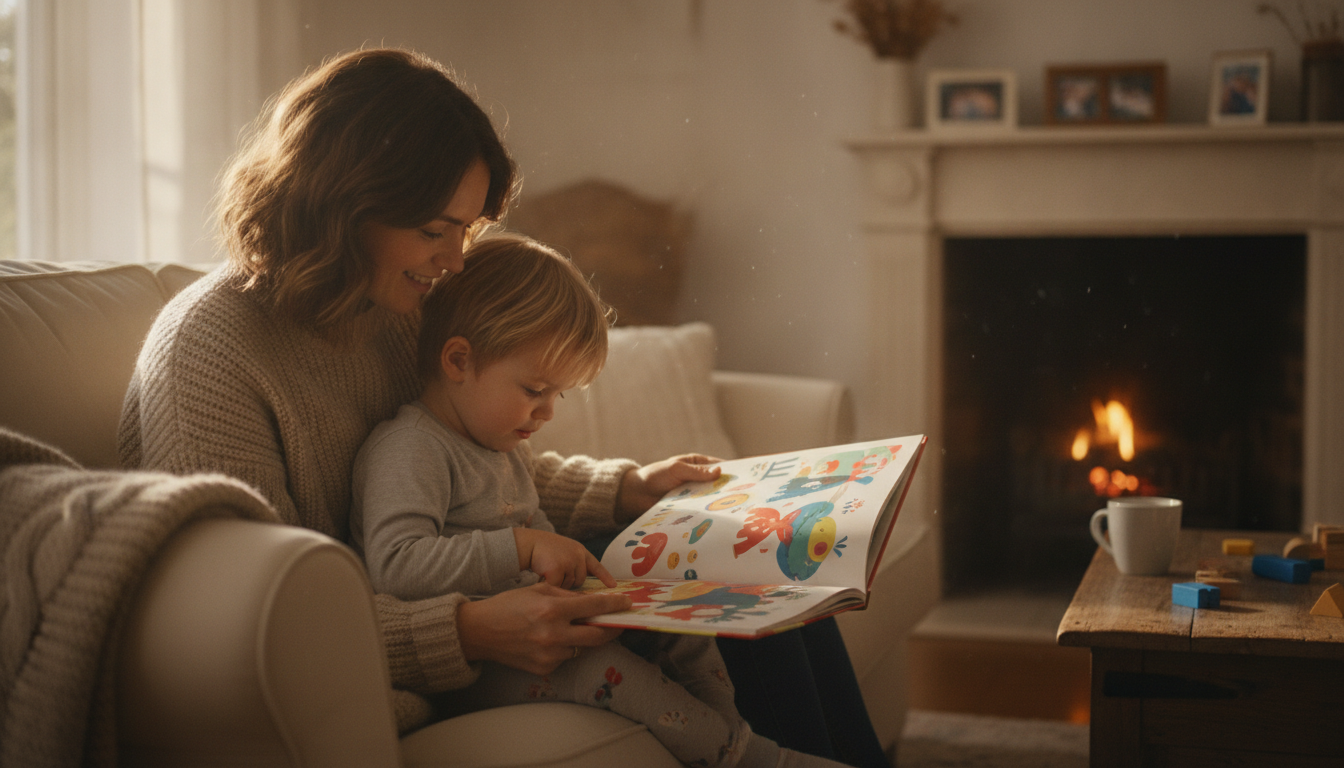
Why You'll Find Four, Five, or Six Stages Depending on Where You Look
If you've searched "stages of reading development" online, you've probably found pages that list four stages, others that list five, and still others that list six — and you may have wondered which one is correct. The honest answer is that researchers aren't disagreeing about the sequence of how reading develops; they're simply disagreeing about how finely to slice it, the way you could describe a road trip as having three legs or six stops depending on how detailed you want to be.
You may also have landed on pages with this same title that actually list the five components of reading instruction — phonemic awareness, phonics, fluency, vocabulary, and comprehension. Those are not stages at all. They're the skills teachers work on at various points in a child's education. Confusing the two is like mixing up the chapters of a book with the tools you use to read it. If you came here looking for a clear picture of your child's journey from non-reader to confident reader, you're in the right place.
What genuinely helps you as a parent is understanding the order and the visible signs at each point, not debating the count. The two models you're most likely to encounter — Jeanne Chall's six stages and Linnea Ehri's four phases — describe the same journey from different angles. Understanding both gives you a much clearer picture of where your child is right now, and what to expect next.
Jeanne Chall's Six Stages: The Full Arc from Birth to Adulthood
Jeanne Chall was a Harvard reading researcher whose stage model remains one of the most widely used frameworks in education. What makes it especially useful for parents is that it covers the entire lifespan of a reader, not just the early school years. Here's the full picture, laid out plainly.
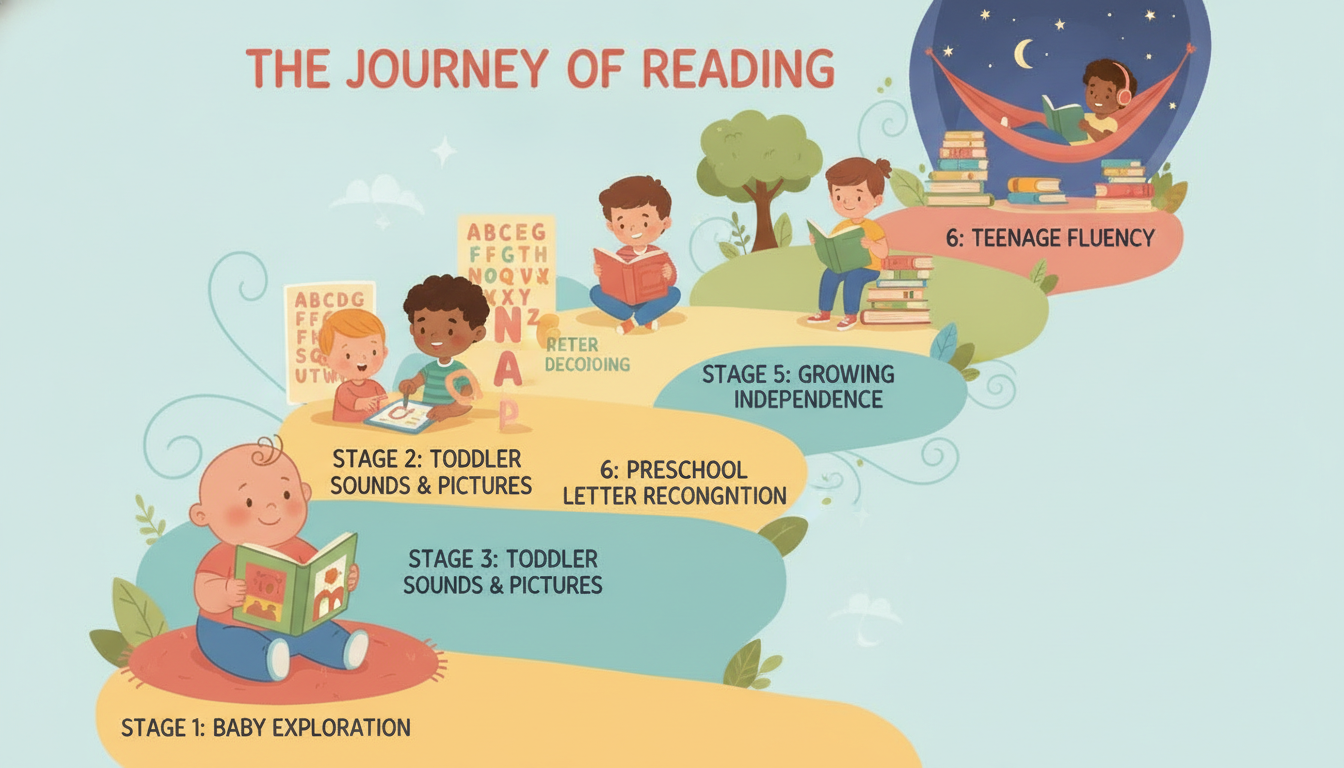
| Stage | Typical Age / Grade | What Your Child Is Visibly Doing |
|---|---|---|
| 0 Prereading | Birth to around age 6 | Pretends to read a favorite book from memory, recognizes some letters and familiar signs (a stop sign, a cereal box), loves playing with rhyme and the sounds of words. |
| 1 Initial Reading & Decoding | Grades 1–2, ages 6–7 | Sounds words out letter by letter, reading aloud is slow and effortful, may look exhausted after just a few minutes — this is completely normal. |
| 2 Confirmation & Fluency | Grades 2–3, ages 7–8 | Familiar text starts to flow more smoothly, stops sounding out every single word, reading begins to feel less like a workout and more like actual reading. |
| 3 Reading to Learn the New | Grades 4–8, ages 9–13 | Reading brings new information; vocabulary and background knowledge now determine how much a child gets out of a text, rather than decoding ability. |
| 4 Multiple Viewpoints | High school, ages 14–18 | Handles long, complex texts and sources that disagree with each other; begins to weigh perspectives critically. |
| 5 Construction & Reconstruction | College age and beyond | Reads selectively across many sources and builds one original understanding; reading and thinking become deeply integrated. |
The shift that surprises most parents happens between Stage 2 and Stage 3. Up to that point, the main question is whether your child can read. From Stage 3 onward, the question becomes what they understand from reading — and that's where vocabulary and background knowledge take over as the limiting factor. A child who has heard a lot of conversation, been read to widely, and experienced a variety of topics has a real advantage here, which is one reason why talking with your child matters enormously even after they can read independently.
Stages 4 and 5 matter for your older child, but if yours is still in the early years, the most useful thing you can do is understand Stages 0 through 3 deeply — because that's where the foundation is built.
Linnea Ehri's Phases: How Your Child Learns to Read Individual Words
Linnea Ehri is a reading researcher whose work focuses specifically on how children learn to recognize and decode words. Her four phases often come up in conversations with teachers — especially when they say things like "she's not decoding yet" or "he's reading by sight." While Chall's stages describe the full arc of a reader's life, Ehri's phases zoom in on the mechanics of how a child moves from seeing a word as a shape to reading it fluently. Both frameworks are describing the same child; they're just looking through different lenses.
Pre-Alphabetic
Words are recognized as shapes, not as sequences of letters. Your child might "read" a familiar logo correctly but won't notice if a letter is flipped or swapped — because they aren't yet connecting letters to sounds.
Partial Alphabetic
Some letters — usually the first and last — are being used to identify words. Your child might read a word correctly from its beginning and ending sounds but guess wrong on words that share those letters.
Full Alphabetic
Every letter is being mapped to its sound. Reading is slow and effortful. This is what teachers mean by "decoding," and it's a sign of real progress even when it looks laborious.
Consolidated Alphabetic
Familiar letter chunks — like -ing, -tion, or common word families — are recognized at a glance. This is the bridge between Chall's Stage 1 and Stage 2, and what allows fluency to develop.
If you want to understand more about what happens when decoding is in place but reading still sounds choppy, the post on reading fluency explains exactly why some children read every word correctly but still don't sound natural aloud — and what that means for where they are in the process. And if your child is just starting out and you're wondering whether they're ready to begin, the guide to reading readiness walks through the five pre-reading skills to look for.
Why Moving Between Stages Can Look Like Going Backwards
One of the most alarming things parents notice is that a child who was reading confidently from memory suddenly seems to get worse — slower, more hesitant, stopping at every word — and it can feel like something has gone wrong. It hasn't. What's actually happening is that your child has moved forward.
They've shifted from reading by memory and picture cues to actually decoding the words on the page. That's harder and slower at first, the same way learning to type properly feels slower than hunt-and-peck before it eventually gets faster. The child who sounds out painfully through a book they once "read" smoothly is building a skill that will eventually make them a far stronger reader than one who stayed in the comfortable memorization zone.
Apparent regression in reading is often a sign of real progress. The child who slows down to decode is doing harder cognitive work than the child who recites from memory — and that hard work is exactly what builds a lasting reading foundation.
You can help by staying calm and encouraging the effort rather than the speed. Saying "I love how carefully you worked that out" does more good than "you used to read this so easily." If you're genuinely concerned that your child seems stuck at the same point for a long stretch with no sign of movement, the right person to talk to is their classroom teacher or reading specialist, who can observe them in a learning context and give you specific guidance.
What You Can Do at Home at Each Early Stage
The research on this is consistent and clear: what you do at home matters, and it doesn't need to be complicated. Here's what's genuinely useful at each early stage.
At Stage 0: Build the Foundation
The single most powerful thing you can do is read aloud to your child every day — not to teach them to read but to build the vocabulary, background knowledge, and love of stories that will fuel everything that comes later. Talk about what you're reading, ask what they think will happen next, and let them hold the book. Play with rhyme, make up silly words, sing songs. None of this needs to feel like instruction — it just needs to happen regularly.
At Stage 1: Protect Their Confidence
When decoding is effortful and slow, your job is to protect your child's confidence. Let them sound things out without jumping in too quickly. Celebrate attempts rather than accuracy alone. Keep read-aloud time going so that reading stays pleasurable even when the independent work is hard. If your child finds a particular type of book irresistible — whether that's facts about animals or stories about superheroes — lean into it. Motivation matters enormously at this stage. You might also find it useful to look at sight words for kindergarten to understand how high-frequency words fit into this stage alongside decoding.
At Stage 2: Let Them Reread
When fluency is building, rereading familiar text is genuinely valuable. A child reading the same book three times is not being lazy — they're consolidating the word recognition that makes fluency possible. Keep favorite books within easy reach rather than always pushing for something new. You can also explore free books online to give your child a wider range of texts to return to without any cost.
At Stage 3 and Beyond: Talk About Everything
The most useful thing you can do at home is talk — about the news, how things work, history, nature, places you've been. Background knowledge and vocabulary are now what determine how much your child gets out of what they read, and conversation builds both. Across all stages, the habit of reading for pleasure — chosen freely, not assigned — is one of the strongest predictors of long-term reading growth, so creating space and time for it matters more than any particular activity or program. Stories that end on a clear lesson are useful here precisely because they invite disagreement — a child who argues with the moral of a fable is doing exactly the thinking you want, and our classic stories with morals are short enough to read and argue about in one sitting.
Key Takeaway
At every stage, your most powerful tools are: daily read-aloud, genuine conversation, and protecting your child's belief that reading is worth the effort. No special program required. For the youngest stages, dialogic reading is the practical version of "genuine conversation" — what to ask, and what to do with the answer.
How to Tell Your Child Has Moved to the Next Stage
Stage transitions aren't announced — they show up gradually in your child's behavior. Here are the signs to look for at each key shift.
- Stage 0 → Stage 1: Your child stops reading from memory and starts actually looking at the words. You'll notice them tracking with a finger, slowing down on unfamiliar text, and sometimes getting a memorized book wrong because they're now actually reading it.
- Stage 1 → Stage 2: Smoothness appears on familiar text. Your child stops sounding out words they've seen before, their reading aloud starts to sound more like talking, and they can get through a page without looking exhausted afterward.
- Stage 2 → Stage 3: Your child starts telling you things they learned from a book — not just recounting the story but sharing information. Reading has become a tool for acquiring knowledge rather than just a skill being practiced.
Keep in mind that every age range in this guide is a wide, overlapping window. The signs matter more than the timeline: focus on what your child is doing, not on whether they're doing it at the "right" age. If your child's school uses a reading level chart and you're not sure how it maps to any of this, the plain-English guide to reading level charts explains every system a US school is likely to use.
One Thing That Works Quietly at Home: A Story About Your Child
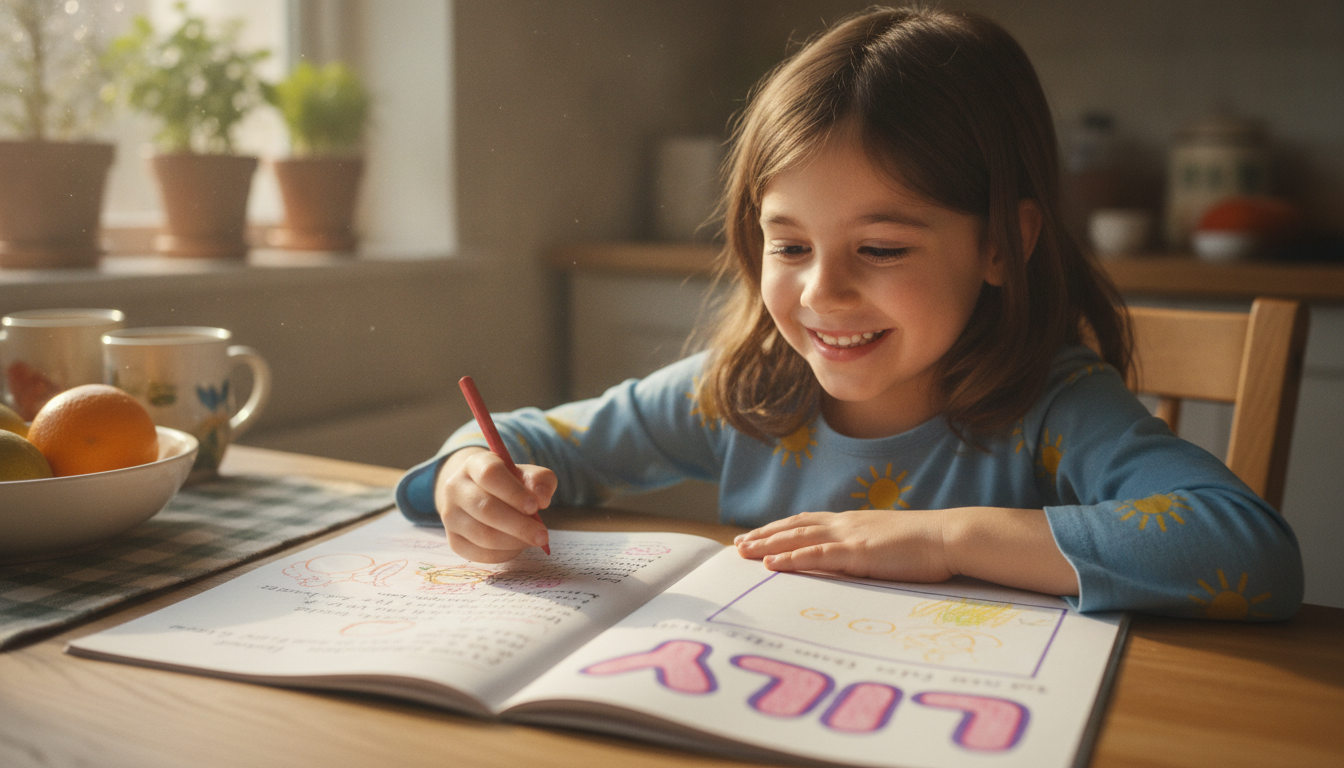
A personalized story starring your child gives a reader in the decoding and fluency stages a text they will reread by choice, and the rereading is the practice — the child who reads their own adventure story five times in a week is getting real reading repetitions without it feeling like work, while the text is being reading material rather than reading instruction and is no replacement for what school is teaching.
You don't need to be a writer to do this. A simple typed paragraph or two about something your child loves, with their name and their pet's name and their best friend's name in it, is enough to make a text feel irresistible to a child who would otherwise resist sitting down to read. Keep it short, keep it fun, and let your child illustrate it if they want — the ownership they feel over the story is part of what makes them want to return to it.
If you'd like to go further than a typed paragraph, LoveToRead makes personalized storybooks with your child as the main character — the same idea, done properly, and still reading material rather than a reading program. The guide to personalized story books for kids covers what makes them work and what to look for, and if your child is specifically in the kindergarten years, the roundup of personalized story books for kindergarten narrows it down to the options best suited to that age and stage.
Answers to Questions Parents Actually Ask
Q: My child's teacher called her an "emergent reader" — is that a problem?
No. Emergent reader is another term for Chall's Stage 0 or the early part of Stage 1, describing a child who is building the foundations of reading. It's a description of where she is, not a warning about where she's going. Most children who enter kindergarten are emergent readers, and that's exactly where they're supposed to be.
Q: My son isn't decoding yet and he's in first grade — should I be worried?
Decoding develops at different rates, and first grade is when most children are right in the middle of building this skill. If his teacher has raised a concern, follow up with them directly, since they can observe him in ways no guide can. If the teacher hasn't raised a concern, that itself is useful information.
Q: My daughter reads fluently but doesn't seem to understand what she's read — what stage is that?
This is a common pattern at the transition into Stage 3, where decoding is strong but comprehension hasn't caught up. Talking about books together, asking open questions ("What do you think that character was feeling?"), and building background knowledge through conversation all help. The gap usually closes as vocabulary grows.
Q: My child was reading ahead of grade level and now seems to have plateaued — is something wrong?
Plateaus are normal and often precede a jump. The move from fluency into reading-to-learn requires new skills to develop — particularly vocabulary and the ability to hold and process longer texts. A child who seems stuck is often consolidating before the next leap. Keep reading together and keep talking.
Q: How do I know if my child needs extra help?
The person best placed to answer that is your child's teacher, who sees them reading in a structured environment every day and can tell you specifically what they're working on and what support might help. If you're not sure how to start that conversation, you can ask: "Where does my child sit in their reading development, and what's the next skill they're working on?"
The Whole Picture, Briefly
Reading development follows a predictable sequence that researchers have mapped in detail — from the very first time a baby reaches for a board book to the moment a college student synthesizes a semester's worth of reading into an original argument. The number of stages you'll see listed varies, but the order never does.
For your child right now, the most important things to hold onto are these: the signs of progress matter more than the timeline, apparent setbacks are often genuine advances in disguise, and the daily habits of reading aloud together and talking about the world are doing more than they look like they're doing. You don't need to become a reading specialist to support your child well. You just need to know the road well enough to recognize where they are on it — and now you do.
You Know More Than You Did an Hour Ago — Use It
Now that you can picture the full arc from pretend-reading to reading-to-learn, you're better placed to have a real conversation with your child's teacher, to notice the signs of progress at home, and to support your child through each stage with confidence. The order is the same for every child. The timeline is their own.




4 Comments
Comments are closed.