Free Books Online for 3rd Graders: What Actually Works Tonight
Third grade is the year reading gets harder to find — here's your honest, no-fluff guide to the best free resources available right now.
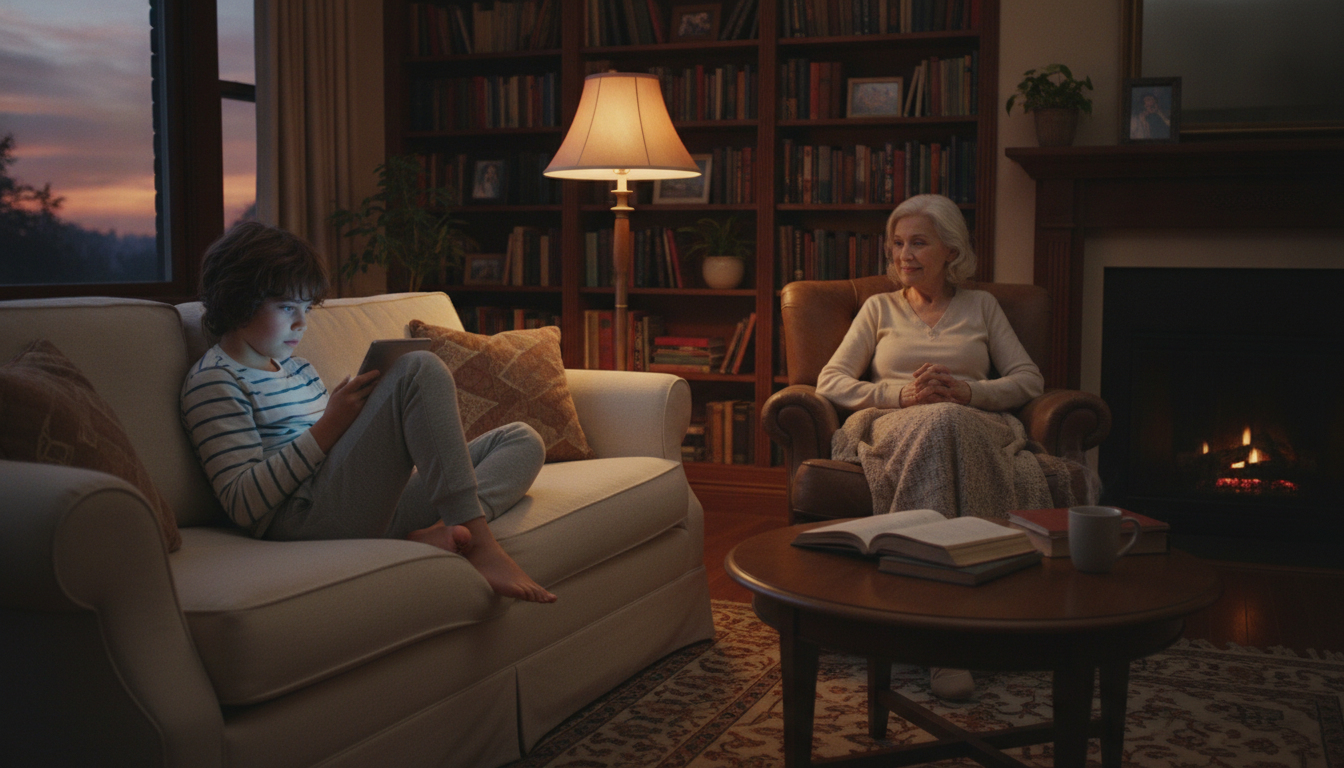
Why Third Grade Is the Trickiest Reading Level to Shop For
If you've been searching for free books online for 3rd graders tonight and coming up empty, you're not imagining things. Third grade is genuinely the hardest level to find free online reading for — and there's a structural reason for that.
Third grade marks the critical shift from learning to read to reading to learn. Children move away from picture books toward chapter books and longer nonfiction. But most free reading sites were built for the earlier stage — the phonics-and-picture-book years — and they simply run out of useful content right when a third grader needs it most. The well goes dry at exactly the wrong moment, and it happens again a year later — which is why we keep a separate guide to free books for 4th and 5th graders.
Picture book sites feel too babyish for an 8-year-old who wants a real story with chapters. But full chapter book libraries — the kind that stock the titles your child actually wants to read — tend to sit behind paywalls. That leaves parents searching in frustration on a Tuesday night when homework is done and screen time is happening anyway.
A third grader reading at grade level is typically working through books like the Magic Tree House series or early Roald Dahl. Those titles cost money almost everywhere online — unless you know exactly where to look.
This guide was written for the parent or grandparent who needs something usable tonight. Not a curriculum plan. Not a classroom resource list. Just an honest answer to where the free books actually are, what's truly free versus what requires a paid account, and which resources are actually worth your child's time at this specific reading level.
If you have a younger child at home too, you might find our guide to free books online for 1st graders useful alongside this one — the free options at that level look quite different.
The Nine Best Free Reading Resources for Third Graders — Honestly Assessed
Here is a plain-language breakdown of every resource worth your time, with a clear statement about what it actually costs, who it's best for, and where it falls short for a third grader specifically.
1. Storyline Online Free — No Account
storylineonline.net — Professional actors read picture books aloud on video. Completely free, no account needed, no hidden tiers. The production quality is genuinely wonderful — this isn't a parent reading into a microphone, it's a polished video experience. The books skew toward picture-book level, which means it works best as a supplement for a strong third-grade reader rather than a main reading source. That said, for reluctant readers or as a cozy wind-down activity before bed, it's hard to beat.
2. Project Gutenberg Free — No Account
gutenberg.org — Thousands of public-domain classics, completely free, no account required. The catalog includes older adventure stories, fairy tales and classic children's novels published before the 1930s. The honest caveat: the language in many books is formal and dated, which some kids find dry and off-putting. This works best for kids who are already enthusiastic readers and can handle older prose styles. If your child picks up a book and says "this sounds weird," Gutenberg may not be the right fit tonight.
3. Open Library (Internet Archive) Free — Account Required
openlibrary.org — Free to borrow, but requires a free account to check books out. The catalog is enormous, but set your expectations correctly: after publishers won Hachette v. Internet Archive on appeal in September 2024, more than 500,000 titles were pulled from lending, and the Archive no longer lends in-copyright books that are already sold as ebooks. That rules out most current series. Borrow limits apply just like a real library, so popular books may have a wait. It is still one of the most underrated options on this list for third graders, because the older and out-of-print titles it does carry are often exactly the ones your branch no longer shelves. Worth the five minutes it takes to create a free account.
4. Unite for Literacy Free — No Account
uniteforliteracy.com — Free picture books with audio narration, available in many languages. No account needed. A strong pick for bilingual families or English language learners. The reading level skews younger than third grade, so it's better suited as a confidence-builder, or as a way to read to a younger sibling together, rather than a primary reading source for an 8-year-old reading at grade level.
5. Starfall Free Tier Paid Tier
starfall.com — Has both a free tier and a paid tier. The free content is strongest for phonics and early readers — kindergarten through early second grade. A third grader reading at grade level will likely find the free section too easy. The paid tier expands the content significantly, but the free version alone is not enough for most third graders. Worth knowing about if your child is reading below grade level and needs phonics reinforcement.
6. ReadWorks Free — Account Required
readworks.org — Free, but you need a free account to open the passages. Built primarily for classrooms, but the nonfiction reading passages with comprehension questions are genuinely excellent and work well at home too. Best for kids who like learning about animals, science, and history. The format feels a little school-like, which some kids resist on a weekend — but the content quality is high and the reading level range covers third grade well.
7. Epic Paid for Home Use
getepic.com — This one needs a plain, direct statement, because parents are frequently misled about it. Epic is free only for teachers, during school hours. If your child's teacher has given your child an Epic login, that access may stop working in the evenings or on weekends. For families reading at home, Epic requires a paid subscription. It is a good service with a large, well-organized library — but it is not free for home use, and it should not appear on any honest list of free resources for families without that clarification.
8. Oxford Owl Free — Account Required
oxfordowl.co.uk — Free with a signup for a free account. Strong leveled ebook library with a solid range of reading levels that includes genuine third-grade material. The books have a British English flavor — "color" instead of "color," that sort of thing — which is a minor quirk but not a problem. This is a genuinely useful and underused option for parents who take five minutes to create a free account. Well worth it.
9. Libby (with a Library Card) Free — Library Card Required
libbyapp.com — Free with a library card from your local public library. This is the single most powerful option on this list and the most underused. Libby gives access to your library's full digital collection, which often includes current bestselling chapter books, audiobooks, and graphic novels. If your child has a library card — or if you can get one online tonight, which is possible in many cities — Libby should be your first stop, not your last. The catalog dwarfs every other option here.
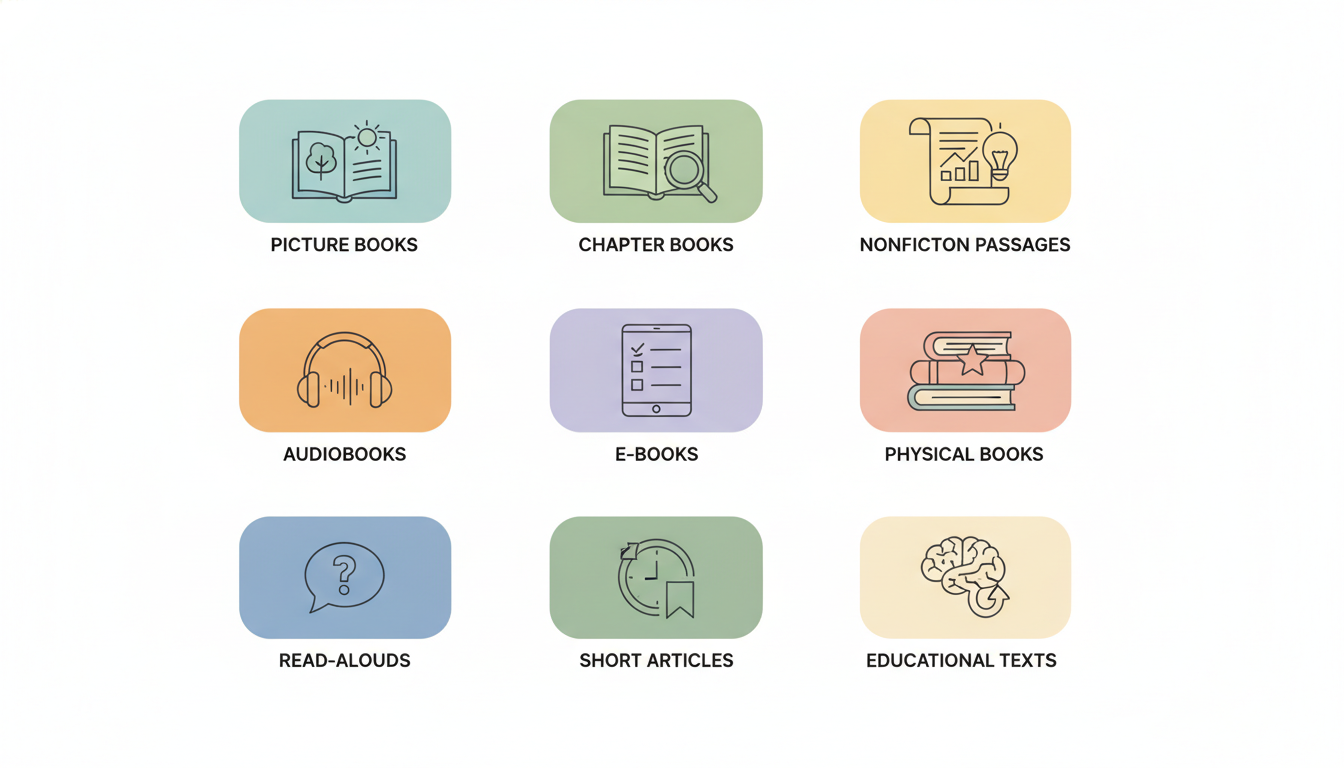
Quick Comparison: All Nine Resources at a Glance
Use this table to find the right fit in under a minute. Scan the "Best For" column to match your child's situation.
| Resource | Cost | Reading Level | Best For |
|---|---|---|---|
| Storyline Online | Free, no account | K–2 picture books | Reluctant readers, bedtime wind-down |
| Project Gutenberg | Free, no account | Varies; many suit grades 3–5 | Enthusiastic readers comfortable with older language |
| Open Library | Free, free account required | Older and out-of-print titles; not current series | Classics and backlist chapter books |
| Unite for Literacy | Free, no account | K–2 picture books | Bilingual families, English language learners |
| Starfall | Free tier; paid tier for full access | Free content is K–2 | Third graders reading below grade level needing phonics |
| ReadWorks | Free, free account required | Grades 1–12; strong at grades 2–5 | Kids who enjoy nonfiction, animals, science, history |
| Epic | Free for teachers only; paid for home use | All levels | Families willing to pay for a large digital library |
| Oxford Owl | Free, free account required | Strong range including grade 3 | Parents who want leveled ebooks with clear progression |
| Libby | Free with library card | Full library catalog, all levels | Every third grader — start here first |
Bottom Line
If you only do one thing tonight: go to libbyapp.com, check whether your library lets you sign up for a card online, and download the app. It's free, it's enormous, and it has the books your third grader actually wants to read.
How to Know If a Book Is the Right Level for Your Third Grader
Finding a free book is only half the challenge. Handing a child a book that's too hard leads to frustration and abandonment. Too easy, and they're bored before the second chapter. Here's how to check in under two minutes.
The Five-Finger Rule
Open the book to any random page and have your child read it aloud. Every time they stumble on a word they don't know, hold up one finger. If you reach five fingers before the end of the page, the book is probably too hard for independent reading right now — though it might be perfect to read together. Zero or one fingers means the book is comfortable, which is fine for pleasure reading even if it feels easy.
Lexile scores give a more precise picture. A typical third grader reads somewhere in the range of 420L to 820L, though that range is wide because third grade covers a full year of growth and kids vary enormously. You can look up the Lexile score of almost any book at Lexile.com for free. If a book's score falls in that range, it's likely a reasonable match — but the five-finger rule is still a better real-world test, because Lexile doesn't measure how interesting a book is to a specific child. For a fuller explanation of how reading level systems work, this plain-English guide to reading level charts is worth bookmarking.
Understanding where your child sits within their developmental stage can also help you set realistic expectations. The stages of reading development are well-documented, and third grade sits at a genuinely pivotal transition point — which is exactly why this level is harder to find free resources for.
Reading level is not a ceiling. A child who loves dragons might successfully tackle a book that scores above their Lexile range simply because they care about the topic and push through. Interest is a more powerful motivator than level, and a slightly challenging book a child loves will do more for their reading growth than a perfectly leveled book they find boring.
If your child is reading below grade level, the goal for tonight is not to find a grade-level book — it is to find a book they will actually finish. A shorter, easier book completed with enjoyment does more good than a grade-level book abandoned after two pages.
What to Do When Your Third Grader Says Reading Is Boring
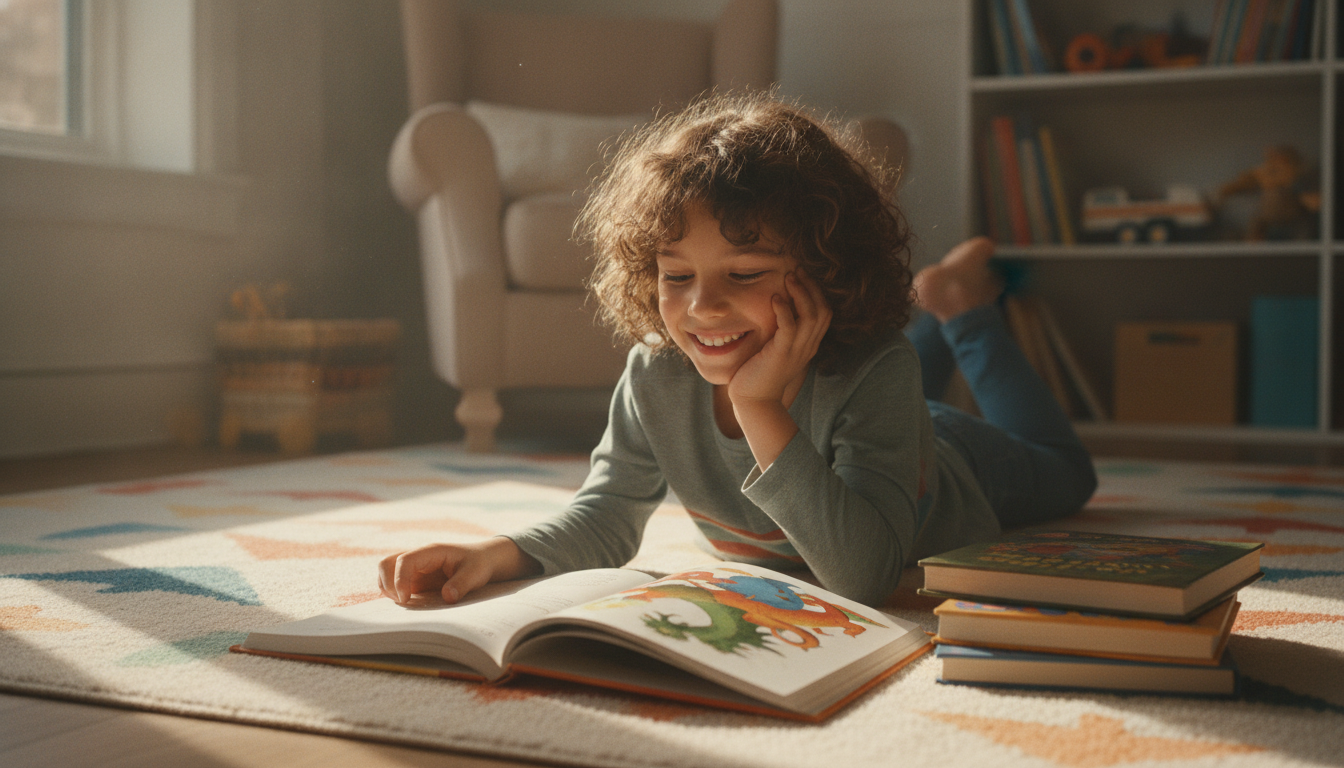
"Reading is boring" almost never means reading itself is boring. It usually means the specific books this child has been handed are boring to this specific child. Here are concrete tactics — not platitudes.
Let Them Pick the Topic, Not the Level
Ask what your child is curious about — sharks, video games, soccer, space, horses, gross science facts — and find books on that subject. Nonfiction on a loved topic is often the entry point that turns a reluctant reader into an enthusiastic one. ReadWorks, listed above, is particularly strong here because it covers a wide range of high-interest nonfiction topics at adjustable reading levels.
Try Audiobooks Alongside the Text
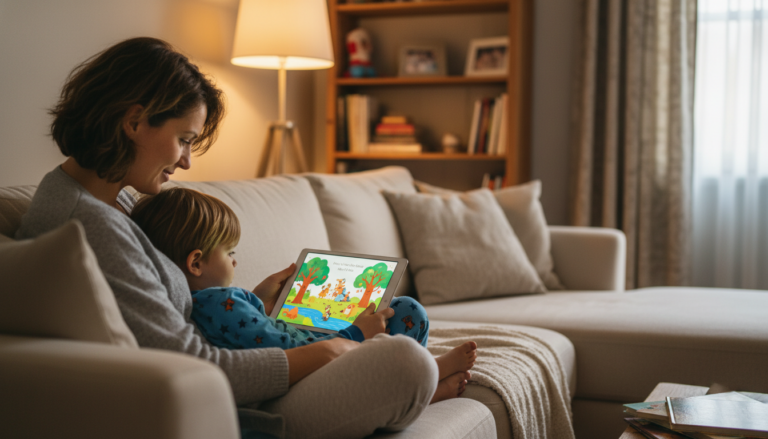
Listening to a book while following along on the page is a legitimate reading activity, not cheating. Many kids who struggle with decoding find that hearing a skilled narrator makes the story come alive, and they start reading ahead on the page because they want to know what happens next. Libby has a strong audiobook collection included with your library card, and the app lets you sync audio with the ebook text.
Read Aloud Together — Even for Older Kids
There is a common assumption that once a child can read independently, reading aloud together is no longer necessary. This is wrong. A parent reading a chapter aloud while a child follows along — or just listens — builds vocabulary, models fluency, and keeps the emotional connection to stories alive. It also works on nights when a child is too tired to read but not ready to sleep.
Give Reading a Different Physical Setting
Sometimes "reading is boring" means "reading at my desk after school is boring." Try a blanket fort, the backyard, a flashlight under the covers, or reading in the car. The novelty of a different location can reset a child's attitude toward the activity itself. The book doesn't change, but the experience does.
Try a Book Where the Child Sees Themselves
Personalized stories — where the child is the main character — can spark genuine interest in a reluctant reader. LoveToRead is one option for creating a personalized story of this kind. Beyond personalization, look for books with protagonists who share your child's background, interests, or sense of humor. Representation and relevance matter enormously to whether a child keeps turning pages.
Frequently Asked Questions
Are free online books as good as print books for a child's reading development?
The honest answer is: it depends on the child and the reading experience. A child who reads enthusiastically on a tablet is doing more for their reading skills than a child who stares at a print book without engaging. That said, many children find it easier to focus on print, and scrolling interfaces can fragment attention. If your child reads well on screens, online books are absolutely worthwhile. If they seem distracted, a print book from the library is still the best tool. The format matters less than the engagement.
How much screen time is reasonable when the screen time is reading?
There is no universal number, and any specific figure would be made up. The more useful question is whether the reading session ends because time ran out or because the child finished and wanted more. A child absorbed in a chapter book on a tablet for 45 minutes is having a very different experience from a child passively scrolling. Quality of engagement matters more than minutes on a clock. If reading online is displacing sleep or physical activity, that is worth addressing — but reading itself is not the problem.
What should I do if my child is reading below grade level?
First, do not panic — reading development is uneven and many children who read below grade level in third grade catch up fully. Tonight, find a book at the level where your child reads comfortably and with enjoyment, not at the level the school expects. Consistent reading practice at a comfortable level builds fluency and confidence faster than struggling through harder material. If you have ongoing concerns, talk to your child's teacher about specific support strategies, and ask whether the school has access to reading specialists. Starfall and Storyline Online, listed above, are good starting points for a child who needs to build confidence before tackling longer material.
Putting It All Together
The free reading options for third graders are genuinely uneven — but it's not empty. The nine resources in this guide cover a real range of needs, from the reluctant reader who needs a warm, actor-narrated picture book at bedtime to the enthusiastic chapter-book reader who wants something current and engaging.
The three resources most worth your time at the third-grade level specifically are Libby (the most powerful, most underused option), Open Library (enormous catalog, free account), and Oxford Owl (genuinely leveled ebooks including grade 3 material). Start there. Add ReadWorks if your child likes nonfiction. Use Storyline Online for winding down at night. If you want the same check applied across every age band rather than just third grade, our guide to free children's books online covers fifteen sites.
And remember: the best book is the one your child actually reads. Level matters less than interest, and interest matters less than the habit of reaching for a book — or a screen with a book on it — when there's a free fifteen minutes. That habit, built consistently in third grade, is worth more than any single resource on this list.
Start Tonight: Open Libby, Get a Library Card, and Let Them Choose
You don't need a subscription or a curriculum plan. A free library card, the Libby app, and fifteen minutes of your time is enough to give a third grader access to hundreds of real books — tonight.
- Search your city's name + "library card online" to apply tonight
- Download the Libby app (free on iOS and Android)
- Let your child pick the first book — any topic, any level
- Sit with them for the first chapter if you can

One Comment
Comments are closed.