Halloween Stories for Preschoolers: How to Choose Spooky-Fun Without the Scary
A complete parent's guide to finding age-perfect Halloween tales that spark imagination, build excitement, and keep bedtime meltdowns far, far away — for children aged 2 to 7.
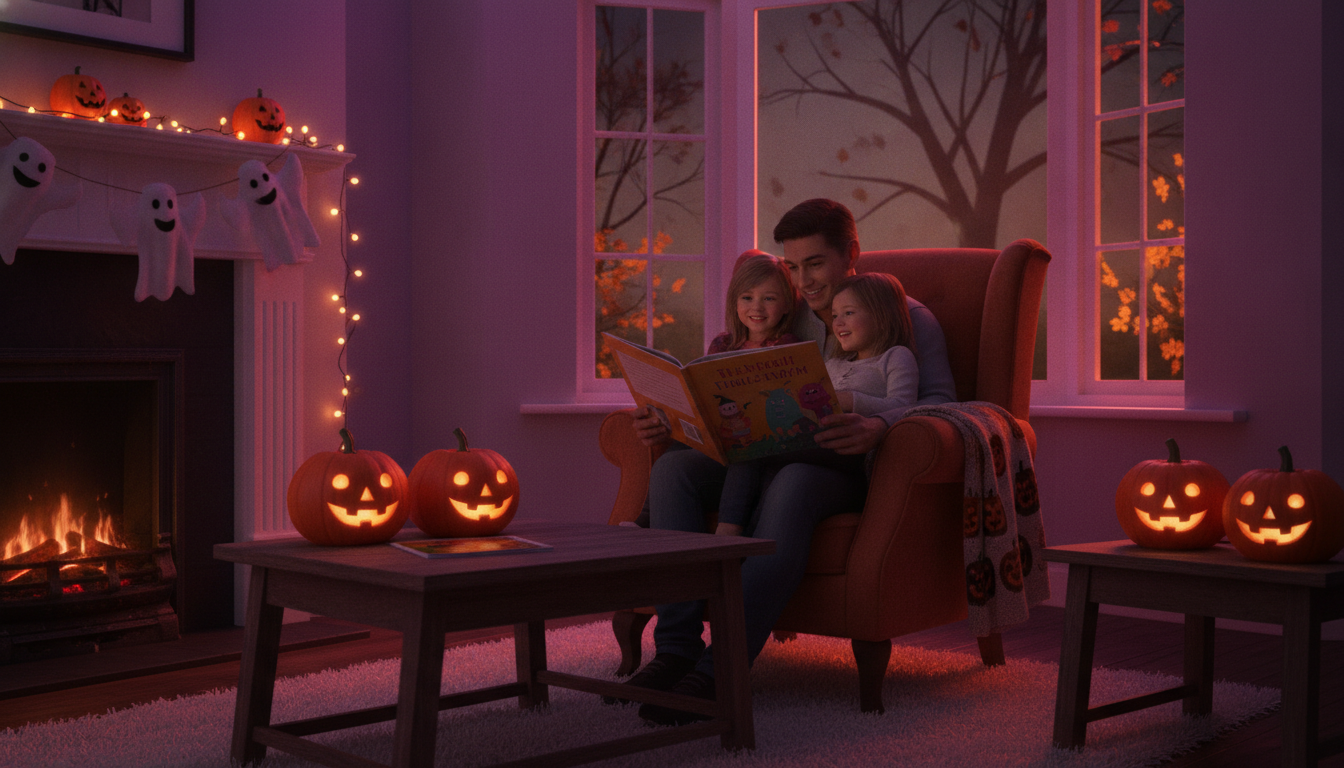
Halloween is one of the most magical times of year for young children — the costumes, the candy, the pumpkins glowing on every doorstep. And yet, for parents of toddlers and preschoolers, it can also be the season that produces the most bedtime tears. The wrong Halloween story, chosen with the best intentions, can turn October nights into a weeks-long battle with monsters under the bed.
The good news is that choosing the right Halloween stories for preschoolers is not complicated once you understand what's actually happening in your child's brain — and what kinds of stories hit that sweet spot between thrillingly spooky and genuinely safe. This guide covers everything: the developmental science, an age-by-age comparison, five gentle stories you can tell tonight without a single book, expert read-aloud tips, and answers to the questions parents ask most.
Why Halloween Stories Can Feel Too Big for Little Ones
Here is something that surprises many parents: young children are not being dramatic when a "harmless" Halloween story frightens them. Their brains are genuinely wired to respond more intensely to perceived threats than adult brains are. Understanding this changes everything about how you choose and read Halloween content.
Children between ages 2 and 7 are still developing the cognitive ability to distinguish fantasy from reality. A story villain or monster that an adult finds obviously fictional can feel genuinely threatening to a preschooler. The character in the book is not safely contained within the pages — it is real, and it might be coming.
The amygdala — the brain's fear-processing center — is highly active in early childhood, meaning emotional responses to frightening images or story events can be intense, long-lasting, and hard for children to self-regulate.
Halloween themes like death, darkness, jump scares, and grotesque imagery are common in mainstream content but are developmentally inappropriate for children under 7. The potential consequences — nightmares, sleep regression, new fears of the dark, or a lasting negative association with Halloween itself — are real and worth taking seriously.
The goal is not to avoid Halloween entirely. Quite the opposite. Halloween is a wonderful opportunity to build imagination, practice emotional bravery in a safe context, and create family traditions that children carry into adulthood. The goal is to find the sweet spot where a story feels excitingly spooky without crossing into genuine distress — and that balance looks very different at age 2 versus age 7.
Key Takeaway
Young children's brains are not equipped to process the same Halloween content as adults. Choosing age-appropriate stories is not about being overprotective — it's about matching the emotional experience to your child's developmental stage so Halloween stays magical, not traumatic.
Age-by-Age Guide: What Frightens Each Child and What Works Instead
One of the most useful things a parent can do is understand the specific fears that are developmentally typical at each age — because the story that delights a six-year-old can genuinely distress a three-year-old. The table below gives you a practical reference you can return to every Halloween season.
| Age | What Frightens Them | What Works Instead | Read-Aloud Length |
|---|---|---|---|
| Age 2 | Loud noises, sudden movements, unfamiliar faces or masks | Friendly pumpkins, cute little ghosts who say "boo" softly, animals in costumes | 3–5 minutes |
| Age 3 | Characters who are lost, separated from caregivers, or shown alone in the dark | A child or animal trick-or-treating with a loving parent, always returning home safely | 5–7 minutes |
| Age 4 | Villains, witches with mean intentions, stories with unresolved conflict | Clumsy or kind witch characters, silly monsters who lose their scary powers, clear happy endings | 7–8 minutes |
| Age 5 | Realistic danger, blood, or stories where a character is truly in peril | Mystery-style stories where a child detective solves a harmless Halloween puzzle | 8–10 minutes |
| Age 6 | Realistic horror imagery or themes of loss | Funny haunted house stories where ghosts are embarrassed, or a child outsmarts a bumbling monster | 10–12 minutes |
| Age 7 | Complex horror narratives; stories without positive resolution | Light mystery and mild peril with a brave protagonist, Halloween setting, and satisfying twist | 12–15 minutes |
Notice how the progression moves from purely familiar and cozy at age two toward mildly adventurous with narrative complexity by age seven. This is not arbitrary — it mirrors the development of emotional regulation, narrative comprehension, and the ability to hold two ideas simultaneously (e.g., "this is scary but I am safe"). Understanding your child's stage of reading development can help you calibrate not just what stories to choose, but how to read them together effectively.
How to Tell When a Halloween Story Is Too Scary for Your Child
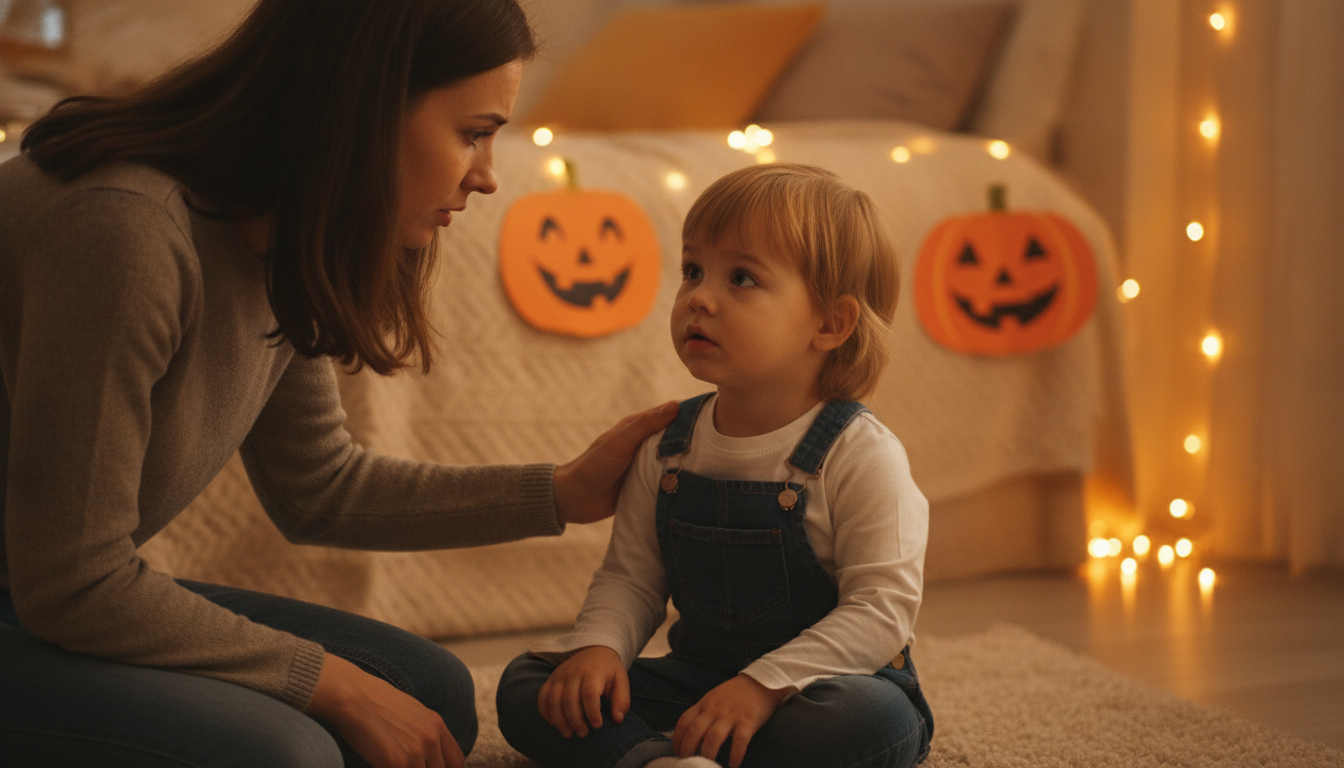
Even with the best preparation, you will sometimes start a story and realize partway through that it's not quite right for your child on this particular evening. Knowing the signals means you can respond quickly and calmly, before the story leaves a lasting impression.
Physical signals to watch for
Watch your child's body language during reading. If they pull their knees to their chest, hide their face, go very still, or ask you to stop, these are clear physical signals that the story has moved past exciting and into genuinely frightening territory. A child who was wriggling with delight two pages ago and is now completely motionless is telling you something important.
Verbal and breathing cues
Listen for a change in breathing or voice. Children who are scared often become very quiet, begin to breathe faster, or ask repeated questions like "Is the monster going to come here?" — questions that reveal they are no longer experiencing the story as fiction. When a child asks that question, they have crossed from imaginative engagement into genuine fear. Close the book.
What happens after the book closes
A story that was too scary will often follow a child into bedtime, showing up as reluctance to sleep alone, requests to check under the bed, or waking in the night. If you notice this pattern after introducing new Halloween content, make a note — and step back to gentler territory for a few nights. The dialogic reading approach, which encourages conversation during reading rather than straight-through recitation, can help you catch these signals earlier by keeping the emotional channel open throughout the story.
Changes in how they talk about Halloween
Pay attention to how your child talks about Halloween in the days following a scary story. If they express dread about trick-or-treating, refuse to wear their costume, or seem anxious about the holiday in general, a too-scary story may have shifted their emotional association with Halloween. This is reversible — but it requires a deliberate return to warm, positive Halloween experiences.
Parent's Rule of Thumb
Trust your instincts. You know your child's baseline sensitivity better than any rating system. It is always better to choose a story that feels slightly too gentle than one that leaves your child unsettled — you can always work up to more complex stories as confidence grows.
Five Gentle Halloween Stories You Can Tell Tonight — No Book Required
You do not need a published book to give your child a wonderful Halloween story. Oral storytelling is one of the oldest and most powerful forms of connection between parent and child — and it has the enormous advantage of being completely customizable in the moment. If your child looks nervous, you can soften the story. If they're giggling and asking for more, you can add another funny twist. Here are five story frameworks you can use tonight, each designed for specific ages and emotional needs.
🎃 The Pumpkin Who Wanted a Friend (Best for ages 2–4)
Tell the story of a small round pumpkin sitting alone on a porch who is worried no one will choose him — until a little child picks him because his lopsided smile looks just like theirs. This story explores belonging and self-acceptance wrapped in Halloween warmth. Children love hearing their own name inserted as the child in the story, making it immediately personal and safe.
👻 The Ghost Who Forgot How to Boo (Best for ages 3–5)
Imagine a tiny ghost named Pip who has lost his "boo" and must travel through a friendly neighborhood asking a cat, an owl, and a kind witch if they've seen it anywhere — only to discover his "boo" was hiding inside him all along, waiting until he felt brave enough. This story is perfect for children who feel shy or nervous about trick-or-treating, gently reframing bravery as something that grows from within.
🧙 The Witch's Backwards Spell (Best for ages 4–6)
A kind witch accidentally mixes up her spell ingredients and turns all the Halloween candy into vegetables — and must work with the neighborhood children to reverse the spell before midnight. This story is funny, collaborative, and gives children a sense of agency and problem-solving power. The witch is bumbling and warm, never threatening, and the resolution is always joyful.
🐶 The Monster Under the Bed Who Was Actually a Dog (Best for ages 4–7)
A child hears mysterious sounds under the bed on Halloween night and works up the courage to look — only to find that the family dog has dragged all the trick-or-treat candy under there to guard it. This story gently addresses one of the most common preschooler fears while resolving it with humor and a beloved pet. Adapt the animal to match your child's real pet for maximum delight.
🎵 Five Little Pumpkins Going on an Adventure (Best for ages 2–4)
Loosely inspired by the classic rhyme, tell an expanded story where five pumpkins roll off a fence and each one has a small adventure in a different part of the neighborhood before rolling back home just in time for Halloween. Children love counting stories, and the repetitive structure makes this one ideal for toddlers who love to predict what comes next and join in on repeated phrases.
These oral story frameworks work beautifully alongside the story retelling technique — after you tell the story, invite your child to tell it back to you in their own words. This doubles the literacy benefit and gives you a window into which parts of the story resonated most.
Read-Aloud Tips for Halloween Night: Making the Magic Last
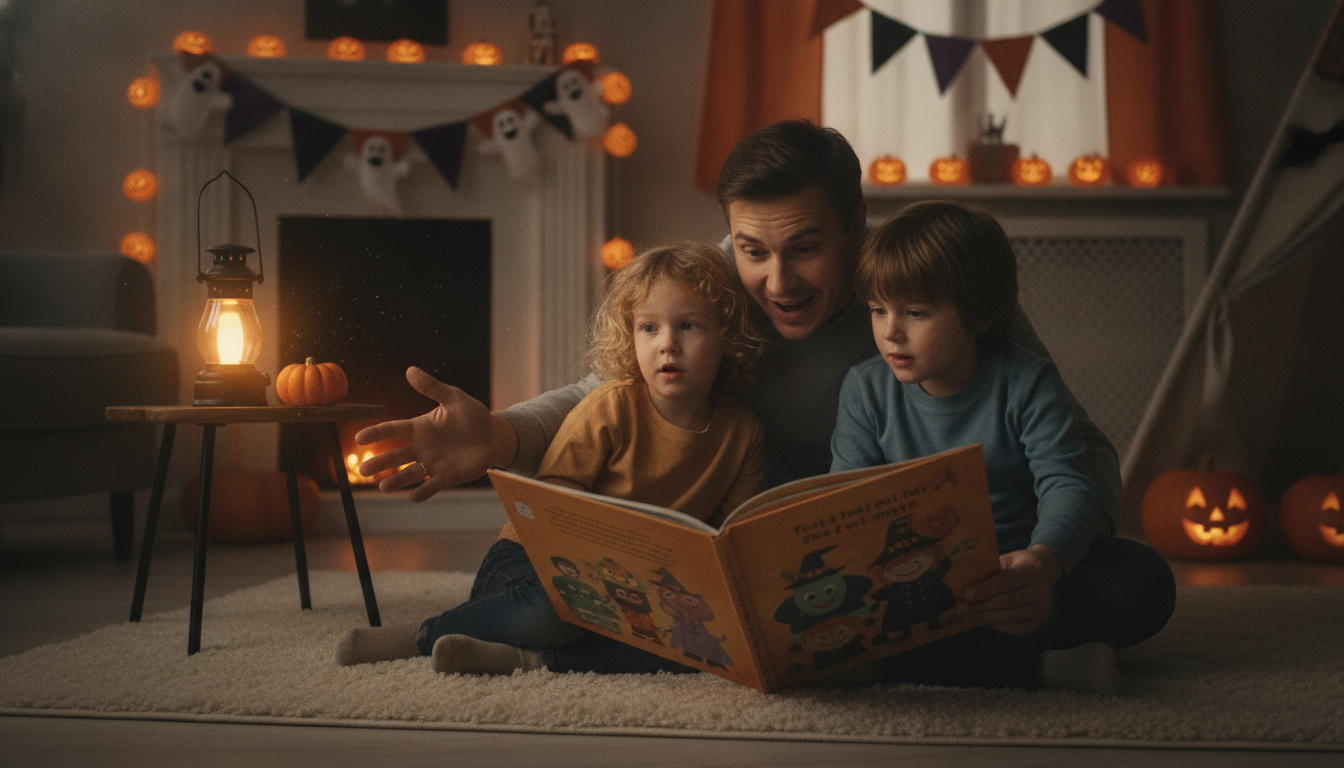
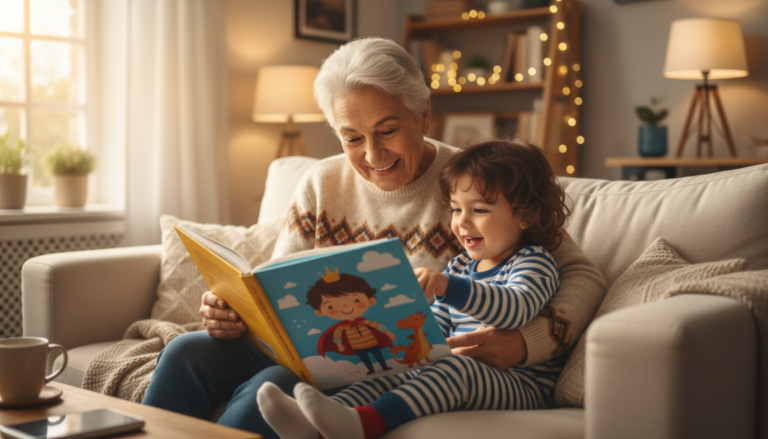
The story you choose matters — but so does how you tell it. The same Halloween book can be a cozy, magical experience or a mildly unsettling one depending entirely on the atmosphere, pacing, and emotional cues you bring to the read-aloud. Here are the techniques that make the biggest difference.
- Set the scene before you begin. Dim the lights slightly and use a small battery-powered lantern or LED candle to create a cozy, atmospheric glow. This creates a sense of occasion without any genuine darkness that might feel threatening to young children. The warm light signals: this is a safe, special moment.
- Use your voice as a storytelling instrument. Slow down for suspenseful moments, use a whisper for secrets, give each character a slightly different voice, and pause dramatically before a funny reveal. These vocal techniques transform even a simple story into a memorable performance that children will ask to repeat every year.
- Pause to ask open-ended questions. Questions like "What do you think the little ghost is feeling right now?" or "What would you do if you were the pumpkin?" keep children engaged and help them process the narrative emotionally. This approach — central to dialogic reading — builds emotional intelligence alongside reading enjoyment.
- Extend the story through play afterward. After the story ends, invite children to draw a scene, act out a character, or make up what happens next. This post-story play cements the positive emotional associations with Halloween and helps children feel creative ownership over the holiday.
- Time it thoughtfully for sensitive children. For children who are particularly sensitive, consider reading the Halloween story earlier in the evening rather than right before bed, so there is time for a calming wind-down routine afterward — a bath, a quiet non-Halloween story, and familiar bedtime rituals help signal to the nervous system that all is safe and well.
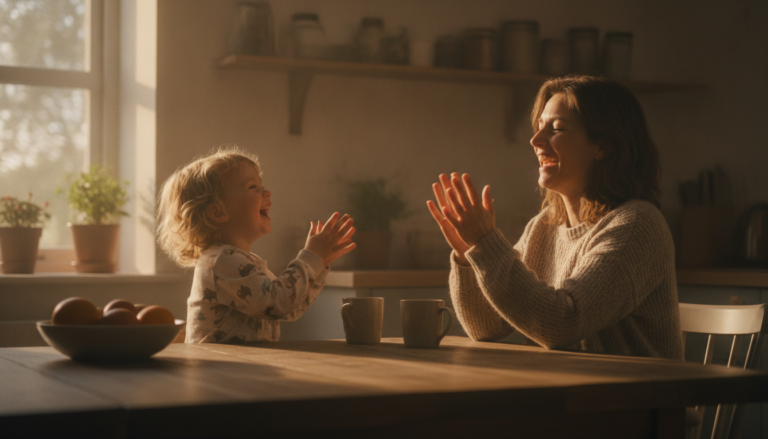
The most important thing you bring to a Halloween read-aloud is not the book — it's your calm, warm presence. A child who feels safe with you can handle a story that is a little bit spooky. A child who feels anxious cannot. You are the emotional container for the experience.
It's also worth noting that repeated readings of the same story significantly reduce fear responses in young children. The first time through a mildly spooky story, your child may be tense. By the fourth or fifth reading, they will likely be laughing at the parts that once worried them — because familiarity creates safety. Don't be discouraged if a new Halloween book takes a few readings to fully land.
How LoveToRead.ai Creates the Perfect Halloween Story for Your Child
If none of the stories above is quite the one, you can write your own. LoveToRead.ai's personalized storybooks put your child into the story by name: you describe them, pick a story angle, and the AI writes and illustrates the book in minutes.
That control matters more at Halloween than at most times of year, because the line between fun-spooky and too-spooky sits in a different place for every child. Writing the story yourself is how you set that line: you decide whether the ghost is friendly, whether anybody gets lost, and how the night ends.
You do not need any writing experience — the prompt is a sentence or two, and you can regenerate a page if an illustration is not what you pictured. And because every page is illustrated, the story does what a picture book does: it pairs the words with the images, which is the groundwork for early reading readiness.
Why Personalization Matters for Sensitive Children
Personalized stories have a significant advantage for sensitive children because they can be tailored to include only the elements a specific child finds comforting — their own name, their pet, their favorite color, their familiar home. This creates a psychological sense of safety that a generic published book cannot replicate. When a child hears their own name in a story, they are not watching events happen to someone else — they are the protagonist, and they are safe.
Stories generated on LoveToRead.ai can be saved, printed, or revisited year after year, meaning the personalized Halloween book you create this October can become a beloved annual tradition — one that grows with your child as you update the details each Halloween season. The AI illustration generator ensures each story is visually rich and engaging, giving early readers the picture-word connections that support emerging literacy skills.
Frequently Asked Questions About Halloween Stories for Preschoolers
At what age can children handle mildly scary Halloween stories?
Most child development experts suggest that children under 5 should stick to stories with no genuine threat or villain, while children aged 5 to 7 can begin to enjoy mild suspense and humor-based spookiness — as long as stories resolve happily and there is no realistic danger depicted. Individual temperament matters enormously; some four-year-olds are ready for gentle mystery, while some six-year-olds still prefer purely cozy Halloween content. Follow your child's lead rather than the number on their birthday cake.
My child loved Halloween stories last year but seems scared this year — is that normal?
Yes, completely. Fear development in young children is not linear; a child may become more sensitive between ages 4 and 5 as their imagination expands and they become more aware of the world around them. This is actually a sign of healthy cognitive development — their brain is becoming better at imagining consequences. Simply step back to gentler stories and let them lead the way back to spookier content when they feel ready. Never push through resistance.
How do I handle it if my child gets scared mid-story?
Close the book calmly and without drama. Reassure your child that it is just a story and that they are completely safe, and offer to switch to a familiar favorite book. Avoid pushing through a scary story — stopping immediately and validating their feelings teaches children that their emotional responses are respected and manageable. You might say: "That story got a bit too spooky, didn't it? Let's read your favorite one instead." Keep your tone light and matter-of-fact so the moment doesn't become bigger than it needs to be.
Can personalized AI stories really be better than published Halloween books for sensitive children?
For sensitive children specifically, personalized stories have a measurable advantage. Published books, however beautifully written, are designed for a broad audience and cannot account for your child's individual fears, family context, or comfort level. A personalized story that includes your child's name, their beloved stuffed animal, and their actual home address as the safe place the characters return to creates a level of psychological grounding that no generic book can match. That said, the two approaches complement each other beautifully — personalized stories for the most emotionally significant moments, published classics for everyday reading variety.
Halloween Magic Without the Nightmares
What to Remember
Halloween stories for preschoolers work best when they match your child's developmental stage — not just their age, but their temperament and how they are doing that particular week. The right story creates excitement, warmth, and a little delicious shiver of spookiness without crossing into genuine fear. Once the pumpkins are put away, the same age-by-age thinking applies to the rest of the fall calendar — the Diwali stories for kids arrive about a week later, and Thanksgiving activities for preschoolers covers what a three-, four- and five-year-old can each handle at the table.
Use the age-by-age table in this guide as a starting point. Watch your child's body language and behavior in the days after a new Halloween story. Trust your instincts when something doesn't feel right. And remember that your calm, warm presence during read-aloud time is the most powerful safety net of all.
Whether you tell a story from scratch tonight, pull a gentle classic from the shelf, or create a personalized Halloween adventure on LoveToRead.ai, the most important thing is this: Halloween should feel like magic, not dread. With the right story and the right approach, it absolutely can.
Looking to build your child's broader reading confidence this autumn? Explore our guides to phonological awareness and sight words for kindergarten — both of which pair beautifully with the kind of enthusiastic, joyful reading that Halloween stories inspire.
Create Your Child's Perfect Halloween Story Tonight
Why choose between spooky and safe when you can have both? LoveToRead.ai crafts personalized, age-perfect Halloween stories featuring your child's name, their favorite characters, and just the right amount of Halloween magic — gentle enough for a 2-year-old, exciting enough for a 7-year-old. Start your first story free and make this Halloween a bedtime tradition they'll ask for every year.
Create Your Free Halloween Story →


3 Comments
Comments are closed.