Your Child Can Read the Words — So Why Do They Stop After Five Minutes?
A warm, practical guide to building reading stamina at home, one short session at a time.
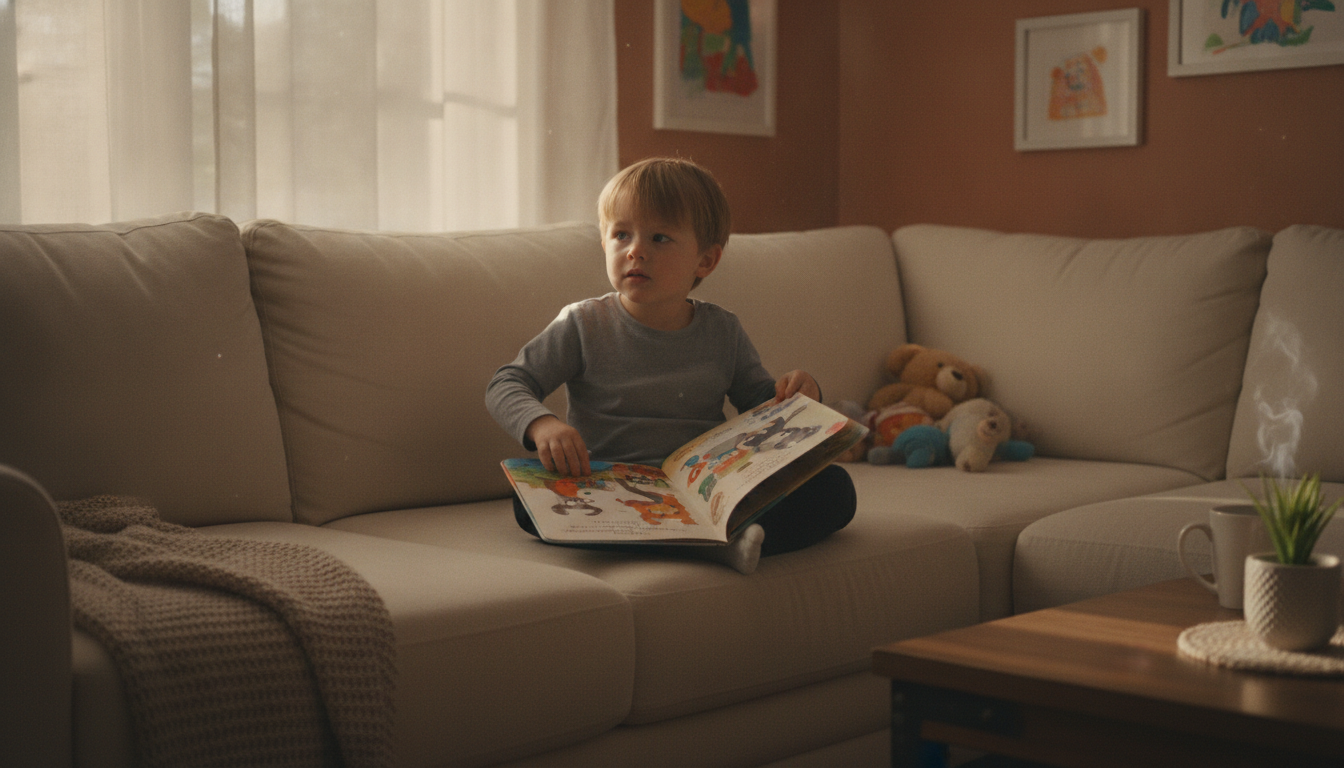
Picture the scene. Your child picks up their book, settles in, reads a page or two — and then the fidgeting starts. They adjust their position. They look out the window. They ask if it's nearly snack time. You remind them to keep reading. They read another sentence, then put the book face-down on the cushion and announce they're done.
And yet you've heard them read aloud. They can decode every word. They're not stumbling over the letters. So what's going on?
If their teacher has recently mentioned that your child needs to build reading stamina, you might have left that conversation feeling a little puzzled — or quietly worried. This guide is for you. It will explain exactly what reading stamina is, why it has nothing to do with how clever your child is, and how to build it at home in a way that's calm, practical, and genuinely effective.
What Reading Stamina Actually Is (And Why It Has Nothing to Do With How Smart Your Child Is)
Reading stamina is the ability to sustain focused, independent reading for a stretch of time without needing to stop, fidget, or seek distraction. It is a physical and mental endurance skill — not a measure of intelligence, and not a measure of reading ability either.
This is the part that surprises most parents: a child can decode every word on the page perfectly and still have very low reading stamina, because decoding and sustaining attention are two completely different skills that develop on separate timelines. Your child's teacher isn't saying your child can't read. They're saying the reading muscle needs more exercise.
Think of it like running. A child can know exactly how to run with good form — arms, stride, breathing — and still only manage two laps before their legs give out. Stamina is built through consistent, gradual practice, not through knowing the technique.
Low reading stamina often becomes most visible during independent reading time at school, when a child is expected to sit quietly with a book without a teacher guiding every page. This is why it tends to show up around ages five to seven, as classroom expectations shift and children are asked to sustain attention on their own for longer stretches.
The good news is that this is something you can absolutely work on at home — and the approach is simpler than you might expect. If you'd like to understand more about where your child sits in their overall reading journey, the stages of reading development guide is a useful companion to this one.
Reading Stamina by Age: What to Expect and Where to Start
Every child is different, and the numbers below are typical starting points rather than targets your child must hit on a specific birthday. What matters is where your child is right now — and the first practical move you can make from there.
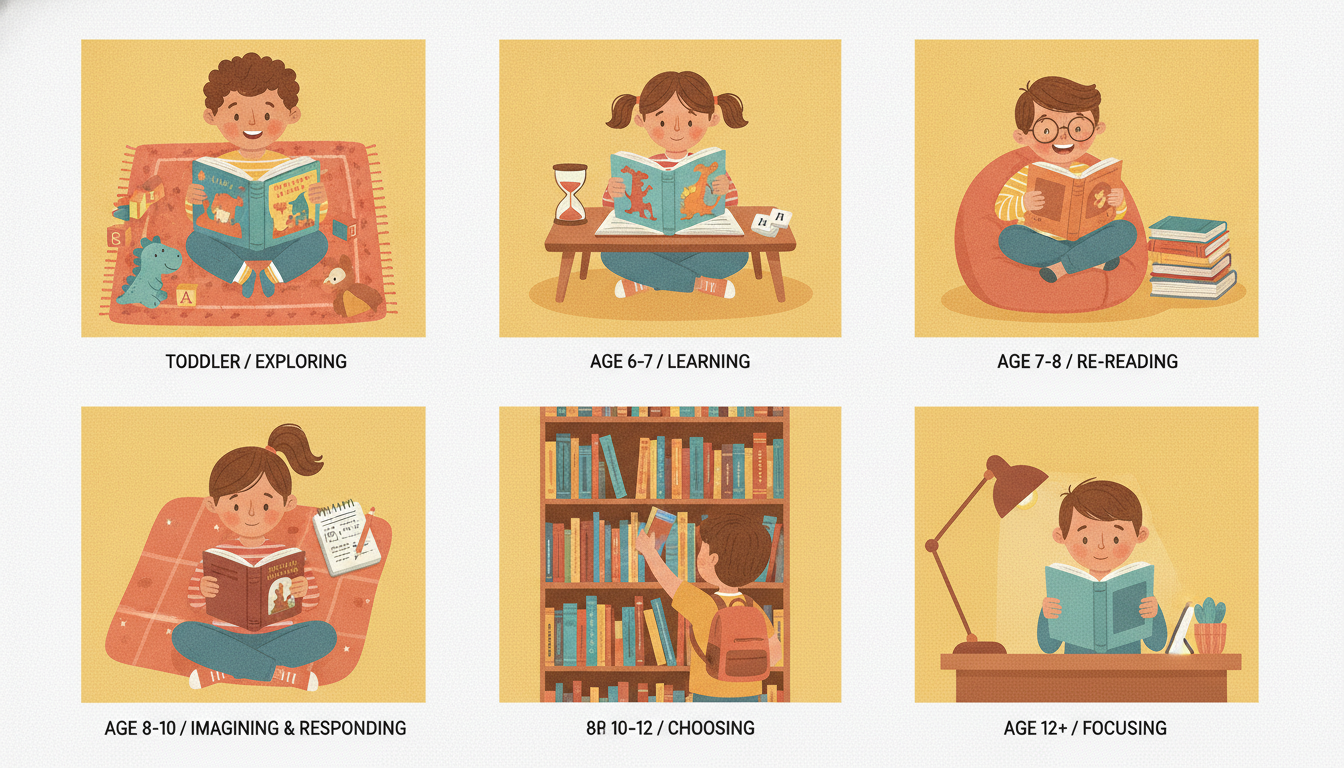
Ages 4–5
Starting Point
Ages 6–7
Starting Point
Ages 7–8
Starting Point
Ages 8–9
Starting Point
Ages 9–11
Starting Point
Ages 11–13
Starting Point
If your child is sitting significantly below the typical range for their age, don't worry — that's simply your starting point. The build is gradual, and starting lower is fine. What matters is that you begin at a level they can actually succeed at, not a level that feels like a stretch.
The Two-Week Build: A Real Routine With Real Numbers
The most important rule of building reading stamina is this: start where your child actually is, not where you wish they were. If they can currently manage four minutes without falling apart, four minutes is your starting number — and that is a win, not a problem to fix immediately.
Here's how a two-week build looks in practice for a child starting at five minutes:
| Days | Target Minutes | Focus |
|---|---|---|
| Days 1–3 | 5 minutes | Make it calm and positive — same time, same spot, genuine praise for finishing |
| Days 4–6 | 6 minutes | Add one minute; child should finish feeling like they could have kept going |
| Days 7–9 | 8 minutes | Two-minute jump only if previous level felt easy; otherwise stay at 6–7 |
| Days 10–12 | 10 minutes | Celebrate the chart growing — focus on the progress shape, not the number |
| Days 13–14 | 12 minutes | Consolidate at this level before building further next week |
The Rules of the Build
- One session per day — don't double up on weekends to catch up
- Add one to two minutes every two to three days, not in bigger jumps
- If a session goes badly, hold the same level next time rather than dropping back dramatically
- Look for practical causes (tiredness, hunger) before treating a bad session as a reading problem
- Consistency across the week matters far more than total minutes in any single session
The goal of each session is for the child to finish feeling like they could have kept going a little longer. That feeling — of having energy left over — is what makes them willing to sit down again tomorrow. A session that ends in exhaustion or frustration does the opposite.
The Reading Stamina Chart: Why Seeing Progress on Paper Changes Everything
A homemade reading stamina chart does not need to be elaborate. A piece of paper on the fridge with the days of the week across the top and minutes down the side — where the child colors in a bar after each session — is genuinely effective and costs nothing.
Children who can see their own progress in a visual format are far more motivated to protect that progress than children who are simply told they are doing well. The chart makes the improvement concrete and owned by the child rather than assessed by an adult. That shift in ownership matters more than it might seem.
Let the child choose the colors and decorate the chart themselves before the first session. This creates a small sense of investment — it becomes their project, not a parent's tracking system.
When you look at the chart together, celebrate the shape of the bars growing taller over the two weeks. Avoid comparing today's number to a target or to what other children can do. The chart is a record of their personal growth, and that's the only comparison that matters here.
If the bars dip for a day or two, resist the urge to draw attention to it or ask why. Simply move forward. The upward trend over the course of the week is what tells the real story, and children are remarkably good at noticing that trend themselves when you give them the space to.
Book Choice, Rereading, and the Read-Aloud Handoff
Interest is the single most powerful fuel for reading endurance. A child who is genuinely curious about a topic will sit with a book twice as long as a child reading something chosen for its reading level rather than its appeal. During a stamina-building phase, always prioritise what the child wants to read over what seems appropriately challenging.
This is where many parents find the guide to choosing children's books genuinely useful — it walks through how to match a book to a child's actual interests rather than just their reading band. For children who say they don't know what they like, the guide for reluctant readers has a practical approach to narrowing it down.
Why Rereading Is a Feature, Not a Problem
Rereading the same book three, five, or ten times is not a sign that a child is stuck or avoiding challenge. It is a legitimate stamina-building strategy. Familiar text removes the cognitive effort of decoding new words and lets the child practice the sustained focus part of reading in a lower-pressure environment. The confidence and fluency that come from rereading a loved book are exactly what makes tackling a new one feel possible later.
Never suggest a child has read a book enough times, or that they should move on to something harder, during a stamina-building phase. That suggestion — however well-intentioned — tends to make the reading spot feel like a place where they'll be judged rather than a place where they can relax into a story.
The Read-Aloud to Independent Handoff
One of the most effective techniques available to parents is deceptively simple: read the first chapter or first few pages of a new book aloud together, then hand the book to the child and let them continue independently. This removes the cold-start problem — the moment where a child doesn't yet care about the characters or story enough to sustain attention on their own.
Once they're already invested in what happens next, the motivation to keep reading is internal rather than external. You've essentially given them a reason to stay in the book.
What Counts as Reading?
Graphic novels, magazines about topics the child loves, joke books, fact books, and illustrated non-fiction all count as reading for stamina purposes. The goal is sustained, focused engagement with text, and the format matters far less than the habit being built. If your child is deeply absorbed in a nature fact book for twelve minutes, that is twelve minutes of reading stamina being built — full stop. You can find a wide range of genuinely engaging options in this collection of stories for elementary readers.
When Your Child Stalls, Goes Backwards, or Refuses Entirely

Even with the best routine in place, there will be sessions that don't go to plan. Here's how to handle the most common situations without losing the progress you've built.
When They Stall Mid-Session
The most effective response is a calm, quiet check-in rather than encouragement to push through. Ask simply whether the book is working for them. Offer to swap it without any fuss, and reset the timer from the beginning rather than asking them to finish the remaining minutes on a book they've disconnected from. A fresh start on a different book is not giving up — it's a sensible reset.
When They Go Backwards
A slide of two to four days is completely normal during a stamina build, particularly after a disrupted week, a school event, or a period of poor sleep. It does not mean the progress has been lost. Returning to a slightly lower number of minutes for a few days before building again is a sensible and effective response — not a failure.
When They Refuse Entirely
A full refusal to sit with a book is almost always a signal about the book rather than about reading itself. Go back to a book the child has loved before, drop the timer entirely for one or two sessions, and rebuild the positive association with the reading spot before reintroducing the structure. Avoid turning reading time into a negotiation or a consequence — if it becomes something a child does to earn screen time or avoid losing a privilege, the intrinsic motivation that sustains long-term reading endurance is much harder to build.
If stalling or refusal persists for more than two to three weeks despite trying different books and keeping sessions short, it is worth a calm conversation with the class teacher to share what you are observing at home. This is useful information for both of you, and sharing it early is always better than waiting.
Common Mistakes Parents Make (And How to Avoid Them)
- Raising the minutes too fast. Adding five or ten minutes in a single jump because a child had one great session almost always leads to a crash the following day. Stick to one to two minute increases every two to three days even when it feels slow. The slow build is the effective build.
- Asking comprehension questions during the session. Sitting with the child and asking questions about the book mid-session turns independent reading time into a test, which raises anxiety and shortens the amount of time a child is willing to sit. Save any conversation about the book for after the timer goes off, and keep it genuinely curious rather than quiz-like.
- Choosing books based on reading level labels. Reading level and reading interest are different things, and interest wins for stamina every time. A child who wants to read something will sit with it far longer than a child who is reading something because the label said it was right for them.
- Skipping days and then compensating. A five-minute session on a hectic Tuesday is worth more for stamina building than a forty-minute catch-up on Saturday. The habit loop — the automatic, daily pull toward the reading spot — is what you're building, and skipping disrupts it more than the lost minutes suggest. If you want a ready-made structure for a month of short daily sessions, our 31-day National Book Month plan is built around exactly that.
- Showing disappointment when the target isn't met. Even non-verbal signals — a sigh, a look — are enough to make a child associate reading time with parental disapproval, which is one of the hardest associations to undo. Keep your reaction to a missed target as neutral and matter-of-fact as possible. Tomorrow is another session.
Quick Reminder
The reading spot should feel like the safest, most pressure-free place in the house. Your child's job is to sit with a book. Your job is to make sure the environment around that is calm, consistent, and free of judgment. Everything else follows from those two things.
Frequently Asked Questions
How long should my child be reading independently by the end of the school year?
There's no single correct answer because it varies by age, school, and individual child. As a general guide, children aged six to seven are typically working toward around 15–20 minutes, ages eight to ten toward 20–30 minutes, and ages eleven and up toward 30 minutes or more. These are typical ranges, not pass-or-fail thresholds — your child's teacher is the best person to give you a more specific target for their classroom.
Can audiobooks help build reading stamina?
Audiobooks build listening stamina and a love of stories, both of which are genuinely valuable. But they don't directly build the visual reading endurance that independent reading time develops. They work best as a companion to reading — a way to spark interest in a series or topic — rather than a replacement for sitting with a book.
What if my child only wants to read books that seem too easy?
Let them, especially during a stamina-building phase. A child who reads an easy book for twenty minutes is building far more endurance than a child who struggles through a hard book for five minutes and quits. The challenge level can increase naturally once the stamina is there. If you want to understand more about how reading levels work and when they actually matter, the reading level chart guide is a helpful reference.
Should I use a reward system to get my child to read?
Small, low-key acknowledgements — a sticker on the chart, a genuine "well done" — work well. Large external rewards like toys or significant screen time bonuses tend to signal that reading is a chore worth enduring rather than a habit worth building. Keep it simple and keep the emphasis on the child's own sense of progress.
Could a personalized story help with a reluctant reader?
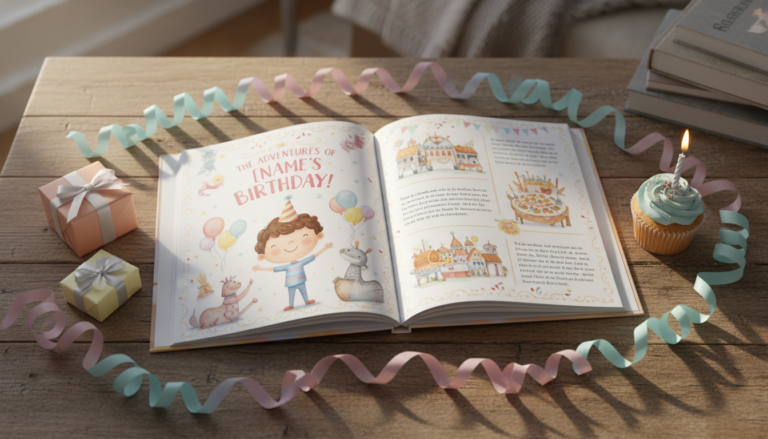
Some children engage more readily with a book when they feel a personal connection to it. Tools like LoveToRead create personalized illustrated stories starring the child, which can be a useful way to spark interest and make the reading session feel special — particularly for reluctant readers in the early stages of building stamina. When a child sees themselves as the main character, the motivation to keep turning pages often comes naturally.
My child reads the words correctly but doesn't seem to understand what they've read. Is that a stamina problem?
It can be related — when a child is working hard to sustain focus, comprehension is often the first thing to suffer. But if it's a consistent pattern even in short sessions, it's worth looking at reading comprehension separately. The guide to improving reading comprehension covers practical strategies for exactly this situation.
Pulling It All Together
Reading stamina is not a fixed trait. It is a skill — a physical and mental endurance that grows with consistent, gentle practice, just like any other kind of fitness. Your child's current four or five minutes is not a ceiling. It is a starting line.
The approach that works is not complicated: start at the level your child can actually manage, hold it steady for a few days, add a minute or two at a time, track progress somewhere visible, and keep the reading spot calm and pressure-free. Book choice matters enormously — interest beats level every time. Rereading is welcome. The read-aloud handoff is one of your most powerful tools. And when sessions go wrong, the response is a quiet reset, not a big reaction.
If you want to go further once the stamina is building, understanding your child's broader reading journey — from how they decode new words to how reading fluency develops — will help you support them at every stage. But for now, the most important thing is simply to begin.
Start Small, Stay Consistent, and Trust the Process
Reading stamina is built one quiet session at a time. Grab a piece of paper, draw a simple chart, set a timer for whatever your child can manage today, and begin. The minutes will grow — and so will your reader.
Create a Personalized Story to Spark the Habit



4 Comments
Comments are closed.