World Kindness Day 2026: What Parents Can Actually Do at Home
November 13, 2026 is World Kindness Day — and for once, here's a guide written for the kitchen table, not the classroom.
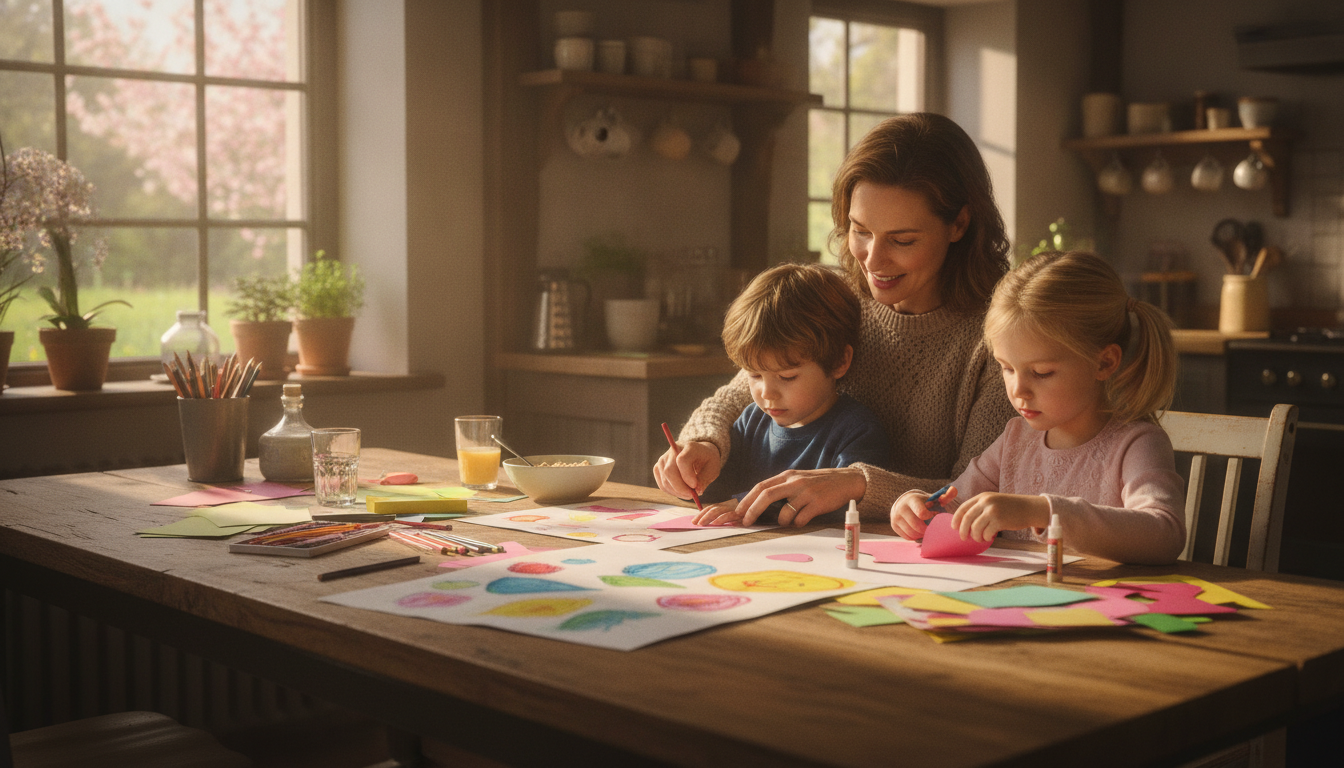
What Is World Kindness Day and Why Does It Matter at Home?
World Kindness Day falls on November 13 every year and has been observed since 1998, when a coalition of kindness-focused organizations formally established it to encourage small, meaningful acts of goodwill across communities. The date is now recognized in dozens of countries around the world — but here is the frustrating part for parents: the vast majority of guides written about it are aimed at teachers running classroom activities or HR teams organizing workplace events.
That leaves parents and grandparents with very little that is actually useful at home. This guide is the exception. Everything here is written for the kitchen table, the living room floor, and the car ride home from school — not for a whiteboard or a team-building exercise.
Children aged 2 to 10 are at exactly the right developmental stage to absorb the idea that their choices affect other people. A single intentional day can plant a seed that grows into a genuine habit — but only if it is handled with the right tone and followed through with real conversation rather than a sticker chart and a pat on the head.
The core idea
Marking World Kindness Day at home does not require craft kits, special purchases, or elaborate planning. The most effective kindness experiences for young children happen in ordinary moments that a parent simply chooses to name and discuss. This guide is organized so you can dip in and out depending on your child's age and your family's schedule — whether you have a full Saturday or just a quiet twenty minutes after school.
Kindness Day At A Glance
The table below gives you the essential facts about World Kindness Day in a single, scannable reference — useful for answering your child's questions confidently, and for explaining the day to older children (ages 8 and up) in a way that feels real rather than abstract. It was started by people who believed that deliberate, named acts of kindness could shift the tone of daily life. The day carries no religious affiliation and is not a public holiday, which makes it straightforward to observe in any household regardless of background or tradition.
| Date | Founded | Observed In | Best For |
|---|---|---|---|
| November 13 | 1998 | Worldwide | Ages 2–10 |
At-Home Kindness Activities Organized by Age
Children develop their understanding of other people's feelings at different rates, which means a single activity rarely works equally well across a wide age range. The breakdown below gives you a practical starting point for each stage — with the emphasis on why each approach works at that age, not just what to do.
Ages 2–3: Physical, immediate, and named out loud
Toddlers are still learning that other people have feelings at all, so the best kindness activities at this age are physical and immediate — drawing a picture for a grandparent, helping to carry something small, or gently patting a pet. The critical ingredient is a parent naming the feeling out loud: "You made Grandma feel so happy." Without that narration, the experience passes without meaning. With it, you are building the neural scaffolding for empathy.
Ages 4–5: Cause, effect, and a little mystery
Children this age can begin to connect cause and effect in social situations. They are ready for slightly more intentional acts — making a card, leaving a flower from the garden on a neighbor's step, or helping a younger sibling with a task they find hard. The element of a secret kind act works particularly well here because children aged 4 and 5 love the slight excitement of doing something good without waiting for a reward. Always narrate why it matters, even briefly.
Ages 6–7: Projects with a beginning and an end
Children aged 6 to 7 can handle a small kindness project with a clear arc — collecting tins for a food bank, writing a thank-you letter to someone who helped the family, or making a kindness jar where family members drop in notes about kind things they noticed during the week. The structure matters at this age: they want to feel that something was completed and that it had a real effect on a real person.
Ages 8–9: Extending empathy beyond the immediate circle
Children aged 8 to 9 are capable of empathy that extends beyond the people they see every day. This is a good age to involve them in planning a kindness gesture for someone outside the family — a neighbor who lives alone, an elderly relative, or a friend going through a hard time — and to have a real conversation about why that person might need kindness right now. Avoid scripting the conversation; let it go where the child takes it.
Age 10: Real ownership, real responsibility
Ten-year-olds can take genuine ownership of a kindness project from identifying the need to following through independently. They benefit most from a parent who steps back and lets them lead while remaining available to talk through any friction or disappointment that arises. Being trusted with something that genuinely matters deepens their investment in the outcome far more than being guided through a pre-planned activity.
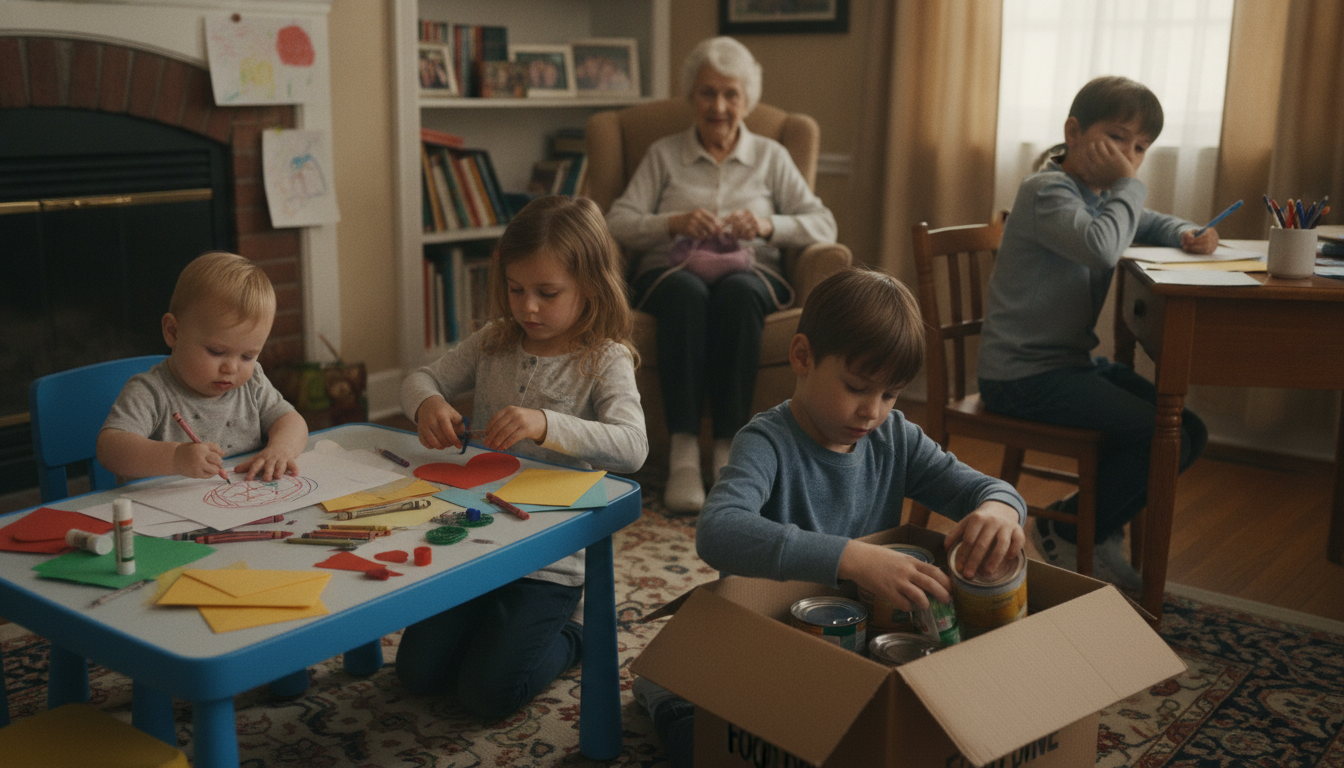
Six Kindness Activities By Age — A Full Reference Table
Each row below gives you the activity, the reason it works at that developmental stage, and the exact kind of thing worth saying to your child afterwards. The "what to say afterwards" column is not a script — it is a prompt for a real conversation, so adapt the words to your own voice.
| Age Band | Activity | Why It Lands | What to Say Afterwards |
|---|---|---|---|
| Ages 2–3 | Draw a picture and hand-deliver it to a family member or neighbor. | Toddlers understand giving through physical action long before they understand abstract concepts, and the immediate joy on the recipient's face creates a direct emotional loop they can feel and remember. | "You made someone feel really good today — did you see their face when you gave it to them?" |
| Ages 4–5 | Leave a small bunch of garden flowers or a handmade paper flower on a neighbor's doorstep. | Children this age are developing a sense of other people's inner lives and love the slight mystery and excitement of a secret kind act. | "We don't need them to say thank you for it to count — we did it because we wanted them to have a nice moment." |
| Ages 6–7 | Write or dictate a thank-you letter to someone who has helped your family in the past year — a doctor, a teacher, a librarian. | Children at this stage can hold a more complex narrative about another person's role in their life and are ready to express gratitude in a form that takes genuine effort. | "That person probably doesn't hear thank you very often — your letter might be the best part of their week." |
| Ages 8–9 | Plan and carry out a small act of kindness for someone outside the immediate family who the child identifies as needing it. | At this age children are beginning to notice social dynamics and inequalities, and channelling that awareness into action gives it a constructive outlet. | "How did you decide that was the right person to help — what made you notice them?" |
| Age 10 | Let the child design and lead the family's entire World Kindness Day, choosing who to help, how, and what the family will do together. | Ten-year-olds are ready for real responsibility and respond strongly to being trusted with something that matters, which deepens their investment in the outcome. | "What was the hardest part of making this happen, and what would you do differently next time?" |
| Whole Family | Create a kindness jar together — a glass jar where every family member drops in a folded note describing a kind thing they witnessed or received that week, then read them aloud on Sunday evening. | The ritual works across all ages because it asks each person to pay attention to kindness rather than perform it, building a shared family language around noticing and naming goodness. | "Which one surprised you the most — did you notice any kindness this week that you almost missed?" |
Reading as a Kindness Practice: How to Talk About a Character's Choices
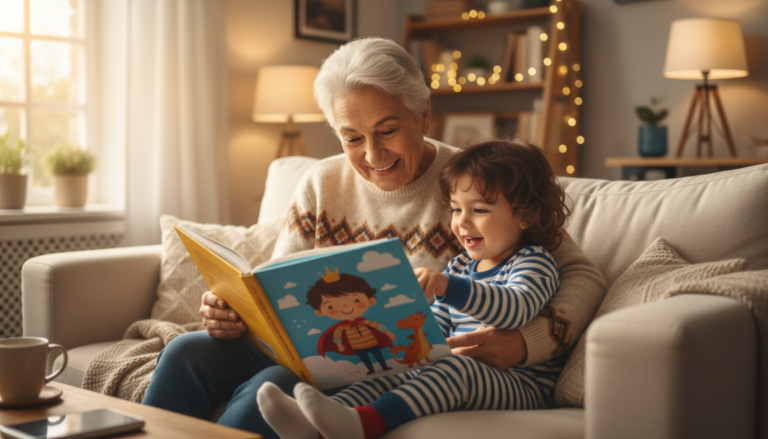
Reading together is one of the most underused kindness tools available to parents — and the reason it is underused is not that parents are not reading with their children. It is that most parents do not realize how much of the value comes not from the book itself but from the conversation that happens inside it. Almost any story that involves a character making a choice about how to treat another person is an opportunity for a real, substantive conversation about empathy and decision-making. You do not need a specially curated kindness reading list for this to work. Any story already on your shelf will do the job — and if you would rather start something fresh, there is a shelf of free stories to read together.
Rather than asking your child whether a character was "good" or "bad," try pausing at a moment of decision and asking what the character noticed about the other person before they acted. This shifts the conversation from moral judgment — which tends to produce one-word answers and closed thinking — to empathy and observation, which is the actual engine of kindness. A child who learns to ask "what did that person notice?" is developing a habit of mind that will serve them far beyond November 13.
The goal is not to turn every story into a lesson but to make the habit of noticing other people's inner lives feel natural and interesting — children who grow up doing that in books tend to do it in real life too.
With children aged 2 to 5, keep the conversation anchored in the immediate moment of the story. "Look at that character's face — how do you think they are feeling right now?" is enough. You do not need to draw a lesson or make it tidy. The point at this age is simply to model the habit of looking at another person's face and wondering about their inner experience.
With children aged 6 to 9, you can go further by asking what the character could have done differently, and — crucially — whether the kind choice was also the easy choice. Honest conversations about the fact that kindness is sometimes inconvenient or uncomfortable are far more useful than presenting it as something that always feels good and costs nothing. Children this age are perceptive enough to notice when that framing does not match their experience, and if they catch you being dishonest about it, you lose the thread.
With ten-year-olds, you can explore the gap between a character's intention and the actual effect of their action. Sometimes people mean well and still cause harm — and exploring that complexity in fiction is a safe, productive way to build genuine moral reasoning rather than a surface-level script about being nice. If you are looking for a way to create personalized stories that center exactly the kinds of choices and characters your child responds to, that is worth exploring as a companion practice to your regular reading.
One practical technique that works well across all ages: when you reach the end of a story, ask your child to identify the single moment where the character's choice mattered most. Not the biggest dramatic moment — the moment where a small decision changed something for another person. That conversation trains attention in a way that transfers directly to real life. For more on how to choose books that naturally open up these conversations, the guide to choosing children's books on this site covers the key considerations by age.
It is also worth noting that stories with moral dimensions have been part of childhood for as long as people have been telling stories — not because adults decided children needed lessons, but because the structure of a story (a character faces a choice, makes a decision, lives with the consequence) is the most natural way the human mind processes ethical questions. You are working with something deep when you read with your child and pause to ask what a character noticed.
Making Kindness a Habit That Outlasts November 13
One day of intentional kindness activities is genuinely valuable — but its real purpose is to give your family a shared reference point that you can return to when things get hard or when you want to name a moment of goodness you witnessed. "Remember what we did on Kindness Day" is a surprisingly powerful phrase in a difficult moment, because it anchors an abstract value to a specific, shared memory.
The kindness jar described in the table above is one of the most practical ongoing habits because it requires almost no effort on any individual day but builds a cumulative record of the family noticing and valuing kindness over time. After a few weeks, the jar itself becomes a visible reminder that goodness is happening around your children even when nobody is making a fuss about it.
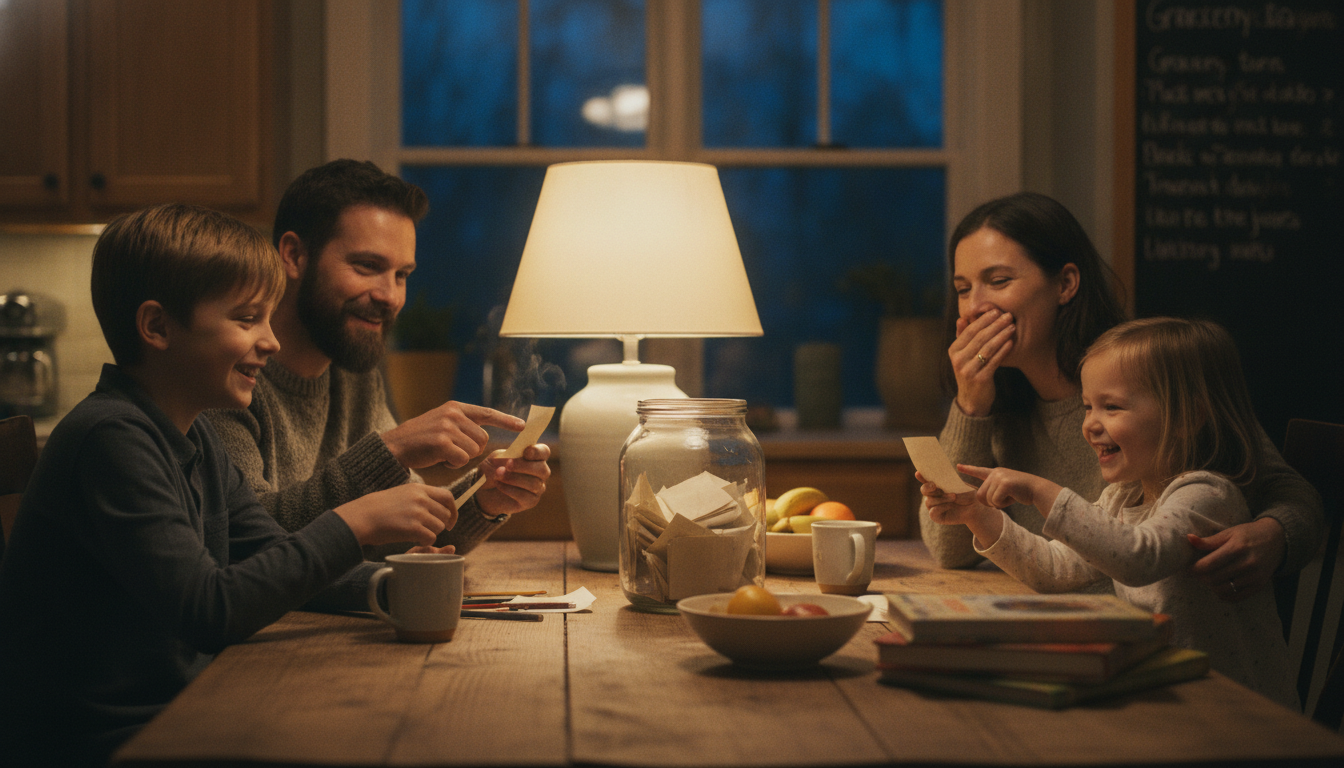
Narrating kindness when you see it in daily life — "did you notice what your sister just did for you?" or "that person held the door for us even though they were in a hurry" — costs nothing and trains children's attention without any formal activity or special occasion. This kind of running commentary is more powerful than most parents realize, because it teaches children that kindness is something worth noticing, not just something worth performing.
Letting children see you apologize, make amends, and try again when you get something wrong is more powerful than any planned kindness activity. It demonstrates that kindness is not a performance for special days but a practice that includes failure and repair — which is the version of kindness that actually holds up over a lifetime. Children who only see kindness modelled as something easy and frictionless are not well-prepared for the moments when it costs something.
A simple ongoing habit
Consider returning to World Kindness Day each November as a family tradition with a slightly different focus each year, allowing older children to revisit the concept with greater sophistication as they grow rather than treating it as something they have already covered. A ten-year-old and a five-year-old can participate in the same day in genuinely different ways — and watching an older child take the lead is itself a powerful model for younger siblings. The same November works for gratitude, which is kindness pointed inward: Thanksgiving activities for preschoolers covers what children this age can actually understand about being thankful, and how to build a ritual that outlasts the holiday.
If you are looking for ways to extend the reading habit that supports all of this, personalized bedtime stories are a particularly effective vehicle for the kind of character-focused conversation described in the previous section, because the child's investment in the story is higher when they recognize themselves or someone they love in it. And if you want to go further and create a story that puts your child's own kindness choices at the center of the narrative, the step-by-step guide to making custom storybooks walks you through exactly how to do that.
Frequently Asked Questions
When exactly is World Kindness Day 2026?
World Kindness Day is observed on November 13 every year, so in 2026 it falls on a Friday. That means you can begin celebrating on the Thursday evening and carry activities through the weekend if that suits your family's schedule better than a school-day morning — there is no rule that says the day has to happen on the day itself.
My child is only two years old — is this day relevant for them?
Yes, though the activities need to be very concrete and immediate. A two-year-old is not ready to understand the concept of a global day, but they are absolutely capable of experiencing the warm feeling of giving something to someone they love. That experience is exactly what you are building on over the years that follow — the concept catches up to the feeling, not the other way around.
How do I explain World Kindness Day to a child without it sounding preachy?
Keep the explanation short and grounded in something specific: "Today is a day when lots of people around the world try to do something kind for someone else — we are going to do that too" is enough for most children. Then move straight into the activity rather than spending time on the concept. The doing is the explanation; the talking comes after.
What if my child refuses to participate or says it is boring?
Do not force it, and do not make the refusal into a lesson about kindness — that is counterproductive and tends to harden resistance. Instead, do the activity yourself or with another child and let the reluctant child observe without pressure. Curiosity usually wins within a few minutes, and a child who joins on their own terms is far more engaged than one who was cajoled into it.
Can grandparents be involved even if they live far away?
Absolutely — and a video call on November 13 where a child delivers a drawing or reads a letter they have written is one of the most effective kindness activities for any age band. It is immediate, personal, and produces a visible emotional response that the child can see and remember. The distance is not a barrier; in some ways it makes the gesture feel more deliberate and meaningful.
How do I handle it if my child asks why not everyone is kind all the time?
This is one of the best questions a child can ask, and it deserves an honest answer: kindness takes effort and attention, people get tired and stressed and scared, and sometimes they forget to think about how their actions affect others. That is exactly why days like this one exist — to remind us all to pay attention. You do not need to make the world sound better than it is; you need to make the practice of kindness sound worth doing anyway.
Conclusion: One Day, Many Days After
World Kindness Day on November 13, 2026 is not a complicated event to mark at home. You do not need a theme kit, a printed activity pack, or a formal plan. What you need is a child, a small amount of time, and the willingness to name what is happening — to say out loud that you are choosing to pay attention to how your actions affect other people, and that this is something your family does on purpose.
The age-by-age activities in this guide give you a practical starting point, but the real work is in the follow-up conversations — the questions you ask after the activity is finished, the moments you narrate in daily life, and the way you model repair when things go wrong. Those are the things that make a single November Friday into something that lasts.
If you want to extend the kindness theme through storytelling — a natural fit for children who respond well to narrative — exploring personalized books for kids is a worthwhile next step, particularly for children aged 4 to 9 who are at the stage where seeing themselves in a story deepens their engagement with the ideas inside it.
Mark November 13 in Your Calendar — and Keep Going
World Kindness Day is one Friday a year. The habits it can start are for every day after that. Pick one activity from this guide, try it with your child, and see what happens. The kindness jar costs nothing. The thank-you letter takes fifteen minutes. The conversation afterwards might last a lifetime. Need somewhere to begin? Start with a free story.



4 Comments
Comments are closed.