Free Read-Aloud Books Online: Your Complete Family Guide
Everything parents and grandparents need to know about finding free story videos and read-along books — and using them to raise confident, lifelong readers.
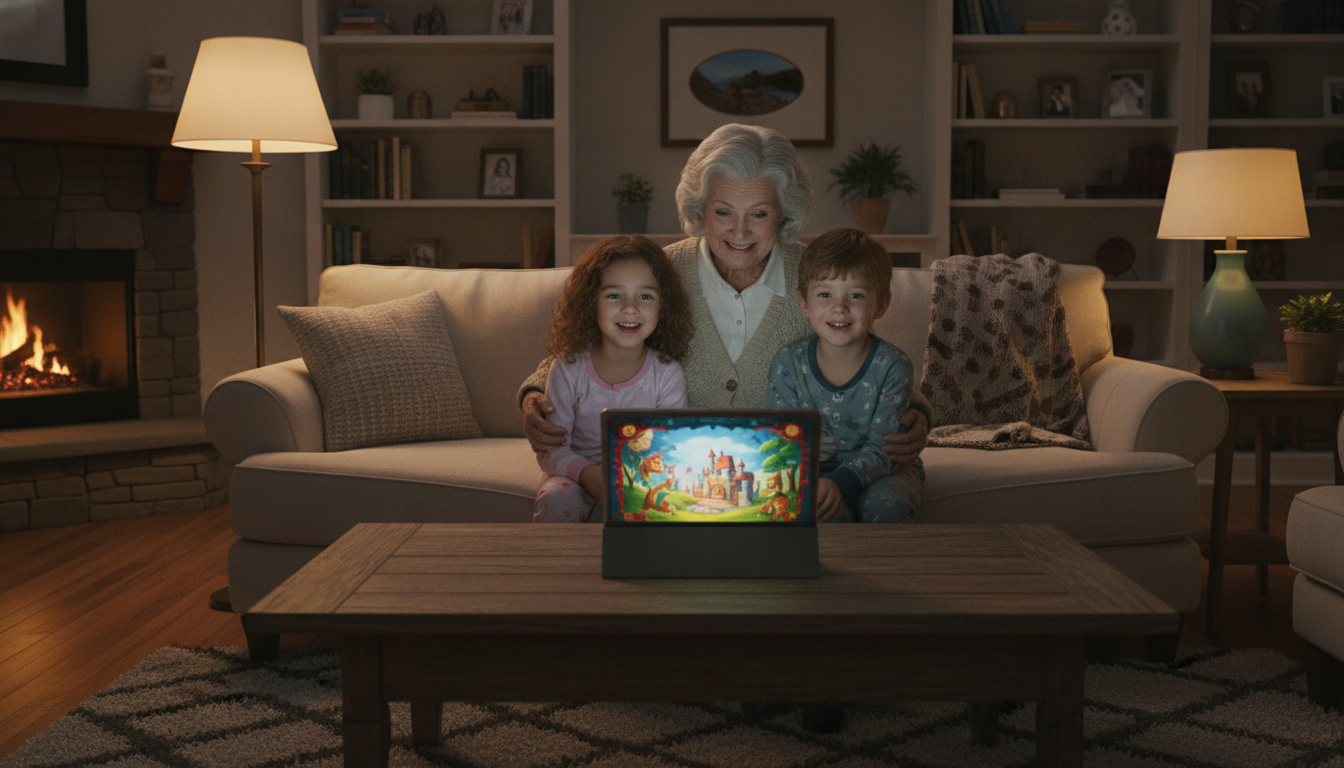
Every parent has been there: it's a rainy afternoon, a long car ride, or a restless half-hour before dinner, and you need something genuinely good for your child's brain — not just something to fill the silence. The internet is overflowing with content aimed at kids, but free read-aloud books online occupy a special category. They're not passive entertainment. They're one of the most research-backed tools in early literacy, available at zero cost, on virtually any device you already own.
This guide walks you through everything you need to know: what a read-aloud actually is, why hearing a story read well has such a profound effect on a child's developing brain, how to match the right format to your child's age, where to find the best free platforms, and how to weave online read-alouds into your family's existing reading life without letting the screen replace the book. Let's dig in.
What Exactly Is a Read-Aloud — and Why Does It Matter?
A read-aloud is any experience in which a skilled, expressive reader voices a book aloud for a child to listen to and follow along — whether that's a grandparent on the couch, a teacher at the front of the classroom, or a professional narrator on a screen. The key word is expressive. A monotone recitation of words is not a read-aloud in the meaningful sense. A great read-aloud uses rising tension, funny character voices, dramatic pauses, and warm emotional coloring to bring the text to life.
When a story is delivered that way, something remarkable happens in a child's mind. They absorb vocabulary, sentence rhythm, and emotional nuance that silent reading simply cannot deliver at early ages. A four-year-old cannot yet decode the word "luminous" on a page, but she can hear it, feel what it means from context and tone, and store it in her growing mental lexicon — ready to deploy it weeks or months later in conversation.
"The single most important activity for building the knowledge required for eventual success in reading is reading aloud to children." — Becoming a Nation of Readers, National Academy of Education (1985), still cited by literacy researchers today
The American Academy of Pediatrics formally recommends reading aloud to children from infancy onward, calling it one of the single most powerful predictors of later reading success and school readiness. Hearing fluent, expressive reading models what good reading sounds like, giving children an internal benchmark they unconsciously work toward when they begin decoding words themselves. Understanding the stages of reading development helps parents see exactly where read-alouds fit into the bigger picture of a child's literacy journey.
Free online read-alouds extend this benefit to every household regardless of budget. A family without access to a library branch, a family where English is a second language and a parent feels uncertain reading aloud, or a grandparent caring for grandchildren during the day — all of them can access professional-quality story time on a tablet, laptop, smart TV, or phone at any hour of the day. That democratization of story time is genuinely significant.
📚 Key Takeaway
- Read-alouds are not just entertainment — they are one of the most evidence-backed literacy tools available to families.
- Expressive narration builds vocabulary, comprehension, and phonological awareness simultaneously.
- Free online platforms make professional-quality read-alouds accessible to every family, on any device.
How Hearing a Story Read Well Builds Early Literacy
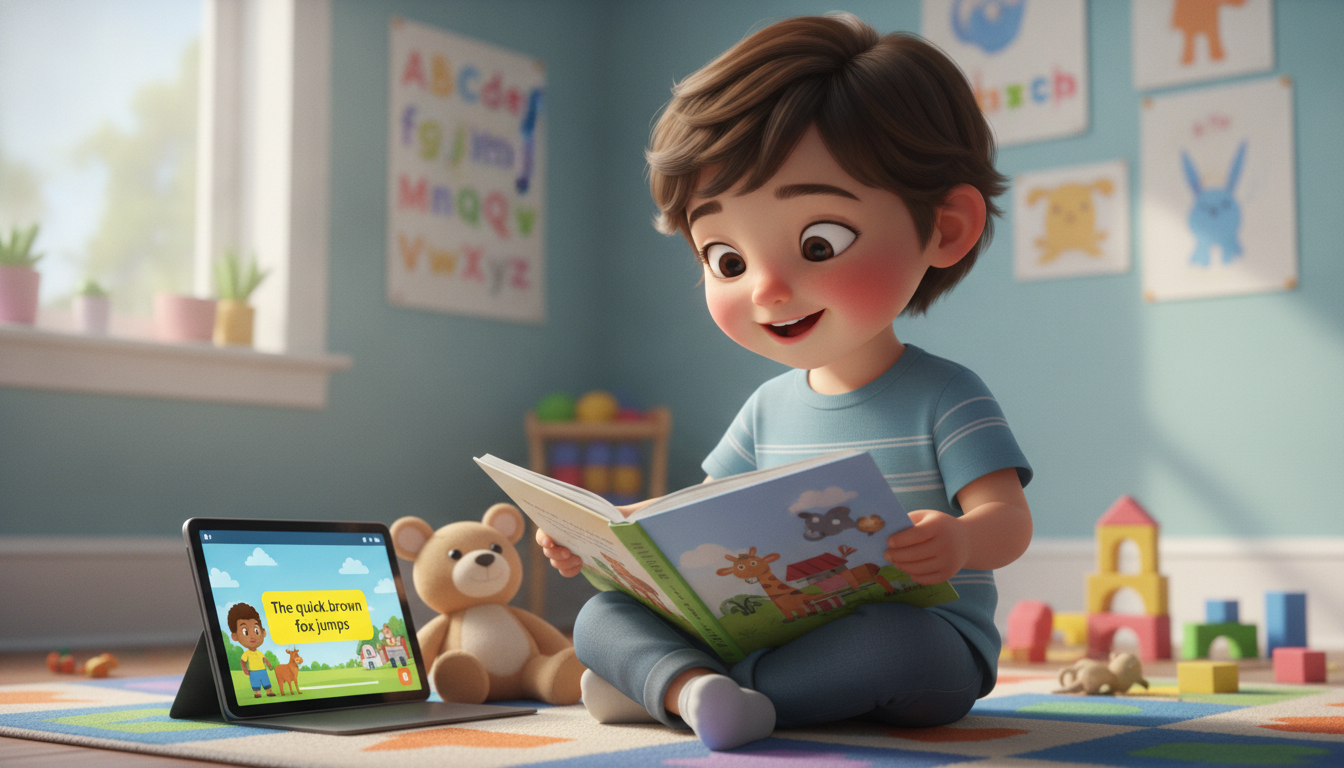
It's worth unpacking the specific literacy mechanisms at work when a child listens to a well-read story — because once you understand what's happening developmentally, you'll find yourself being much more intentional about the read-alouds you choose and how you use them.
Vocabulary Acquisition
Children's picture books and literature use a dramatically richer vocabulary than everyday conversation. The classic measure comes from Hayes and Ahrens (1988), still the number literacy researchers reach for: children’s books carry about 30.9 rare words per thousand, against roughly 9 per thousand in an adult’s ordinary speech to a three-year-old. That is not a slight edge — it is more than triple. When a narrator reads "the peculiar little creature scurried reluctantly across the mossy log," a child who has never encountered "peculiar," "scurried," or "reluctantly" in conversation is now meeting them in context — the richest possible way to absorb a new word. Over hundreds of read-aloud sessions, this compounds into a vocabulary advantage that pays dividends throughout school.
Phonological Awareness
Phonological awareness — the ability to hear and manipulate the sounds inside words — is one of the strongest predictors of early reading success. It is strengthened every time a child listens to rhyming text, alliteration, and rhythmic language read aloud with clear enunciation. Think of how Dr. Seuss books train children's ears through sheer repetition of sound patterns. A good narrator makes those patterns audible in ways that a child reading silently never would. This is also why reading readiness — the cluster of skills a child needs before formal decoding begins — is so deeply connected to the quality of their early listening experiences.
Print Awareness and Read-Along Formats
A specific benefit of online read-along videos — as opposed to audio-only recordings — is that many of them highlight each word on screen as it is spoken. This builds print awareness: the understanding that spoken words correspond to specific written symbols, that text moves left to right across the page, and that spaces between words are meaningful. For a child on the cusp of learning to read, this connection between heard sound and seen symbol is profoundly valuable. It's one reason that sight word recognition often accelerates in children who regularly watch read-along videos with word highlighting.
Story Comprehension and Emotional Intelligence
Story comprehension — understanding cause and effect, character motivation, and narrative arc — is built through repeated exposure to well-structured stories. A child who has heard hundreds of stories by age five arrives at kindergarten already understanding that stories have a beginning, middle, and end; that characters want things and face obstacles; and that events have consequences. These are not trivial insights. They are the cognitive scaffolding on which all later reading comprehension instruction rests.
Beyond cognition, stories introduce children to characters navigating friendship, fear, loss, jealousy, and joy — giving families a natural springboard for meaningful conversations after the story ends. "Why do you think the bear felt lonely?" is a question that opens up emotional worlds. This is why making reading a warm, connected experience matters so much in the early years.
Matching a Read-Aloud to Your Child's Age
Not every read-aloud is right for every child. Choosing the right length, format, and complexity for your child's developmental stage dramatically increases engagement and literacy benefit. Here's a practical age-by-age breakdown.
Babies and Toddlers (Ages 0–2)
At this stage, the goal is exposure to language rhythm, sound patterns, and the pleasure of story. Look for short board-book style read-aloud videos — ideally under five minutes — featuring bold, simple illustrations, repetitive refrains, animal sounds, and a soothing, clear narrator voice. Songs woven into the reading are a bonus. Attention spans are short and variable; that's completely normal. Even two minutes of engaged listening is a meaningful literacy experience for a one-year-old.
Preschoolers (Ages 3–5)
This is the golden age of the picture book read-aloud. Children at this stage are ready for richer storylines, humor, relatable characters, and a bit of suspense. Read-aloud videos of 8–15 minutes work well, and read-along formats that highlight words on screen begin to build early phonics connections. This is also the age range where choosing the right books for a four-year-old makes a genuine difference — the best picture books at this age are funny, surprising, and emotionally resonant all at once.
Early Readers (Ages 6–8)
Children who are beginning to decode words themselves benefit enormously from hearing fluent reading modeled. A child who reads haltingly and choppily on their own — which is entirely normal at this stage; see our guide on reading fluency for why — can hear what smooth, expressive reading sounds like through a read-aloud video. At this age, longer picture books and early chapter book readings of 15–30 minutes work well. Encourage your child to follow along in a physical copy of the book while the video plays — this dual-channel engagement accelerates decoding skills noticeably.
Independent Readers (Ages 9–12)
Older children can enjoy full chapter readings, classic novel read-alouds, and author-narrated audiobook previews. Don't assume read-alouds are only for young children — a ten-year-old listening to a skilled narrator read a chapter of The Phantom Tollbooth or A Wrinkle in Time is experiencing literature at a level that enriches their own reading. LibriVox and Project Gutenberg offer thousands of free public-domain titles read by volunteers at this level.
Age-by-Age Read-Aloud Format Comparison
Use this quick-reference table to match your child to the right format, session length, and platform type at a glance.
| Age Group | Best Format | Ideal Length | Key Literacy Benefit | Top Free Sources |
|---|---|---|---|---|
| 0–2 Babies & Toddlers |
Board book videos, lullaby story readings, simple animation | Under 5 min | Sound & rhythm exposure; language bonding | YouTube Kids, Sesame Street YouTube |
| 3–5 Preschoolers |
Illustrated picture book read-alouds with expressive narration; word-highlight read-alongs | 8–15 min | Vocabulary, phonological awareness, print concepts | Storyline Online, PBS Kids, YouTube channels |
| 6–8 Early Readers |
Longer picture books, early chapter book readings; follow along with physical copy | 15–30 min | Fluency modeling, comprehension, decoding reinforcement | Epic!, Storyline Online, public library apps (Libby) |
| 9–12 Independent Readers |
Full chapter readings, classic novel read-alouds, author-narrated previews | 20–45 min | Advanced vocabulary, literary appreciation, motivation | LibriVox, Project Gutenberg, hoopla (library card) |
| All Ages Family Together |
Shared co-viewing with pauses for discussion and prediction | Any length | Comprehension, bonding, reading motivation | Any platform — the togetherness is the feature |
The Best Free Platforms for Read-Aloud Books Online
The good news for families is that the best free read-aloud resources online are genuinely excellent — not watered-down versions of paid products, but purpose-built, high-quality experiences. Here are the platforms worth bookmarking today.
| Site | What you get | Account needed? | Actually free? |
|---|---|---|---|
| Storyline Online storylineonline.net | Picture books read on video by actors, with an activity guide for each title | No | Yes — free and ad-free |
| Just Books Read Aloud justbooksreadaloud.com | More than 1,000 picture books read aloud on video, no games or extras | No | Yes |
| PBS KIDS Read-Alongs pbs.org/parents/read-along | Authors and guest readers reading favorites, with follow-on activities | No | Yes |
| Storynory storynory.com | Over 1,000 audio stories — fairy tales, myths, poems and originals | No | Yes |
| Storyberries storyberries.com | 1,700+ bedtime stories and picture books to read on screen or hear read aloud | No | Yes |
| Free Children’s Stories freechildrenstories.com | Original stories with audio versions, sorted by age | No | Yes |
| Unite for Literacy uniteforliteracy.com | 600+ picture books narrated by native speakers in more than 50 languages, no ads | No | Yes |
| Libby and hoopla via your public library | Library e-books and audiobooks, including read-along picture books | Library card | Yes, with a card |
| Oxford Owl for Home oxfordowl.co.uk | About 130 free eBooks, including Oxford Reading Tree — leveled to the UK system | Free sign-up | Yes, after registering |
| Epic getepic.com | 40,000+ books with "Read to Me" narration | Yes | Partly — free in classrooms on weekdays 7am–4pm; home accounts see a limited shelf; family plan $13.99/mo or $84.99/yr |
| Vooks vooks.com | Animated read-aloud storybooks with highlighted text | Yes | No — 7-day trial, then $10.99/mo or $69.99/yr |
Pricing and access terms above were checked in August 2026; the paid tiers in particular change. The nine sites in the top block need no payment at any point. Epic and Vooks are in the table because both rank highly for read-aloud searches and both look free at first glance — it is easier to know that before you have handed a child a tablet than after.
Storyline Online (storylineonline.net)
Run by the SAG-AFTRA Foundation, Storyline Online features Hollywood actors — including Viola Davis, Bryan Cranston, Jennifer Garner, and Oprah Winfrey — reading award-winning picture books aloud in beautifully produced videos. Every video is completely free, ad-free, and available anytime. This is the gold standard for read aloud books online free, and it's the first place we recommend to every parent. The production quality rivals anything you'd pay for.
YouTube Read-Aloud Channels
YouTube hosts thousands of free read-aloud channels. Two that have been running for years and hold up: StoryTime at Awnie's House and KidTime StoryTime, both with libraries of hundreds of picture books narrated with genuine warmth and expression. Use YouTube Kids mode or pre-select videos before handing over the device to prevent autoplay drift into unrelated content. The depth of the free library here is extraordinary — you could run a daily read-aloud for years without running out of material.
Public Library Apps: Libby and hoopla
With a free library card — most public libraries issue one to anyone who lives, works or goes to school in their service area, usually with proof of address — you can access Libby and hoopla, which together offer thousands of e-books with read-aloud narration across every age group and reading level. Libby is particularly strong for audiobooks and e-books from major publishers; hoopla has no waitlists and provides instant access to a wide catalog. If you haven't connected your library card to these apps yet, do it tonight — it's one of the best free literacy moves a family can make.
Epic! (getepic.com)
Epic is the one on this list where "free" needs a footnote, so here it is in full. Classrooms get it free on weekdays between 7am and 4pm, which is why so many children know it from school. A parent can open a free home account, but that account only opens a small hand-picked shelf, not the 40,000-book catalog. Full family access is a paid subscription — $13.99 a month or $84.99 a year as of August 2026. The "Read to Me" feature, which narrates a book while highlighting the words, is genuinely good for early readers, and it is worth asking your child's teacher whether the school already has a plan you can use.
PBS Kids and Sesame Street YouTube
PBS Kids and Sesame Street's official YouTube channel offer curriculum-aligned story videos and read-aloud segments that blend literacy with social-emotional learning — making them especially effective for children aged 2–7. The content is rigorously developed by child development researchers and is completely free. For grandparents looking for something reliable and age-appropriate to play on a smart TV, these channels are a safe, enriching default.
For families interested in going further with technology-assisted reading, it's also worth exploring the best kids reading apps of 2026 and the top reading programs for children, which combine read-aloud features with interactive phonics and comprehension practice. If you're looking for free resources specifically for early elementary students, our roundups of free books online for kindergarten, 1st graders, 2nd graders and free books online for 3rd graders covers platforms with strong read-aloud features at those levels.
Using Read-Alouds Alongside Bedtime Reading — Not Instead of It
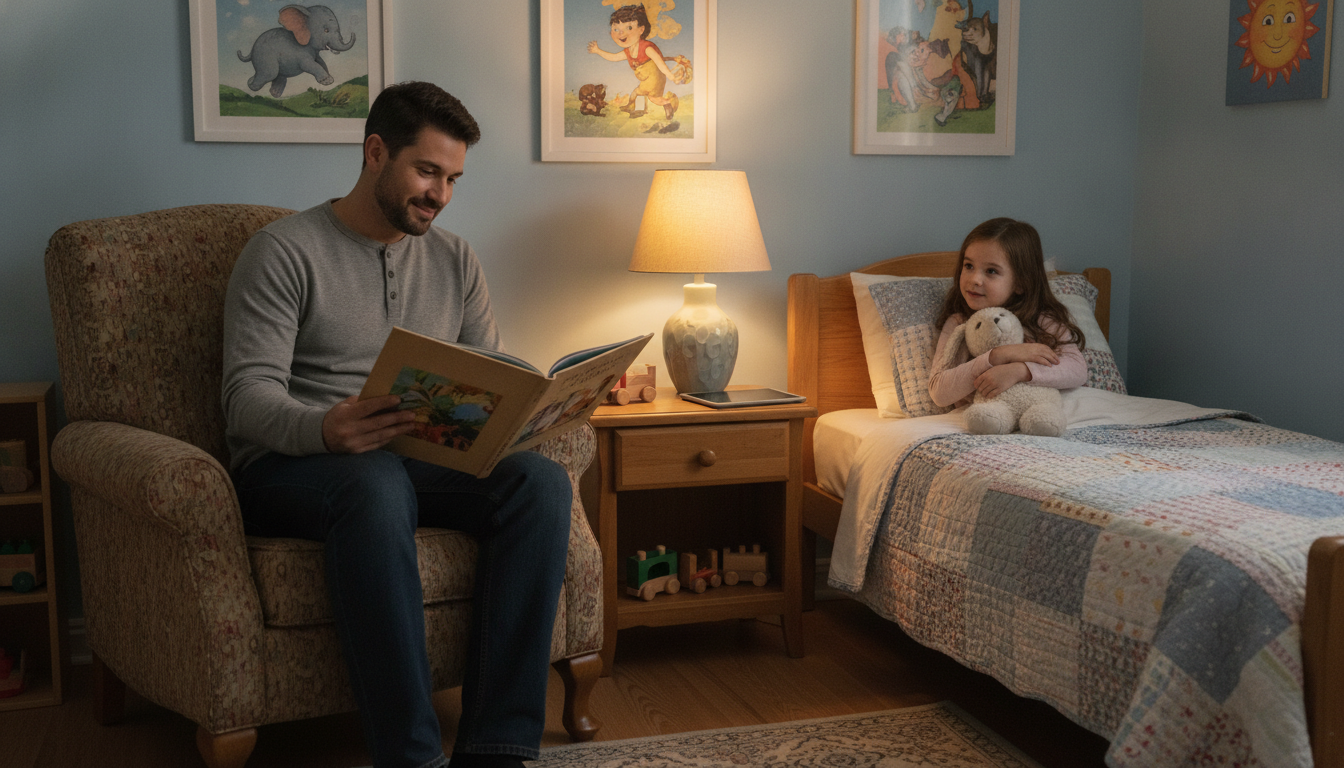
Here's where we need to be honest with you: online read-alouds are a powerful supplement, but they are not a complete replacement for the physical act of sharing a book with a child. The distinction matters, and it's worth understanding why.
The irreplaceable value of a parent or grandparent reading in person lies in three things that no screen can replicate. First, physical closeness — the warmth of being held or sitting pressed against someone you love while a story unfolds is a neurological and emotional experience that shapes a child's relationship with reading itself. Second, spontaneous interaction — when a child reading with a grandparent suddenly asks "Why is the bear sad?" the grandparent can answer, digress, share a memory, and return to the story in a way that deepens comprehension and connection simultaneously. Third, modeling — when the most important adult in a child's life puts down their phone and picks up a book, the child absorbs a powerful message: reading is worth my time and attention.
"The fire of literacy is created by the emotional sparks between a child, a book, and the person reading." — Mem Fox, Reading Magic
A practical approach that works beautifully for many families is to use free online read-aloud videos during the day — perhaps after school, during quiet time, or while a caregiver is cooking dinner — while preserving bedtime as a sacred, screen-free window for reading physical books together by lamplight. This rhythm gives children both the richness of professional-quality narration and the irreplaceable warmth of a shared book with someone they love.
Another powerful strategy: after watching a read-aloud video together, visit your local library to find the physical copy of the same book. Children who have heard a story read aloud often become intensely motivated to revisit it independently — turning the pages themselves, recognizing words they heard, and experiencing the pride of "reading" a book they love. This is one of the most natural bridges from passive listener to active reader that exists. Families who want to build a sustainable reading rhythm through the year might enjoy our 31-day family reading plan as a structured way to combine online and in-person reading throughout October.
🏠 A Simple Weekly Reading Rhythm
- 2–3 evenings per week: Parent or grandparent reads a physical book aloud at bedtime — screen-free, unhurried, cozy.
- 2–3 afternoons per week: A free online read-aloud video plays during quiet time or after school — Storyline Online, a YouTube channel, or a library app.
- Weekend bonus: Visit the library to find the physical copy of a book you watched together that week.
- Year-round: Let your child choose — children who have agency over what they read are dramatically more motivated readers.
Frequently Asked Questions About Free Read-Alouds Online
Conclusion: The Best Reading Tool Is the One You Actually Use
If there's one thing to take away from this guide, it's this: the research on read-alouds is clear, the free resources are excellent, and the barrier to starting tonight is essentially zero. You don't need to spend money, drive to a store, or wait for a delivery. You need a device you already own, a free platform, and fifteen minutes.
The children who grow up to be confident, joyful readers are almost universally children who heard a lot of stories read aloud in their early years — by parents, grandparents, teachers, and yes, sometimes by a warm narrator on a screen. Every format counts. Every story matters. The cumulative effect of hundreds of read-aloud sessions, in person and online, is a child who knows that books are worth their time and attention — because the people they love most showed them that first.
Start simple. Bookmark Storyline Online tonight. Queue up one video for tomorrow afternoon. Then pick up a physical book at bedtime. That combination — professional narration during the day, a parent's voice at night — is one of the most powerful literacy investments a family can make, and it costs nothing but time.
Start Your Free Read-Aloud Routine Tonight
You don't need a big budget or a special subscription to give your child the gift of great stories. Pick one free platform, bookmark a favorite channel, and press play together — because every story heard is a step toward a child who loves to read.
Read Free Stories on LoveToRead →

6 Comments
Comments are closed.