Reading Fluency: Your Child Reads Every Word Right — So Why Does It Sound Wrong?
If your child reads accurately but sounds flat, choppy, or robotic — or reads so slowly that meaning disappears by the end of the page — this guide is for you.

You sit down next to your child. They open the book and start reading aloud. The words are right — every single one of them. But something feels off. There are long pauses between words that have nothing to do with the punctuation. The voice stays flat from the first sentence to the last. A question mark at the end of a sentence gets read with the same tone as everything else. By the time your child reaches the bottom of the page, you've both lost the thread of what was happening in the story.
That experience has a name: it's a fluency gap. And it is one of the most common and most misunderstood parts of learning to read. This guide is written for the parent sitting at that kitchen table — not for a teacher, not for a school district. Just for you, trying to figure out what you're actually hearing and what you can do about it.
What Reading Fluency Actually Is (Described by What You Hear)
Reading fluency is not simply reading fast. It is reading in a way that sounds like natural, meaningful speech — the right words, a comfortable pace, and a voice that rises and falls with the meaning of the text. When all three parts are working together, the reading sounds effortless. And that effortlessness is what allows the meaning to land.
There are three pieces to fluency, and it helps to know what each one sounds like from the outside:
Accuracy
The words come out right. Your child is not guessing, skipping, or substituting words that change the meaning. The text is being decoded correctly, word by word.
Rate
A comfortable, conversational pace — not a race to the finish line, and not such a slow crawl that each word feels disconnected. Think of how you sound when you read aloud to your child.
Expression
The voice rises at a question mark, pauses at a comma, slows for a sad moment, speeds up when a character is excited. Punctuation is obeyed, and characters sound like characters.
Reading researchers call that third piece prosody — and it is usually the part parents notice first when it is missing. A child who reads with flat, unchanging intonation from beginning to end is showing you that the reading is not yet fluent, even if every single word is correct.
| What you hear when your child reads aloud | What it usually points to | What tends to help |
|---|---|---|
| Long pauses between words that have nothing to do with the punctuation | Recognizing the words is still taking most of their effort | Easier text, plus rereading the same short passage across a few days |
| Every sentence read in the same flat tone, questions included | They have not heard enough of what expressive reading sounds like | Echo reading — you read a line, they read it straight back |
| Fast and accurate, but they cannot tell you what happened | Speed is being treated as the goal | Slow down on purpose and talk about the page together |
| Several stumbles on a single page | The book is too hard to be practice material | Drop to text they can already read comfortably |
| Reads smoothly on their own, falls apart reading to you | Usually self-consciousness rather than skill | Choral reading, so their voice is not out there alone |
Why Fluency Is the Bridge Between Sounding Out Words and Understanding Them
Learning to decode — to sound out letters and blend them into words — takes real mental effort. When a child is still working hard at that level, there is very little mental energy left over to think about what the words actually mean.
Think of it like learning to drive. When you are brand new behind the wheel, you are thinking about every small movement, and you cannot also hold a conversation. Once driving becomes automatic, the conversation is easy. Reading fluency works exactly the same way.
Fluency is what happens when decoding becomes automatic enough that the brain can shift its attention from the individual words to the meaning of the whole sentence, paragraph, and page. A child who reads every word correctly but in a flat, disconnected way is often still spending most of their mental energy on the decoding itself — leaving very little room to think about what they are reading.
This is why fluency matters so much for comprehension. A child who sounds choppy or robotic may also struggle to tell you what the passage was about, even though they read every single word correctly. The two problems are connected — and solving one tends to help the other. If you want to read more about the comprehension side of this, how to improve reading comprehension covers that connection in more detail.
The Most Misunderstood Part of Fluency: Speed
Speed is the piece of fluency that causes the most confusion — and the most unintentional harm. It is worth being honest about something many articles skip over entirely.
Schools do use words-per-minute benchmarks to screen for reading difficulties. The widely used oral reading fluency norms are associated with researchers Hasbrouck and Tindal, and teachers use them as one tool among many to identify children who may need extra support. But these are screening tools designed for teachers — not targets for a child to chase at home.
⚠ Be Honest About This
Pushing a child to read faster does not make them a better reader. A child who races through a page and remembers nothing has not read fluently at all — speed without comprehension is just noise. If your child's school has shared a fluency score or mentioned that your child is below a benchmark, ask the teacher what that means for your specific child and what the school's own goals are. Do not rely on a chart you find on the internet, because those numbers are screening reference points, not finish lines.
The goal at home is never faster. The goal is smoother, more natural, and more meaningful — and that comes from practice, not pressure.
Why Easy Books Are the Right Practice Material (And Hard Books Are Not)
One of the most counterintuitive things about building fluency is that the books your child practices with should feel almost too easy. If your child is stumbling over words, the book is too hard for fluency practice, full stop.
When a child is working hard to decode unfamiliar words, they cannot also practice smooth, expressive reading. The two tasks compete with each other, and the decoding always wins. For fluency practice, choose books where your child already knows almost every word by sight — books they have read before, or books that are slightly below their current independent reading level. If you are not sure where to look, a reading level chart can give you a general sense of the range to aim for.
Hard books have their place. They stretch vocabulary, build knowledge, and are wonderful when you are reading aloud to your child. But they are not the right tool for fluency practice, and choosing an easy book on purpose is not giving up or going backward. It is choosing the right tool for the job.
If your child resists easy books because they feel babyish, look for high-interest, low-difficulty options. There are many books written for older children who are still building fluency, and finding something your child actually wants to read matters more than the reading level printed on the back cover. A good place to start is our guide to books for reluctant readers, which focuses on interest and engagement rather than difficulty. Once the reading itself is comfortable, the next thing to grow is how long they can keep going — see our guide to building reading stamina.
Rereading the Same Passage: The Single Most Effective Thing You Can Do at Home
Repeated reading — going back to the same short passage more than once — is one of the most well-supported practices for building fluency, and it is completely free and requires no special materials.
Here is what it looks like in practice:
- The first time a child reads a passage, they are working through the words.
- The second time, the words are familiar and they can start to pay attention to phrasing.
- By the third or fourth reading across a few days, the reading often sounds genuinely smooth and expressive.
Keep the passage short — a paragraph or a page is plenty — and spread the rereading across a few days rather than drilling it repeatedly in one sitting, which can feel tedious and discouraging.
You will often hear a real difference between the first read and the third read. Pointing that out to your child — "listen to how much smoother that sounded than the first time" — gives them concrete evidence that practice is working. That kind of specific, honest feedback is far more useful than general praise.
💡 Key Takeaway
Rereading is not a sign that your child is behind or struggling. It is the actual mechanism by which fluency is built. Even strong readers reread text to understand it better. Framing it that way — as what good readers do — removes the stigma entirely.
Three Home Practices That Actually Help: Echo Reading, Choral Reading, and Partner Reading
Beyond rereading, there are three simple approaches you can use at home without any special training or materials. All three work best with easy, familiar text — a book your child has already read once, a favorite story, or a short passage they chose themselves.
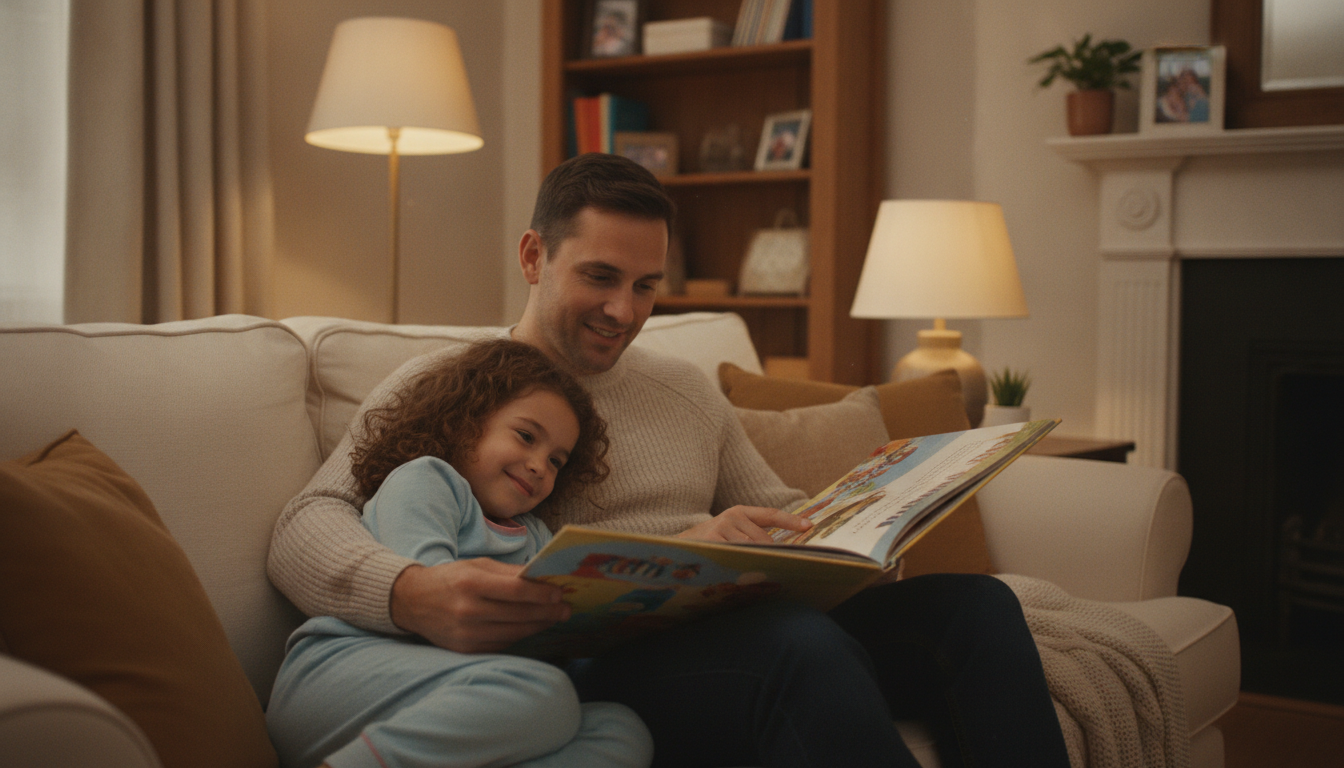
- Echo Reading (Model and Repeat): You read a line or a sentence aloud with natural expression, and your child reads the same line back to you, trying to match your phrasing and tone. This gives them a living example of what fluent reading sounds like — which no worksheet can replicate. The key is to use your real voice, not an exaggerated performance. Just read the way you naturally would.
- Choral Reading: You read aloud together at the same time, side by side, with both of your voices going at once. Your child's voice is carried along by yours, which removes the pressure of performing alone and lets them feel what smooth, expressive reading sounds like from the inside. This is particularly helpful for children who are self-conscious about how they sound when reading solo.
- Partner Reading: You and your child take turns reading aloud — a sentence each, a paragraph each, or alternating pages. This keeps both of you engaged, gives your child frequent short turns rather than one long exhausting stretch, and lets them hear your expression regularly throughout the session. It also keeps the whole thing feeling more like a conversation than a test.
Even ten or fifteen minutes a few times a week makes a real difference over time. You do not need long sessions, and stopping while your child is still enjoying it is better than pushing until they are frustrated. The goal is to end each session on a good note so they are willing to come back tomorrow.
| Practice | What you actually do | Best for |
|---|---|---|
| Rereading | The same short passage, a few times spread across several days | Hearing real smoothness appear on text they already know |
| Echo reading | You read a line in your normal voice; your child reads it back | A child who reads accurately but with no phrasing |
| Choral reading | You both read the same text aloud at the same time | A child who is self-conscious about reading alone |
| Partner reading | Take turns — a sentence, a paragraph, or a page each | Keeping a longer session from feeling like a test |
Let Your Child Hear You Read With Expression — It Matters More Than You Think
Children learn what fluent reading sounds like by hearing it, and you are the most available model they have. Reading aloud to your child — even after they can read independently — gives them a constant example of what expressive, meaningful reading sounds like.
When you read to your child, you do not need to perform or exaggerate. Just read the way you naturally would: pausing at commas, raising your voice at questions, slowing down for a tense moment, and letting a funny line land the way it should. That natural, uncontrived expression is exactly what you want your child to absorb.
If your child is working on fluency, you might occasionally read a sentence and then say, "Did you hear how I slowed down there? That was a long dash — the author wanted us to pause." Small moments of noticing, not lecturing, help children connect punctuation to sound.
Reading aloud together also keeps reading a shared, enjoyable activity rather than a performance your child has to get right. That matters enormously for children who are self-conscious about how they sound. The more reading feels like something you do together, the less pressure they feel when reading on their own.
Finding Reading Material Your Child Actually Wants to Reread
The best fluency practice material is text your child actually wants to read again. That is harder to find than it sounds, especially for children who are already self-conscious about reading. The goal is text that feels like a treat to return to — not an assignment to get through. Short, familiar tales work unusually well here, because your child already knows how the story ends and can spend their attention on how it sounds — our collection of stories with morals for kids is full of pieces short enough to reread in one sitting.
Personalized stories, like those created by LoveToRead, give a child a text starring themselves or the things they love most, which can make rereading feel like a treat rather than a chore. And the rereading is the practice — that is genuinely useful. It is worth being clear, though: a personalized story is reading material, not reading instruction, and it does not replace what your child's school is doing. But if it gets your child to pick up a book and read it three times in a week because they love it, that is real fluency practice happening.
For children who are building sight word recognition alongside fluency — particularly younger children — understanding which words appear most often in early text can help you choose the right practice material. Our guide to sight words for kindergarten is a good place to start thinking about this, even if your child is slightly older, because many of those high-frequency words are the same ones that appear constantly in early fluency practice texts.
Whatever material you choose, keep the focus on enjoyment and repetition with easy text. The hardest book your child can technically get through is not the right choice for fluency practice — the right choice is the book they actually want to open again tomorrow.
When to Talk to the Teacher — and What to Say
If your child has been reading for a while and still sounds significantly choppy, flat, or very slow — and the strategies above are not making a noticeable difference over several weeks — it is worth a conversation with their teacher. Not because something is necessarily wrong, but because the teacher has information you do not.
Children arrive at fluency at very different times, and a wide range of timelines is completely normal. But if you have a genuine concern, the teacher can tell you whether what you are seeing matches what they see in the classroom, and whether any additional support is already in place or being considered.
- If the teacher uses words-per-minute scores in that conversation, ask them to explain what those numbers mean for your child specifically, what the school's benchmarks are, and what the next steps look like. You deserve a plain-language answer.
- If you are ever worried that something more is going on — that your child may have a reading difficulty that goes beyond typical variation — that conversation belongs with the teacher and your child's pediatrician, not with a checklist you find online. They can point you toward a proper evaluation if one is warranted.
Improving reading comprehension is closely connected to fluency, and once your child is reading more smoothly, you may find their understanding improves noticeably too. The two grow together, and progress in one area tends to support the other.
Putting It All Together: What This Actually Looks Like at Home
You do not need a curriculum, a timer, or a special program to support your child's reading fluency. What you need is a short, easy book your child already knows a little, about fifteen minutes a few times a week, and a willingness to read alongside them rather than just listening and correcting.
📋 A Simple Weekly Routine
- Monday: Read a short, easy passage together using choral reading — your voices at the same time.
- Wednesday: Try echo reading — you read a sentence with expression, your child reads it back.
- Friday: Partner reading — take turns, a paragraph each. Notice aloud if the reading sounds smoother than Monday.
- Anytime: Read aloud to your child from a book slightly above their level. Let them hear what fluent, expressive reading sounds like.
That is genuinely enough. Fluency builds slowly, through repetition and enjoyment — not through pressure or speed drills. The flat, choppy reading you are hearing today is not a permanent feature of your child's reading. It is a stage, and it responds well to exactly the kind of warm, low-pressure practice you can do at your kitchen table.
Keep Reading Together — That Is the Whole Plan
Pick an easy book your child loves. Read it together a few times this week. Let your voice show them what reading is supposed to sound like. That is enough — and it is more than most parents know to do.






One Comment
Comments are closed.